
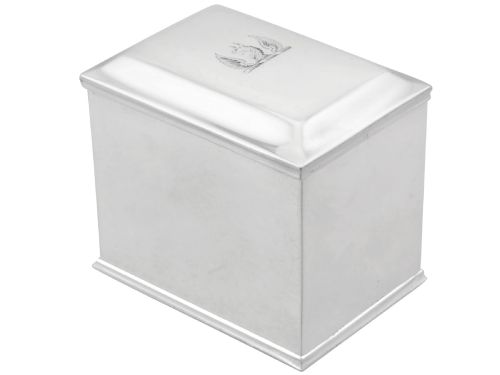
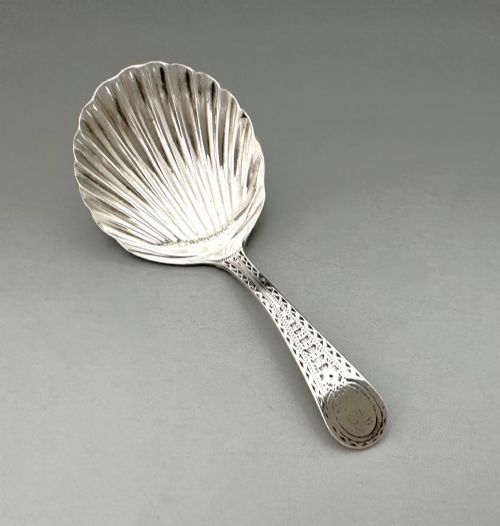
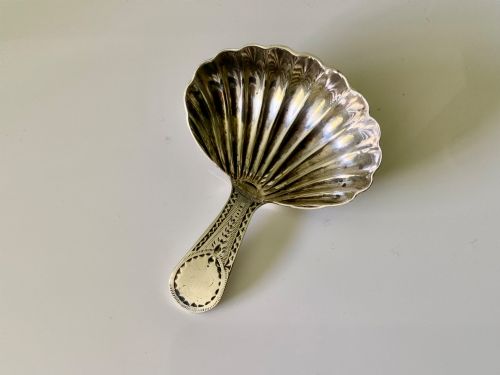
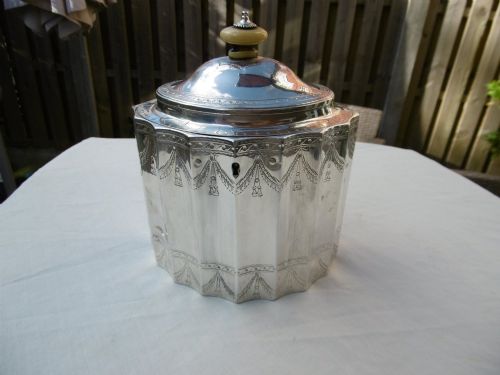
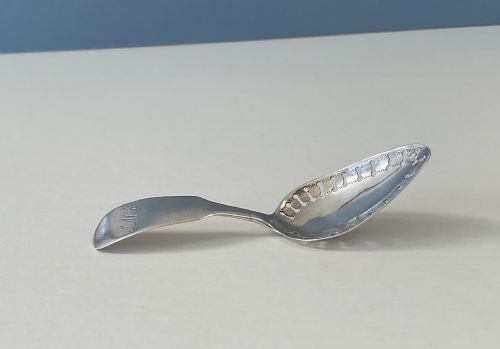


Georgian Sterling Tea Caddy
A georgian sterling tea caddy is a silver vessel designed for storing tea leaves, prized for its craftsmanship and historical connection to the tea ceremony.
Georgian Sterling Tea Caddy
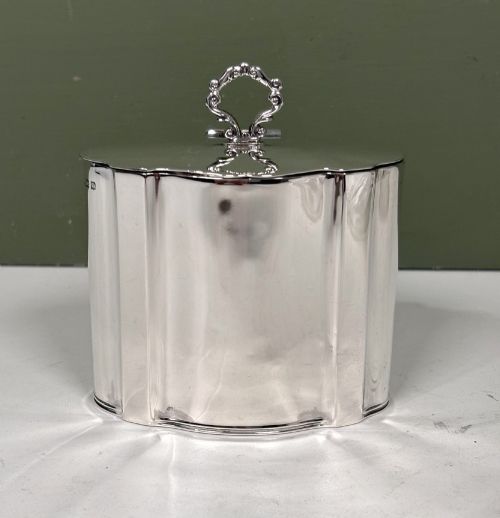
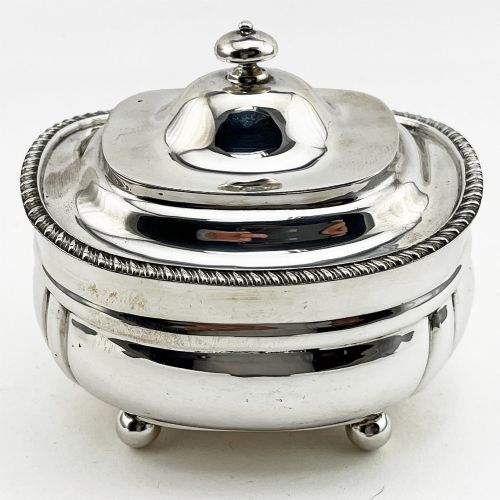
A georgian sterling tea caddy is a domestic container made to hold expensive tea leaves securely under lock and key. The selections here typically feature the work of eighteenth-century makers alongside later revival interpretations.
The inventory on this page spans items originating from Georgian, Edwardian, and later twentieth-century workshops. Pieces vary from simple domestic utensils to ornate items displaying neoclassical or rococo ornamentation.
Materials and construction
These items are constructed primarily from sterling silver and solid silver, occasionally incorporating parcel-gilt highlights, silver-gilt finishes, bone components, or ebonised wood details.
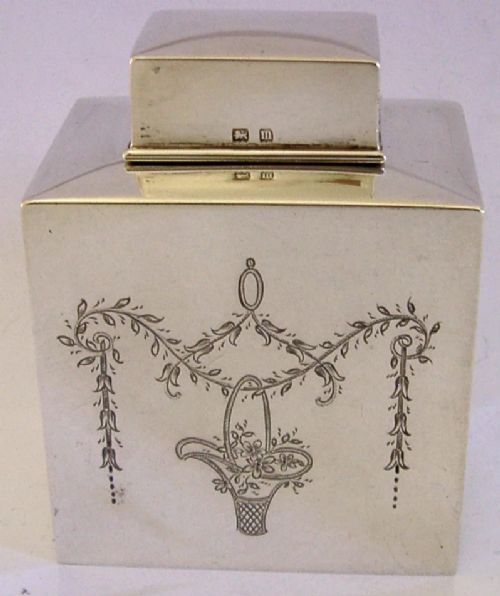
Silversmiths employed techniques such as fluting, engraving, and casting to shape the metal into boxes and spoons. Maker marks and hallmarked dates stamped into the silver record the origin and year of creation.
Listings include items spanning the Georgian period, the Edwardian era, and mid-twentieth-century revivals, formed in sterling silver, bone, and ebonised wood.
Distinctions in quality
Quality in a georgian sterling tea caddy rests upon the crispness of the chased or engraved ornament and the weight of the silver. Pieces bearing clear hallmarks from notable silversmiths demonstrate superior provenance.
The refinement of the form, such as balanced proportions on fluted bodies or delicate detailing on shell and shovel caddy spoons, separates standard utilitarian items from finer examples.
Robert Hennell·Zimmermann·Goldsmiths and Silversmiths Co·George Wintle
The Georgian Sterling Tea Caddy Glossary
- Sterling silver
- An alloy consisting of ninety-two point five percent silver by mass, with the remainder composed of other metals like copper for durability.
- Caddy spoon
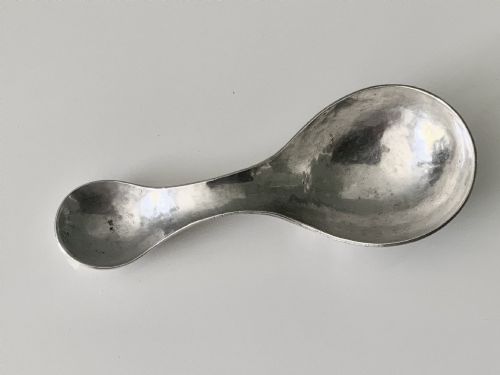
- A small spoon specifically designed for measuring loose tea leaves from a caddy into a teapot.
- Hallmark
- An official stamp applied by an assay office to indicate the purity of the metal, the maker, and the year of production.
- Parcel-gilt
- A technique where parts of a silver object are gilded with gold, leaving other sections in plain silver.
- Neoclassical
- A style characterised by symmetry, straight lines, and classical motifs inspired by ancient Greece and Rome.
Georgian Sterling Tea Caddy: Frequently Asked Questions
What is a georgian sterling tea caddy?
A georgian sterling tea caddy is a metal container made during the eighteenth or early nineteenth century to preserve precious tea leaves. They were essential household items when tea was an expensive commodity.
These pieces often feature hallmarks indicating the year and city of manufacture, alongside maker marks identifying the silversmith who shaped the silver.
How were tea caddies used?
Tea caddies served to store loose tea leaves securely in the parlour or dining room. Because tea carried high value, the containers were frequently kept locked.
Servants or the master of the house would measure out the leaves using specialised caddy spoons before brewing the beverage for guests.
How do I identify a Georgian piece?
Georgian pieces are identified by official hallmarks stamped into the silver which record the assay office, the maker's mark, and a date letter corresponding to the reign of the Georges.
Stylistic elements such as neoclassical symmetry, rococo scrolling, and hand-engraved decoration also help date the silver to the eighteenth or early nineteenth century.