



Georgian Sterling Silver Candlesticks
Georgian sterling silver candlesticks bring monumental presence to a dining table, combining substantial weight with the restrained ornament of the eighteenth century.
Georgian Sterling Silver Candlesticks
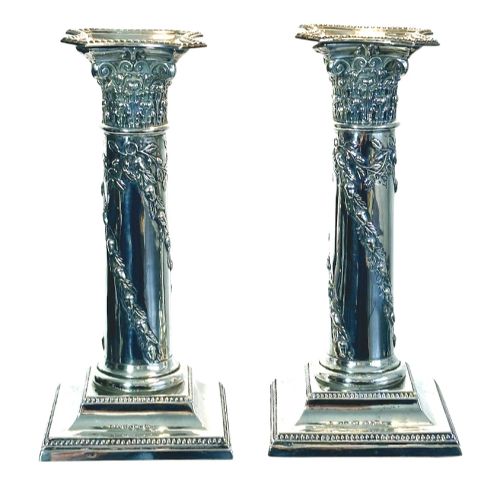
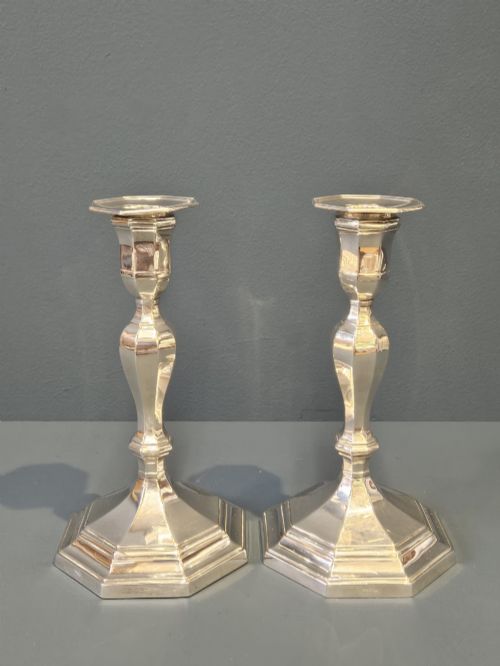
When you search for georgian sterling silver candlesticks, you look for formal lighting pieces that reflect the proportion and balance of the eighteenth century. These items include both authentic eighteenth-century pairs and later revival pieces produced in the twentieth century.
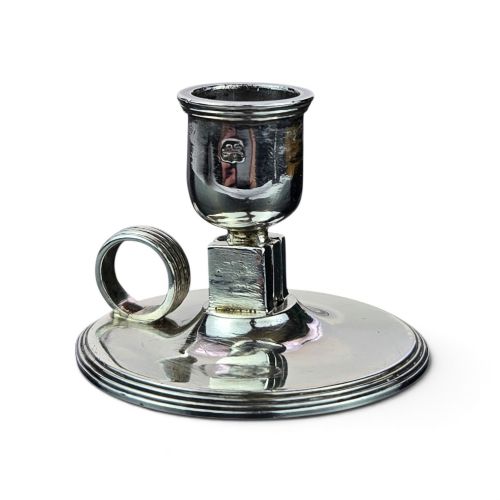
The selection ranges from single pairs of tall shafts to sets of four, alongside related lighting forms such as chambersticks and multi-light candelabra. Styles span from early Georgian forms through to Rococo Revival and Neoclassical interpretations.
Materials and Construction
The primary material is sterling silver, worked into solid cast components or shaped sheet metal. Makers employed casting techniques to create the heavy, detailed bases and stems characteristic of the period.
Many examples incorporate weighted bases filled with other materials to provide stability, a standard manufacturing method for tall silver lighting. Hallmarks stamped into the metal record the assay office, standard, and date of manufacture.
Georgian Sterling Silver Candlesticks Retail Price Guide 2026
Typical asking prices for georgian sterling silver candlesticks among the pieces listed under this phrase on Sellingantiques today, from the lower quarter to the upper quarter. They describe what is for sale here now, not the wider market.
Some chambersticks retain tiny conical extinguishers tucked beside the socket, designed to snuff out bedroom candles without smoking.
Distinctions in Quality
Quality rests in the crispness of the cast ornament and the weight of the silver used in the construction. Pieces produced by recognised silversmiths display sharper detail in decorative motifs such as gadrooning, shell work, and fluting.
The integrity of the original form and the clarity of the hallmarking stamps differentiate standard production items from masterworks of the silversmithing trade.
John Cafe·Thomas Bradbury & Sons Ltd·James Dixon & Sons·William Hutton & Sons·The Goldsmiths & Silversmiths·Henry Wilkinson & Co
The Georgian Sterling Silver Candlesticks Glossary
- Sterling silver
- A silver alloy containing 92.5 percent pure silver and 7.5 percent other metals, usually copper, chosen for durability. This standard is marked by the lion passant on British silver.
- Candelabra
- A branched candlestick holding multiple lights on a single base. These forms often utilise removable branches to function as standard candlesticks.
- Chamberstick
- A low-profile candlestick fitted with a handle and a small saucer tray to catch wax drippings. They were designed for carrying through a house at night.
- Gadroon
- A decorative carved or chased band of alternating convex curves, commonly found on the borders of bases and drip pans. It reflects light across the profiled edge.
- Hallmark
- An official stamp applied by an assay office to indicate the metal standard, the maker, and the year of production. These marks provide the primary evidence for dating.
Georgian Sterling Silver Candlesticks: Frequently Asked Questions
How do I spot a reproduction?
Examine the hallmarks for official assay office stamps and date letters that correspond to known working periods. Revival pieces often carry twentieth-century marks that distinguish them clearly from eighteenth-century originals.
Check the weight and casting quality against known examples from the same stylistic era. Modern copies frequently lack the depth and hand-finished crispness seen in period work.
Are these pieces safe to use?
Solid silver items are structurally stable for daily use, provided they are handled with clean hands and kept away from direct heat sources. Modern taper candles can be fitted securely using melted wax or paper adapters.
Avoid abrasive metal polishes that wear away thin plating or soften engraved detail over time. Gentle washing with warm soapy water preserves the surface finish.
What causes weight differences?
Many taller examples contain a weighted interior composition to prevent tipping, which changes the overall heft. Solid cast pieces lack this internal filling and rely entirely on thick metal for their weight.
Earlier production methods often utilised heavier gauge silver before manufacturing standards shifted toward thinner sheet construction in later decades.
How do I date an unmarked piece?
Stylistic indicators such as base shape, column design, and decorative motifs provide the primary clues for dating unmarked items. Neoclassical urn forms and square stepped bases point to the late eighteenth century, while rococo scrolls suggest earlier decades.
Comparison with documented pieces by known makers helps narrow the decade of production. Absence of marks requires professional examination to confirm the silver standard.