
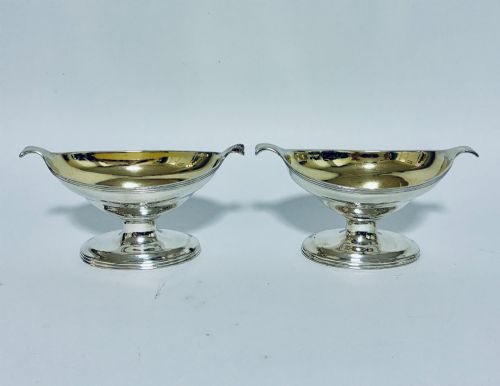
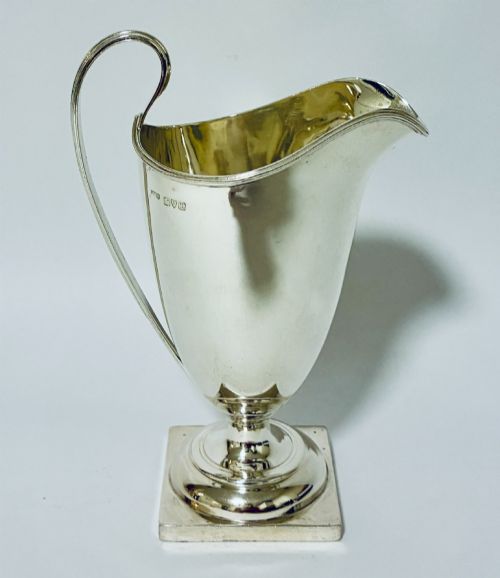
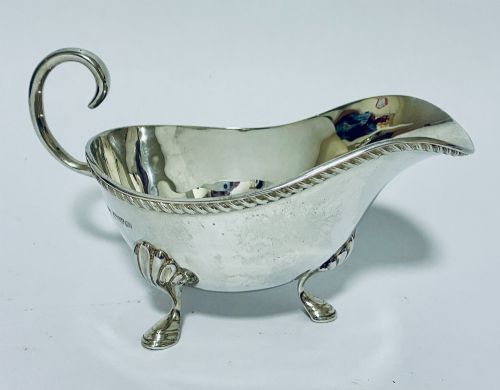
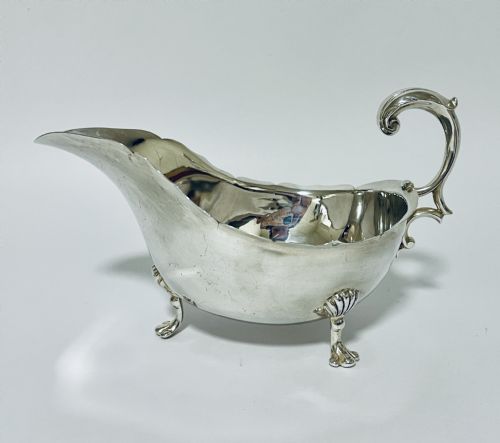
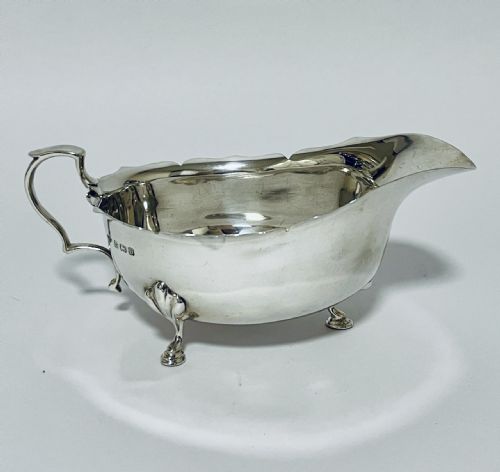

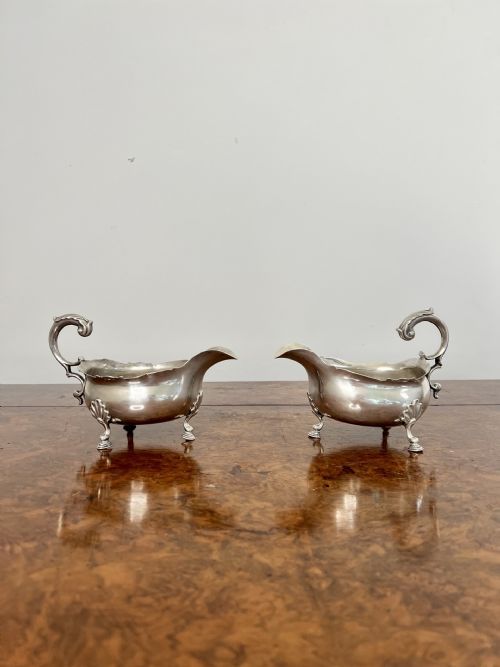


Georgian Sterling Silver Boat
A georgian sterling silver boat is an essential piece of antique serveware designed for sauce, gravy, or salt, prized for its classic form.
Georgian Sterling Silver Boat
Originating primarily from Georgian periods alongside Edwardian and later revivals, these items showcase diverse regional origins including Scottish, Irish, and English workshops. Forms span from simple cream pails to large pedestal sauceboats and boat-shaped table salts complete with glass liners. Each piece reflects the functional requirements of historic dining and serving practices.
What varies in quality
The standard of a georgian sterling silver boat depends heavily on the crispness of its embossed detail and the weight of the metal. Heavier gauges and well-balanced pedestals indicate superior fabrication by skilled silversmiths.
Design execution and original components further differentiate examples, particularly where original cobalt glass liners remain intact with salt boats. Pieces displaying clear hallmarks and maker attribution command greater interest among collectors.
One unexpected surviving piece is a silver sailing trophy from Vauxhall Boat Society, proving these vessels could celebrate water sports.
James Welch·John Mackfarlan·William Grundy·Walker and Hall
The Georgian Sterling Silver Boat Glossary
- Sterling silver
- A standard alloy consisting of ninety-two point five percent silver and seven point five percent other metals, primarily copper. This composition provides the durability required for functional tableware.
- Sauce boat
- A vessel with an open top and a spout used for serving gravies or sauces at the table. They frequently feature handle configurations and resting feet or pedestals.
- Pap boat
- A small, boat-shaped vessel with a covered or semi-enclosed top used historically for feeding invalids or infants. These items often date to the eighteenth century.
- Gilt
- A thin layer of gold applied to the interior surface of a silver vessel. This technique protected the silver from acidic contents such as fruit sauces or dairy.
- Cobalt glass
- A deep blue glass used to line open salt cellars and salt boats. The contrasting colour highlights the openwork silver frames.
Georgian Sterling Silver Boat: Frequently Asked Questions
What were silver boats used for?
These vessels served functional roles in historic dining rooms, holding sauces, gravies, or salt at the table. Smaller versions known as pap boats were utilised for feeding invalids or infants.
Over time, their domestic utility shifted towards decorative display and collection, though many retain their original structural integrity for modern entertaining.
How do I identify a Georgian piece?
Authentic pieces from the period often exhibit specific markers such as hallmarks denoting the year, maker, and assay office. Stylistic indicators include Neoclassical symmetry or Georgian Rococo embossing.
Revival pieces from later centuries frequently emulate these exact historical forms, requiring careful examination of hallmarks to confirm precise age.
What are salt boats with glass liners?
Salt boats are miniature vessel forms designed to hold dry condiments at the dining table. They frequently incorporate cobalt glass liners to protect the silver metal from corrosive salt.
Finding these items with their original glass inserts intact adds significantly to their completeness as antique table sets.
How should I care for silver boats?
Maintenance involves gentle cleaning with appropriate silver polish to preserve the surface without removing delicate hallmarks or embossed details. Storing pieces in dry environments prevents tarnishing.
For items with glass or gilt components, specific care must be taken to avoid harsh chemical cleaners on the vulnerable interior surfaces.