


Georgian Slope Front Desk
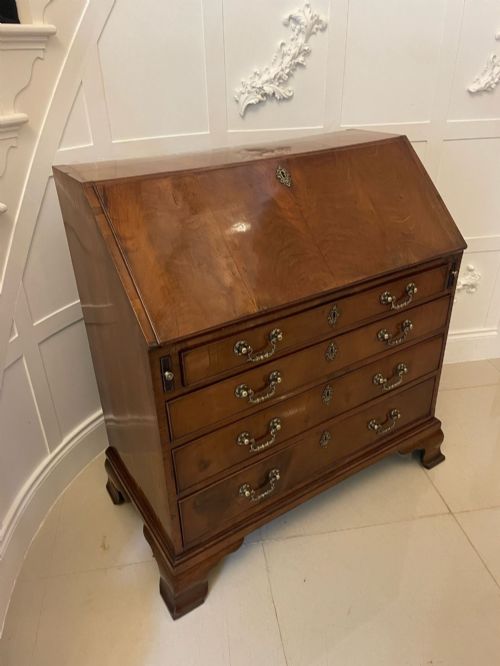
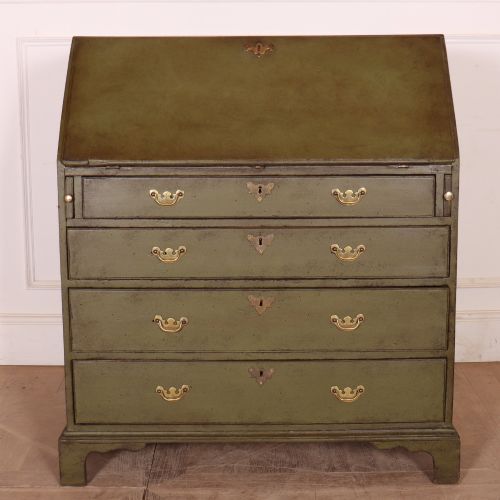
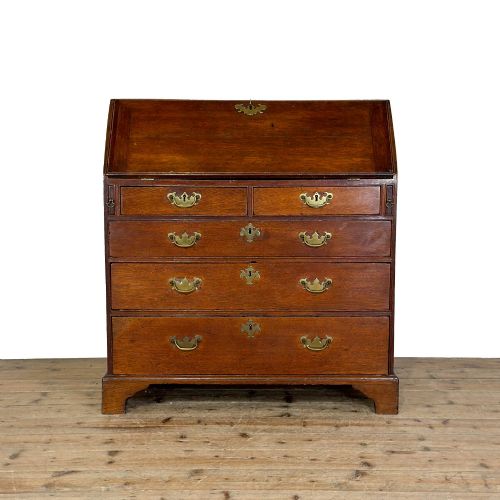
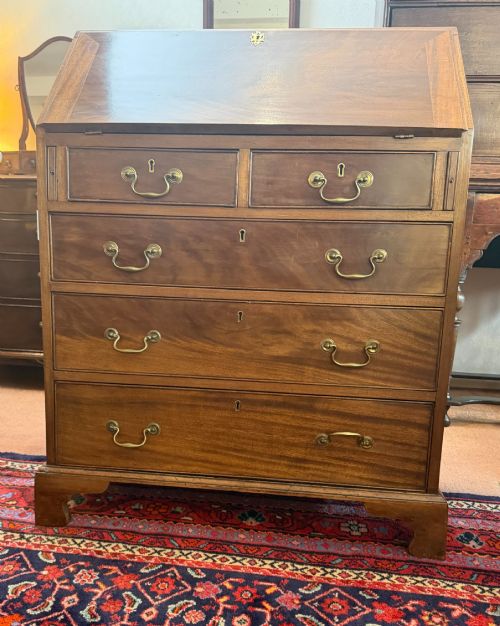
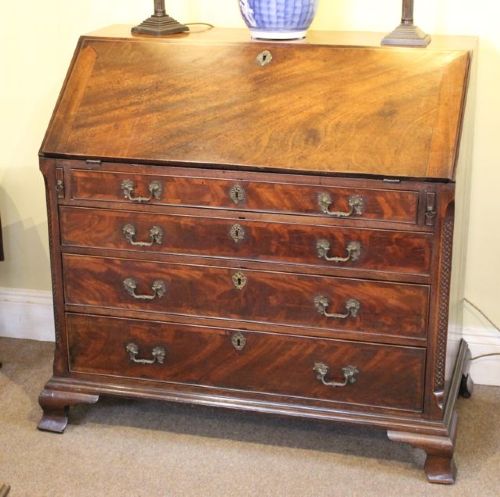
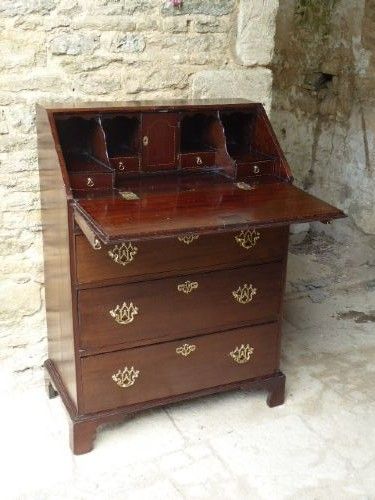
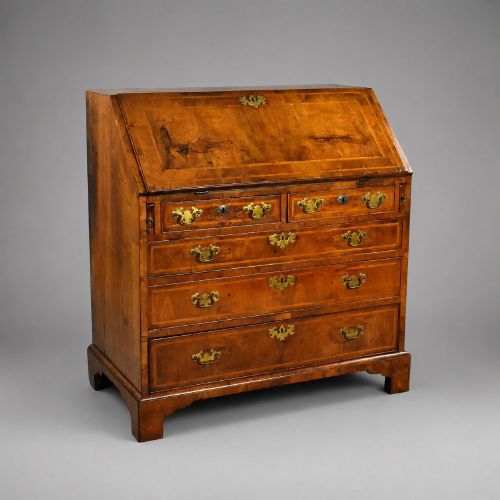
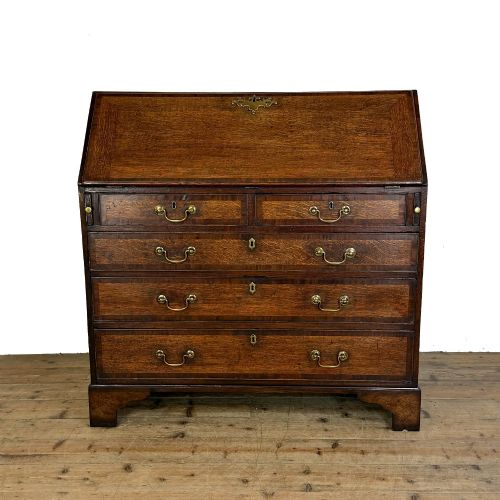
A georgian slope front desk is a classic workspace offering a fall front that lowers to reveal fitted drawers and pigeonholes.
Georgian Slope Front Desk
When you search for a georgian slope front desk, you are looking at practical writing furniture created primarily during the eighteenth and early nineteenth centuries.
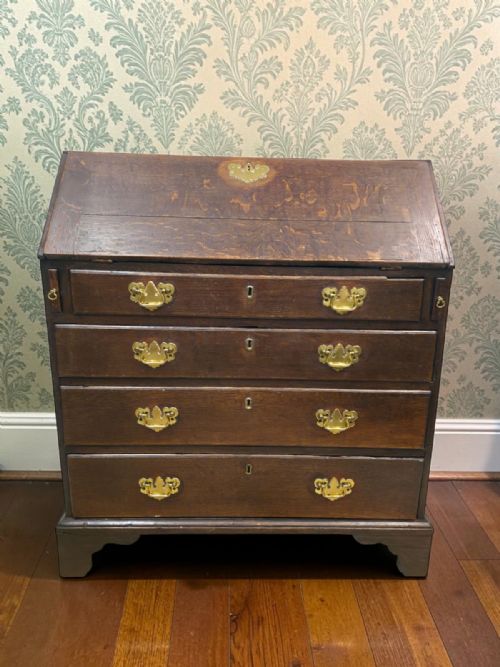
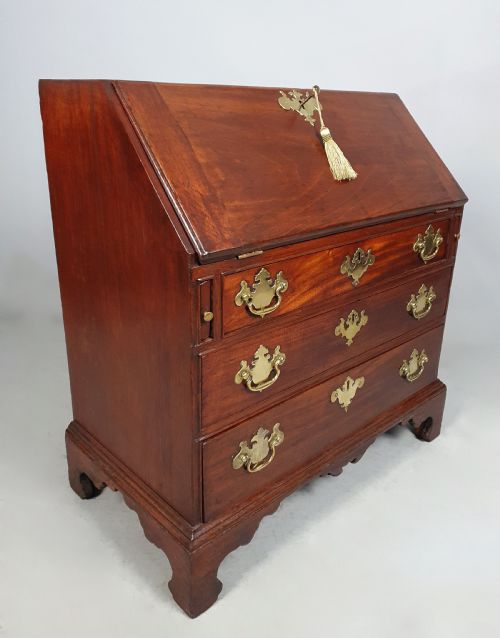
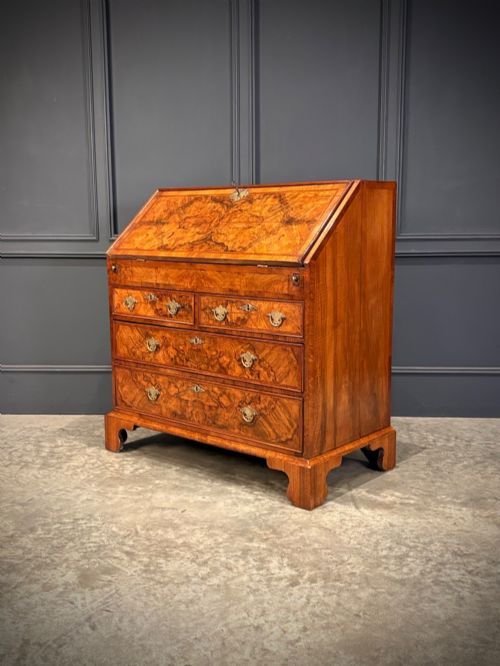
The pieces on this page appear mostly as mahogany or oak bureaux from the Georgian and George III periods, alongside earlier walnut examples.
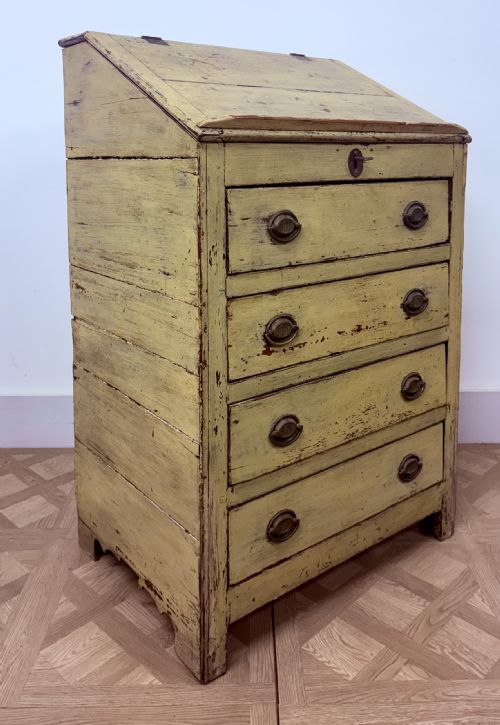
These forms combine a slant-front writing flap with functional storage drawers beneath, serving as both a working surface and a chest.
How they were made
Cabinet makers utilised dense hardwoods like mahogany, walnut, and oak, often applying figured veneers over secondary timbers.
Internal compartments incorporate delicate small drawers and pigeonholes joined with traditional dovetailing, supported by brass handles and ironwork.
Periods represented span the early eighteenth century through the Edwardian era, with strong representation from George II and George III reigns.
What varies in quality
The excellence of a piece relies upon the grain figure of the wood, such as burr walnut or figured mahogany, and the crispness of internal drawer construction.
Proportion dictates desirability, with petite dimensions and untouched original surfaces commanding greater attention from collectors.
Chippendale
The Georgian Slope Front Desk Glossary
- Bureau
- A writing cabinet featuring a sloping lid that opens to form a desk. This term is frequently used interchangeably with slope front desk.
- Fall front
- The hinged writing flap that pulls down into a horizontal position for writing. It conceals the inner nest of compartments when closed.
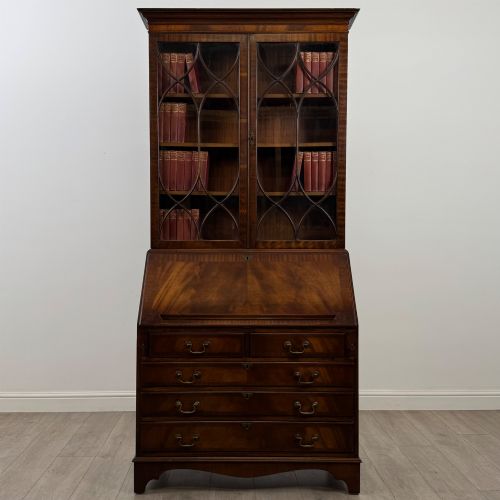
- Bureau bookcase
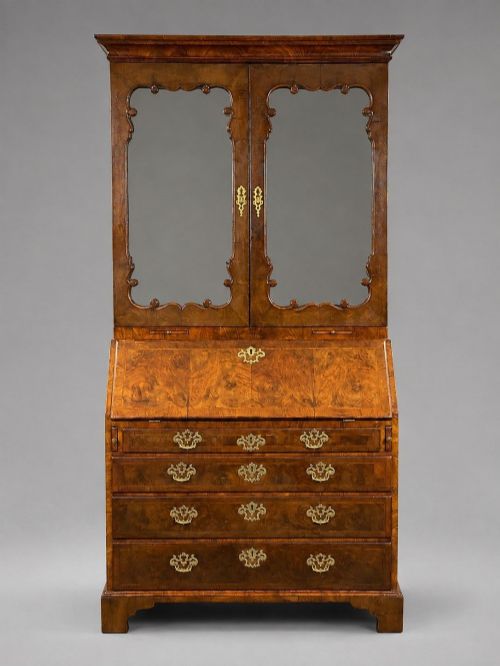
- A tall cabinet combining a slope front desk base with upper shelving enclosed by doors. These pieces provide extensive storage capacity.
- Pigeonhole
- A small open compartment inside the desk used for sorting letters and papers. These are often framed by secret compartments or miniature drawers.
Georgian Slope Front Desk: Frequently Asked Questions
What is a slope front desk?
A slope front desk is an antique writing cabinet featuring an angled lid that drops down to create a flat writing surface.
Inside, the desk reveals a fitted interior containing small drawers and pigeonholes for correspondence.
How do I date a georgian desk?
Dating relies on examining the timber species, construction methods, and hardware style. Earlier pieces often feature walnut or oak, while later Georgian examples commonly use mahogany.
Drawer linings and handle styles provide further clues to the specific decade of manufacture.
What woods were used?
Cabinet makers utilised a variety of native and imported timbers depending on the period and status of the piece. Mahogany, oak, and walnut are the most prevalent materials found in these listings.
Exotic woods such as padauk and Brazilian rosewood appear alongside fruitwood, elm, and burr walnut veneers.
How were these desks used?
These desks served as private writing spaces for correspondence, household accounts, and the storage of important documents. The fall front provided a concealed surface that could be locked when not in use.
Beneath the writing flap, wide drawers offered general storage for household or professional belongings.
What is a bureau bookcase?
A bureau bookcase is a combined furniture form featuring a slope front desk on the lower section and a glazed or panelled bookcase above.
This taller configuration served as a complete study cabinet for libraries and formal rooms.