




Dark Wood Reading Table
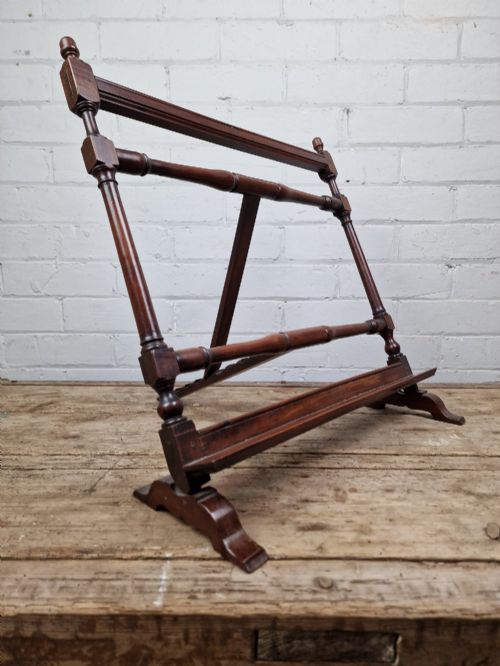
These dark wood reading table pieces provide functional book and paper supports crafted in rich timbers across several historic periods.
Dark Wood Reading Table
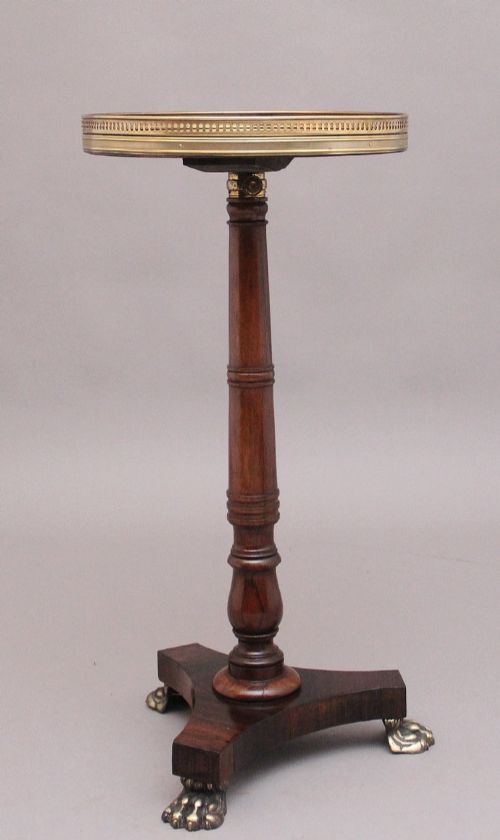
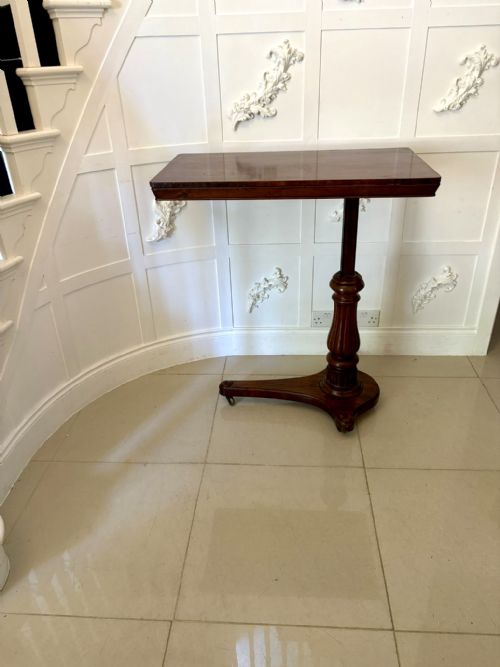
A dark wood reading table serves as a functional surface designed for books, papers, and manuscripts, often featuring adjustable elements for comfortable viewing. These pieces appear across periods such as the Regency, Victorian, and Edwardian eras, spanning forms like music stands, occasional tables, and writing desks.
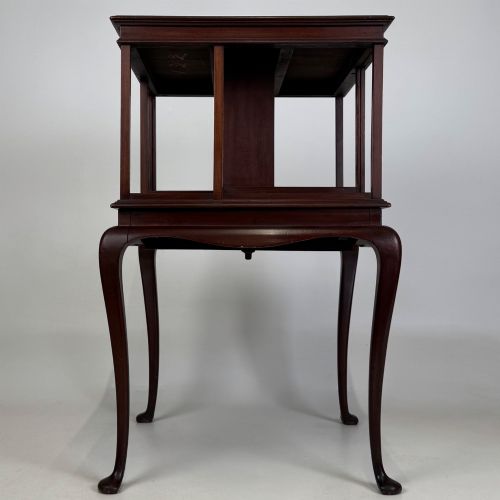
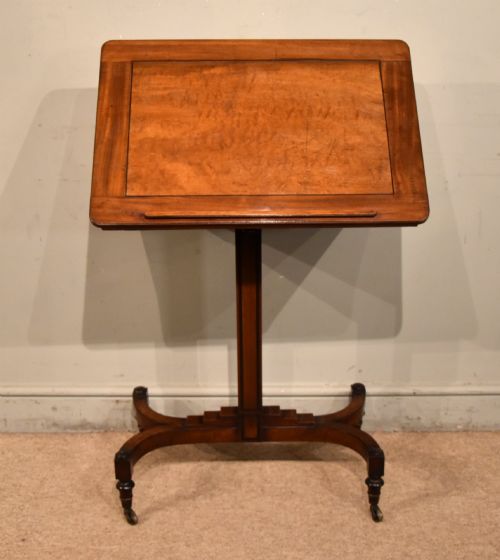
The materials centre heavily on rich timbers such as mahogany and rosewood, alongside occasional oak and brass accents. Buyers meeting these items will find forms ranging from simple table-top easels and adjustable reading stands to more complex library architects desks and revolving bookcases.
Materials and construction
Makers utilised dense, dark timbers like mahogany and rosewood to build these reading surfaces, providing both structural stability and a deep natural grain. These woods were often polished to a high finish, highlighting the rich colour and figuring of the material.
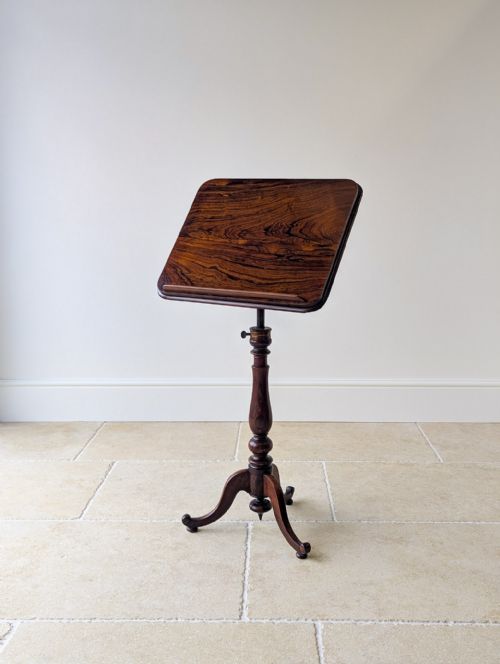
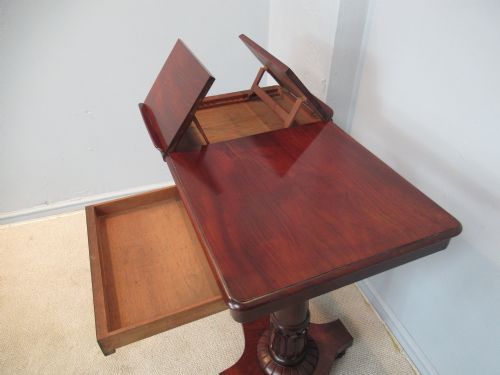
Adjustable mechanisms frequently incorporate brass components, allowing reading surfaces and music stands to tilt or alter in height. Joinery and turning techniques varied by period, shifting from Georgian and Regency cabinet-making to later Victorian and Edwardian production.
Draftsmen and architects once relied on these adjustable surfaces to keep their blueprints from rolling away while working.
Assessing quality and craftsmanship
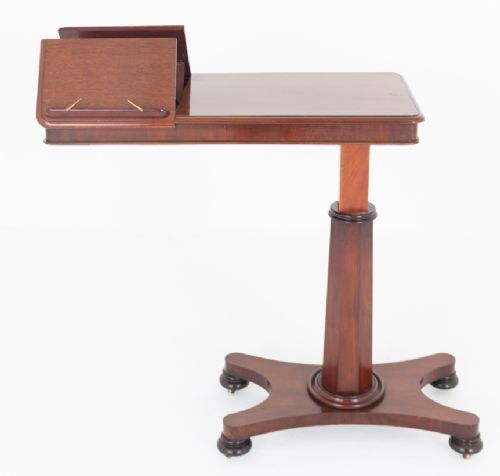
The refinement of the adjusting mechanisms separates simpler pieces from the finest examples, particularly in how smoothly reading surfaces tilt or rise. Superior construction shows in the precision of the brass fittings and the joinery of the timber.
The choice and figuring of the mahogany or rosewood veneer or solid timber dictate visual distinction. Pieces that retain harmonious proportions between the support column, base, and reading surface display superior design intent.
Gillow
The Dark Wood Reading Table Glossary
- Regency
- A style and period spanning the early nineteenth century, known for classical restraint and elegant furniture proportions. Pieces from this era often incorporate finely turned columns and brass details.
- Rosewood
- A dense, heavily figured dark timber with distinctive grain patterns, frequently utilised for nineteenth-century library and reading furniture. Its rich reddish-brown colour deepens with age.
- Adjustable
- A mechanical property allowing a reading surface, desk, or stand to alter its height or angle for the user. These mechanisms often rely on brass ratchets, screws, or pillars.
- Occasional table
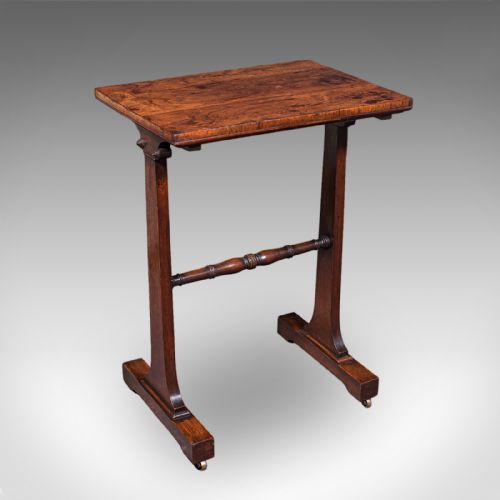
- A small, versatile table designed for specific subsidiary uses around a room, such as holding books or lamps. They appear in various polygonal and circular top forms.
- Music stand
- A specialised support designed to hold scores or folios at a legible angle, frequently sharing forms with reading tables. They often feature adjustable ledges to secure bound volumes.
Dark Wood Reading Table: Frequently Asked Questions
What periods do these tables come from?
The pieces span several historic eras, starting from the Georgian and Regency periods through the William IV and Victorian years, up to the Edwardian era. Each period brings distinct design characteristics to the woodwork and brass hardware.
Craftsmanship evolved across these decades, shifting from classical Regency proportions to heavier Victorian forms and lighter Edwardian occasional furniture.
How do adjustable reading stands work?
Many of these tables incorporate mechanical elements such as brass ratchets, telescopic pillars, or tilting book ledges. These allow the user to alter the height and angle of the surface for reading or drafting.
The complexity of the mechanism often reflects the intended use, whether for a grand library, a morning room, or a draftsman's studio.
What woods are most common?
Mahogany and rosewood dominate the selection, offering deep dark tones and prominent grain figuring. Oak also appears in certain Arts and Crafts or vernacular pieces.
These timbers were selected for their strength and ability to take a deep polish, making them durable surfaces for daily reading and writing.
How can I tell a reading table from a standard side table?
Reading tables typically feature adjustable tops, built-in book supports, or specialised sloped surfaces designed to hold open volumes. Standard side tables maintain a flat, fixed top intended for serving or display.
Some versatile forms combine both functions, acting as an occasional table while concealing a reading stand mechanism.