



Mahogany Slant Top Table
A mahogany slant top table is a practical writing surface with a sloping lid, offering hidden storage for papers and correspondence.
Mahogany Slant Top Table
When you search for a mahogany slant top table, you encounter forms designed for writing, reading, and estate administration. The selection includes pieces described as writing tables, desks, davenports, and bureau de dame examples.
The versions most likely to meet you on this page span the Georgian, Regency, Victorian, and Edwardian periods. Makers and workshops from the eighteenth century onward utilised solid timbers and figured veneers to construct these functional writing surfaces.
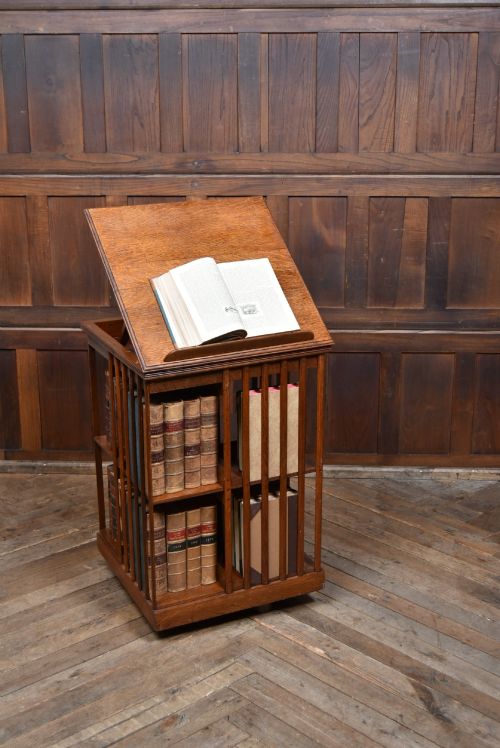
Object types vary from estate rent tables and architects desks to revolving bookcases and reading tables. Each piece combines a sloping top or writing surface with compartmented interiors for papers and stationery.
How they were made
Makers constructed these writing pieces primarily using mahogany and flame mahogany, often incorporating secondary timbers such as oak. Workshops selected figured veneers for visual depth on the sloping lids and drawer fronts.
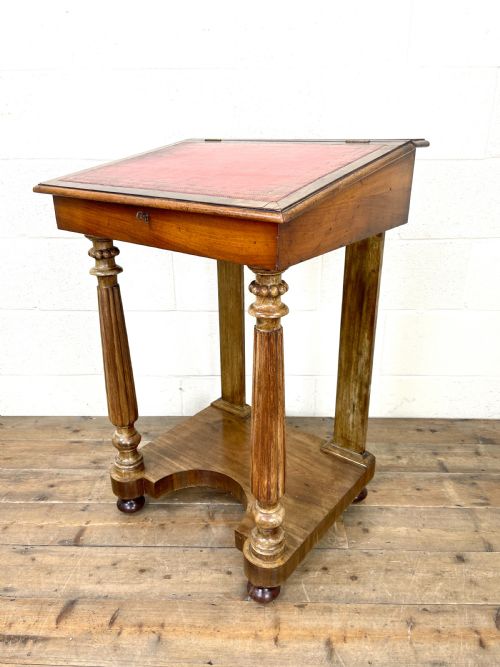
Metalwork details include cast iron mechanisms, ormolu mounts, and brass elements such as galleries and inlay. Leather writing surfaces provided a suitable texture for quill and pen work.
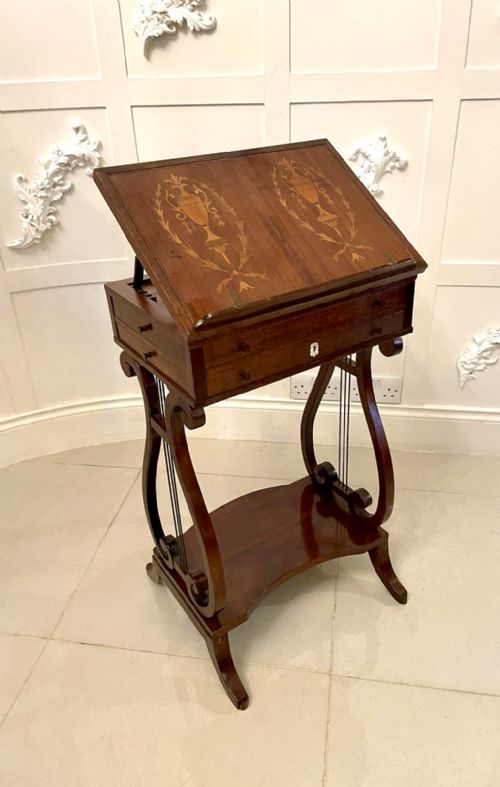
Inlay work in satinwood decorated surfaces on pieces from the Edwardian and Victorian eras. Joinery techniques accommodated the sloping mechanisms and fitted interiors required for desk storage.
Rent collectors spun heavy mahogany tables in circles to grab the right ledger without standing up.
What varies in quality
The selection of timber sets the visual standard, with flame mahogany veneers showing greater complexity than plain boards. Figured grain patterns on the sloping lid indicate careful material selection by the maker.
Hardware and secondary materials reveal the standard of construction, from simple brass galleries to elaborate ormolu mounts and cast iron components. Fitted interiors with multiple drawers and pigeonholes demonstrate greater complexity in design.
Edwards & Roberts
The Mahogany Slant Top Table Glossary
- Slant top
- A sloping writing surface that typically lifts or opens to reveal storage compartments underneath. This configuration defines bureaus and davenports.
- Flame mahogany
- A veneer cut from timber where the grain creates a distinctive undulating flame pattern. It appears on the principal display surfaces of finer furniture.
- Ormolu
- Gilt bronze mounts applied to furniture for decoration. This material is associated with revival styles and high-status pieces.
- Bureau de dame
- A lady's small writing desk, often featuring a sloping lid and delicate proportions. These pieces emerged in various European and English workshops during the eighteenth and nineteenth centuries.
- Estate rent table
- A large round or shaped desk used by land agents for collecting rents and managing property records. They often feature revolving tops and multiple wedge-shaped drawers.
Mahogany Slant Top Table: Frequently Asked Questions
What is a slant top desk?
A slant top desk is a piece of furniture featuring an angled lid that opens to provide a writing surface and access to internal compartments. These surfaces allow comfortable writing while concealing stationery and documents underneath.
Such forms appeared in various sizes across the Georgian, Regency, and Victorian periods. They served domestic and administrative roles in libraries, studies, and country house estates.
How do I identify a Davenport?
A Davenport is a compact form of writing desk featuring a sloping lid on top of a pedestal base. The writing slope often slides forward, and the sides typically house small drawers behind a panel.
Victorian and Edwardian makers produced these pieces for drawing rooms and smaller chambers. Their design prioritised enclosed storage within a minimal footprint.
What is flame mahogany?
Flame mahogany is a highly figured veneer harvested from the junction where branches meet the main trunk. The cutting process reveals a rippled, flame-like grain pattern that reflects light dynamically.
Cabinet makers utilised this veneer on prominent areas such as fall-fronts and desk lids. It distinguishes standard mahogany construction from high-status decorative pieces.
How were estate rent tables used?
Estate rent tables functioned as administrative hubs for managing large properties and collecting tenant payments. The revolving top and wedge-shaped drawers allowed an agent to access records efficiently from a single seated position.
These large tables stood in estate offices and country house libraries during the Georgian era. Their construction emphasised heavy timber and secure compartmentalised storage.