
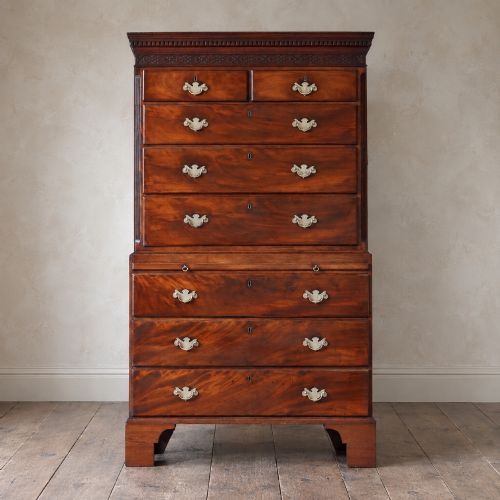
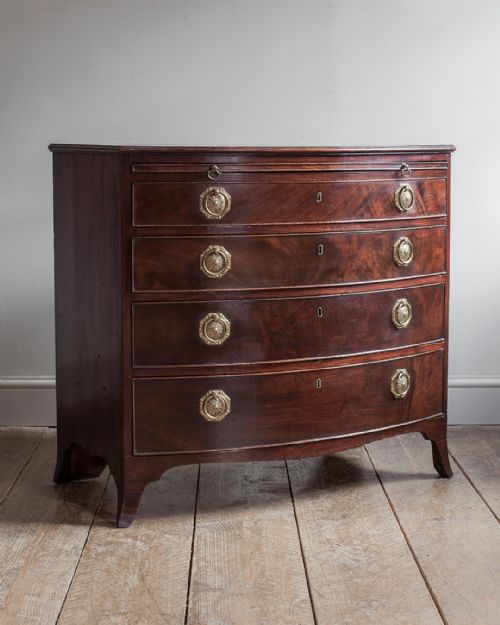

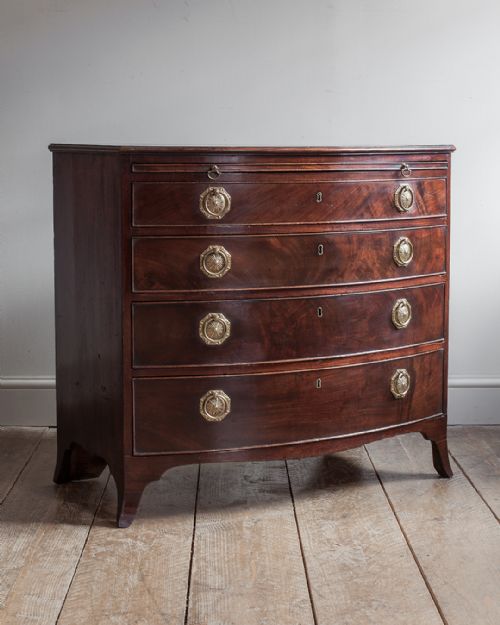
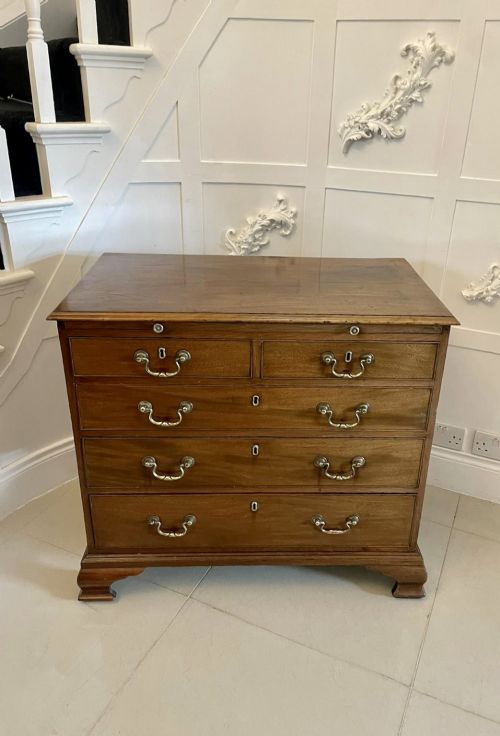

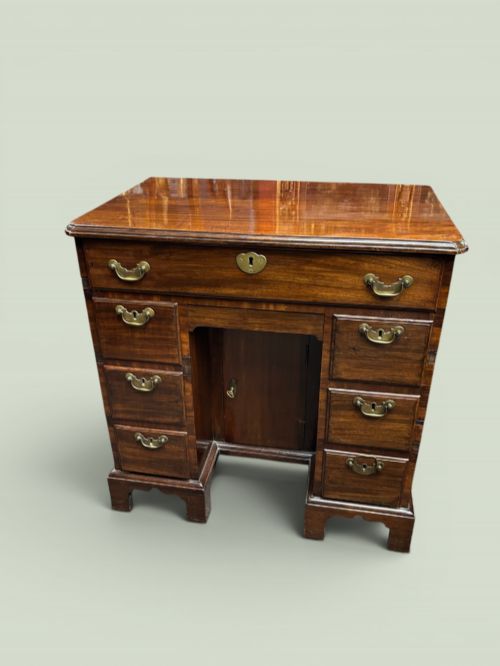
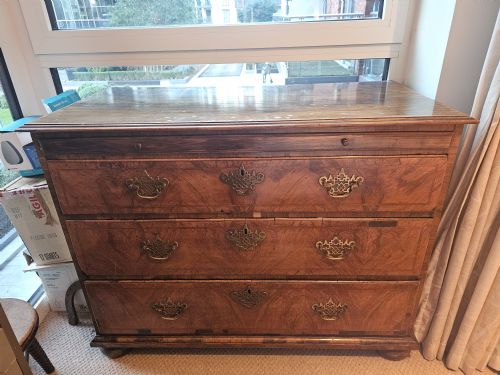
Georgian Slide Chest
A georgian slide chest offers a pull-out surface tucked into compact proportions, combining practical writing space with traditional bedroom storage.
Georgian Slide Chest
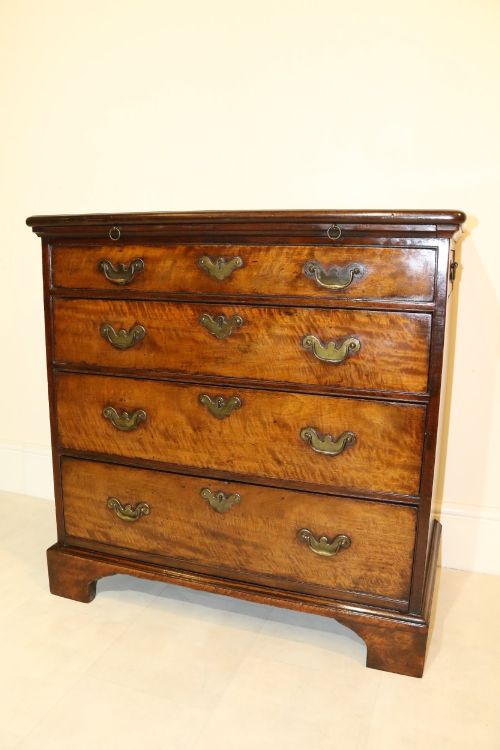
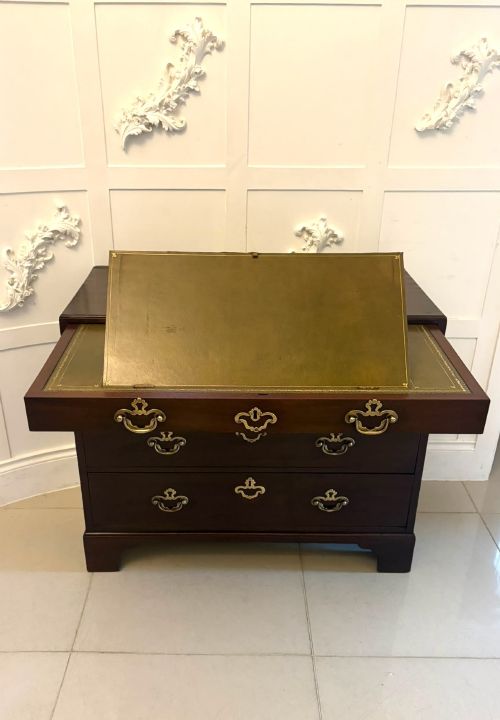
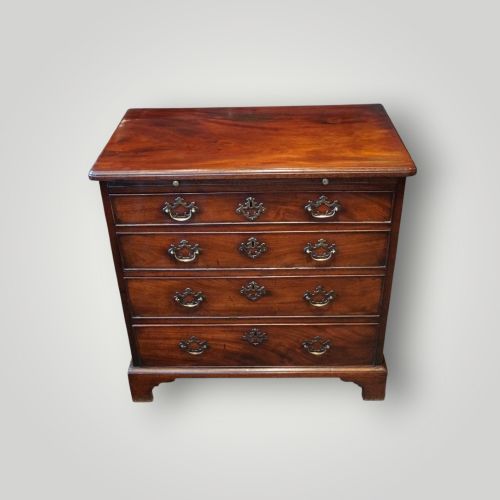
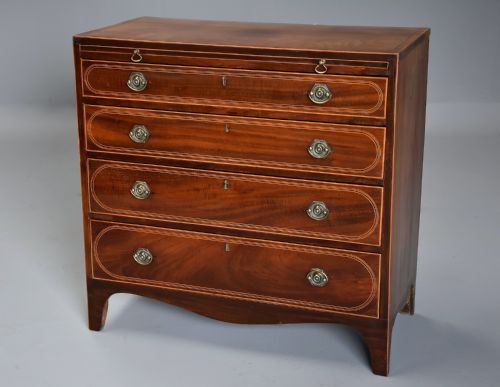
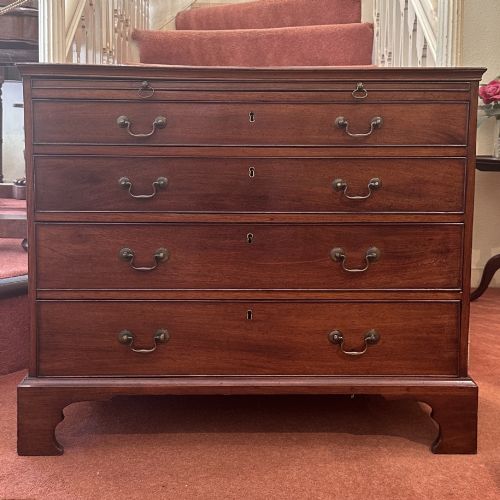
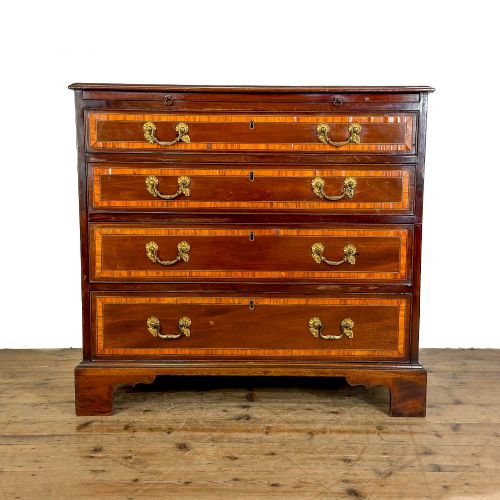
A georgian slide chest integrates a retractable wooden shelf directly above the main drawer tiers, historically serving as a compact writing surface or dressing slide. Buyers searching this phrase most frequently encounter 18th-century and 19th-century mahogany examples, often described as bachelor chests or small tallboys.
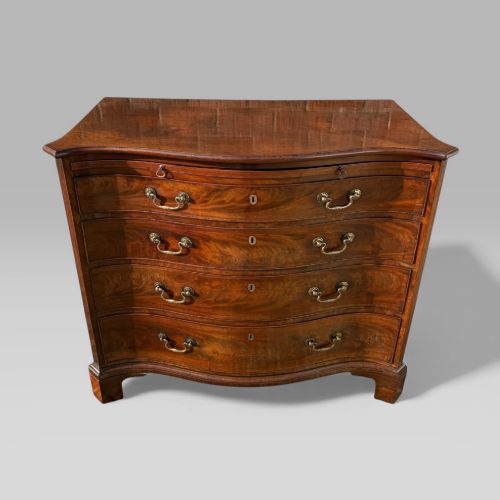
The inventory ranges from early Georgian walnut and oak variants to later Edwardian and revival interpretations, frequently featuring serpentine fronts or chest-on-chest configurations. These pieces bridge the gap between standard drawer units and dedicated desks without occupying additional floor space.
Materials and Construction
Makers predominantly utilised solid mahogany and figured walnut, occasionally incorporating oak for internal drawer linings and carcass framing. Fine satinwood inlay and brass drawer pulls provide decorative contrast on select pieces.
The sliding mechanism relies on carefully channeled runners integrated into the framework just beneath the top board, allowing the board to glide smoothly with minimal clearance.
Listings demonstrate that mahogany is the predominant timber for these forms, followed by walnut and oak across the eighteenth and nineteenth centuries.
Assessing Quality
The standard of timber selection largely dictates value, with highly figured mahogany veneers and burr walnut surfaces occupying the upper tier of the range. Uniformity of grain pattern across the drawer fronts and the retention of original brass hardware indicate superior craftsmanship.
Structural integrity of the internal slide tracks remains paramount, as frequent use subjects these wooden runners to continuous friction and weight.
Druce & Co
The Georgian Slide Chest Glossary
- Brushing slide
- A pull-out wooden shelf mounted above the top drawer, traditionally used for grooming or writing. It retracts flush into the carcass when not in use.
- Bachelor chest
- A small form of drawer unit, usually proportioned for a single gentleman's quarters and equipped with a slide. They date predominantly from the Georgian era.
- Chest on chest
- A tall storage unit comprising a smaller upper section stacked upon a deeper lower base, frequently incorporating a slide in the waist moulding.
- Serpentine front
- A convex-concave curving drawer configuration that requires advanced cabinet-making skill to execute cleanly. It appears on finer regional and metropolitan pieces.
- Oak carcass
- The internal structural framing and drawer carcase built from durable British oak, often concealed behind mahogany or walnut outer veneers.
Georgian Slide Chest: Frequently Asked Questions
What was the slide used for?
The pull-out shelf served as a temporary writing desk or a surface for laying out morning accessories and wig powder.
In smaller bedchambers, it provided a functional workspace that disappeared completely when the day ended.
How do I date a Georgian piece?
Examinations of drawer dovetails, timber choices, and secondary woods like oak or pine offer reliable chronological clues.
Earlier 18th-century examples tend to show finer, hand-cut dovetails and rich walnut surfaces, whereas later Georgian pieces lean towards mahogany and standardised proportions.
Are these chests suitable for modern bedrooms?
Their modest footprints and narrow widths make them well-suited for contemporary spaces requiring vertical storage.
The integrated slide also functions neatly as a laptop shelf or small display ledge in a hallway or sitting room.
What is the difference between a tallboy and a chest on chest?
A chest on chest consists of two distinct stacked carcases designed as a single harmonious storage unit.
Many examples incorporate the sliding shelf within the waist moulding where the upper and lower sections meet.