
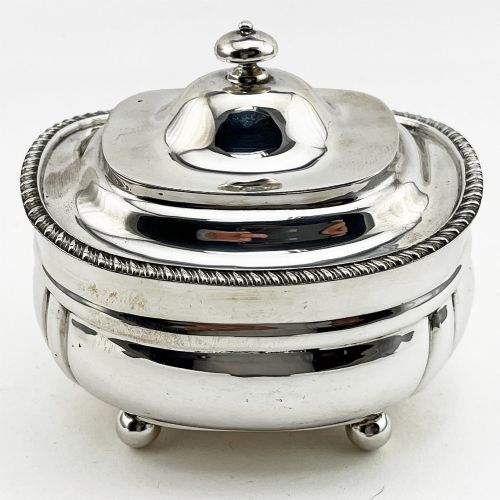
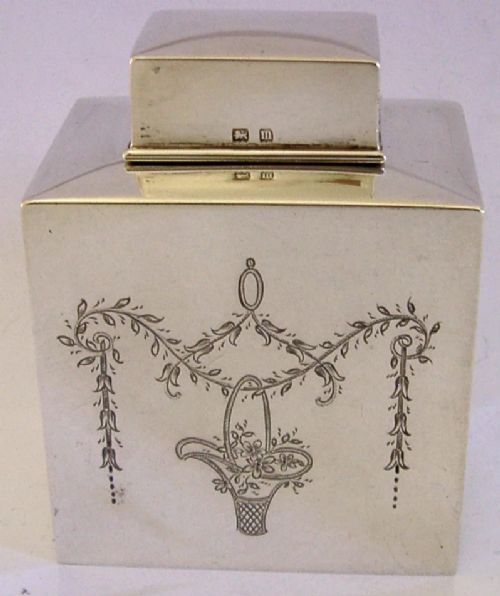


Georgian Silver Tea Canister
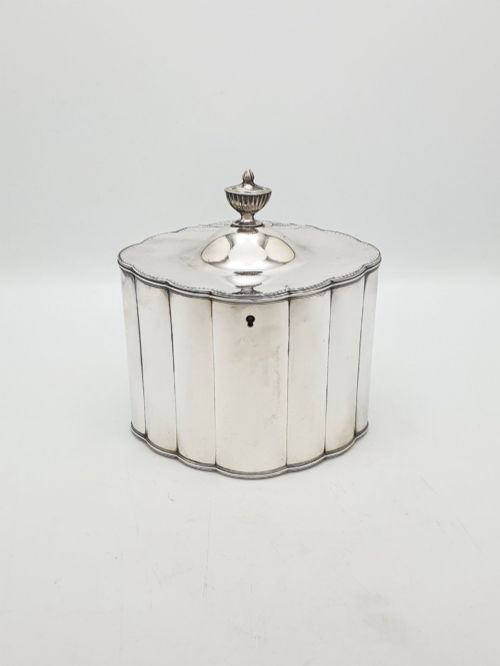
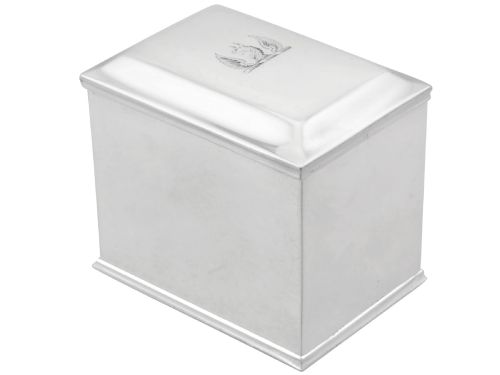
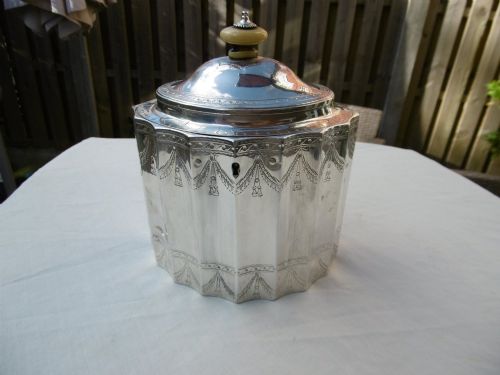
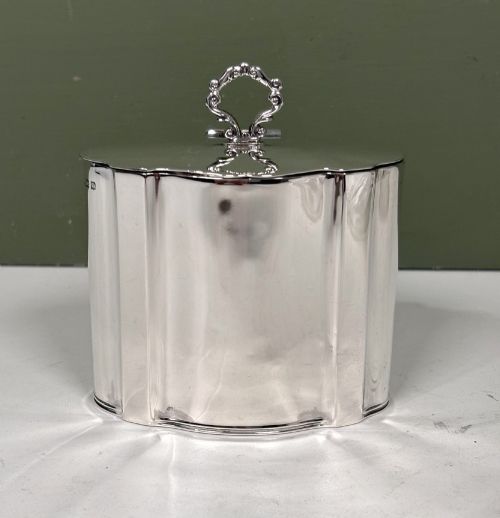
A georgian silver tea canister brings the quiet weight of the eighteenth century to your table, holding the dry leaves once traded across oceans.
Georgian Silver Tea Canister
A georgian silver tea canister sits as a central piece of a gentleman's or lady's tea equipage, designed to preserve precious blends under lock and key. You encounter single canisters alongside twin caddies and boxes housing multiple compartments.
The pieces appearing here span the eighteenth and nineteenth centuries, including later revivals from the Edwardian era and the early twentieth century. Most examples present solid sterling silver, while occasional companions combine tortoiseshell, wood, copper, bone, and silver plate.
Forms range from plain circular shapes to fluted George III vessels and ornate George III Rococo designs. Makers utilise Neoclassical motifs alongside simpler domestic outlines.
Materials and construction
Silversmiths shaped sterling silver and solid silver through hammering, raising, and casting, often adding chased or fluted details by hand. Makers mounted precious metals over timber or paired silver panels with tortoiseshell and shagreen.
Old Sheffield plate and silver plate offer alternative surfaces where a thin layer of silver fuses to a copper base. Interiors sometimes retain remnants of bone or wooden fittings used to secure lids and partitions.
Early tea drinkers required a tiny lock on the tea box because dried leaves cost more than meat.
Distinguishing quality
Quality rests upon the crispness of the chased decoration and the substantial weight of the metal used in the body. Thicker gauge silver retains its structural integrity and sharp lines through centuries of handling.
The precision of the maker's mark and the integration of secondary materials like tortoiseshell or bone dictate the standing of a piece. Finer examples maintain original hinges, locks, and fitted interior elements without later replacements.
Robert Hennell·Zimmermann·Goldsmiths and Silversmiths Co·Thomas Heming
The Georgian Silver Tea Canister Glossary
- Sterling silver
- A silver alloy containing 92.5 percent pure silver by mass, with the remainder consisting of other metals like copper. This standard forms the baseline for the majority of British domestic plate.
- Old Sheffield plate
- An early fused plating technique where a sheet of silver is fused to a heavier copper core under heat and pressure. Examining the edges often reveals the thin copper line.
- Shagreen
- Undyed sharkskin or rayskin with a distinctive rough, granular surface texture, frequently utilised on eighteenth-century boxes and caddies. It provides a durable and tactile outer covering.
- Chinoiserie
- A decorative style reflecting European imaginative interpretations of Chinese and East Asian artistic traditions. You find this ornamenting panels with figures, pagodas, and lush landscapes.
Georgian Silver Tea Canister: Frequently Asked Questions
Can I still store tea inside them?
Most antique canisters retain tight-fitting lids that seal reasonably well, though older metals require careful cleaning before contact with food. Many owners prefer to use them as decorative mantel objects or for storing dry goods.
If you do store tea, ensure the interior is thoroughly cleaned with appropriate silver care to remove any tarnish.
How do I care for antique silver?
Dust the surface regularly with a soft, dry cloth to prevent the accumulation of airborne particles. Avoid harsh abrasive dips that strip away the subtle patination built up over centuries.
Store silver in a stable environment away from direct sunlight and damp conditions to slow down the natural tarnishing process.
How do I distinguish George III from later styles?
George III pieces date from the latter half of the eighteenth century into the early nineteenth, displaying distinct Neoclassical or Rococo influences. Look for hallmarks that match the specific monarch's reign and tax marks introduced during that period.
Later Edwardian or Georgian Revival items often imitate these earlier forms but carry twentieth-century date letters and maker's marks.