



Georgian Silver Sauce Boat
A georgian silver sauce boat brings weight and domestic ritual to the dining table through sturdy metalwork and traditional pedestal forms.
Georgian Silver Sauce Boat
When searching for a georgian silver sauce boat, collectors encounter open vessels designed for serving gravies, melted butter and thin condiments. The selection ranges from authentic eighteenth-century examples bearing period hallmarks to later revivals and plated alternatives.
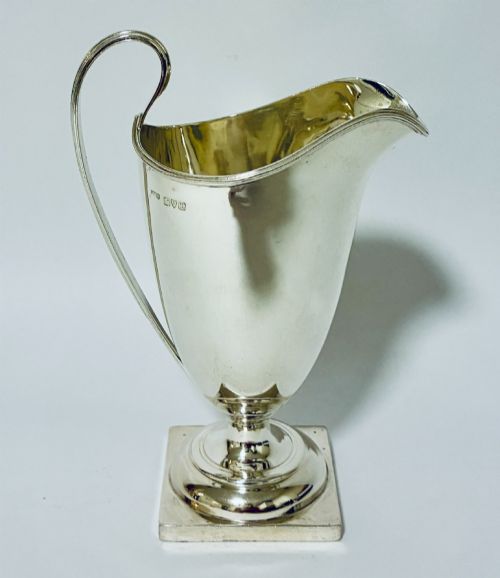
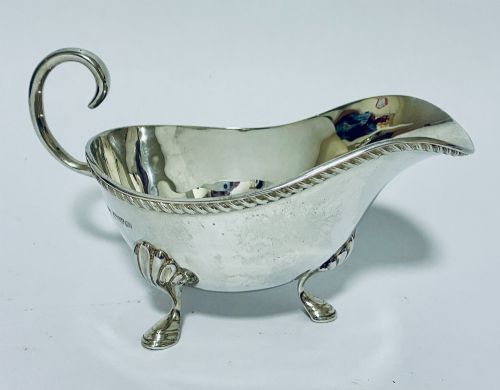
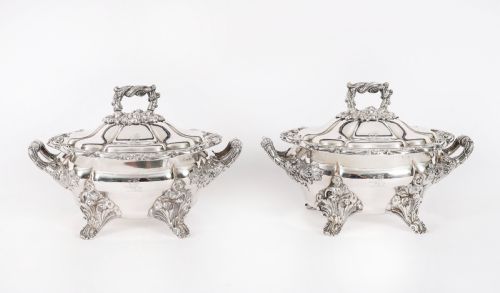
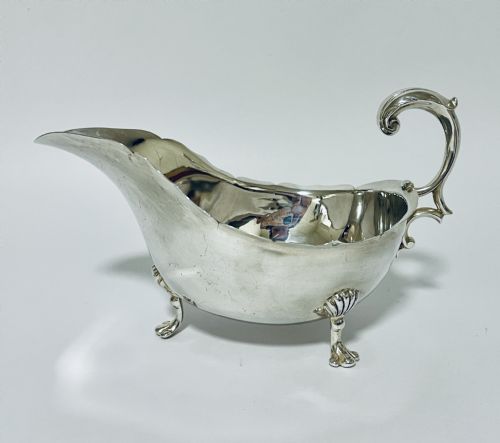
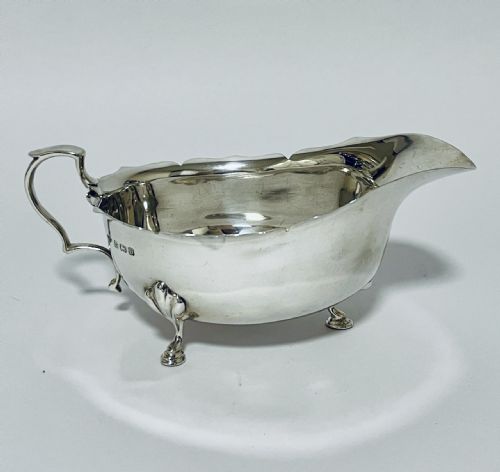
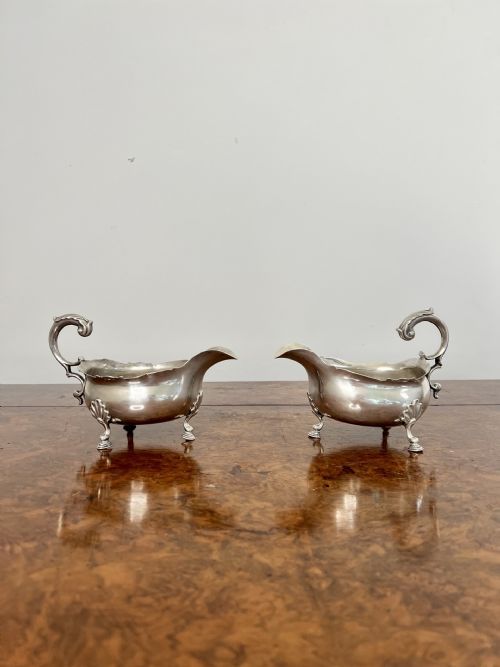
Most pieces take the form of open boats raised on three hoof feet or mounted on oval pedestal bases, often featuring scalloped rims and flying scroll handles. Alongside standard sauce boats, the category includes related serveware such as lidded sauce tureens and gravy warmers.
Origin points span English, Scottish and Irish workshops, showing regional variations in smithing and crest engraving. Buyers meet both single pieces and matched pairs intended for opposite ends of the dining table.
How they were made
Makers relied primarily on sterling silver and Old Sheffield Plate, shaping sheet metal through hammering, raising and soldering. Copper forms the base metal in plated pieces, fused with a thin layer of silver to produce a durable surface.
Details like cast handles and applied borders were soldered to the main body, while surface decoration often involved hand embossing and chased crests. Wood and cane insulated handles appear on specific warming vessels to protect the user's hand.
Georgian Silver Sauce Boat Retail Price Guide 2026
Typical asking prices for georgian silver sauce boat among the pieces listed under this phrase on Sellingantiques today, from the lower quarter to the upper quarter. They describe what is for sale here now, not the wider market.
Object forms range from traditional gravy boats and cream jugs to lidded tureens and argyle warmers.
What varies in quality
Distinction in quality rests upon the crispness of the chasing and the structural integrity of the base. Superior vessels display balanced proportions, firmly attached feet and sharp maker marks that confirm the origin of the silver.
In plated wares, quality depends on the preservation of the silver layer over the copper core, where heavy wear reveals the base metal beneath. Matched pairs with uniform weight and matching crests command greater appreciation than individual assembled pieces.
James Welch·William Grundy·Walter Brind·Ambrose Boxwell·William Collins·William Shaw·George Smith II·James Hewitt·Walker and Hall
The Georgian Silver Sauce Boat Glossary
- Old Sheffield Plate
- A composite material made by fusing a sheet of silver to a copper ingot, common in nineteenth-century serveware before electroplating took over. It often shows a thin line of exposed copper at the edges.
- Gravy Warmer
- A specialised vessel designed to keep sauces warm at the table, sometimes featuring a double wall for hot water insertion. These items appear less frequently than standard open boats.
- Pedestal Base
- A supportive foot raised beneath the body of the sauce boat, lifting the vessel above the tabletop. This style contrasts with pieces supported by three individual feet.
- Hallmark
- A series of stamped official marks indicating metal purity, assay office, and date of manufacture. These small punches authenticate the age and origin of silver pieces.
Georgian Silver Sauce Boat: Frequently Asked Questions
How do I use a sauce boat today?
These vessels suit modern dining tables for serving gravies, cream sauces and warm dressings during dinner parties.
Their sturdy construction and traditional shape bring historical character to everyday meals as well as formal gatherings.
What is the difference between sterling and plate?
Sterling silver contains solid high-purity metal throughout the entire body and bears official assay office hallmarks.
Old Sheffield Plate consists of a silver sheet fused over a copper base, representing an earlier plating method.
Are pairs harder to find?
Matching pairs require both pieces to survive centuries of use together without separation or heavy damage.
Single vessels appear more frequently in collections, while complete pairs command strong interest from table-setters.
How do I identify the period?
Hallmarks stamped into the silver provide exact assay dates, towns and maker initials for proper attribution.
Stylistic shifts, such as the move from plain bellied bodies to neoclassical pedestals, also indicate the era.