


English Silver Sauce Boat
These English silver sauce boat examples bring traditional dining grace to the table, offering solid construction and handsome forms for serving gravies.
English Silver Sauce Boat
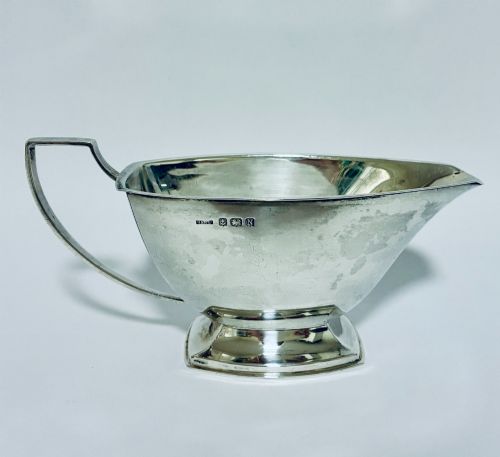
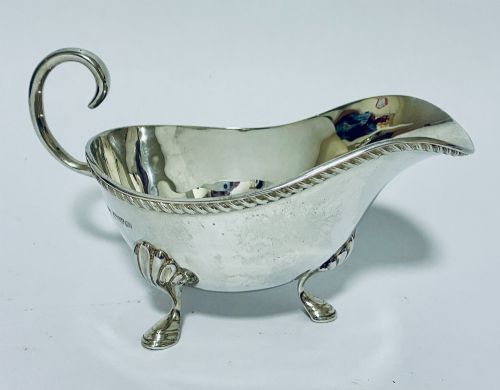
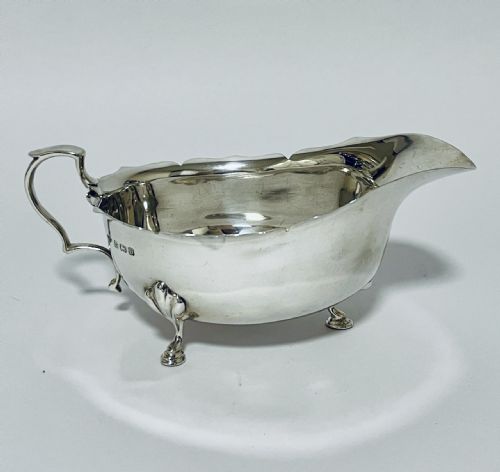
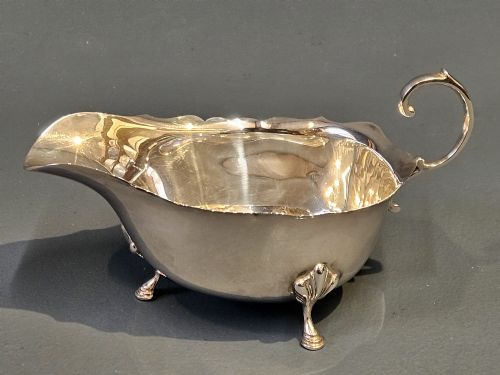
An English silver sauce boat sits ready for service on a dining table, designed with a curved body, a shaped spout for pouring, and a handle at the rear. When you examine an English silver sauce boat on this page, you encounter pieces spanning from the eighteenth century through the mid twentieth century.
The selection ranges from early Georgian sterling silver versions to later Edwardian and Art Deco designs in both solid silver and silver plate. Makers produced these vessels as single items or in matched pairs, sometimes accompanied by matching stands or ladles for complete table service.
Alongside standard gravy boats, the record includes related serveware such as condiment pots, asparagus serving dishes, and sauce boat shaped spoon warmers. Most examples adhere to classic aesthetic traditions including Georgian revival styling and clean twentieth century geometric lines.
Materials and construction methods
Silversmiths constructed these vessels primarily using sterling silver or silver plate, often applying electroplated nickel silver or old Sheffield plating techniques over a base metal such as copper. Solid silver pieces display hallmarks denoting the assay office, standard, and date of manufacture.
Workers shaped the bodies through hammering, casting, or spinning, adding decorative elements such as embossed motifs, figural legs, or family crests. Handles and lips were soldered securely to the main body to withstand regular lifting and pouring.
The records show materials spanning sterling silver, silver plate, EPNS, copper, and general silver.
Distinctions in craftsmanship and weight
Quality separates lighter plated wares from heavy gauge solid sterling silver vessels that offer substantial substance in the hand. Thicker metal gauge prevents denting and maintains crispness in embossed or chased surface decoration.
Superior examples exhibit balanced proportions, cleanly cast feet or stands, and well integrated handles that remain sturdy under daily use. Maker marks from established firms indicate higher workshop standards compared to unmarked pieces.
WALKER AND HALL·VINER'S·John & Joseph Angell·James Dixon·William Hutton & Sons
The English Silver Sauce Boat Glossary
- Sterling silver
- An alloy containing 92.5 percent silver by mass, with the remainder usually copper. This standard represents the primary material for high quality British tablewares.
- Silver plate
- A layer of silver applied to a base metal, commonly copper or nickel silver. This technique offered a bright finish at a lower cost than solid metal.
- EPNS
- Electroplated Nickel Silver. A durable base metal alloy coated with a layer of silver through an electrical process.
- Old Sheffield plate
- A composite material made by fusing a thin sheet of silver to a thicker copper ingot. This method predates modern electroplating.
- Hallmark
- An official stamp applied to precious metals indicating the maker, purity standard, assay office, and year of production.
English Silver Sauce Boat: Frequently Asked Questions
What is a sauce boat used for?
These vessels serve gravies, melted butter, and liquid condiments at the dining table. The spout allows for controlled pouring while the handle maintains a secure grip.
They function as both practical serveware and decorative table accents during formal meals.
How do I care for silver serveware?
Wash pieces gently in warm soapy water using a soft cloth, avoiding harsh abrasive cleaners that scratch the metal surface. Dry them thoroughly immediately after washing to prevent water spots.
Store them in a dry environment and polish occasionally with a suitable silver cleaner to maintain their lustre.
How can I tell solid silver from plated?
Solid sterling silver pieces feature hallmarks stamped into the metal indicating their silver standard. Items without hallmarks that show a different metal colour appearing through worn spots typically indicate silver plate.
Heft also provides a clue, as solid vessels generally feel heavier than plated equivalents.
What periods do these pieces represent?
The selection encompasses items from the Georgian era of the eighteenth century through Victorian, Edwardian, and Art Deco periods of the twentieth century. Each era brought distinct aesthetic preferences to the design of handles, feet, and body shapes.
Twentieth century examples often showcase streamlined geometric forms, while earlier pieces favour ornate embossed decoration and cast figural supports.