
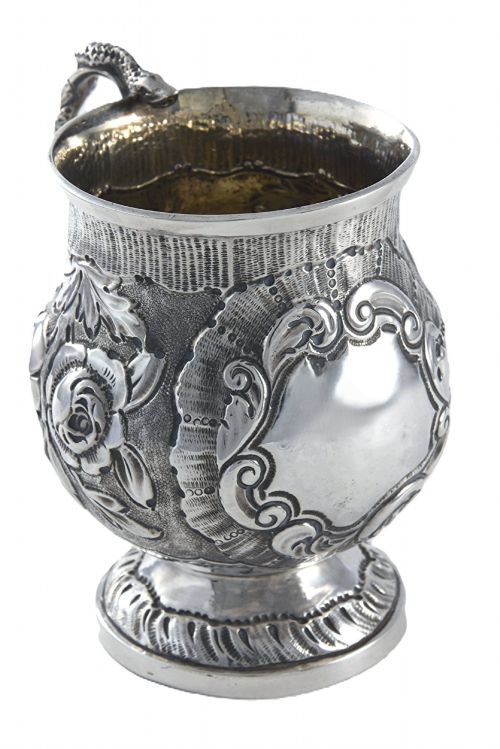


Georgian Silver Christening Mug
A georgian silver christening mug is a small, solid piece of heritage metalwork that holds personal history and traditional charm.
Georgian Silver Christening Mug
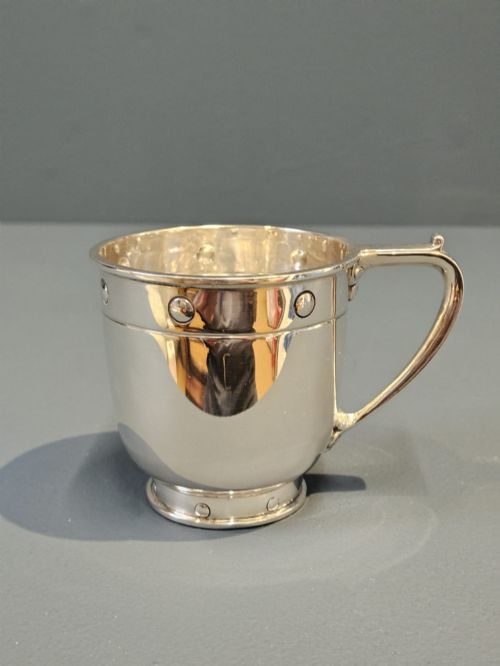
When you search for a georgian silver christening mug, you encounter miniature vessels created to mark the birth or baptism of a child. These pieces take the form of small tankards, cups and barrel shapes designed to be held in tiny hands or kept as lifelong keepsakes. The examples you meet on this page span the Georgian era alongside later Regency, Victorian and George V revivals.
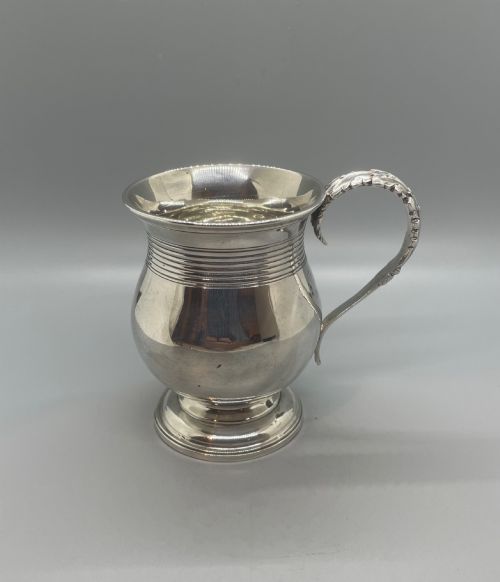
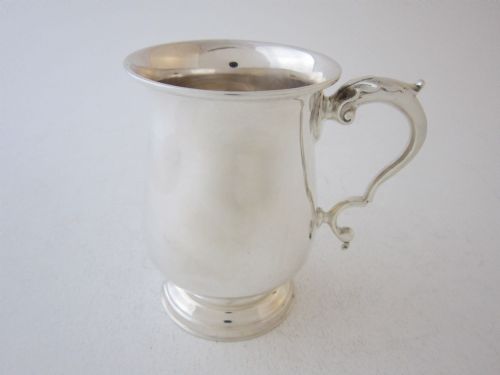
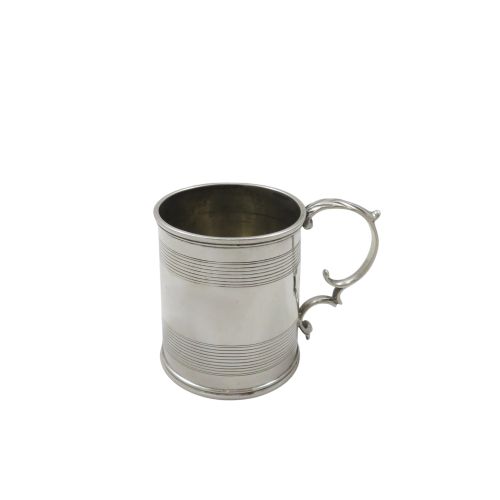
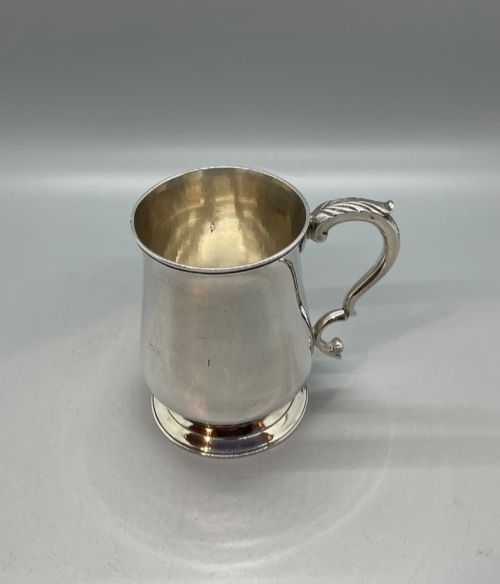
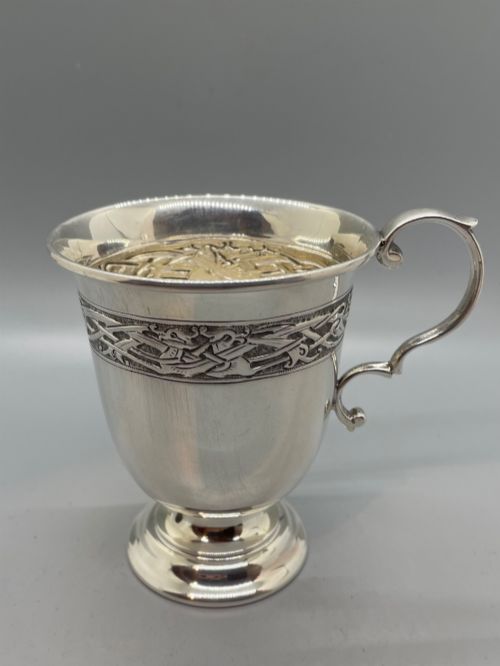
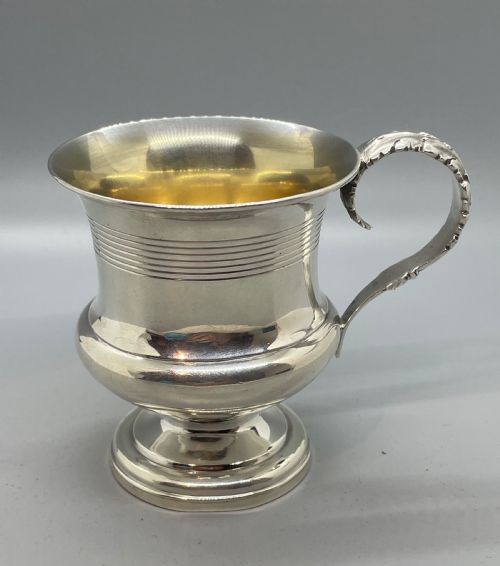
Makers shaped these small containers as scaled-down versions of adult drinking vessels, often featuring baluster bodies or campana profiles. Some carry handles formed as serpents or scrolling acanthus leaves, while others remain plain for later engraving. They reflect a tradition of giving silver to mark significant family milestones.
How They Were Made
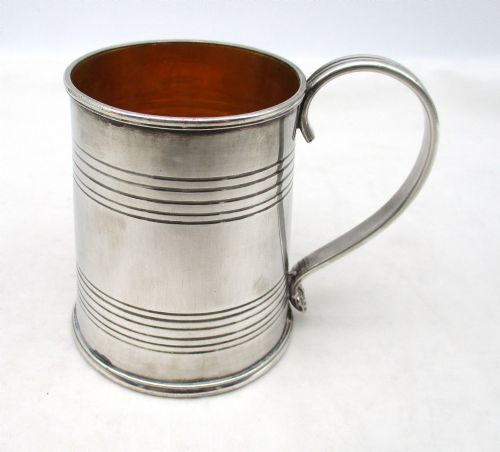
Silversmiths constructed these mugs primarily using sterling silver, beaten or cast into form and finished with applied handles and rims. Some items utilise Old Sheffield Plate or incorporate gold gilt and silver-gilt interiors to add a contrasting warm hue.
Decoration relied on hand engraving, repoussé work and ribbing to create textured surfaces like the Rococo scroll handle or barrel staves. Workshops stamped each sterling piece with hallmarks denoting the assay office, date letter and maker's mark.
Object forms span small child's tankards, campana shapes, barrel designs, and ribbed beer mugs ranging from half pint to smaller capacities.
What Varies in Quality
The distinction between standard items and superior examples lies in the weight of the metal and the crispness of the hand-chased details. Heavier gauge sterling silver provides a substantial feel in the hand that lighter stamped or plated alternatives lack.
Artistry in the handle attachment and the balance of the baluster or campana form define the finer pieces. Clear, unrubbed hallmarks and deeply cut engraving indicate superior craftsmanship from established silversmiths.
Barker Bros·William Bateman·Emes & Barnard·John Emes
The Georgian Silver Christening Mug Glossary
- Sterling Silver
- A standard alloy consisting of ninety-two point five percent silver and seven point five percent other metals, usually copper. This composition provides the durability required for functional domestic objects.
- Old Sheffield Plate
- A fused metal technique where a layer of silver is fused to a thicker copper base. It appears on earlier child's tankards and beer mugs.
- Baluster Form
- A vertical architectural shape resembling a pillar or vase, swelling outwards towards the lower half. This contour appears frequently on Georgian mugs.
- Campana Shape
- An inverted bell profile widening towards the rim, similar to classical garden urns. Mugs of this style often feature decorative cast foot rims.
- Silver-Gilt
- Sterling silver that has been coated with a thin layer of gold on the interior or exterior surface. This finish protects the metal and adds a rich golden lustre.
Georgian Silver Christening Mug: Frequently Asked Questions
What is a christening mug?
A christening mug is a small silver drinking vessel traditionally given to an infant to mark a baptism or birth. Families often had the child's initials or birth date engraved upon the surface.
Over generations, these objects transitioned from functional cups into cherished family heirlooms and decorative display pieces.
How do I clean an antique silver mug?
Cleaning antique silver requires a soft cloth and a gentle silver polish formulated for heritage items. Avoid abrasive pads or harsh chemical dips that strip away the natural patina.
Wash the piece in warm soapy water afterwards and dry it thoroughly with a lint-free cloth to maintain its shine.
Are these mugs safe to use?
Most antique silver mugs remain physically capable of holding liquids, particularly solid sterling silver pieces. However, items with gold gilt interiors or Old Sheffield Plate require more delicate handling.
Collectors generally display them as decorative objects rather than utilising them for daily consumption.
How can I date my silver mug?
Dating a silver mug involves checking the hallmarks stamped into the metal, which include maker's marks, city assay marks and annual date letters. Reference guides match these symbols to specific years of production.
Stylistic indicators like Rococo scrolls, barrel shaping or baluster forms also help narrow down the period.