
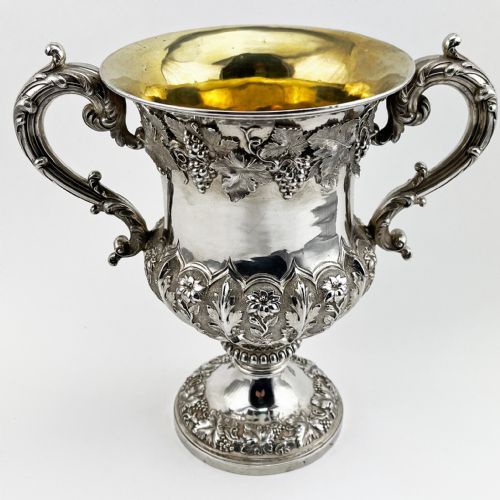


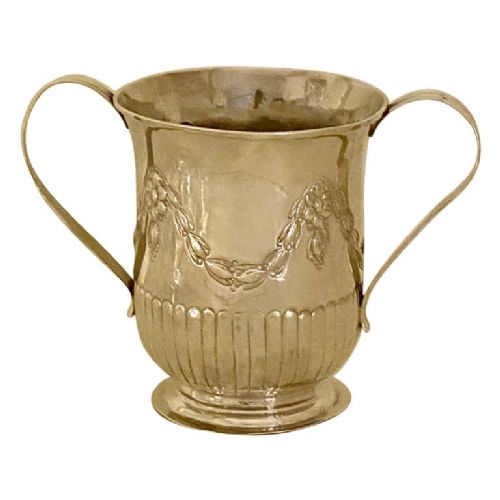

Georgian Silver Handle Cup
A georgian silver handle cup carries the weight of eighteenth-century drinking customs, offering a tactile connection to domestic life and formal presentation through twin handles and solid metals.
Georgian Silver Handle Cup
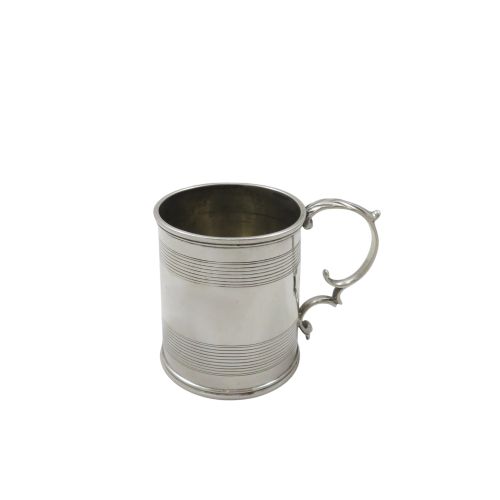
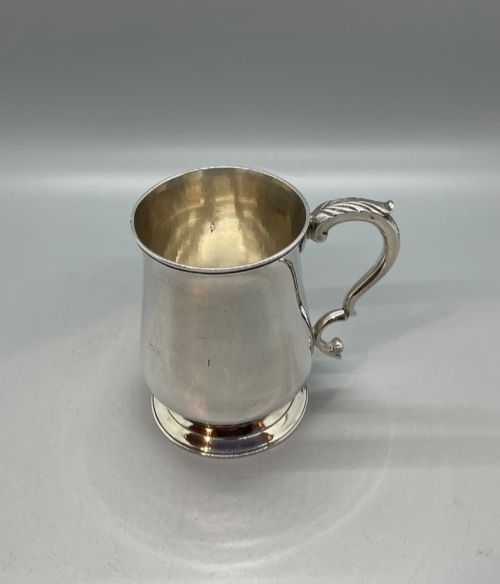
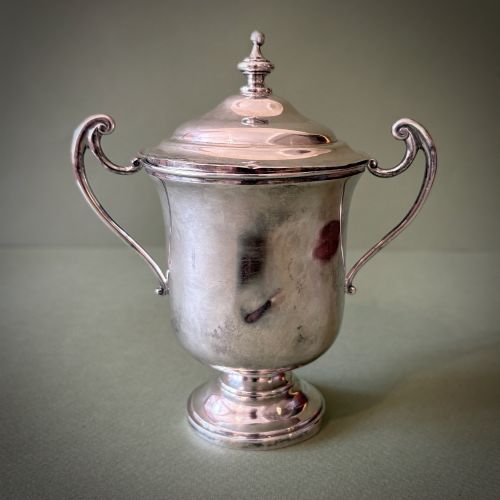
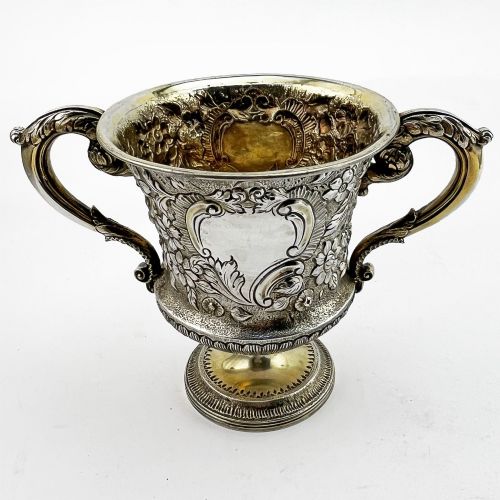
A georgian silver handle cup encompasses christening mugs, two-handled loving cups, and campana-shaped trophy vessels produced across the eighteenth and nineteenth centuries. These drinking vessels emerge primarily from London, Dublin, and early American workshops, taking the form of baluster mugs, covered porringers, and grand presentation pieces.
The versions most commonly met on this page range from small single-handle christening mugs to substantial twin-handled loving cups and campana urns. Many examples bear hallmarks from the reigns of George II and George III, utilising solid sterling silver, silver gilt, and old Sheffield plate.
Craftsmanship and Proportion
The distinction between ordinary and exceptional work rests upon the weight of the metal, the crispness of the chasing, and the harmony of proportion between the vessel body and its applied handles. Substantial gauge silver maintains its structural integrity and resists denting over centuries of use.
Maker marks, clear assay office town stamps, and legible date letters provide documentary evidence that elevates the standing of a piece. Superior casting in handles and decorative mounts reveals a higher grade of artistry compared to routine commercial production.
Listings span eighteen-century baluster mugs to nineteenth-century campana trophies, utilising solid sterling silver, silver gilt, and old Sheffield plate.
Richard Gurney·Thomas Sutton·Peter William Bateman·Barnard·Benjamin Cartwright I·Joseph Bell I
The Georgian Silver Handle Cup Glossary
- Campana
- A bell-shaped vessel profile resembling a classical garden urn, frequently seen on large presentation and trophy cups. This classical silhouette gained immense popularity during the neoclassical revival.
- Loving cup
- A large drinking vessel equipped with two or three handles, designed to be passed among guests at banquets and celebrations. They often commemorate specific historical events or family milestones.
- Porringer
- A shallow two-handled bowl or cup used for porridge, broth, or posset, featuring characteristic ear-like handles projecting from the rim. Georgian examples in silver frequently include matching fitted covers.
- Sheffield plate
- A composite material formed by fusing a sheet of silver to a thicker copper ingot under heat and pressure. This technique predates electroplating and creates a durable dual-metal sheet.
- Vermeil
- Sterling silver coated with a thin layer of gold, providing a rich yellow lustre and protecting the underlying silver from tarnishing. It was commonly applied to the interiors of drinking vessels.
Georgian Silver Handle Cup: Frequently Asked Questions
What is a loving cup?
A loving cup is a large drinking vessel fitted with multiple handles so it can be shared safely around a table among companions. These pieces often mark civic events, weddings, or corporate banquets.
In domestic settings, they served as ceremonial centrepieces before being displayed on sideboards or mantelpieces. Their generous proportions distinguish them from smaller drinking mugs.
How do I identify a Georgian piece?
Identification relies upon reading the hallmarks stamped directly into the metal, which include town marks, maker initials, and date letters corresponding to specific monarchs. Stylistic cues such as rococo scrolls or neoclassical campana shapes further help narrow down the decade.
Comparing the form against authenticated museum examples provides additional certainty. Assay office records archive these punch marks systematically.
Were these cups used for drinking?
Many examples served practical functions at table for ale, wine, or posset during communal feasts and family gatherings. Christening mugs specifically welcomed newborns into the community with engraved initials.
Over time, presentation pieces transitioned into decorative displays or athletic trophies. Their heavy silver construction allowed them to endure centuries of handling.
What is Old Sheffield plate?
Old Sheffield plate is an early fusion material created by melting a thin layer of sterling silver onto a thick copper base. This produces a durable sheet that silversmiths shaped into drinking vessels without solid silver costs.
Examining the rim or worn spots often reveals the reddish copper layer beneath. It represents a major technical achievement in eighteenth-century manufacturing.