


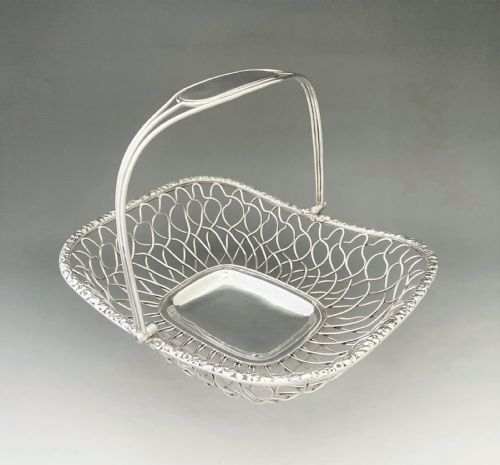


Georgian Silver Centerpiece Basket
These georgian silver centerpiece basket examples are grand table focal points designed to hold fruit or bread, crafted to command the dining room.
Georgian Silver Centerpiece Basket
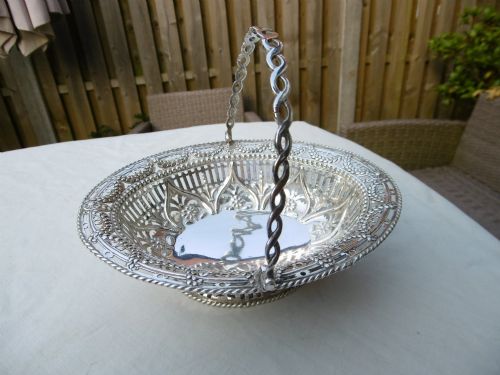
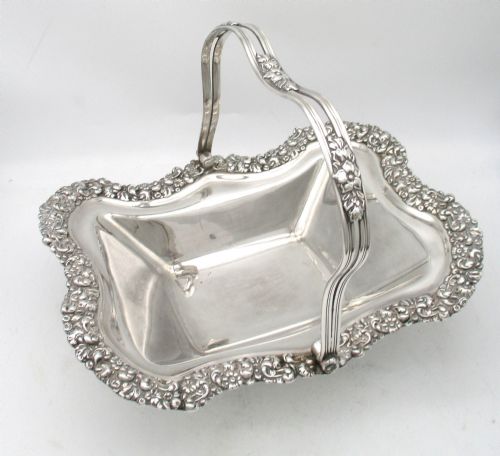
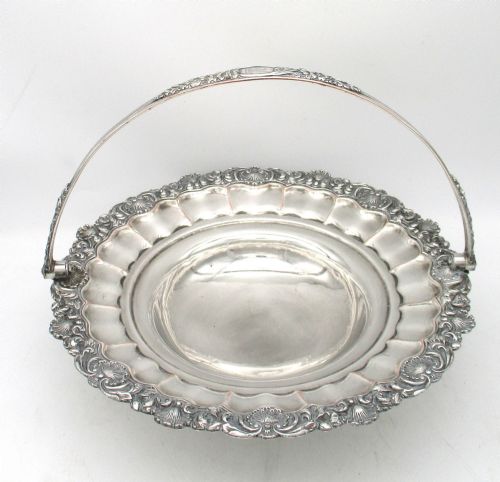
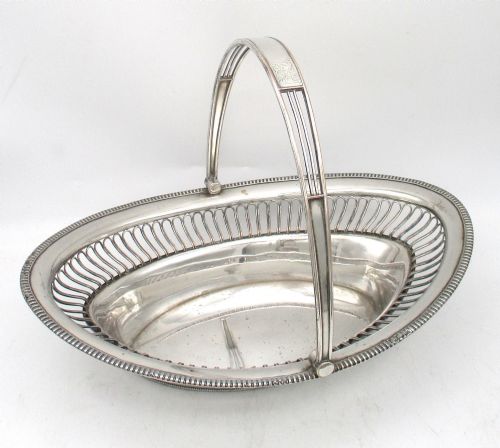
A georgian silver centerpiece basket serves as a grand table display piece, primarily taking the form of bread baskets, cake baskets, and sweetmeat baskets. These items sit centrally on dining tables, often featuring swing handles and pierced or lattice designs.
The pieces encountered span from the eighteenth century into the twentieth century, encompassing Georgian, Regency, William IV, Victorian, Edwardian, and Art Deco styles. While sterling silver forms many of the items, Old Sheffield Plate and silver plate examples also appear regularly.
Makers such as Samuel Herbert, John Walton, John Hunt, George Fox, and Fenton represent the output found in these listings. Forms range from round bowls to footed wirework baskets finished with gold wash and blue glass liners.
How they were made
Silversmiths constructed solid sterling silver vessels using hammering, piercing, and chasing techniques, often applying cast feet and swing handles. Sterling items frequently carry London or provincial hallmarks alongside maker marks.
Old Sheffield Plate makers fused a thin layer of silver onto a copper base, creating durable tableware with characteristic copper edges visible upon close inspection. Wirework baskets required intricate soldering of fine silver or plated wires into geometric lattice patterns.
Listings feature materials including sterling silver, copper, Old Sheffield Plate, silver wire, and blue glass accents.
What varies in quality
The crispness of pierced lattice decoration and the balance of the swing handle separate superior pieces from simpler work. Heavier gauge metal provides greater rigidity to the basket body.
The preservation of original silver plating on Old Sheffield Plate pieces influences overall character, as does the presence of clear hallmarks on sterling items.
John Hunt·Samuel Herbert·Fenton·George Fox·John Walton
The Georgian Silver Centerpiece Basket Glossary
- Old Sheffield Plate
- A fused composite material made by melting a sheet of silver onto a thicker copper ingot. This technique predates modern electroplating.
- Sweetmeat basket
- A small table vessel designed for holding sweet confections, nuts, or small fruits. These items often feature delicate swing handles.
- Silver gilt
- Silver covered with a thin layer of gold, sometimes referred to as wash. This treatment protects the inner surface from tarnishing.
- Wirework
- A decorative construction method using interwoven metal wires to create openwork lattice designs. Baskets utilising this technique appear frequently.
- Swing handle
- A movable arched handle attached to the rim of a basket via pivots. It allows the handle to lie flat when not in use.
Georgian Silver Centerpiece Basket: Frequently Asked Questions
What is a centerpiece basket used for?
These baskets traditionally held bread, cakes, or sweetmeats at formal dining tables. They functioned as both functional serving vessels and decorative centerpieces.
Over time, their roles shifted from daily dining service to decorative display objects within period interiors.
How do I tell sterling from plated items?
Sterling silver pieces generally display hallmarks indicating the assay office, maker, and date of manufacture. These stamps confirm solid silver construction.
Old Sheffield Plate items lack standard hallmarks and may reveal a thin line of copper along the cut edges where the base metal shows through.
How should I clean silver baskets?
Gentle washing with warm soapy water and a soft cloth removes everyday dust and light grime. Avoid harsh abrasive cleaners that can damage fine details or remove plating.
Specialist silver polish should be used sparingly, particularly on Old Sheffield Plate to prevent wearing through the thin silver layer.
What periods do these baskets date from?
The pieces span from the eighteenth century through the Georgian and Victorian eras up to the nineteen-thirties. Styles range from classical Georgian Neoclassical designs to later Art Deco forms.
Different eras brought distinct manufacturing techniques, moving from hand-pierced solid silver to wirework and plated copper compositions.