



Georgian Silver Bottle Tag
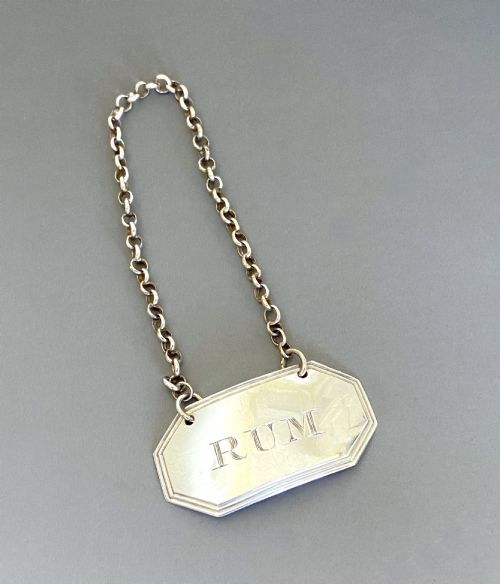
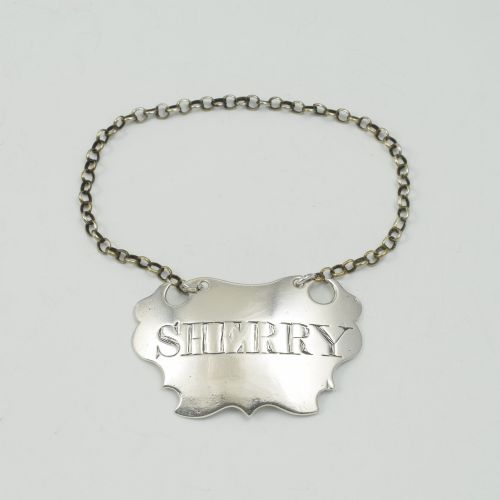
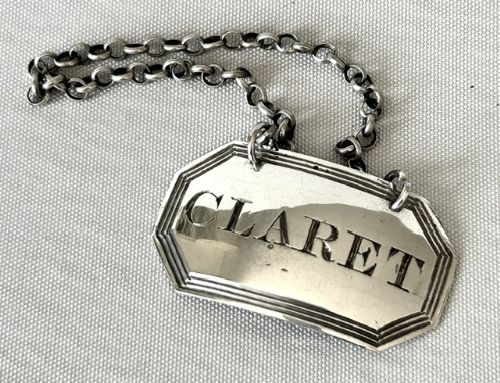
A georgian silver bottle tag sits on the neck of a decanter, marking out vintage spirits with bright metal and pierced lettering.
Georgian Silver Bottle Tag
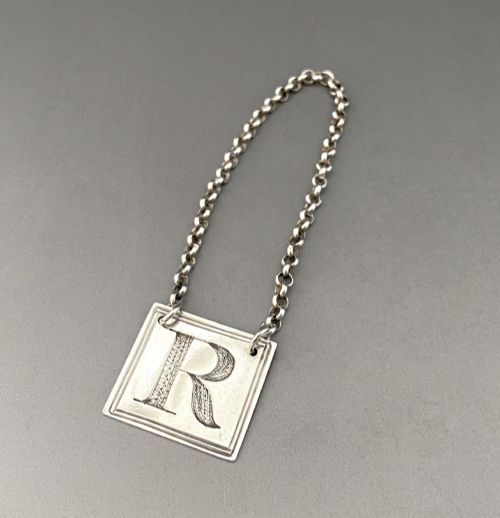
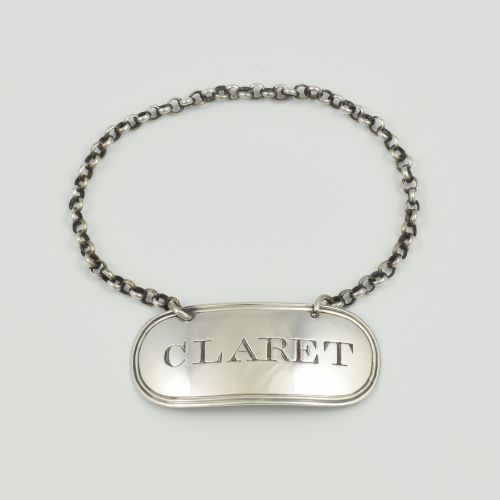
When you search for a georgian silver bottle tag, you encounter small pierced or engraved pieces of silver designed to identify table beverages. The listings here predominantly show decanter labels and wine labels spanning the Georgian and Regency periods, alongside related Victorian examples.
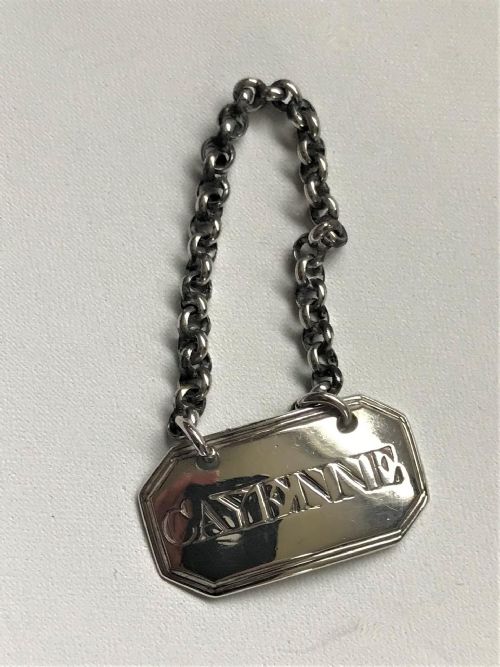
Forms range from escutcheon shapes and crescent plates to naturalistic vine leaves lettered for sherry, port, rum, claret, madeira, gin, hock, and moselle. Labels appear individually or in matched sets, with occasional miniature sizes designated for specific spirits like cayenne or single portions.
Makers stamp these items with provincial or London hallmarks, yielding distinct regional varieties from makers working across the eighteenth and nineteenth centuries.
Evaluating craftsmanship
Quality rests in the crispness of the pierced or engraved lettering and the weight of the solid silver plate. Thicker gauges of metal retain their structural integrity better along the suspension chains and suspension rings.
Design complexity also separates standard productions from superior examples, particularly where silversmiths utilised detailed Rococo Revival casting or naturalistic leaf forms rather than plain geometric plaques.
Certain miniature labels specify 'One Go', ensuring guests poured precisely a single tot of rum.
Elizabeth Morley·John Reily·Thomas Wallis II·William Sharp·Peter and Anne Bateman
The Georgian Silver Bottle Tag Glossary
- Escutcheon
- A shield-shaped plaque often used for heraldry or engraving bottle titles. It forms one of the standard silhouettes found among eighteenth-century wine labels.
- Silver Gilt
- Silver covered with a thin layer of gold, providing a warm yellow lustre to the metal surface. This finish appears on specific nineteenth-century decanter accessories.
- Vine Leaf
- A naturalistic motif shaped like grape foliage, frequently utilised for nineteenth-century beverage labels. Silversmiths often paired this style with hock or sherry inscriptions.
Georgian Silver Bottle Tag: Frequently Asked Questions
How do I date a silver label?
Dating relies on the hallmarks stamped directly into the silver, which record the assay office, date letter, and maker's mark. Stylistic clues such as Regency vine leaves or Georgian escutcheon shapes also point to specific decades.
Comparing the lettering style and decorative borders against known silversmith working periods helps narrow down the exact year of manufacture.
How were they used historically?
Servants placed these tags around the necks of crystal decanters before service to guide guests and prevent confusion between different vintages and spirits. They remained in constant use through formal dinner parties.
As dining habits evolved, sets of labels were often accumulated to match expanding collections of glassware and fortified wines.
Can I use them on modern decanters?
These labels adapt readily to modern glassware provided the suspension chain fits comfortably around the neck of the decanter. Their original purpose remains entirely practical for contemporary dining.
Care should be taken to ensure the chain length and ring size complement the specific thickness of your glassware.