
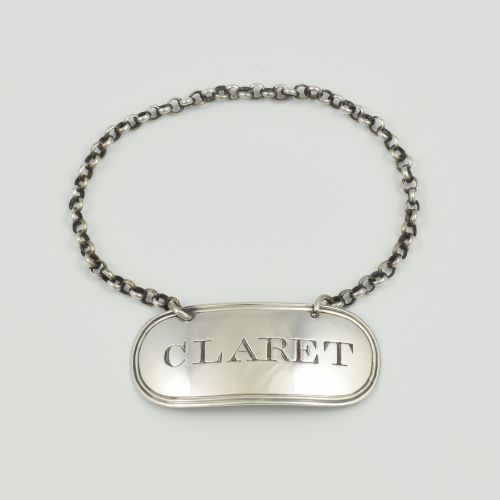


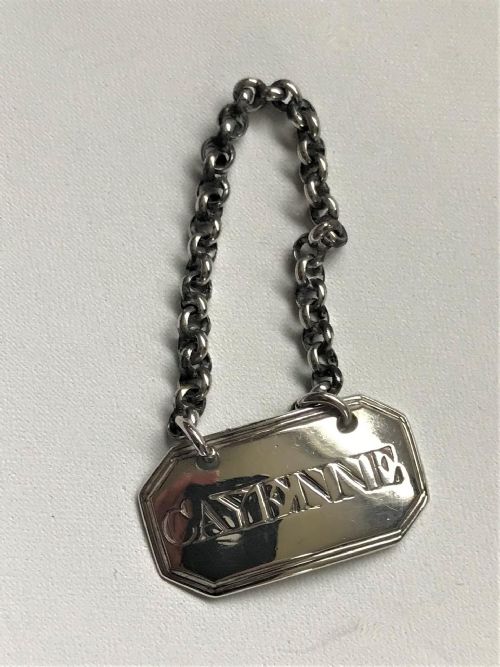


Sterling Silver Decanter Label
These sterling silver decanter label pieces mark the bottle's contents with clear lettering, adding period charm to any barware collection.
What These Pieces Are
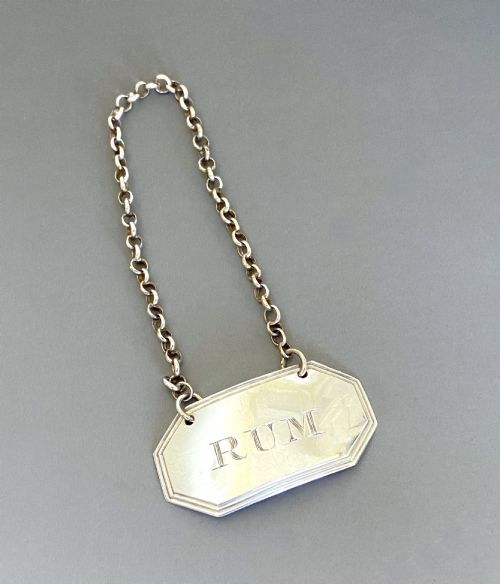
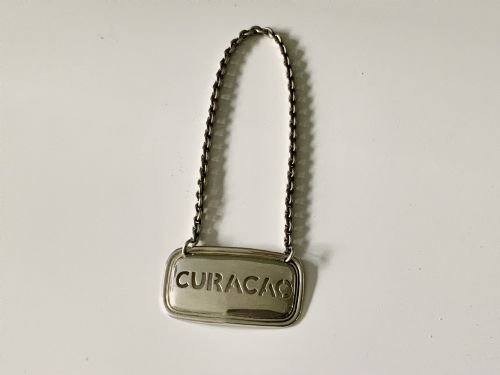
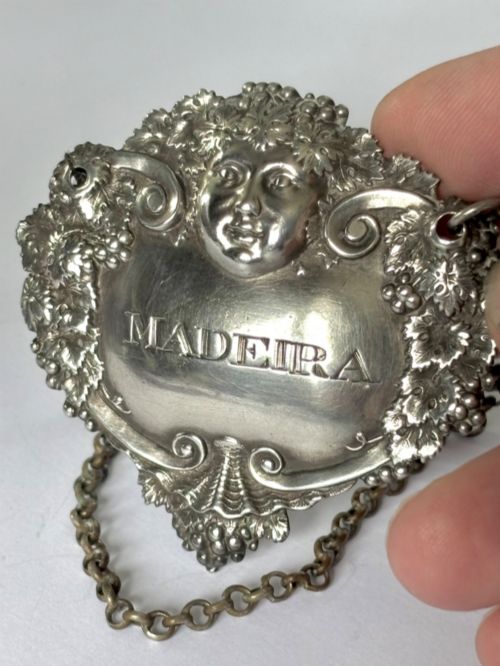
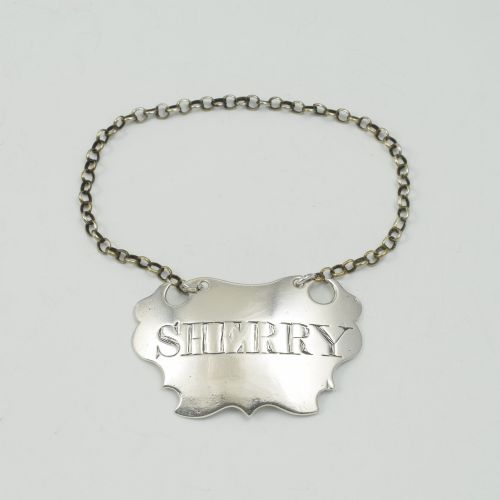
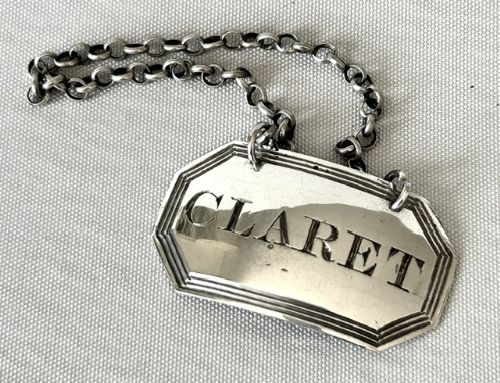
A sterling silver decanter label identifies the contents of a bottle or decanter, functioning as a practical identifier on the sideboard. These items appear across Georgian, Regency, and Victorian periods, often bearing names of drinks like Claret, Madeira, Rum, Gin, Sherry, Brandy, and Whiskey.
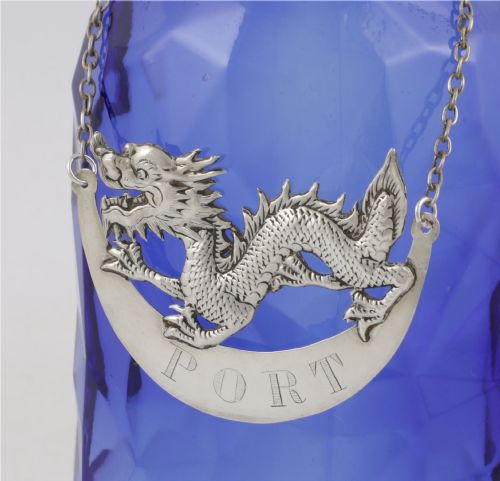
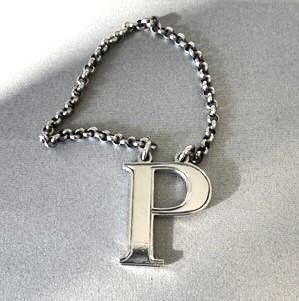
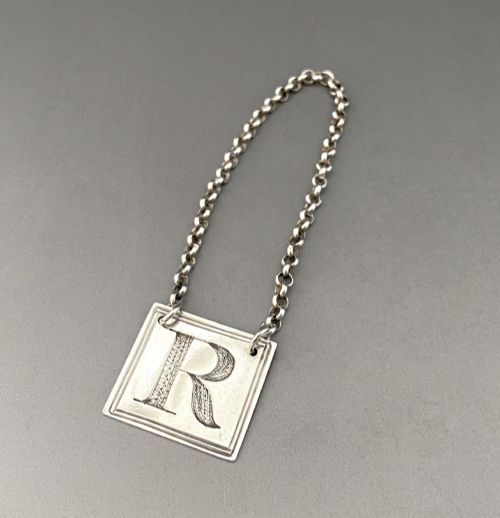
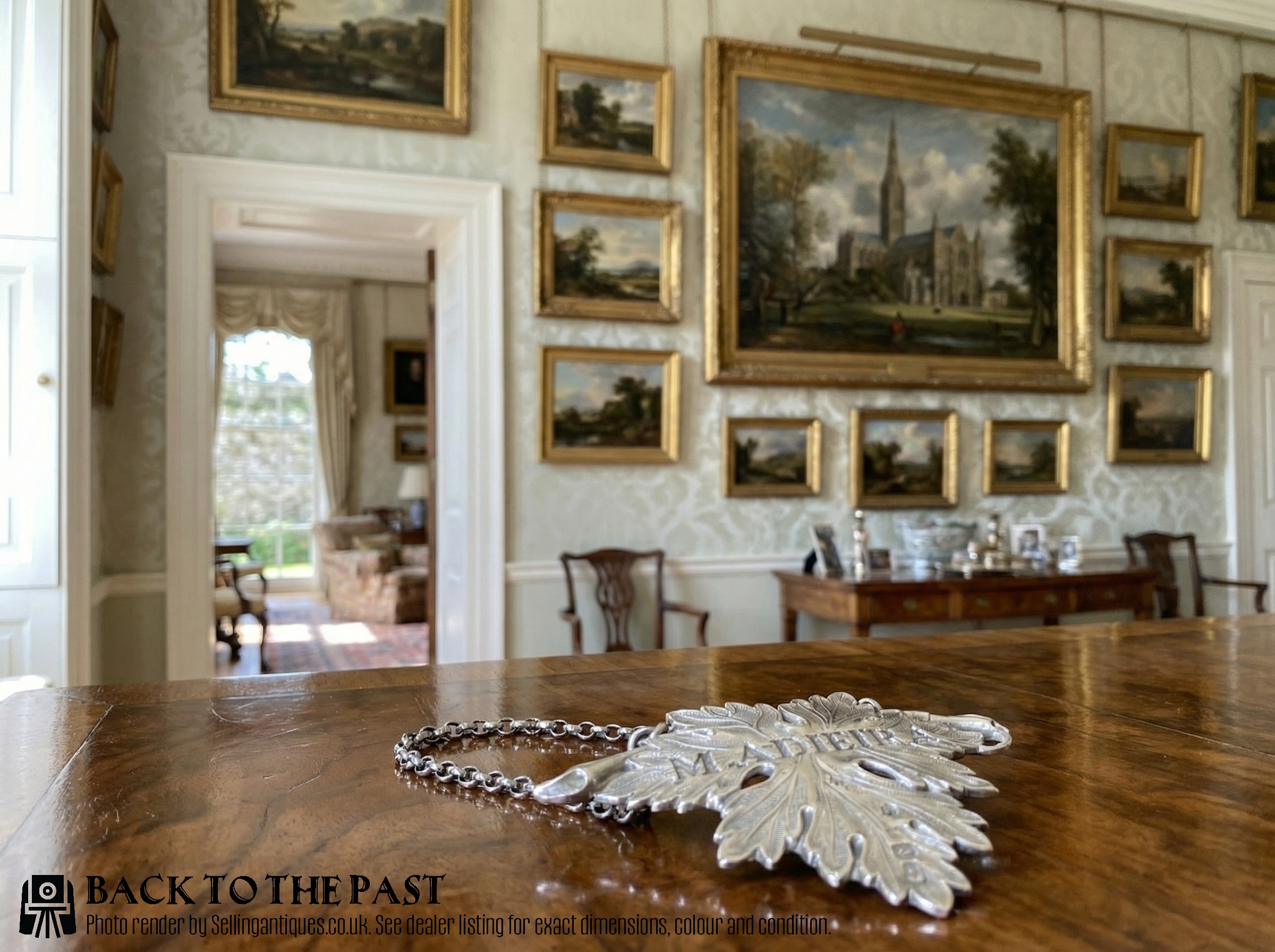
The pieces on this page include individual decanter wine labels and barware items shaped to hang from bottleneck chains. Some examples feature specific bottle titles, whilst others display initials or monograms.
Most entries belong to the Victorian era, alongside Georgian and Regency pieces. Forms range from standard beverage titles to miniature individual wine labels and unusual titles.

How They Were Made
These items are fashioned from sterling silver or solid silver, reflecting traditional metalworking standards. Makers employed stamping, casting, and piercing techniques to shape the metal and form the lettering.
Surface details often include engraved initials, monograms, and specific beverage titles applied to the silver plate. Hallmarks stamped onto the reverse or surface indicate the origin and year of manufacture.
Retail Price Guide 2026
Typical UK retail prices for sterling silver decanter label, calculated from the Sellingantiques database of over a million retail prices indexed since 2003. This retail price guide relies exclusively on Sellingantiques data; no external sources or auction records are used, so the figures do not describe the wider market.
What Varies in Quality
Quality rests upon the crispness of the lettering, the depth of any engraving, and the preservation of the original marks. Sharply cast borders and clear punch-work distinguish finer examples from simpler production.
The presence of identifiable maker marks, legible town hallmarks, and specific period characteristics elevate an individual piece. Unusual titles or specific drink names further differentiate the scope of the range.
Elizabeth Morley·Sampson Mordan·Sammy Hong Kong
The Sterling Silver Decanter Label Glossary
- Sterling Silver
- An alloy consisting of pure silver and other metals, traditionally regulated to a specific standard of purity for durability and lustre. It forms the primary material for these barware pieces.
- Decanter Label
- A small inscribed plate hung around the neck of a bottle or decanter to name the beverage inside. They serve both a decorative and practical purpose.
- Hallmark
- An official stamp applied to precious metals indicating the standard of purity, the assay office, and the date of manufacture. These marks help verify the period of the item.
- Barware
- Equipment and utensils used for preparing and serving alcoholic drinks. These labels belong to this category of entertaining accessories.
- Monogram
- A motif made by overlapping or combining two or more letters to form a single symbol. Many decanter labels feature these personal initials instead of a drink name.
Frequently Asked Questions
How were decanter labels used?
These pieces hung around the necks of glass decanters and bottles using chains or collars. They prevented mix-ups at the dining table by clearly naming the wine or spirit held within.
Hosts used them on sideboards and drinks trolleys to identify different vintages and spirits for guests. Their small size made them easy to transfer between bottles as supplies shifted.
What drinks are usually named?
Common inscriptions include traditional spirits and fortified wines such as claret, madeira, sherry, brandy, gin, whisky, and rum. Some pieces feature single letters like G for gin.
Unusual titles and specific regional wines also appear in the record. Occasionally, items carry personal monograms or initials rather than a beverage name.
How do I date a silver label?
Dating relies heavily on the hallmarks stamped into the silver, which reveal the assay office and year letter. Stylistic clues like Georgian Regency shapes or Victorian ornamentation also help place the item in time.
Comparing the lettering style and suspension method provides further context for the period of manufacture.
How do I care for silver labels?
Gentle cleaning with a soft cloth helps maintain the silver surface without wearing down engraved details. Avoiding harsh chemical dips preserves the original tone of the metal.
Storing the items in a dry environment prevents tarnish accumulation and protects the delicate chains and hanging loops.