


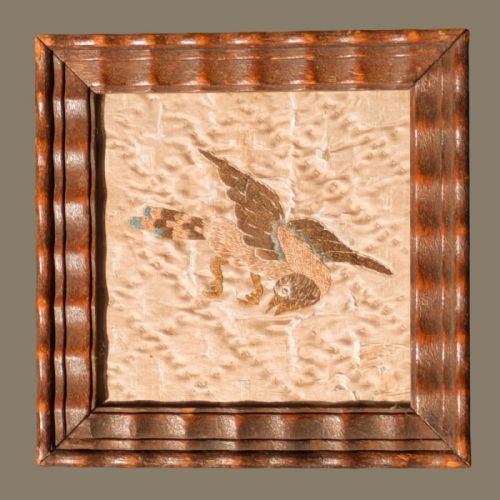
Georgian Silk Picture
A georgian silk picture brings domestic stitchcraft and pastoral scenes from the eighteenth and nineteenth centuries straight to your wall.
Georgian Silk Picture
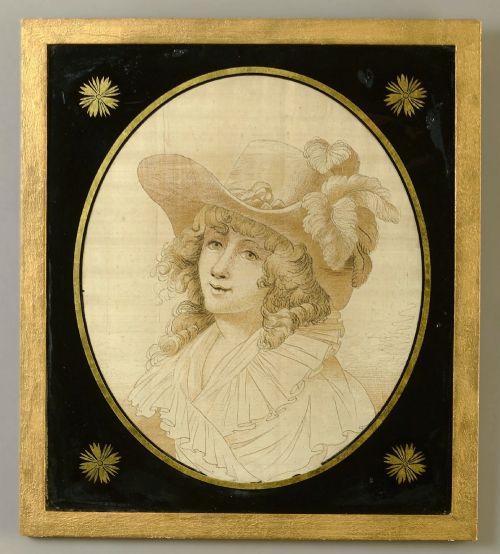
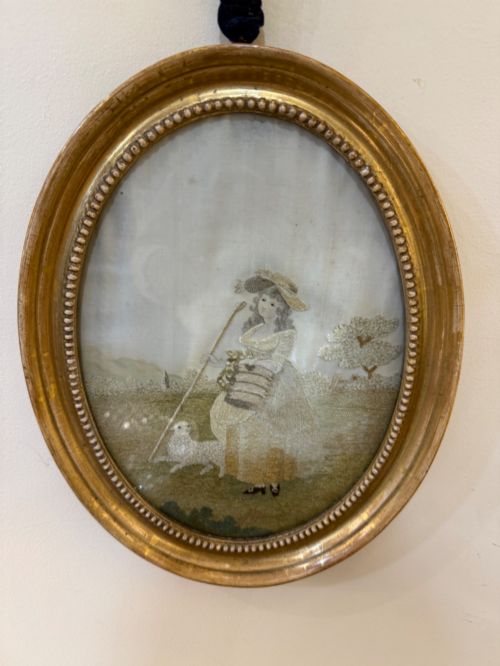
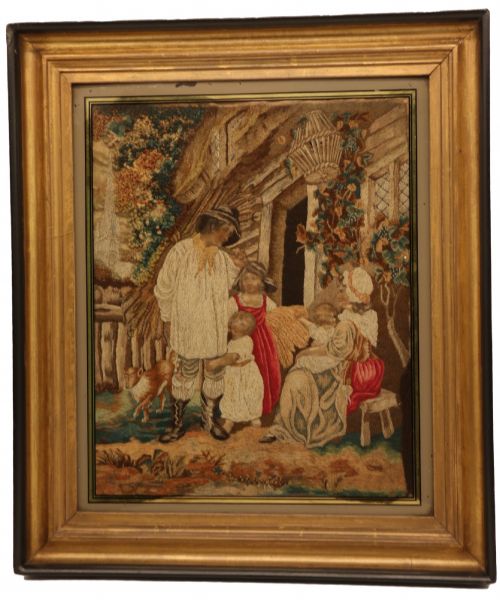
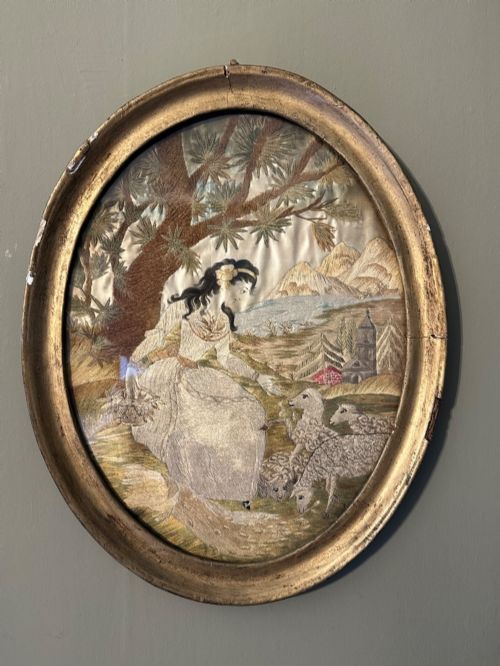
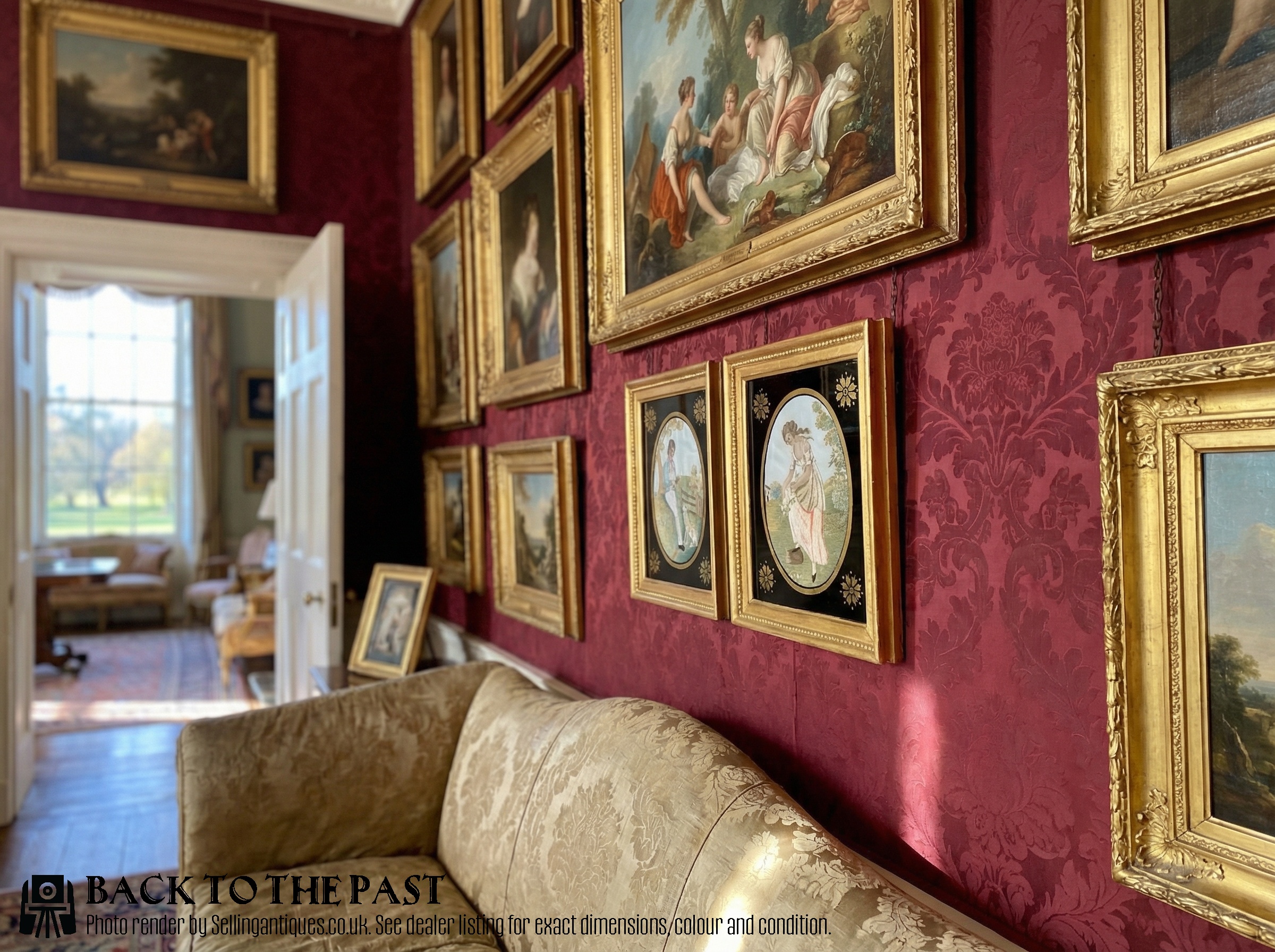
A georgian silk picture is a piece of textile art created through embroidery, needlework, and painting on fabric. These works span the eighteenth and nineteenth centuries, taking the form of framed wall art, samplers, and embroidered panels.
You will encounter subjects ranging from portraits and pastoral farming scenes to theatrical subjects, literary tales like Jack and the Beanstalk, and commemorative military pieces. Many examples incorporate wool, linen, and paper alongside silk floss.
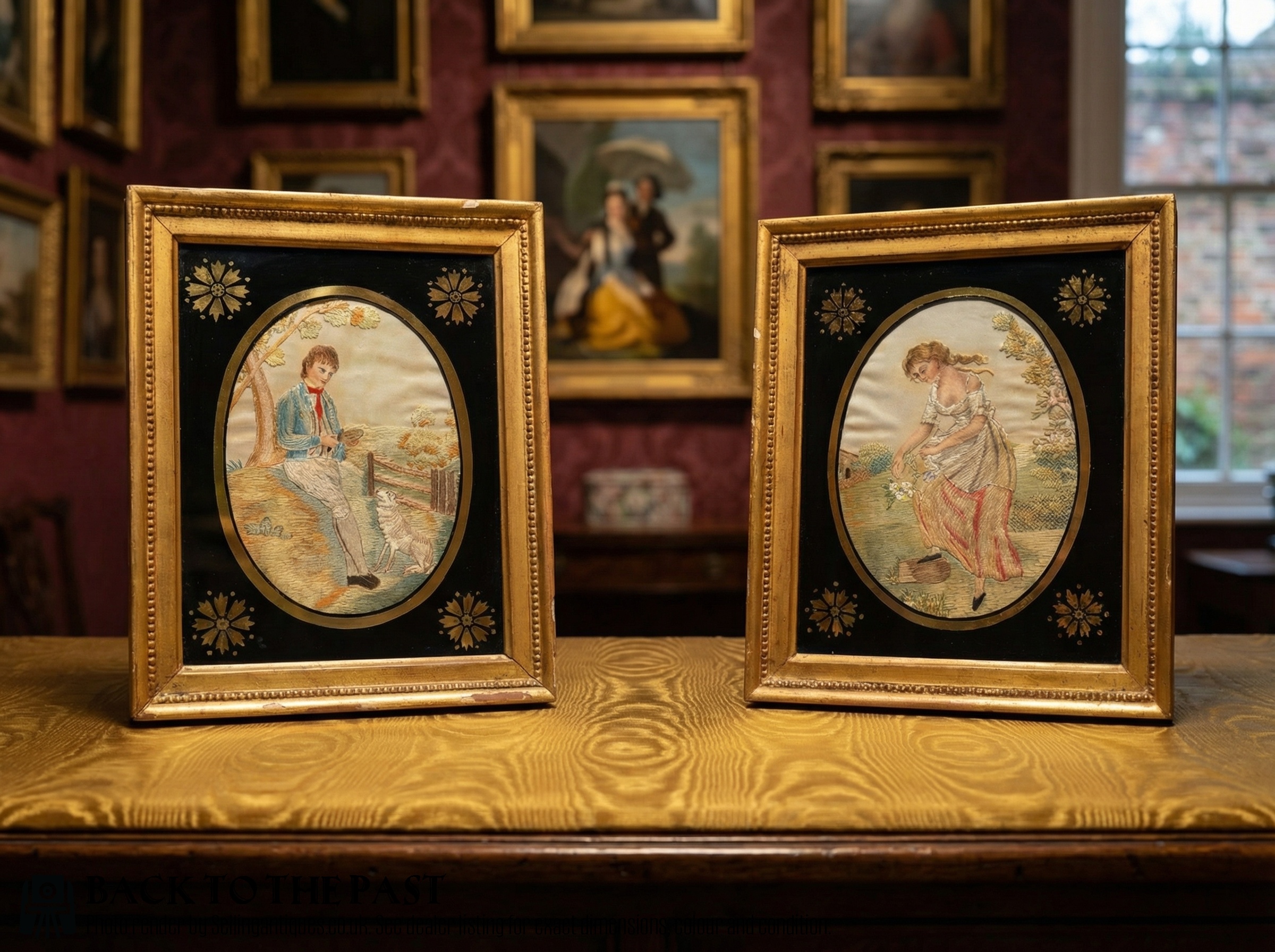
The framing is often integral to the piece, featuring period wooden, giltwood, or verre églomisé frames with black glass mounts. These works frequently arrive as individual framed pictures or matched pairs.
Materials and construction methods
Maker execution relies on silk thread, wool, and linen ground fabrics, frequently combined with hand-painted elements on paper or silk. Stitches range from long stitch and crewel work to fine needlework and stumpwork.
Finished embroideries are set behind glass in wood, giltwood, or water-gilded frames, often featuring mezzotint black glass surrounds. Gold leaf details occasionally accent the framing and internal design.
Georgian Silk Picture Retail Price Guide 2026
Typical asking prices for georgian silk picture among the pieces listed under this phrase on Sellingantiques today, from the lower quarter to the upper quarter. They describe what is for sale here now, not the wider market.
Listings feature works spanning the eighteenth and nineteenth centuries, utilising silk, wool, linen, and glass in various framed formats.
What separates examples
The preservation of the backing and the presence of original water-gilded or verre églomisé frames elevate an example. Pairs and narrative pieces with clear subjects distinguish themselves from standard samplers.
The Georgian Silk Picture Glossary
- Verre églomisé
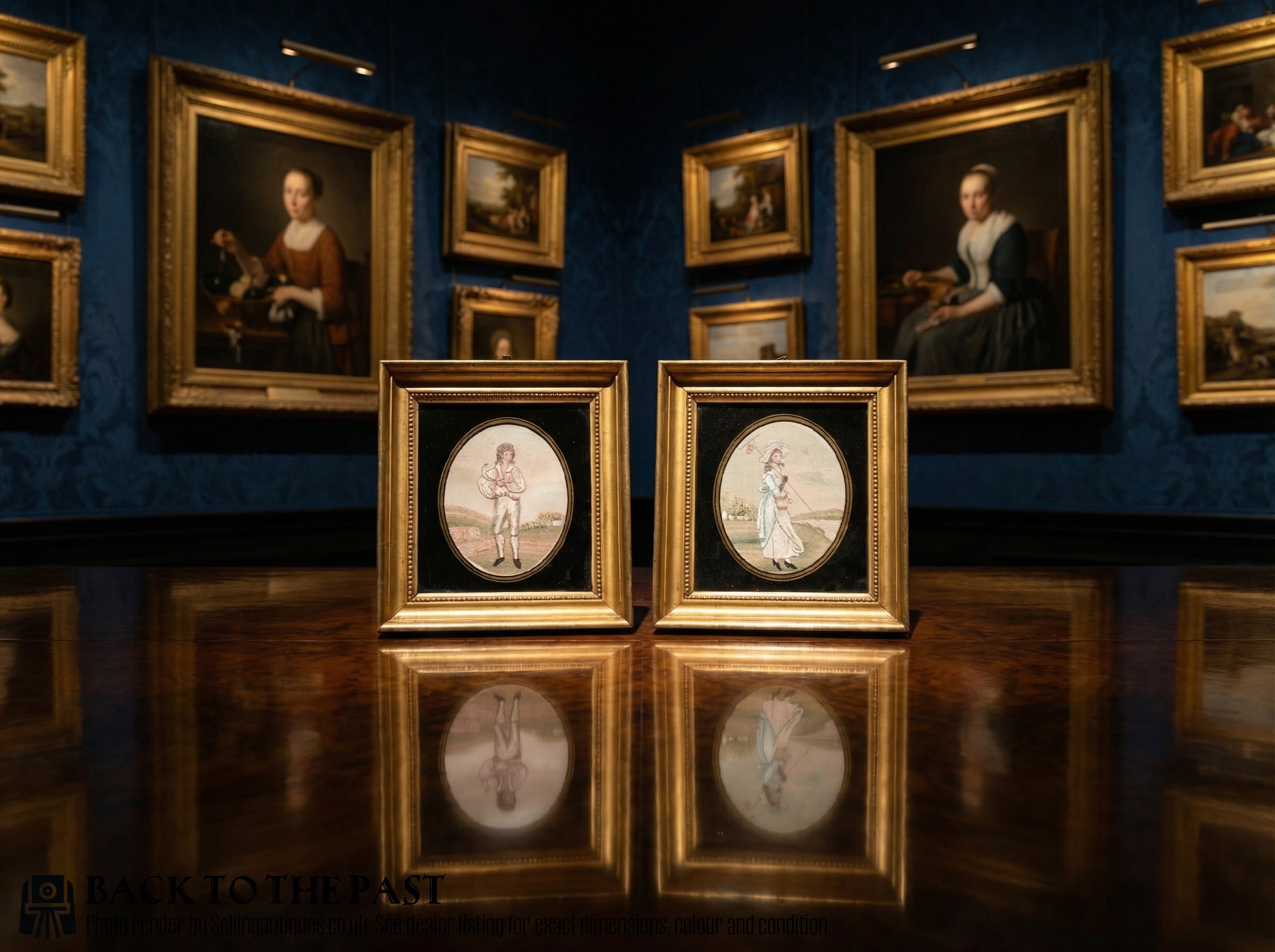
- Glass decorated with a thin layer of gold or silver leaf applied to the reverse, often featuring a black painted border. This framing technique is frequently seen on Regency period needlework pictures.
- Stumpwork
- A raised embroidery style where elements are padded or built over wooden moulds to create a three-dimensional effect. This technique appears on specific eighteenth-century pictorial panels.
- Sampler
- A piece of needlework produced to demonstrate proficiency in various stitches and alphabets. Examples from this era include map samplers and works bearing names and ages.
- Mezzotint glass
- Dark glass borders used in framing that provide contrast to the embroidered picture within. These frames often retain their original giltwood surrounds.
- Crewel work
- Embroidery executed using wool yarn on a heavy linen or cotton ground. This technique creates textured foliage and garments in pastoral scenes.
Georgian Silk Picture: Frequently Asked Questions
How are these pictures framed?
Many examples retain their original wood, giltwood, or water-gilded frames from the eighteenth or nineteenth century. Some feature specialised surrounds like verre églomisé glass panels.
These period frames complement the delicate silk embroidery and protect the textile art from environmental damage.
What subjects do they show?
The imagery covers pastoral farming, portraits, religious themes, and literary narratives such as Jack and the Beanstalk. You also find commemorative military pieces and theatrical scenes.
Samplers often display alphabets, maps, and maker details alongside decorative floral borders.
Are they made entirely of silk?
While silk floss and silk grounds are primary components, many pieces incorporate wool, linen, and paper. Hand-painted watercolor details on silk or paper frequently combine with the needlework.
This mixed-media approach allows for detailed facial expressions and varied textures within a single framed picture.
How do I date a piece?
Dating relies on the stylistic markers of the frame, the subject matter, and the specific mix of materials used. Evidence points to periods spanning the eighteenth century through the late nineteenth century.
Inscribed samplers occasionally include the maker name, location, and date of creation.