




Georgian Shell Tray
A georgian shell tray brings genuine period elegance to a room, offering the fine timber work and silver forms collectors expect from the eighteenth century.
Georgian Shell Tray
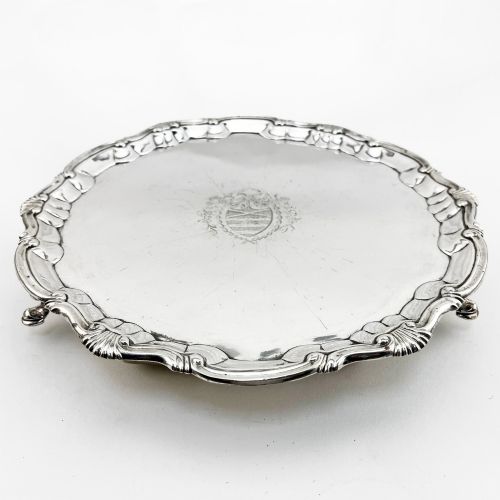
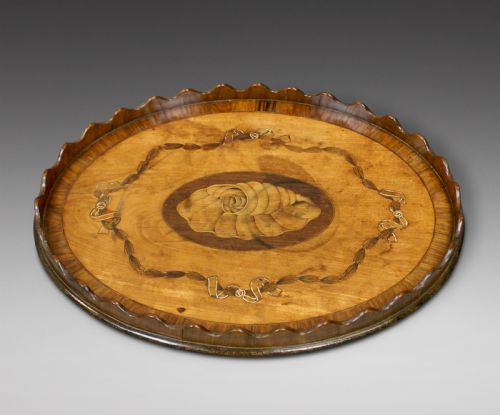
When you search for a georgian shell tray, you encounter a focused selection of serving pieces, salvers, and small dishes created during the Georgian era and its later revivals. These items take the form of sterling silver salvers, mahogany serving trays, and porcelain pickle dishes, often featuring distinct shell motifs or marquetry inlays.
The versions most frequently met on this page span solid mahogany wooden trays with delicate boxwood and satinwood inlay, alongside heavy sterling silver salvers bearing hallmarks from the reigns of George II and George III. Alongside these timber and silver pieces appear soft-paste porcelain scallop shell pickle dishes and ironstone tableware.
Origins stretch from English workshops to Irish makers, with occasional pieces reflecting Chinoiserie tastes or Edwardian revivals of Georgian forms. The selection unites practical serving vessels with decorative cabinet pieces from the eighteenth and nineteenth centuries.
Materials and construction
Timber trays rely on solid mahogany foundations, frequently enhanced by intricate marquetry inlay utilising lighter contrasting woods such as satinwood and boxwood. Carved details define the edges of Irish silver tables and serving platters, demonstrating skilled cabinetmaking.
Silver pieces utilise sterling silver shaped into salvers and card trays, finished with engraved surfaces and cast borders. Porcelain examples employ soft-paste porcelain and glaze, decorated with painted motifs including the Two-Peony Rock Bird and Indian Grasshopper patterns.
Listings feature items spanning the Georgian, Edwardian, and early twentieth-century periods, alongside George II and George III styles.
Assessing quality
Quality rests upon the crispness of the carving and the precision of the marquetry inlay within the timber surfaces. Finer pieces display tight, well-fitted geometric or shell designs executed in contrasting woods without gaps.
In silver work, the depth of the chasing, the legibility of the period hallmarks, and the weight of the metal distinguish superior items. Porcelain quality shows in the fineness of the soft-paste body and the preservation of the hand-painted glaze.
Paul Storr·Mason
The Georgian Shell Tray Glossary
- Marquetry inlay
- The art of applying small pieces of veneer to a structure to form decorative patterns. This technique creates the shell motifs seen on eighteenth-century mahogany trays.
- Soft-paste porcelain
- A ceramic material composed of clay and glass frit, fired at lower temperatures than hard-paste porcelain. It characterises mid-eighteenth-century English pickle dishes.
- Salver
- A flat metal plate or tray used for serving food or drinks. Georgian examples in sterling silver often feature shaped rims and footed bases.
- Pickle dish
- A small, specialised tableware vessel shaped to hold pickles or relishes. Scallop shell forms were particularly popular during the eighteenth century.
- Hallmark
- An official stamp applied to precious metals to indicate purity and origin. These marks provide reliable dating for silver trays and salvers.
Georgian Shell Tray: Frequently Asked Questions
What are georgian shell trays used for?
These pieces served originally for carrying small items, holding calling cards, or presenting tea and small dishes in polite society.
Today, collectors utilise them as decorative accents on side tables or to display small collections of objects.
How do I identify a Georgian silver tray?
Examine the piece for legible hallmarks, which indicate the assay office, maker, and year of production under specific monarchs.
Compare the weight, hand-chased ornamentation, and border style against documented examples from the eighteenth century.
What is marquetry inlay on trays?
Marquetry involves fitting thin slices of decorative timber, such as satinwood and boxwood, into a mahogany base to form pictures or geometric designs.
On trays, this technique frequently creates shell motifs or central paterae that define the style.
How do I care for antique mahogany trays?
Keep wooden trays away from direct sunlight and extreme humidity changes to prevent the timber from warping or the inlay from lifting.
Apply a traditional beeswax polish sparingly to maintain the natural lustre of the mahogany surface.
Are porcelain shell dishes fragile?
Soft-paste porcelain pickle dishes possess a delicate structure that requires careful handling during cleaning and display.
Wash them by hand in lukewarm water without harsh detergents to preserve the historic glaze and painted decoration.