
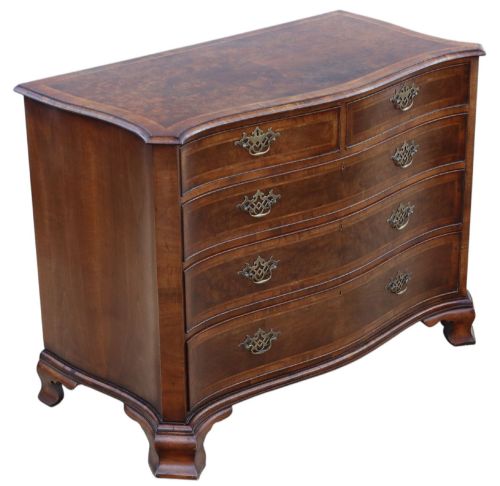
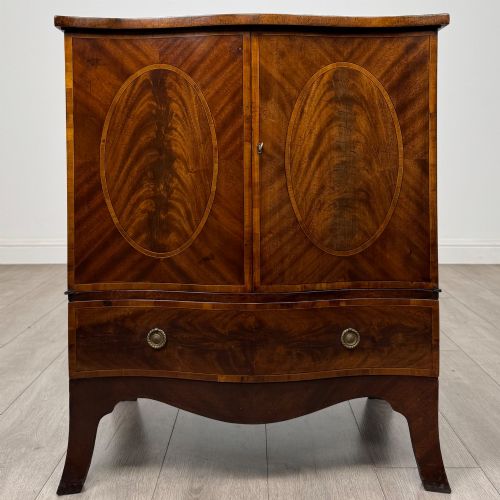
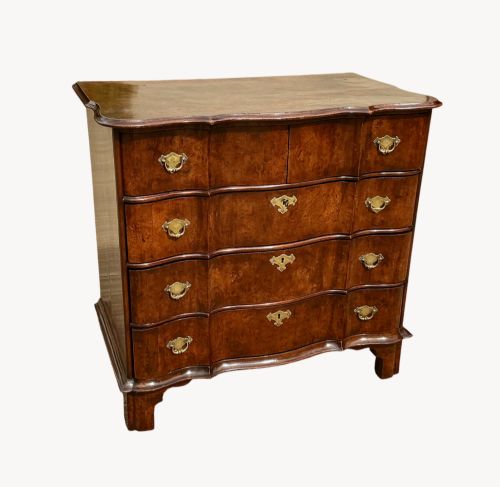
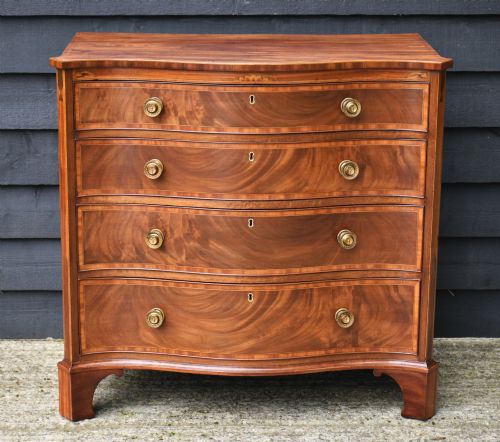
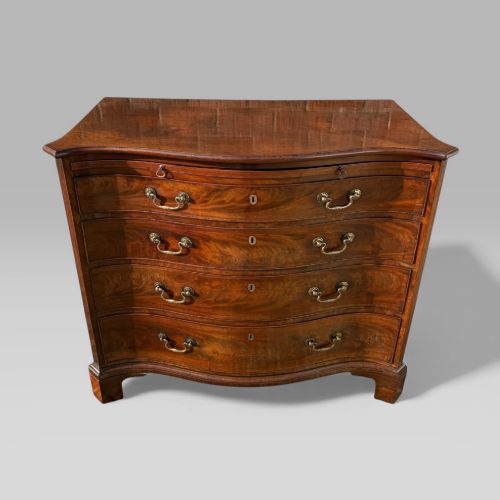
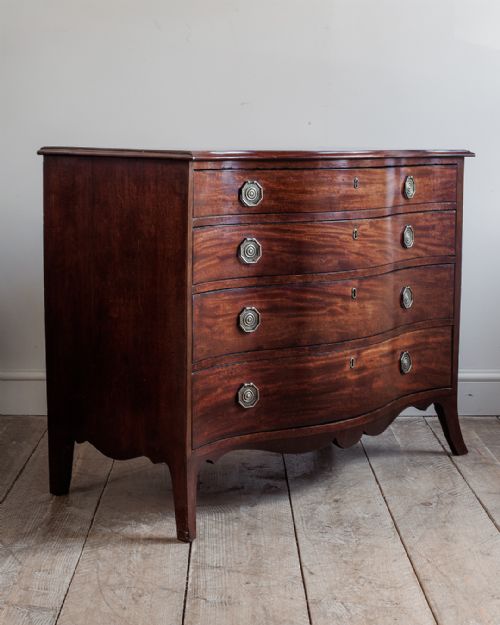
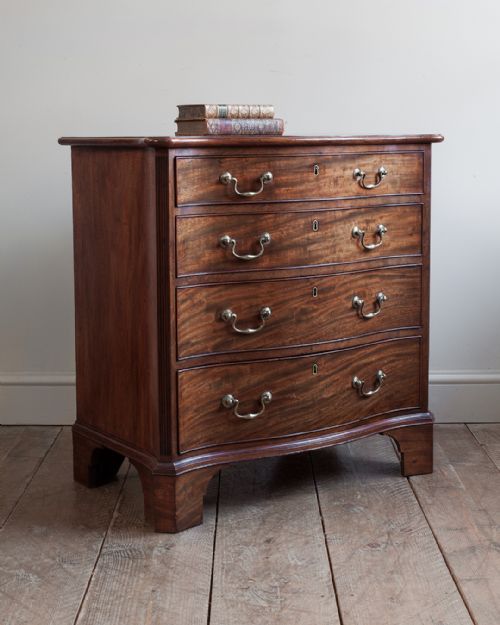

Georgian Serpentine Commode
A georgian serpentine commode brings sweeping curves and refined proportions to a room, offering both generous drawer space and sculptural presence.
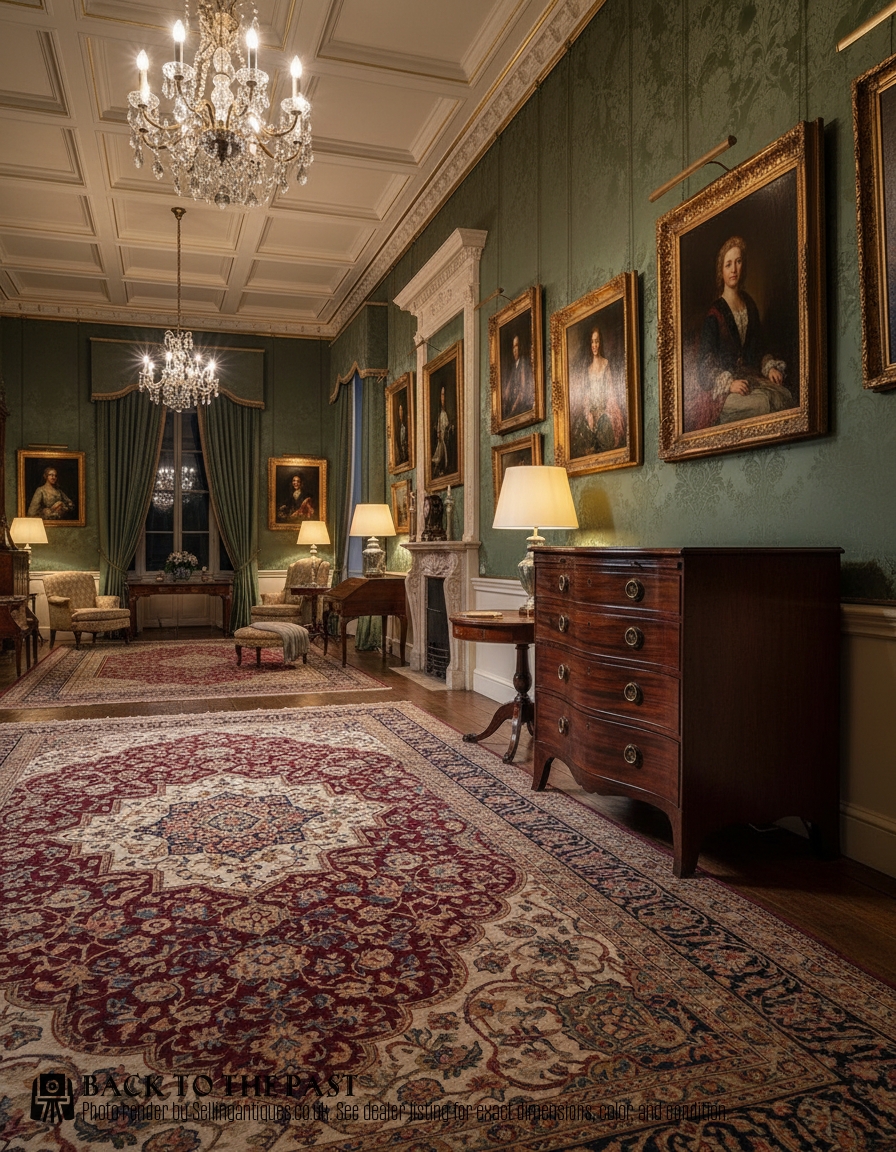
Georgian Serpentine Commode
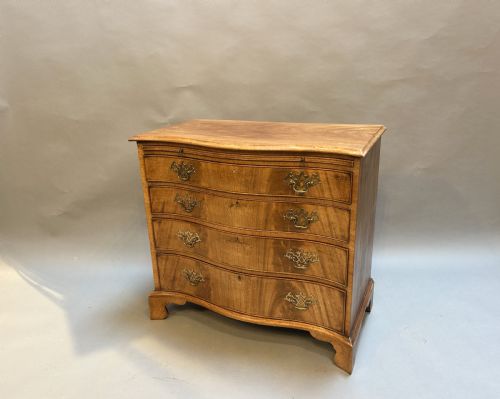
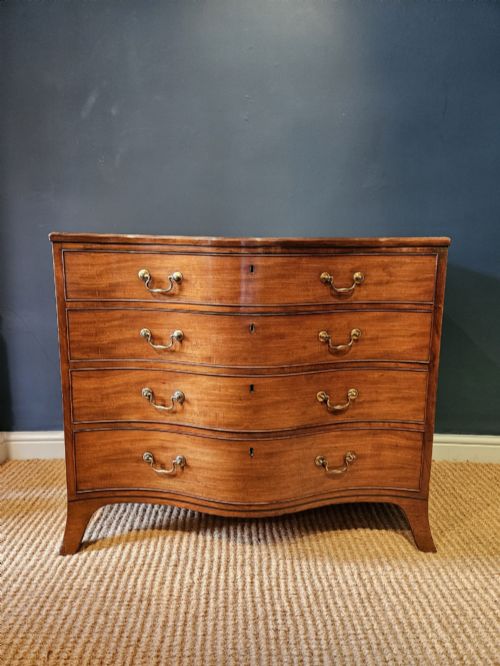
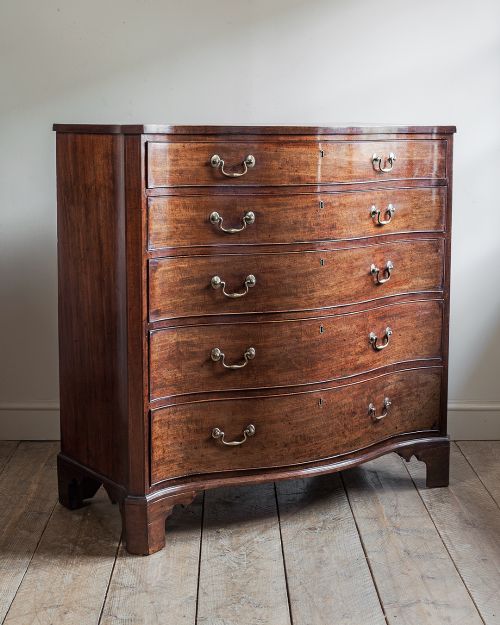
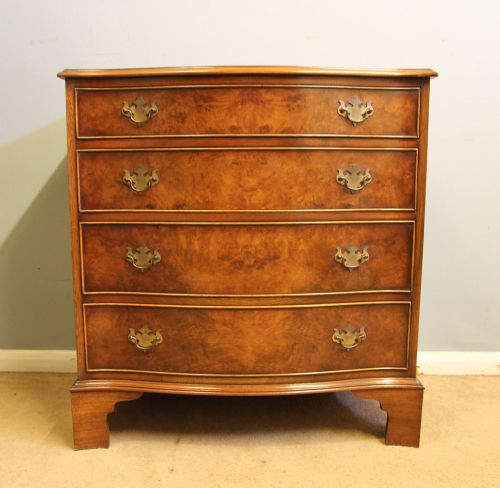
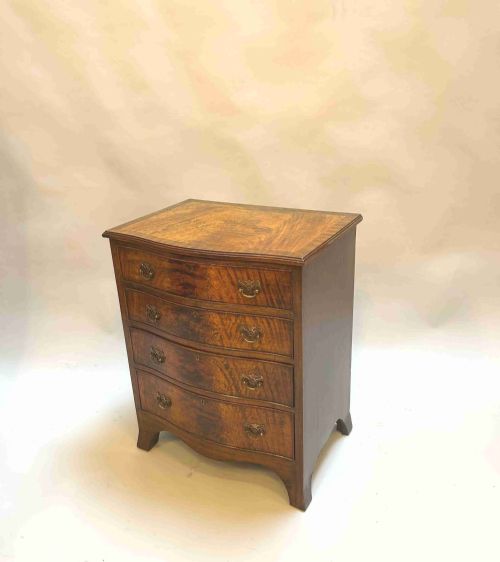
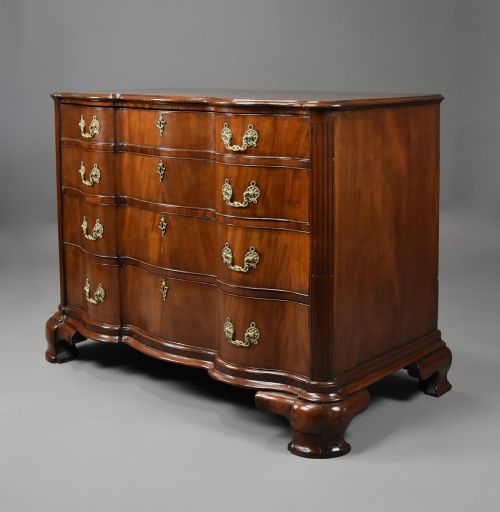
A georgian serpentine commode is a chest of drawers defined by a distinct undulating front that curves outward at the centre and inward at the sides, or vice versa. The pieces on this page span the eighteenth century through to later revival periods, bringing together authentic period forms and later interpretations.
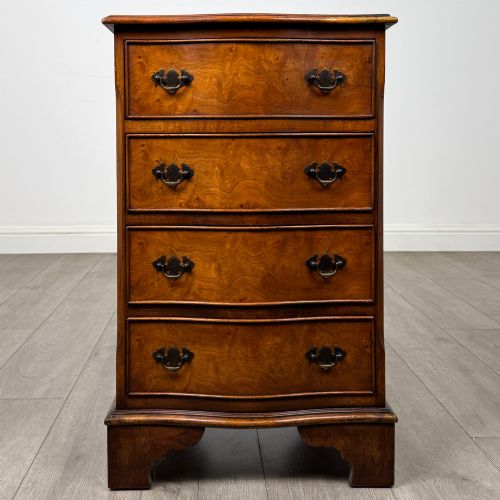
Most examples appear as mahogany chests of drawers, while others utilise burr walnut, walnut, and satinwood with boxwood inlay. Cabinets, cupboards, and bedside tables also adopt this wavy contour, though the classic four-drawer chest remains the most common form met here.
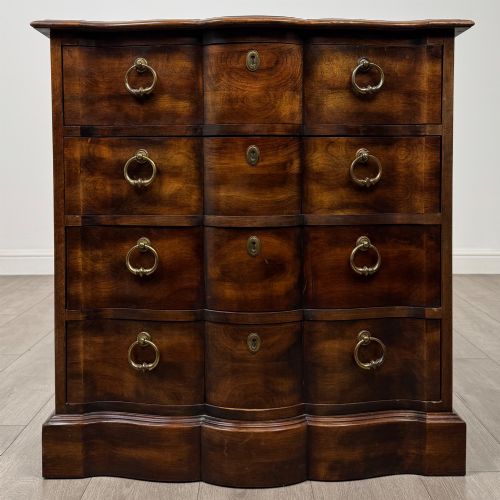
Origins stretch across British workshops as well as Continental makers, including Dutch and Bavarian pieces. Alongside genuine eighteenth-century creations, buyers will encounter Edwardian and twentieth-century revivals echoing George III and Chippendale styles.
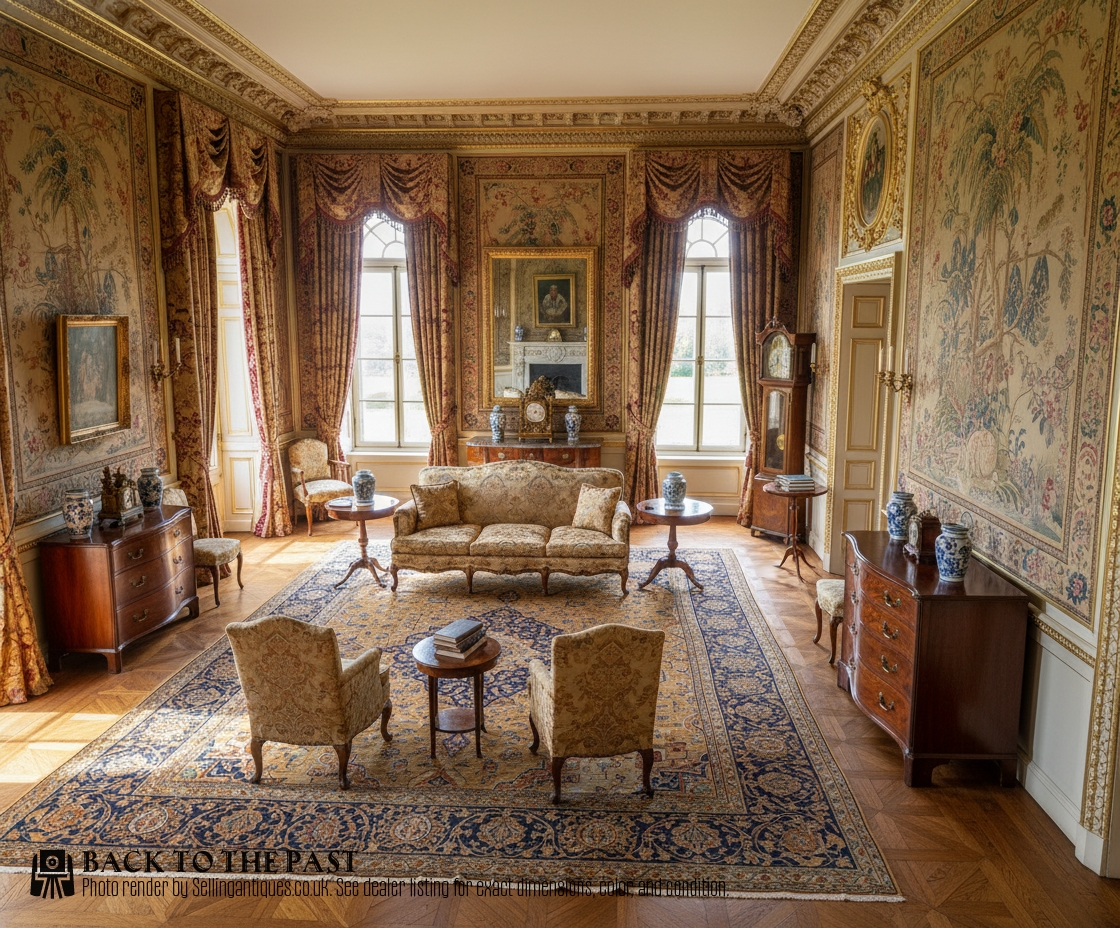
What Varies in Quality
The precision of the curved drawer fronts separates exceptional examples from simpler items, revealing the cabinetmaker's mastery in the smoothness of the wave and the tight fit of the drawers. Timber selection dictates visual depth, where highly figured mahogany or richly patterned burr walnut creates a more striking surface.
Proportion and architectural harmony define the finer pieces, particularly how the ogee or bracket feet support the weight above. Original brass hardware, crisp crossbanding, and secondary woods like oak contribute to the integrity of the piece.
Georgian Serpentine Commode Retail Price Guide 2026
Typical asking prices for georgian serpentine commode among the pieces listed under this phrase on Sellingantiques today, from the lower quarter to the upper quarter. They describe what is for sale here now, not the wider market.
Listings span the eighteenth century through to the 1930s, showcasing mahogany, burr walnut, and satinwood across chest and cabinet forms.
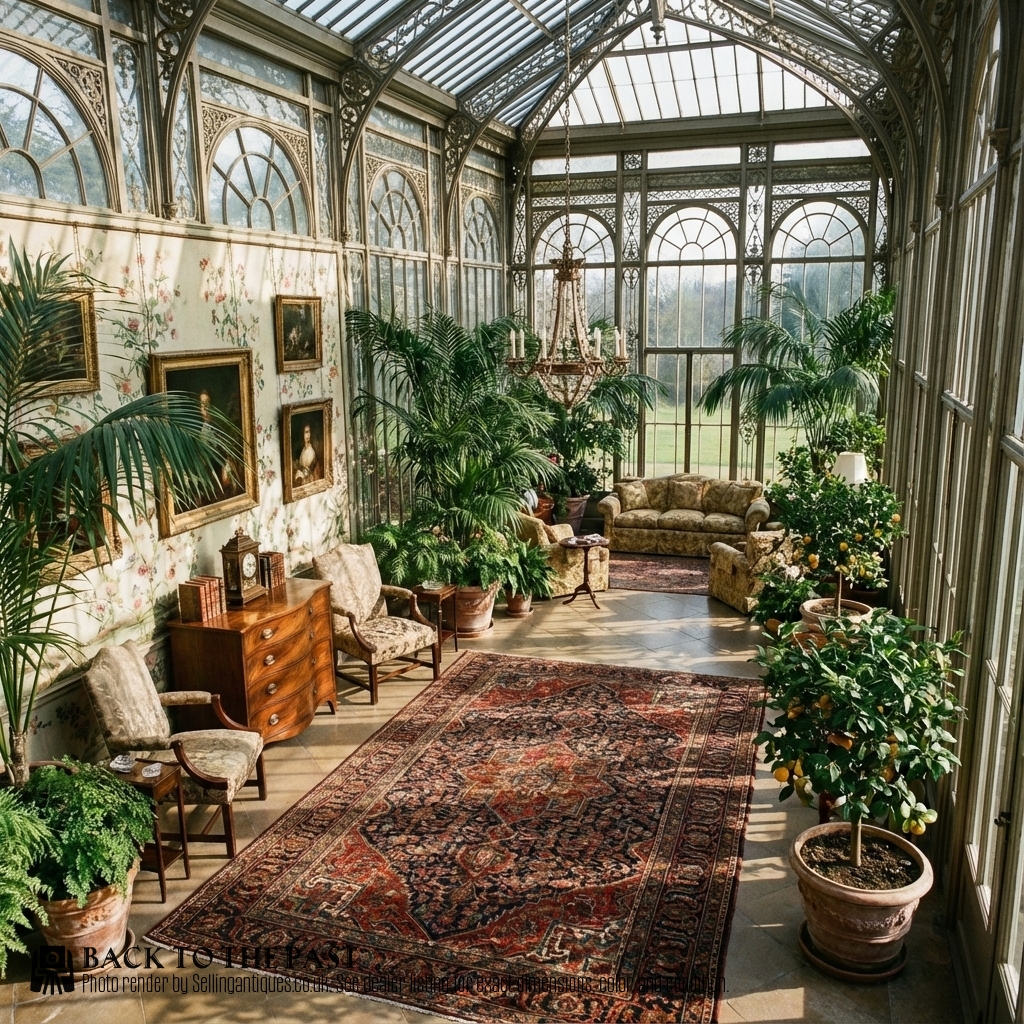
Mayhew and Ince
The Georgian Serpentine Commode Glossary
- Serpentine front
- A furniture front characterised by a double-curved line that sweeps outward and inward. This shape demands advanced woodworking skill to execute properly.
- Commode
- A decorative chest of drawers or cabinet. In eighteenth-century terminology, the term often describes low, elegant storage furniture.
- Crossbanding
- A narrow strip of veneer applied across the grain of the primary surface. It creates a contrasting border around drawer fronts and tabletops.
- Marquetry
- The art of forming decorative patterns using fitted pieces of various coloured woods. It frequently appears on satinwood and walnut revival surfaces.
- Brush slide
- A pull-out wooden shelf integrated above the top drawer. It served as a writing surface or a place to brush clothes.
Georgian Serpentine Commode: Frequently Asked Questions
What is a serpentine commode?
A serpentine commode is a chest of drawers or cabinet featuring a front that curves in a wave-like motion. The design creates a dynamic silhouette that sets it apart from standard flat-fronted furniture.
Cabinetmakers adopted this undulating form during the eighteenth century to add movement and luxury to high-end storage pieces.
How do I date a serpentine chest?
Dating relies on examining the secondary timbers, construction methods, and overall style. Eighteenth-century pieces typically show hand-cut dovetails and native woods like oak or mahogany inside the drawers.
Revival pieces from the Edwardian era or the twentieth century often utilise more uniform machine-sawn components while imitating earlier George III aesthetics.
Where should I place a commode?
These pieces suit living rooms, hallways, or master bedrooms where their curved profile can be appreciated from multiple angles. Their decorative fronts make them natural focal points against plain walls.
Because they offer substantial surface space on top, they also function well beneath a mirror or a hanging painting.
Are these pieces purely decorative?
While visually striking, they remain practical storage furniture built with deep drawers for everyday use. Many historic examples include fitted top drawers or sliding shelves for added utility.
Living with one involves balancing its historical craftsmanship with normal domestic storage needs.