

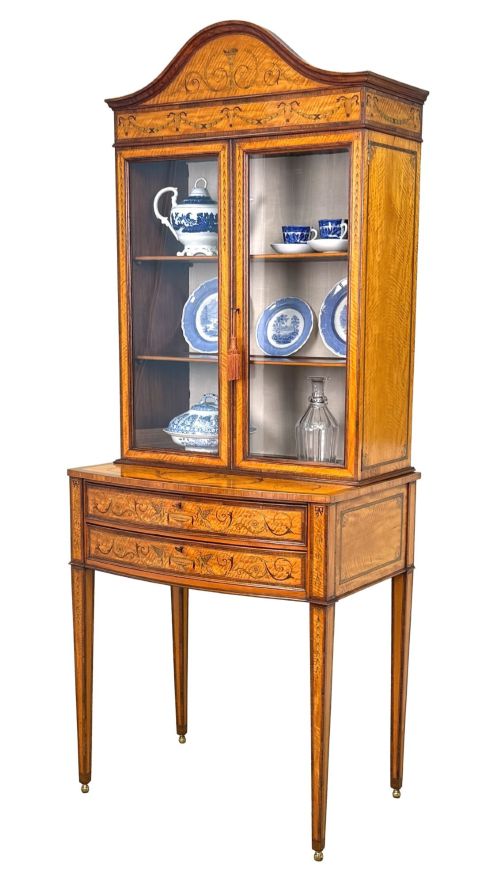
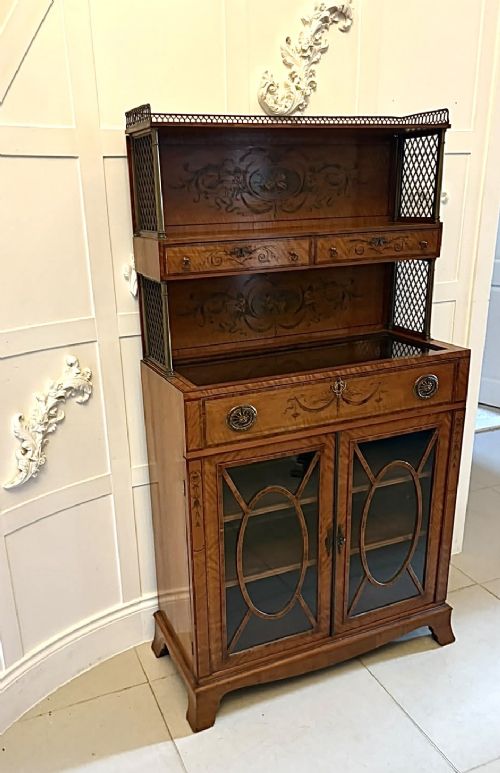
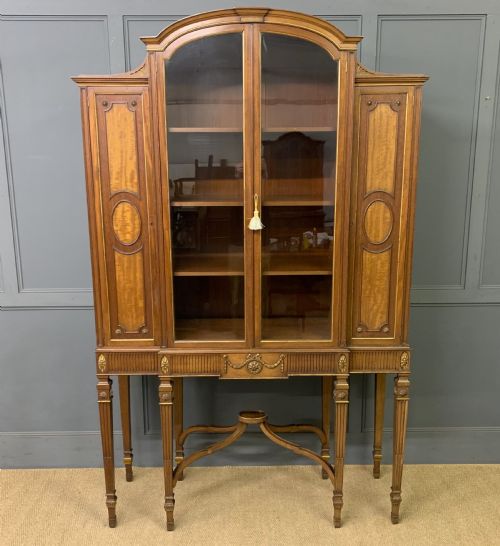
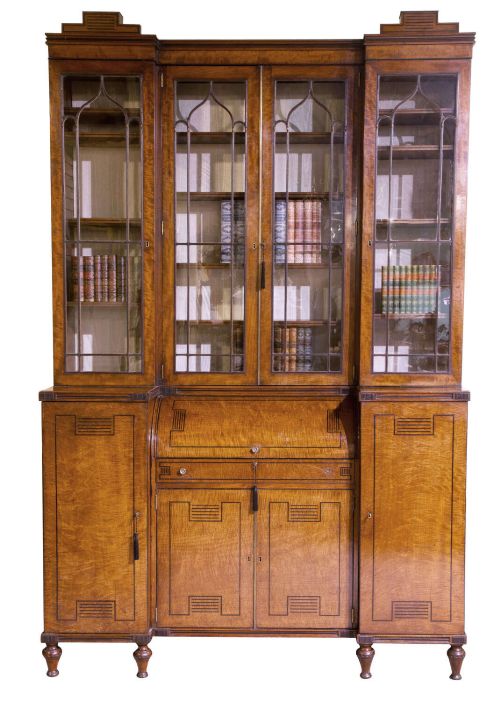
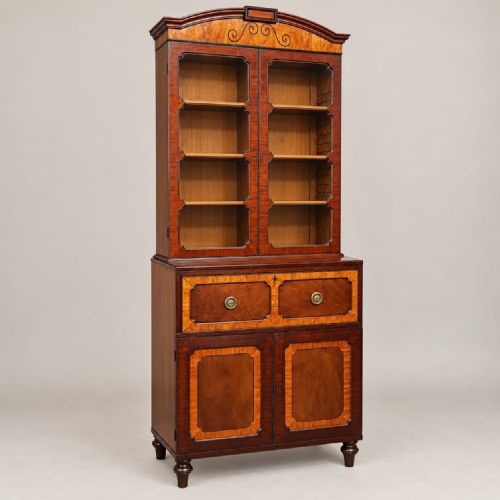
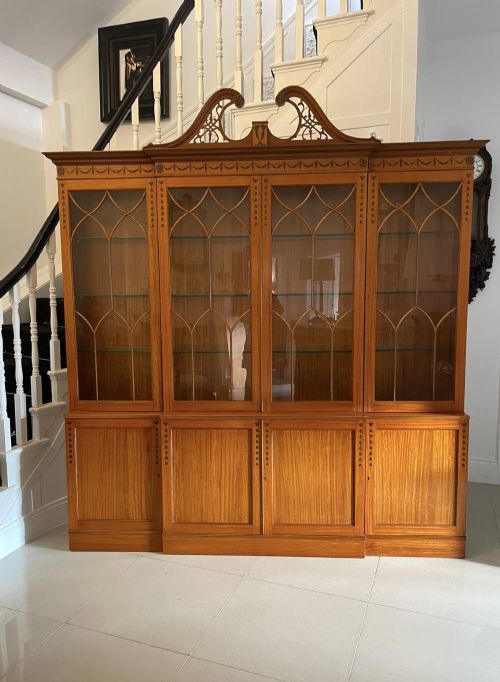
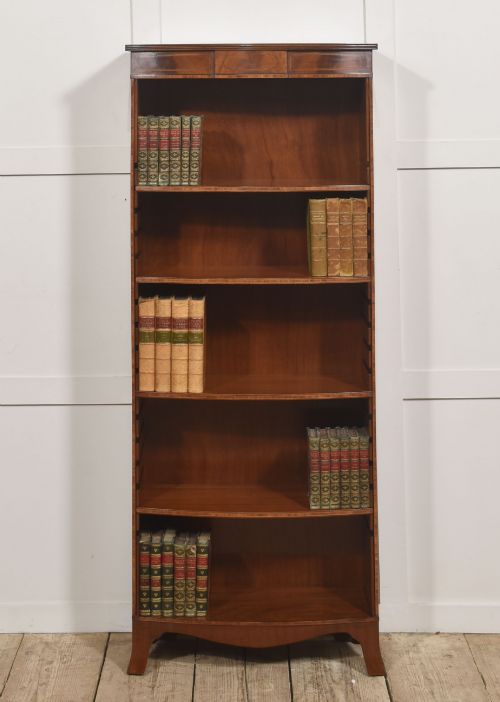
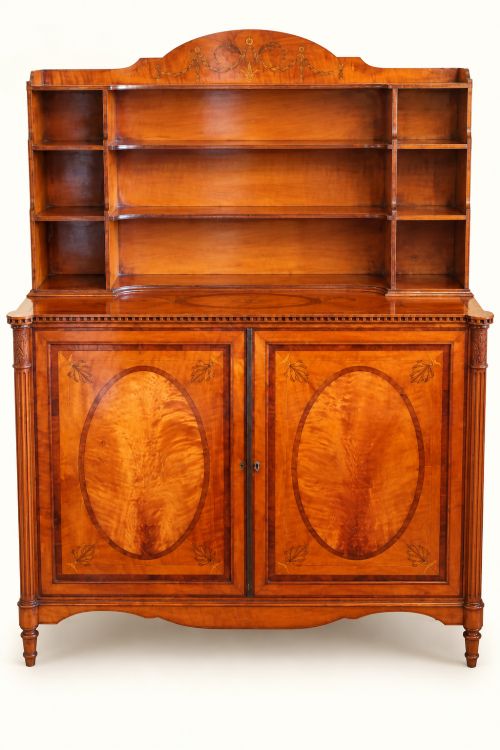
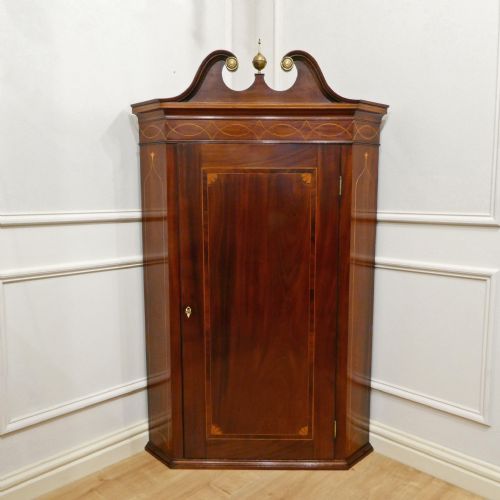


Georgian Satinwood Display Cabinet
A georgian satinwood display cabinet brings figured timber and glass together to showcase prized possessions.
Georgian Satinwood Display Cabinet
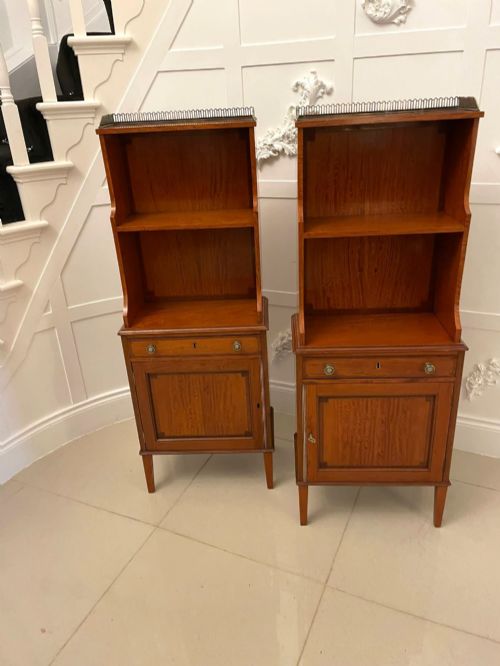
A georgian satinwood display cabinet encompasses refined display cabinets, corner cabinets, and bookcases designed to exhibit books and porcelains behind glass doors. These items span periods from the eighteenth century through to Edwardian Sheraton Revival interpretations.
The versions most commonly met here range from compact hanging shelves and corner cupboards to larger breakfront bookcases and secretaire cabinets. Makers utilised sophisticated timber framing to create both freestanding and wall-hung storage forms.
How they were made
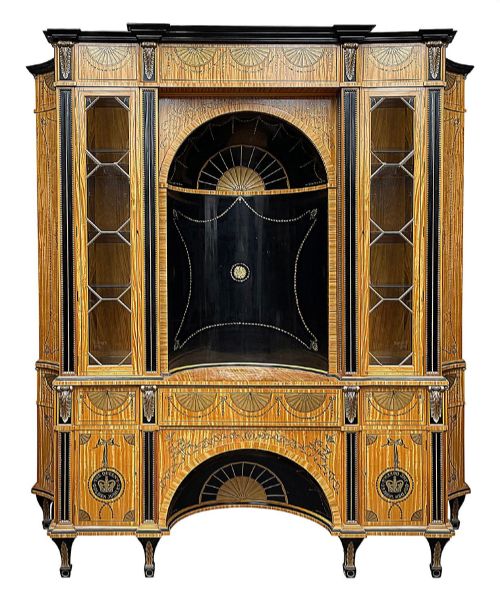
Cabinet makers built carcases primarily from timber such as mahogany, applying satinwood veneers across the visible surfaces. They enhanced these panels using boxwood and ebony stringing alongside intricate marquetry and parquetry patterns.
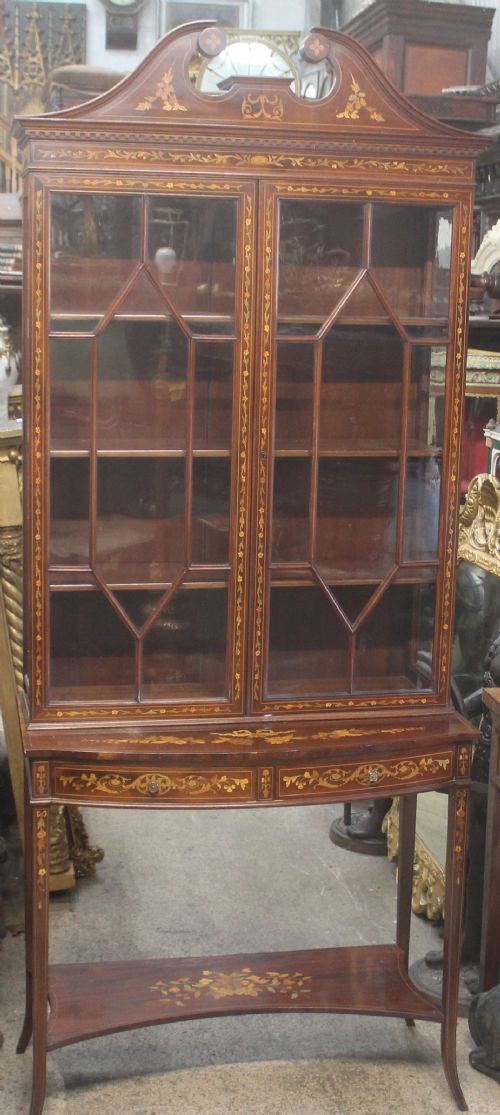
Glazing typically involves timber or brass framing divided into astral bars, while painted decoration and original hardware complete the construction of these decorative pieces.
Georgian Satinwood Display Cabinet Retail Price Guide 2026
Typical asking prices for georgian satinwood display cabinet among the pieces listed under this phrase on Sellingantiques today, from the lower quarter to the upper quarter. They describe what is for sale here now, not the wider market.
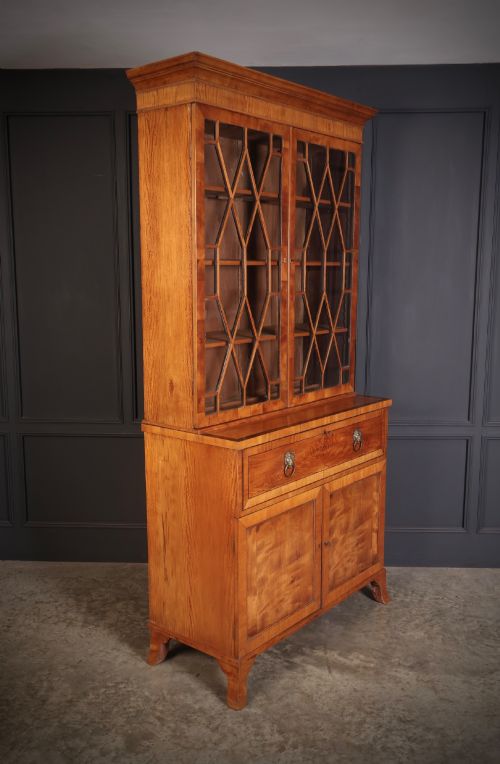
One cabinet hides a drop-down writing drawer inside, proving that past owners enjoyed a secret desk behind their library glass.
What varies in quality
The standard of execution in timber inlay and marquetry defines the upper tier of pieces, where fine contrasting woods create crisp botanical or geometric motifs. Lesser examples rely on simpler painted decoration or plain timber surfaces without complex veneers.
Structural ambition also separates standard production from exhibition quality work, seen in breakfront forms, serpentine profiles, and integrated secretaire drawers that require precise joinery.
Waring and Gillow·Shoolbred of London·Edwards and Roberts
The Georgian Satinwood Display Cabinet Glossary
- Satinwood
- A durable hardwood featuring a lustrous, golden sheen that takes a fine polish. It serves as the primary veneer for eighteenth and nineteenth century decorative cabinets.
- Marquetry
- The art of applying small pieces of veneer to a structure to form decorative patterns. Craftsmen utilised various timber species to build pictorial or geometric designs.
- Secretaire
- A cabinet incorporating a pull-down writing drawer fitted with small interior compartments and pigeonholes. This form combines the utility of a desk with a bookcase.
- Astral glazing
- Glass doors divided into small panes by slender wooden bars. This technique creates a light, grid-like framework for viewing cabinet contents.
- Parquetry
- A geometric mosaic of wood pieces used for surface decoration. It differs from marquetry through its strict reliance on angular, repeating patterns.
Georgian Satinwood Display Cabinet: Frequently Asked Questions
How do I date a satinwood cabinet?
Dating relies upon examining construction methods, timber choices, and stylistic markers such as neoclassical inlay or Edwardian revival details.
Earlier pieces from the eighteenth century exhibit hand-cut dovetails and authentic cabinetmaker joinery, whereas later revival items often display machinery-tooled elements and distinct secondary woods.
Where should I place a corner cabinet?
Corner cabinets fit directly into interior room angles, utilising space that standard rectangular furniture leaves empty.
Their triangular footprint makes them suitable for smaller parlours or dining rooms where floor area is limited.
How do I care for antique veneer?
Antique veneer requires stable indoor humidity and protection from direct sunlight to prevent the timber from drying out or warping.
Regular dusting with a dry cloth preserves the polished satinwood surface without stripping the historic finish.