



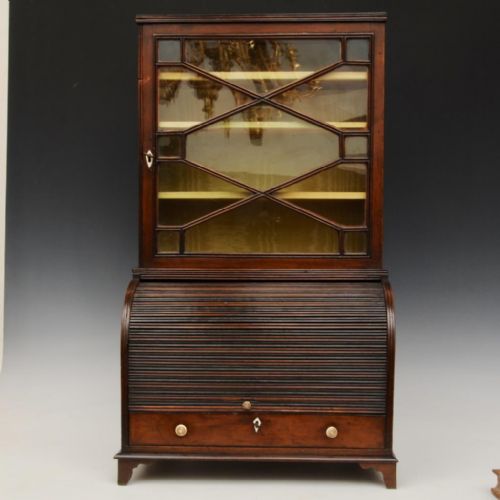
Georgian Salesmans Sample
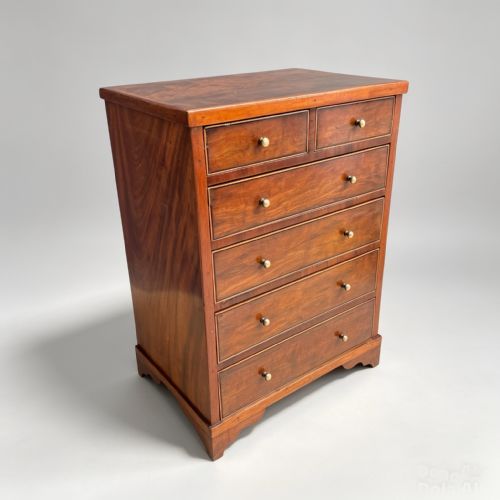
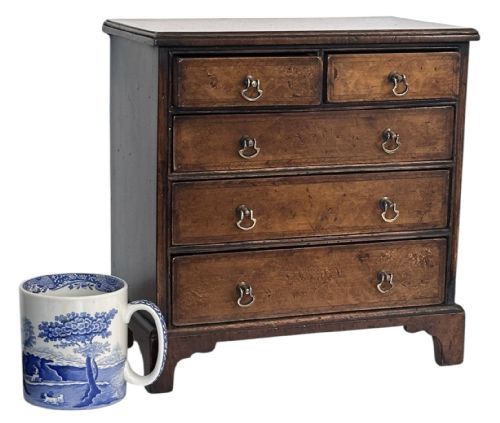
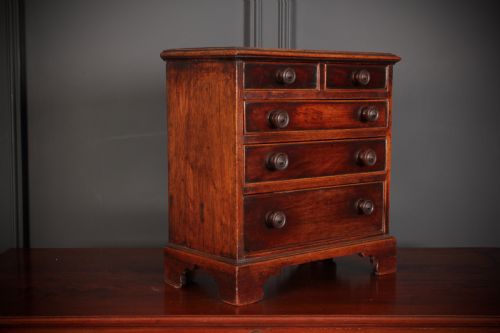
These georgian salesmans sample pieces are scaled-down demonstration models that let master craftsmen and travellers show full-sized designs to clients.
Georgian Salesmans Sample
A georgian salesmans sample or apprentice piece typically takes the form of a miniature chest of drawers, a bureau bookcase, or a small chest made to exacting proportions. These items represent reduced versions of larger domestic furniture, built with the same care and construction methods as their full-scale counterparts.
The pieces appearing in this category span the 18th century, the Georgian and Regency periods, and into the 19th and early 20th centuries. Mahogany is the predominant wood encountered, alongside oak, walnut, burr yew, and pine.
Makers utilised various traditional styles, including George II style, alongside plain Georgian and Victorian interpretations. Miniature furniture and miniature chests of drawers form the core of what is available to collectors.
Materials and construction methods
Cabinetmakers constructed these miniature items using solid timbers such as mahogany, oak, and walnut, frequently incorporating brass hardware for handles and escutcheons. Fine examples feature detailed elements like french polishing and careful timber selection, such as burr yew veneers.
The joinery mirrors standard cabinetmaking of the period, employing dovetailed drawer construction and precise miniature proportions. Secondary woods like pine appear in internal framing and drawer linings.
Current listings feature mahogany, oak, walnut, burr yew, and pine across pieces spanning the 18th century through to the early 20th century.
Judging the standard of miniature furniture
Quality in a georgian salesmans sample rests on the fidelity of the reduction and the standard of the timber selection. Finer examples display figured veneers, such as burr yew or figured walnut, matched across drawer fronts with genuine cabinetmaker precision.
The handling of secondary details separates casual scale models from serious workshop pieces. Crisp dovetails, proportionate brass fittings, and clean internal secondary woods indicate the work of a skilled hand rather than a hurried novelty.
The Georgian Salesmans Sample Glossary
- Apprentice piece
- A small-scale item of furniture traditionally made by a learner craftsman to demonstrate proficiency to a guild or master.
- French polished
- A wood finishing technique using shellac dissolved in alcohol applied in thin layers with a rubber pad to achieve a high gloss.
- Dovetail
- A joint formed by interlocking wedge-shaped fingers, commonly used in drawer construction for structural strength.
- Burr yew
- A timber taken from the growth growths on a yew tree, valued for its complex, swirling grain patterns in fine cabinetwork.
- Escutcheon
- A flat plate of brass surrounding a keyhole, protecting the surrounding wood from wear.
Georgian Salesmans Sample: Frequently Asked Questions
What is a salesman's sample?
A salesman's sample is a portable miniature version of a larger piece of furniture, created so that makers or agents could display designs and wood choices to prospective buyers without transporting heavy items.
These pieces were constructed with the same meticulous joinery and materials as full-sized furniture, serving as both functional demonstration tools and objects of fine craftsmanship in their own right.
What woods were used?
The listings show a strong preference for mahogany, alongside oak, walnut, burr yew, and pine.
Cabinetmakers selected these timbers to match the fashionable full-scale furniture of the Georgian, Regency, and Victorian eras, often using decorative veneers on primary surfaces.
How do I date these miniatures?
Dating relies on identifying the prevailing style, construction techniques, and timber choices relative to known periods like the 18th century, Georgian, Regency, or Victorian eras.
Examining the secondary woods inside drawers and the style of the brass hardware provides further clues to the manufacturing decade.