




Georgian Rural Landscape Artwork
Georgian rural landscape artwork brings the quiet fields and country paths of past centuries directly onto a wall.
Georgian Rural Landscape Artwork
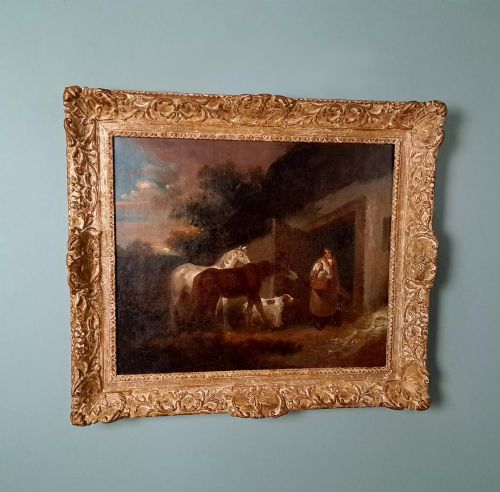
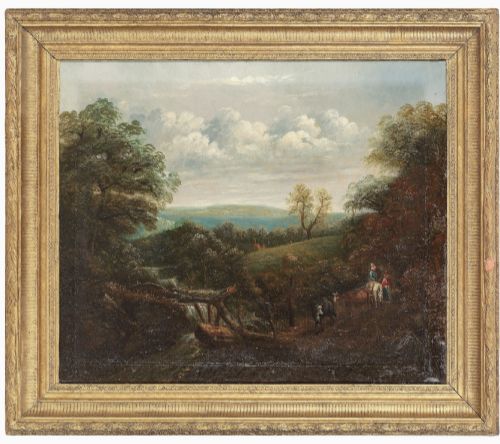
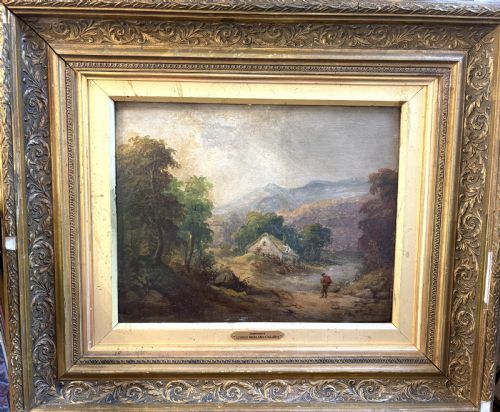
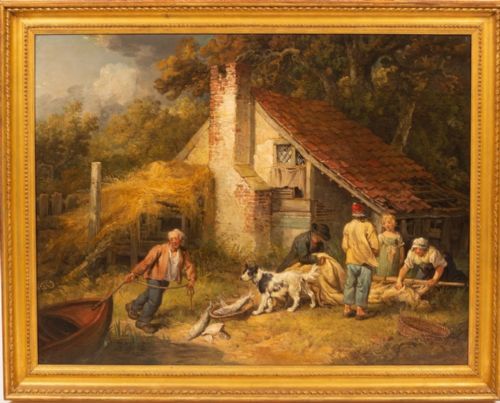
When you search for georgian rural landscape artwork, you encounter paintings and watercolours depicting pastoral scenes, country cottages, and farmyard views. These pieces capture the British countryside through the eyes of artists working during the Georgian era and the early nineteenth century.
The selections on this page span oil paintings on canvas or wood panel alongside watercolours and sand pictures. Common subjects include figures on country paths, windmills, and rustic farm scenes executed in styles ranging from the Norwich School to British pastoralism.
Materials and construction
Makers applied oil paint to stretched canvas, prepared wood panels, or paper, occasionally using sand to build tactile pastoral scenes. Artists of the period worked by hand with traditional pigment mixtures to achieve the soft light and natural tones of the countryside.
Many surviving examples retain their original gilt or giltwood frames, which complement the earth tones of the rural compositions.
Materials across these listings include oil paint, canvas, wood panels, paper, glass, and sand.
Judging quality and execution
Superior works display a confident handling of light and shade, particularly in the rendering of skies, foliage, and human figures along country paths. The precision of brushwork and the natural integration of subjects into the landscape distinguish the finer examples from simpler provincial efforts.
Condition of the canvas or wood panel, alongside the preservation of the original paint surface and framing, determines the overall integrity of the piece.
William Joseph Shayer Senior·George Morland·Julius Caesar Ibbetson·James Ward
The Georgian Rural Landscape Artwork Glossary
- Norwich School
- A regional movement of artists inspired by the landscapes of Norfolk, prominent in the early nineteenth century. Members focused closely on local scenery, skies, and rural life.
- Giltwood
- Timber carved and coated with a thin layer of gold leaf or gold paint. This material is frequently found on the frames housing period paintings.
- Wood Panel
- A solid flat piece of timber used as a rigid support for oil painting before canvas became standard. Panels provide a stable surface that preserves fine brushwork over centuries.
- Sand Picture
- A framed artwork created by fixing coloured sands to a backing to build up a pictorial scene. These detailed works often depict rural farmyards and rustic subjects.
Georgian Rural Landscape Artwork: Frequently Asked Questions
What periods do these artworks cover?
The pieces span the late eighteenth century through the Georgian era into the nineteenth century and Victorian periods. Most examples reflect pastoral aesthetics popular during these decades.
Artists worked within recognised traditions like the Norwich School and British pastoralism, recording country paths, cottages, and rural labourers.
How should I hang an oil painting?
Protect the canvas or wood panel from direct sunlight and dramatic shifts in room temperature or humidity. Mount the piece securely to a wall using appropriate fixings suited to the weight of the frame.
Keep the artwork away from direct heat sources to preserve the oil paint and the integrity of the original giltwood frame.
Are sand pictures fragile?
Sand pictures require careful handling because the bonded mineral grains can dislodge if the frame receives a sharp knock. They are best kept behind glass where possible to protect the surface.
Avoid tilting or shaking the frame to ensure the sand composition remains undisturbed on its backing.
How do I identify a Norwich School painting?
Look for characteristic depictions of local Norfolk landscapes, flatlands, windmills, and rural skies executed during the early nineteenth century. The brushwork typically captures natural light and atmospheric depth.
Many works feature country paths with figures engaged in daily rural tasks, reflecting the regional focus of the movement.