
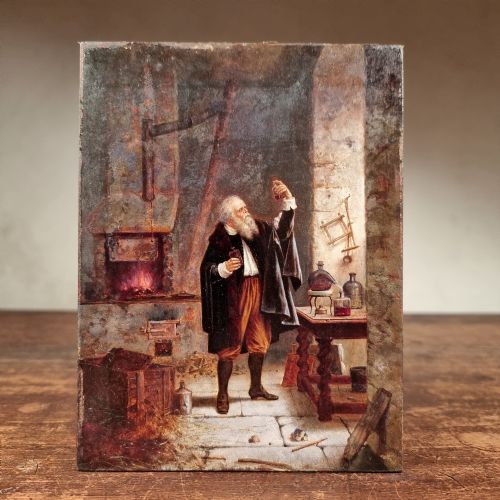
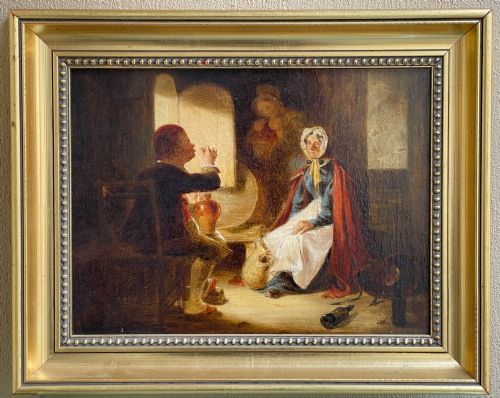


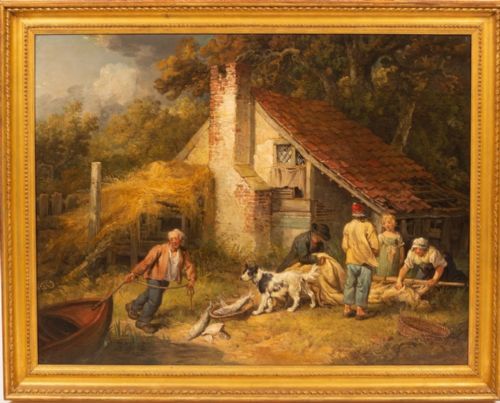


Georgian Genre Scene Painting
Georgian genre scene painting brings everyday life into view through oil on canvas, wood panels, and watercolours.
Georgian Genre Scene Painting
When you search for georgian genre scene painting, you find works depicting domestic interiors, tavern scenes, and countryside moments. These pieces show figures at home, at local houses, or outdoors in gardens and landscapes.
The works on this page include oil paintings, oil on panel, watercolours, and mezzotint engravings. Painters capture figures in daily routines, from domestic interiors to country scenes and group portraits.
While the style covers the Georgian and Victorian eras, the subjects focus on human activity rather than formal portraiture. You meet figures engaged in simple daily actions, recorded by artists working across the eighteenth and nineteenth centuries.
How they were made
Artists apply oil paint to canvas or wood panels, building up composition and detail with fine brushes. Watercolours on paper offer a lighter medium for figurative scenes and portraits.
Many works sit within giltwood frames that complement the painting. Engravings use printed colours on paper to reproduce original compositions for a wider audience.
Listings feature oil on canvas, wood panels, watercolours, and mezzotint engravings across the eighteenth and nineteenth centuries.
What varies in quality
Quality rests in the handling of brushwork and the clarity of the figures within the scene. A stronger painting places characters naturally within a detailed domestic or tavern interior.
The integration of canvas, wood panels, and framing materials contributes to the overall presence of the artwork. Works by named artists demonstrate a firmer grasp of human form and narrative depth.
George Kilburne·John Sanderson Wells·Frank Moss Bennett·Rolinda Sharples·George Morland
The Georgian Genre Scene Painting Glossary
- Genre painting
- Painting that depicts aspects of everyday life by portraying ordinary people engaged in common activities. These works focus on domestic interiors, tavern scenes, and outdoor rural moments.
- Oil on panel
- A painting executed on a wooden support rather than stretched canvas. This technique appears frequently in eighteenth-century works.
- Watercolour
- A painting method where fine pigment is suspended in a water-based solution on paper. It allows for translucent washes and delicate detail.
- Mezzotint
- A printmaking process where the image is worked from dark to light on a copper plate. Printed examples often capture painted compositions in colour.
- Giltwood
- Wood carved and covered with a thin layer of gold leaf. Frames made in this manner frequently surround oil paintings and watercolours.
Georgian Genre Scene Painting: Frequently Asked Questions
What is a genre scene?
A genre scene depicts ordinary people engaged in daily activities rather than historical events or grand portraits. These works show domestic life, tavern gatherings, and outdoor country scenes.
Artists use these subjects to capture the character and social habits of past periods. The focus remains on human interaction and narrative detail.
Are these paintings from the Georgian period?
The selections span the eighteenth and nineteenth centuries, including works created during the Victorian and Edwardian eras. Some pieces date directly to the Georgian period, while others interpret those historic styles later.
Examining the materials, framing, and recorded dates helps place each artwork in its specific era. Painters from the nineteenth century often revisited Georgian subject matter.
What surfaces were used for these paintings?
Artists painted on stretched canvas, wooden panels, and paper. Oil paint suits canvas and wood supports, while watercolours require paper.
Each material affects the texture and preservation of the work. Wood panels appear in smaller eighteenth-century pieces, whereas larger canvases support expansive interior and landscape compositions.
How do I hang a framed oil painting?
Secure fixings that match the weight of the canvas and its giltwood frame should be attached directly to wall studs. Hang the artwork away from direct sunlight and fluctuating heat sources to protect the paint.
Positioning the painting at eye level ensures the details of the figures and interior can be clearly observed. Stable wall conditions preserve both the canvas and the wooden support.