

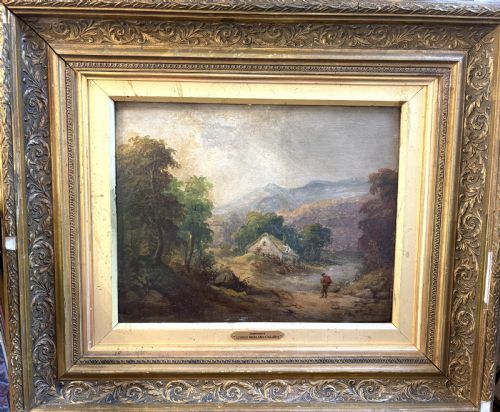


18th Century English Landscape
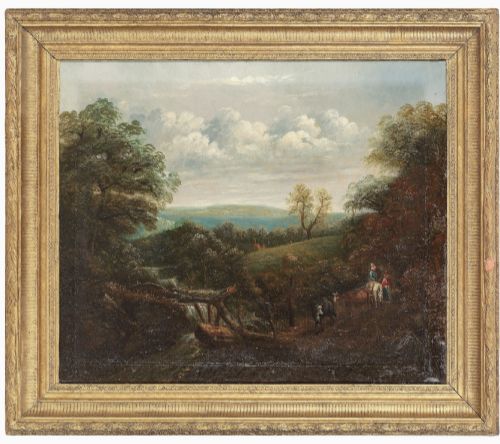
An 18th century english landscape captures the rural topography and pastoral idyll of the Georgian countryside through oil, watercolour, and ink.
18th Century English Landscape
An 18th century english landscape encompasses oil paintings, watercolour sketches, ink drawings, and period engravings depicting rural scenes, country paths, and topographical views.
The selections on this page range from oil on canvas and wood panel to pen and ink drawings, often grouping countryside vistas with figures, cattle, or historic architecture.
Buyers encountering this material will find both finished gallery works by named painters and naive topographical studies by provincial artists working in the Georgian period.
How they were made
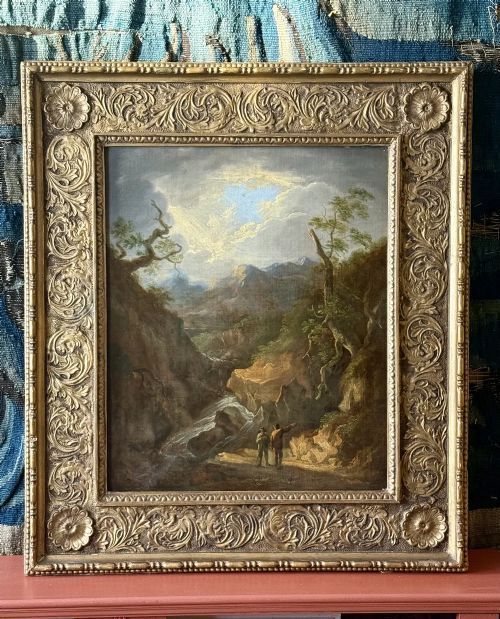
Artists utilised oil on canvas, oak panel, and board, applying pigments with confident brushwork to capture natural light across rural terrain.
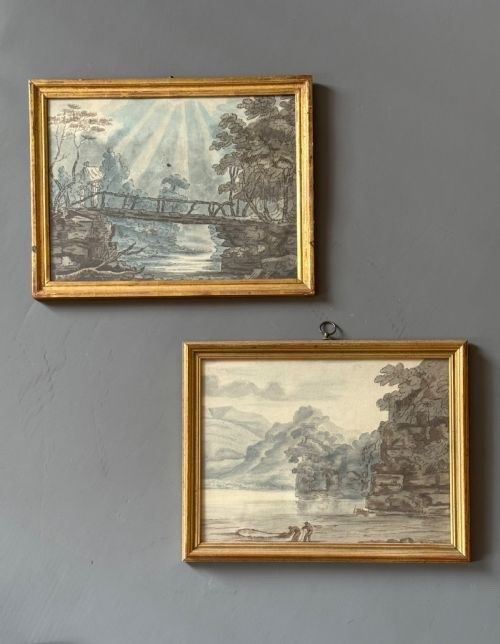
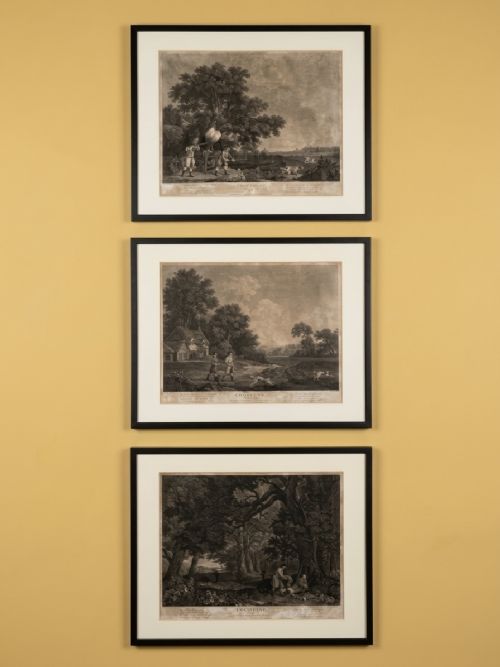
Works on paper rely on watercolour, gouache, pen, and ink, sometimes finished with hand-colouring or aquatint engraving techniques developed in the Georgian era.
Represented styles span the Georgian period, Norwich School, English Country tradition, and Regency topographical art.
What varies in quality
The strength of composition and handling of atmospheric light distinguish superior canvases and watercolours from standard topographical records.
Provenance and attribution to documented artists elevate individual pieces, alongside the survival of original giltwood framing.
Benjamin Barker of Bath·George Morland·Joseph Farrington·Thomas Rowlandson
The 18th Century English Landscape Glossary
- Aquatint
- An etching technique that produces tones resembling watercolour washes. It was frequently utilised in the period for reproductive prints.
- Gouache
- An opaque watercolour medium used by artists to achieve solid areas of colour and sharp detail in landscape studies.
- Giltwood
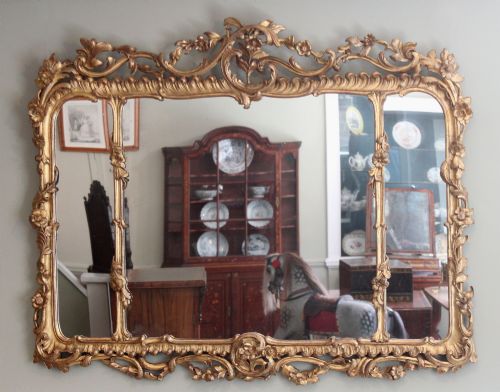
- Carved wood finished with a thin layer of gold leaf, commonly seen on period frames and overmantle mirrors.
- Topographical
- Pertaining to the accurate representation of specific places, buildings, or local countryside views rather than imaginary compositions.
- Mezzotint
- A printmaking process where the copper plate is roughened to produce rich tonal gradations of light and shade.
18th Century English Landscape: Frequently Asked Questions
What subjects appear in these landscapes?
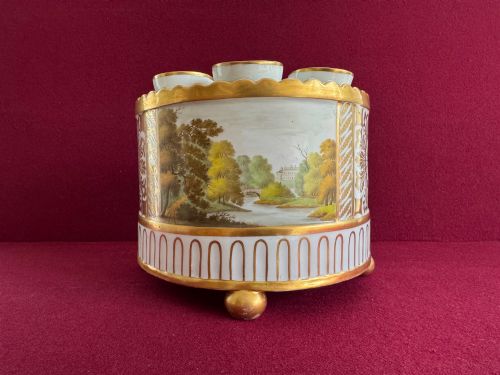
These works typically show rural paths, rivers, country houses, cottages, and agricultural scenes populated by figures, farm animals, or travellers.
Many pieces also record specific British towns, castles, lakes, and topographical views from the Georgian era.
Are these works painted on canvas or panel?
Painters of the period utilised various supports, including stretched canvas, oak panels, and board for oil compositions.
Works on paper rely instead on watercolour, ink, gouache, and graphite applied by hand or reproduced through period engraving.
How do I identify a Georgian watercolour?
Georgian watercolours on paper often display muted earth palettes, delicate pen outlines, and subtle wash techniques used to build atmospheric depth.
They frequently appear mounted in period frames alongside contemporary ink sketches and topographical prints.
How should I display period paintings?
Oil paintings and watercolours from this era suit traditional or period interiors, particularly when housed within contemporary giltwood or wooden frames.
Placing them away from direct sunlight protects the pigments on both canvas and paper from fading over time.