





Georgian Potboard Dresser
When you search for a georgian potboard dresser, you uncover robust utilitarian tables defined by a low slatted shelf built to hold heavy kitchen crockery.
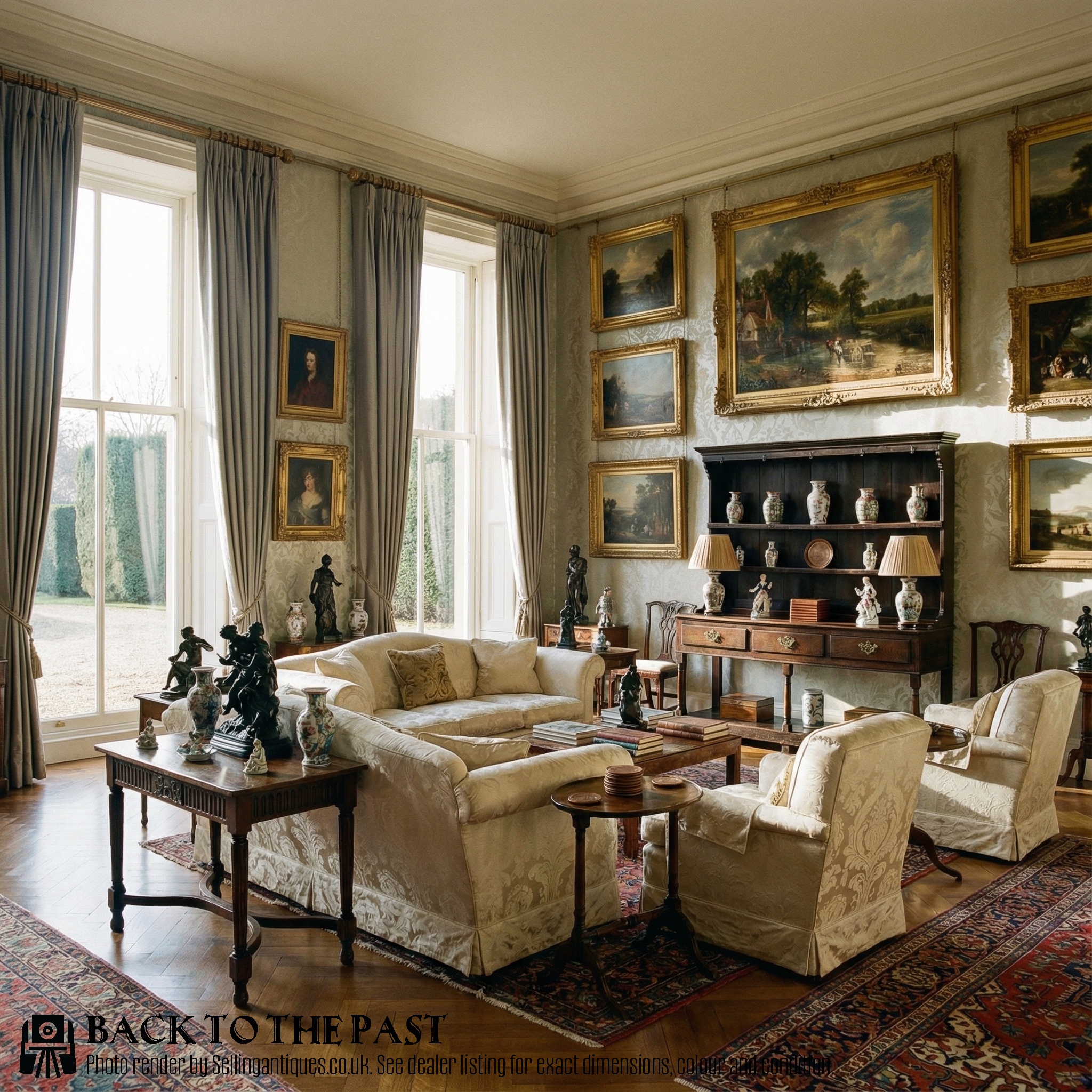
Georgian Potboard Dresser
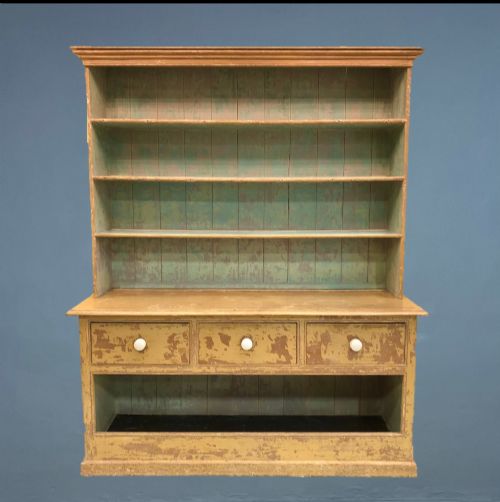
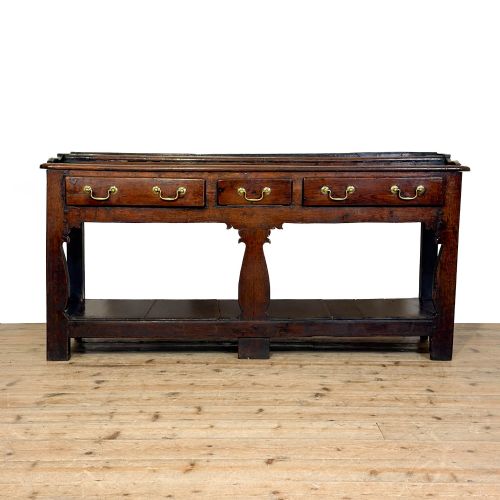
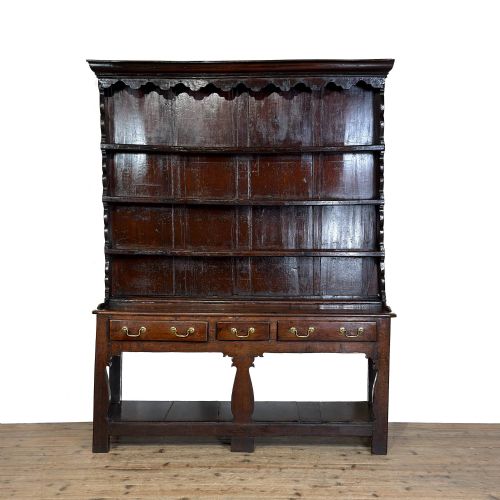
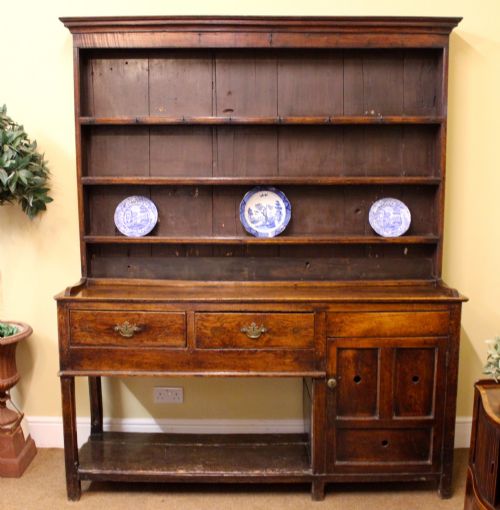
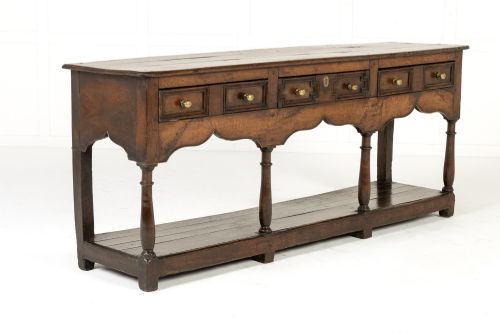
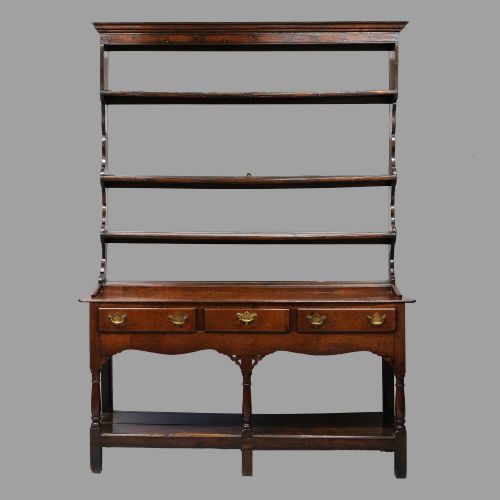
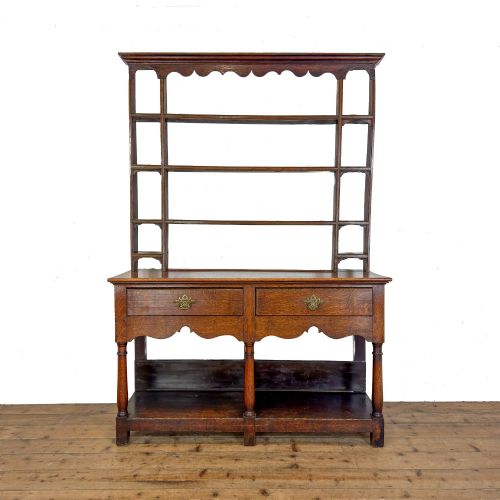
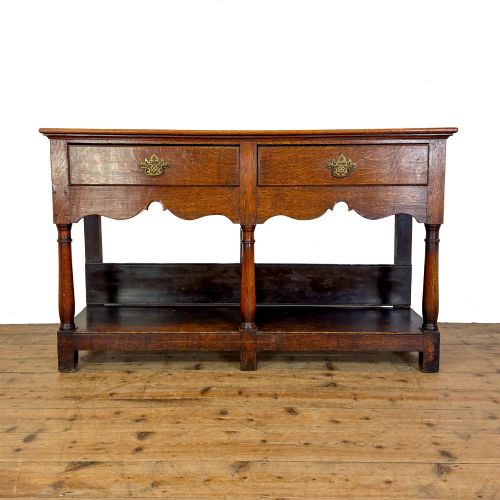
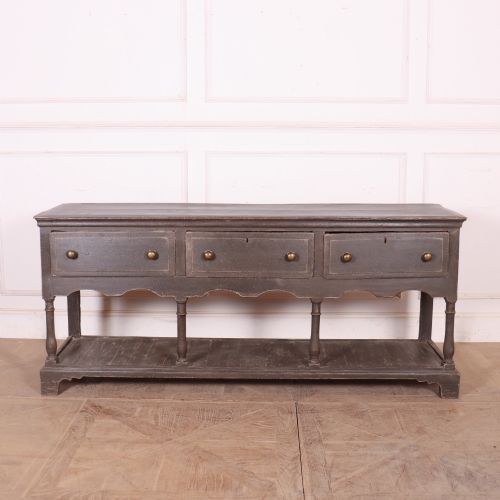
A georgian potboard dresser is a substantial dining room or kitchen storage unit featuring a long surface above drawers, supported by legs connected near the floor by a flat shelf called a potboard. These items originate predominantly from 18th-century and 19th-century English and Welsh workshops, reflecting regional vernacular traditions.
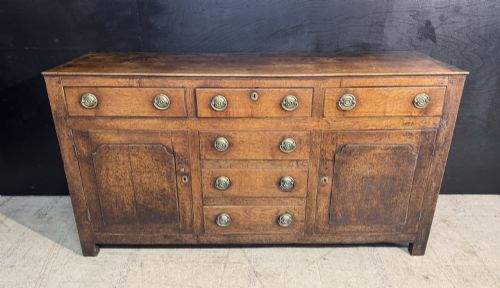
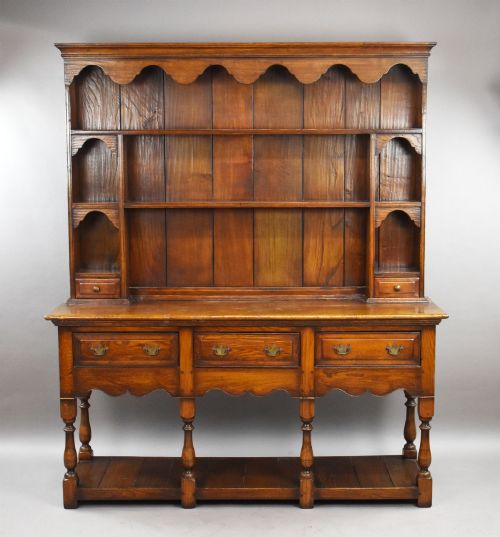
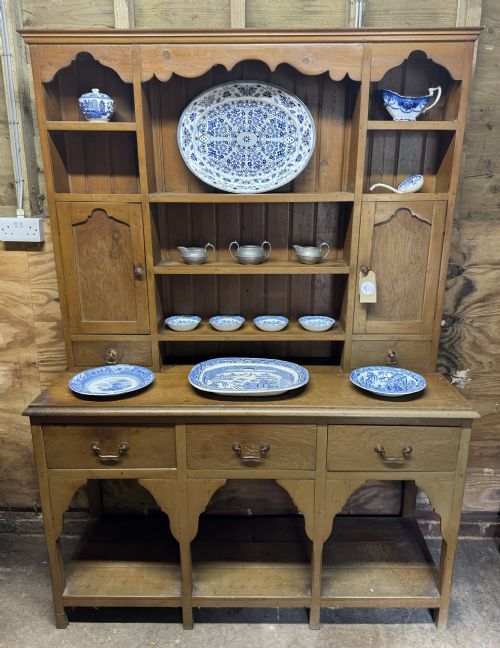
Buyers commonly encounter low dresser bases alongside tall pieces complete with original or associated upper plate racks. The proportions range from compact cottage examples to large farmhouse serving tables.
The form developed to store heavy earthenware, metal platters, and cooking pots away from damp stone floors, making them practical focal points for country house interiors.
Materials and construction
Cabinetmakers built these pieces primarily using native timbers such as solid oak, supplemented occasionally by regional pine or elm for secondary framing and drawer linings. Joinery relied on sturdy pegged mortise and tenon joints designed to withstand heavy daily use.
Surfaces often show hand-planed finishes, wooden drawer pulls or brass drop handles, and accumulated layers of historic paint or wax patina built up over generations.
Georgian Potboard Dresser Retail Price Guide 2026
Typical asking prices for georgian potboard dresser among the pieces listed under this phrase on Sellingantiques today, from the lower quarter to the upper quarter. They describe what is for sale here now, not the wider market.
Generations of kitchen pots left honest ink stains and scrubbed grooves across these historic timber boards.
Assessing quality and proportion
The distinction between standard utility items and finer examples rests on timber selection, structural balance, and the retention of original surface finishes. Well-proportioned drawer arrangements, untouched patination, and robust potboards elevated securely off the floor indicate superior cabinet work.
Altered heights, replaced boards, or heavy modern stripping detract from historical integrity, whereas untouched timber grain and honest signs of wear reveal authenticity.
The Georgian Potboard Dresser Glossary
- Potboard
- The lower shelf fixed between the legs of a dresser base, traditionally used for storing pots and pans. This feature distinguishes these tables from standard sideboards.
- Dresser base
- The lower cabinet portion of a dresser, featuring a flat working surface and multiple drawers above the under-tier. Many survive independently without their upper plate racks.
- Plate rack
- The wooden shelving superstructure mounted above a dresser base to display ceramic plates and platters. Finding a rack that matches the period and timber of the base is uncommon.
- Vernacular furniture
- Domestic items made by local country cabinetmakers following regional traditions rather than metropolitan high-style designs. These pieces emphasise utility and local materials.
- Patina
- The surface sheen and colour acquired by timber through decades of handling, waxing, and exposure to light. Original patination is valued for its depth and visual warmth.
Georgian Potboard Dresser: Frequently Asked Questions
What is a potboard dresser?
A potboard dresser is a traditional storage table featuring a flat surface, drawers, and a low open shelf near the floor. They were standard fixtures in historical kitchens and dining rooms.
The lower shelf provided dry storage for heavy earthenware vessels and metal cookware, keeping utensils accessible and off cold stone floors.
How do I style a dresser base at home?
These low pieces function effectively as sideboards in dining rooms, kitchen islands, or hallway console tables. Their surface handles serving trays, lamps, and decorative objects easily.
The lower potboard offers an ideal space for stacking large art books, wicker baskets, or ceramic collections to add texture to a room.
Did these dressers always have plate racks?
Many surviving pieces were constructed as low dresser bases without upper plate racks, while others retain their tall shelving units. Both configurations are historically correct.
Over the centuries, bases and racks frequently became separated due to shifting interior layouts or moving houses.
How can I tell Welsh and English dressers apart?
Regional differences often appear in timber choices, drawer counts, and overall proportions. Welsh workshops frequently utilised local oak and incorporated distinctive board configurations.
Examining the internal construction methods and secondary woods helps clarify whether a piece originates from rural Wales or English provincial workshops.