

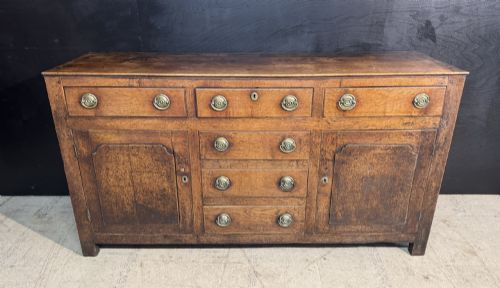
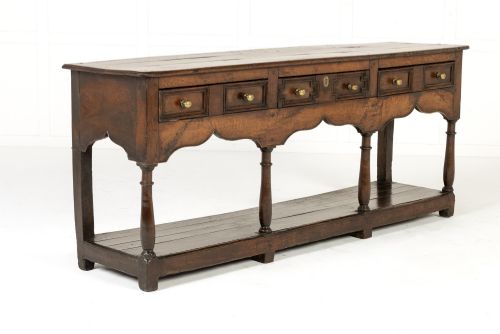
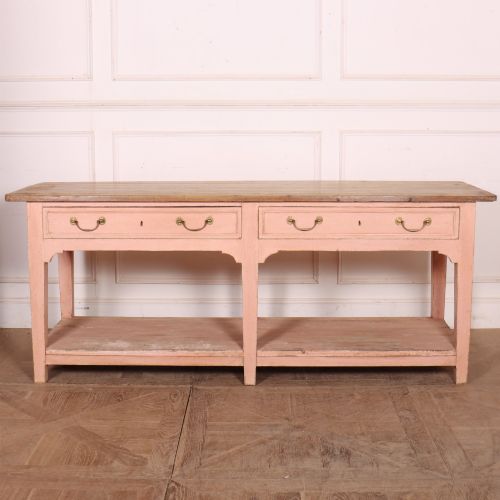
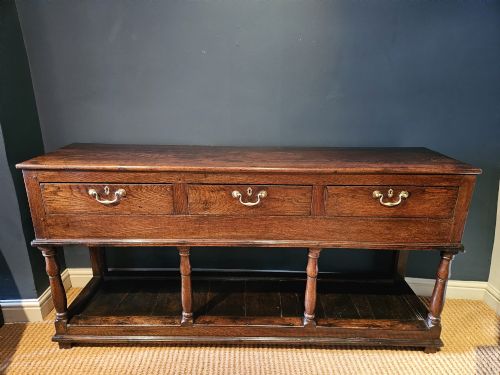




Georgian Potboard Dresser Base
A georgian potboard dresser base anchors the farmhouse kitchen with timber shelves below and deep drawers above for domestic storage.
Georgian Potboard Dresser Base
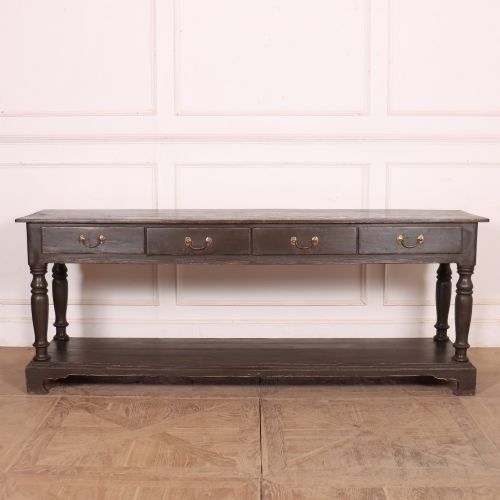
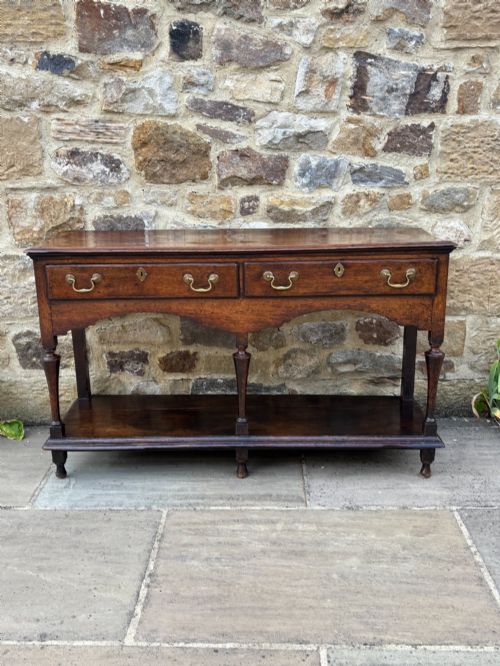
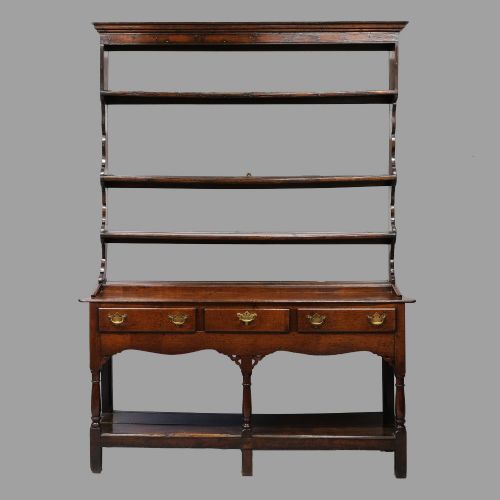
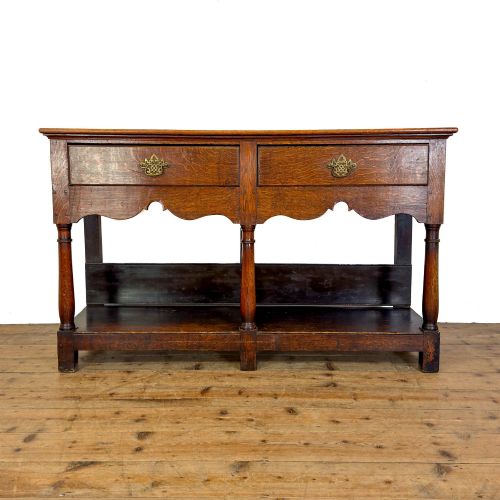
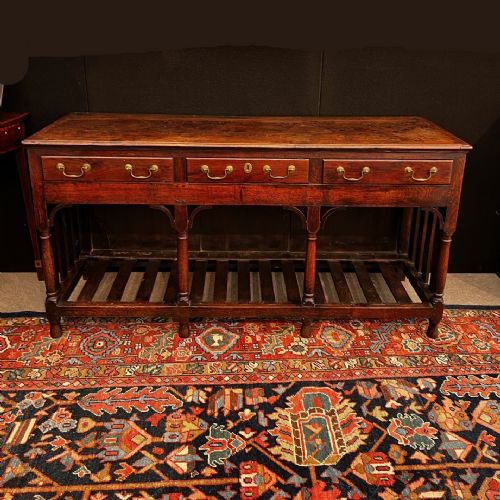
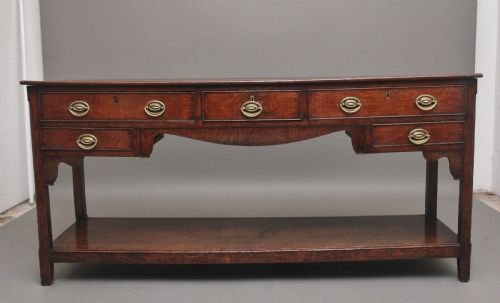
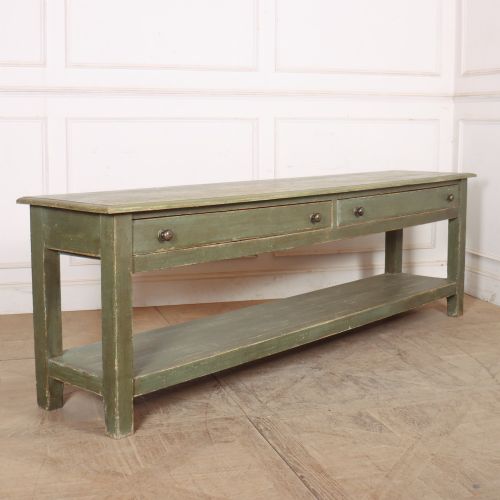
A georgian potboard dresser base is a heavy timber sideboard designed for the rural kitchen, combining a surface for food preparation with open lower shelving known as a potboard.
Most examples found here date from the eighteenth and nineteenth centuries, originating from English and Welsh rural workshops in native timbers.
The form typically comprises a row of three to six drawers set above sturdy legs connected by a low wooden platform near the floor.
How They Were Made
Joiners built these pieces primarily from solid oak, frequently incorporating secondary woods like elm for drawer linings or pine for internal backs.
Construction relied on pegged mortise and tenon joints to withstand heavy domestic use, complemented by hand-cut dovetails on the drawer carcasses.
Surfaces received straightforward applications of wax or oil over time, though some regional examples bear historic layers of paint.
Georgian Potboard Dresser Base Retail Price Guide 2026
Typical asking prices for georgian potboard dresser base among the pieces listed under this phrase on Sellingantiques today, from the lower quarter to the upper quarter. They describe what is for sale here now, not the wider market.
What Varies in Quality
Proportion and scale dictate the visual weight of the piece, with smaller vernacular examples commanding particular attention from collectors.
The degree of original surface paturation and the retention of period brass hardware influence the character of each base.
Structural integrity of the lower potboard shelf and the depth of the drawer mouldings demonstrate the original joiner's skill.
The Georgian Potboard Dresser Base Glossary
- Potboard
- A low slatted or boarded shelf positioned near the floor between the legs of a dresser base, traditionally used for storing heavy pots and pans.
- Vernacular
- Furniture made by local country joiners for regional domestic use rather than following formal metropolitan pattern books.
- Elm
- A tough, interlocking native timber frequently utilised for drawer bottoms and seats in country furniture due to its resistance to splitting.
- George III
- The period spanning from 1760 to 1820, characterised in country furniture by robust proportions and practical utility.
Georgian Potboard Dresser Base: Frequently Asked Questions
What went on a potboard?
Heavy earthenware bowls, metal cooking pots, and everyday kitchen utensils rested on the lower shelf.
This open storage kept frequently used vessels within easy reach for rural cooking.
Where were these dressers made?
Country workshops across England and Wales produced these utility tables for farmhouse kitchens.
Local joiners utilised native timbers available in their immediate surrounding woodlands.
How do I date a dresser base?
Joinery methods, timber selection, and drawer construction provide the primary clues for determining age.
Hand-cut dovetails and pegged frames typically point to eighteenth or early nineteenth century origins.
Can I use one as a sideboard?
These robust timber bases serve admirably in modern dining rooms for storing tableware and linens.
The top surface provides ample space for serving food or displaying decorative objects.