

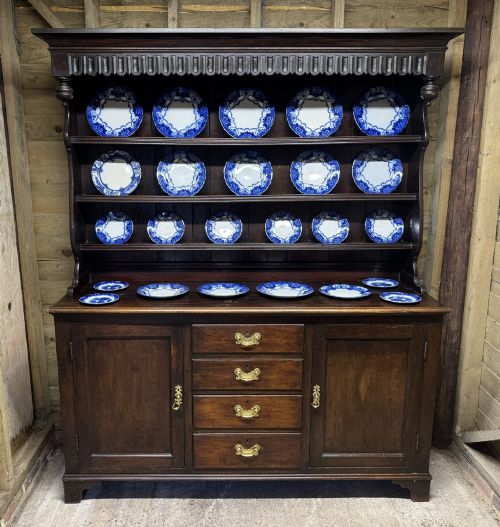
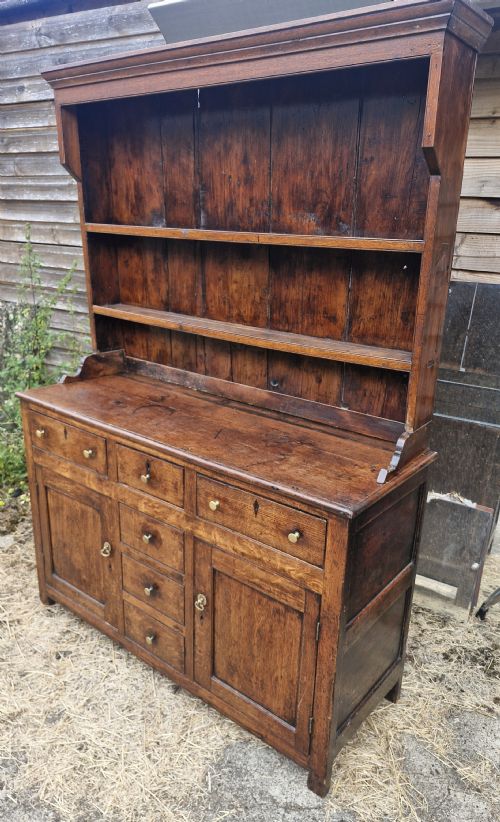
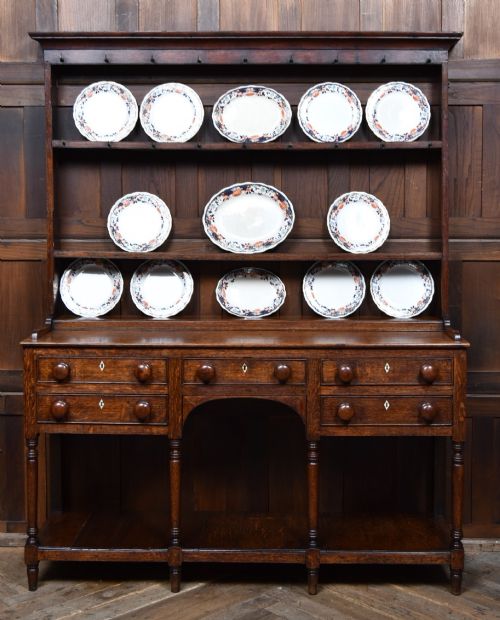
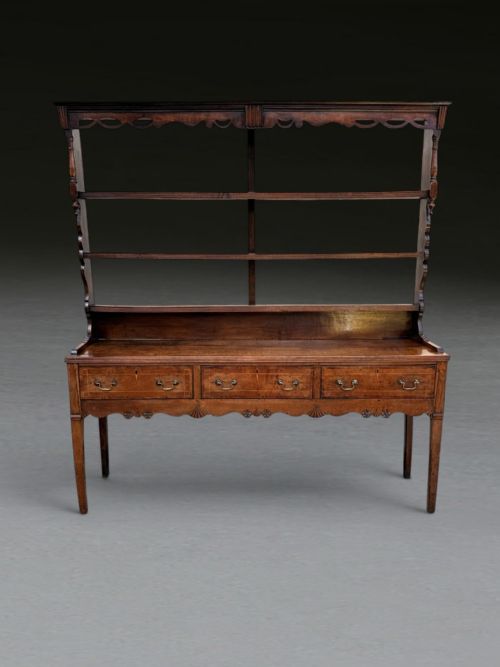
Georgian Plate Rack
A georgian plate rack displays domestic earthenware with functional simplicity, bringing 18th-century utility and warm timber tones to a wall.
What they are
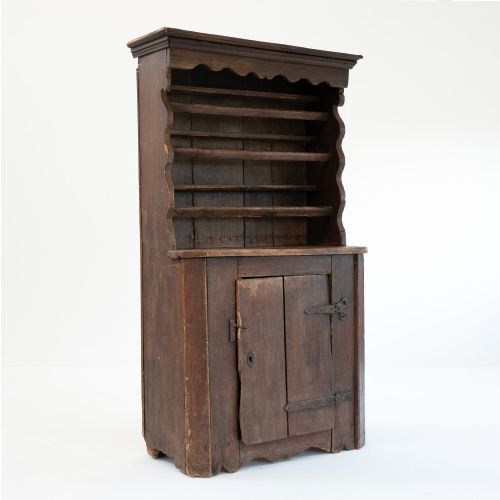
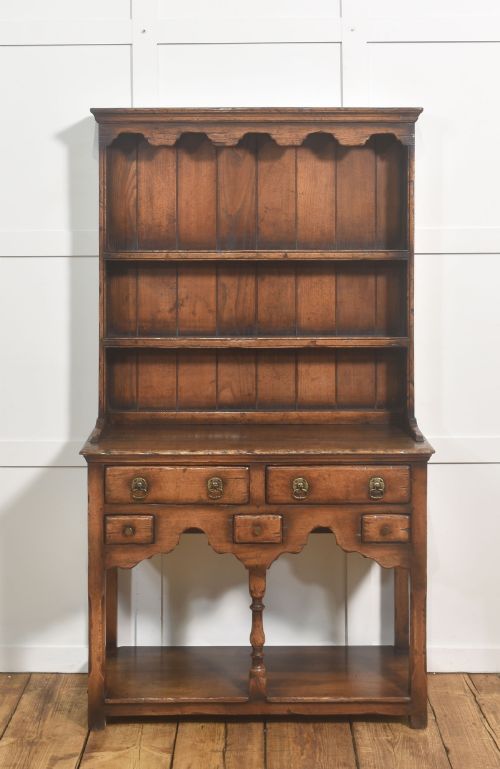
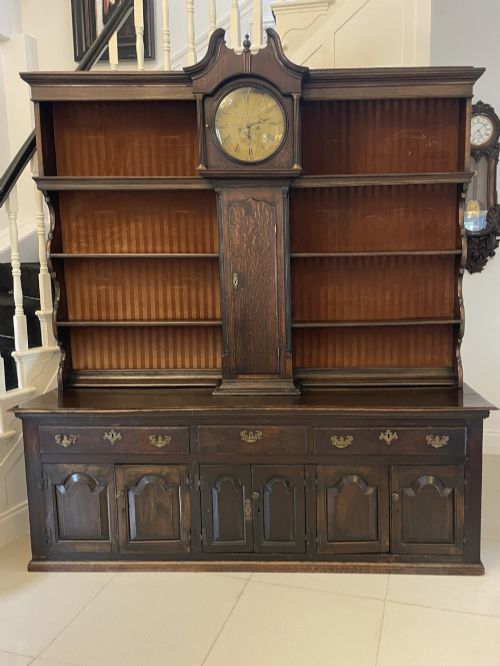
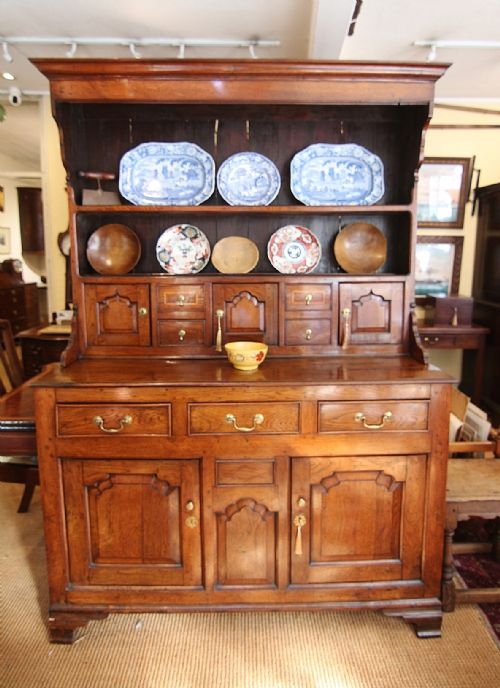
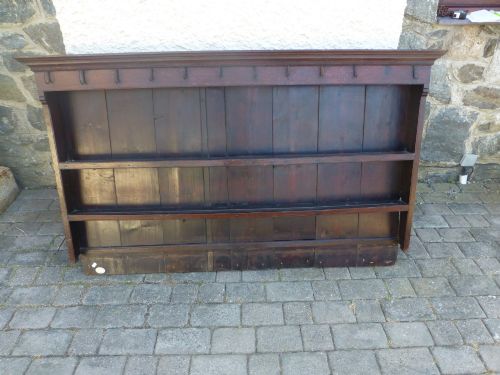
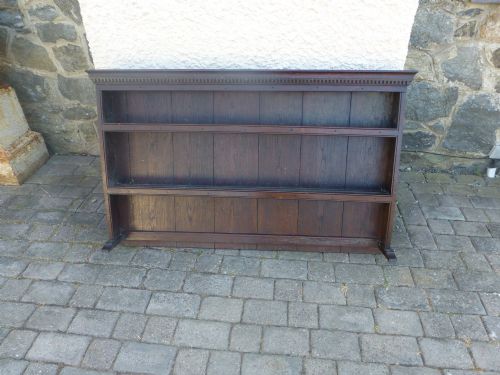
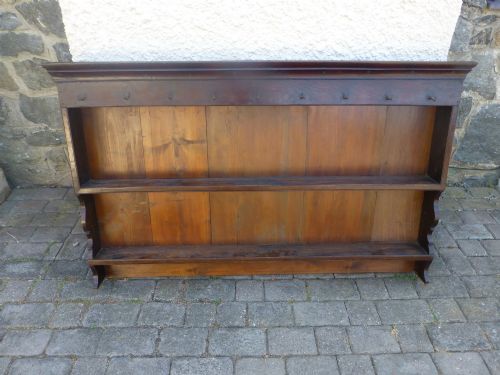
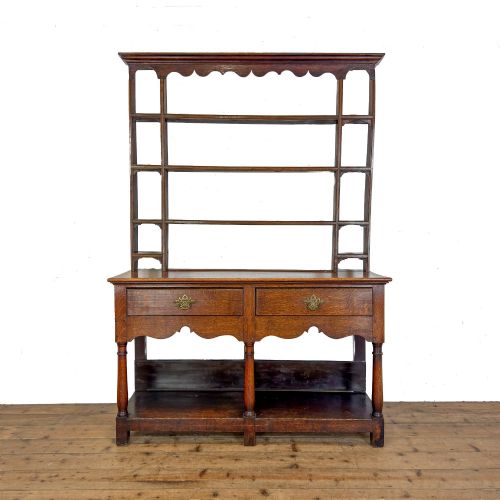
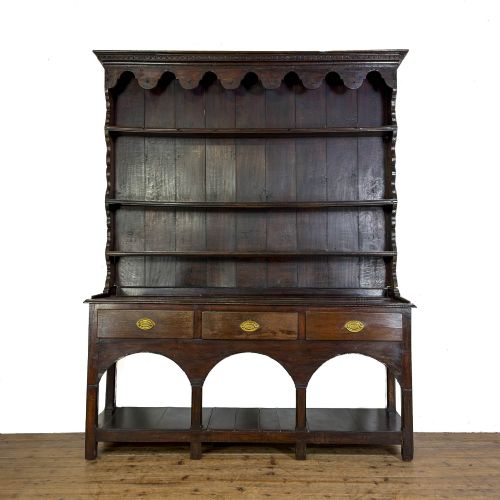
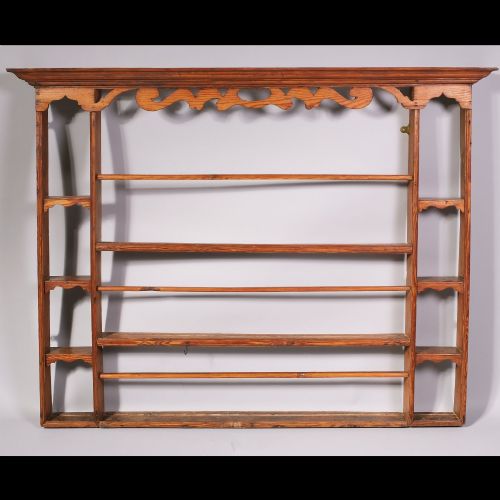
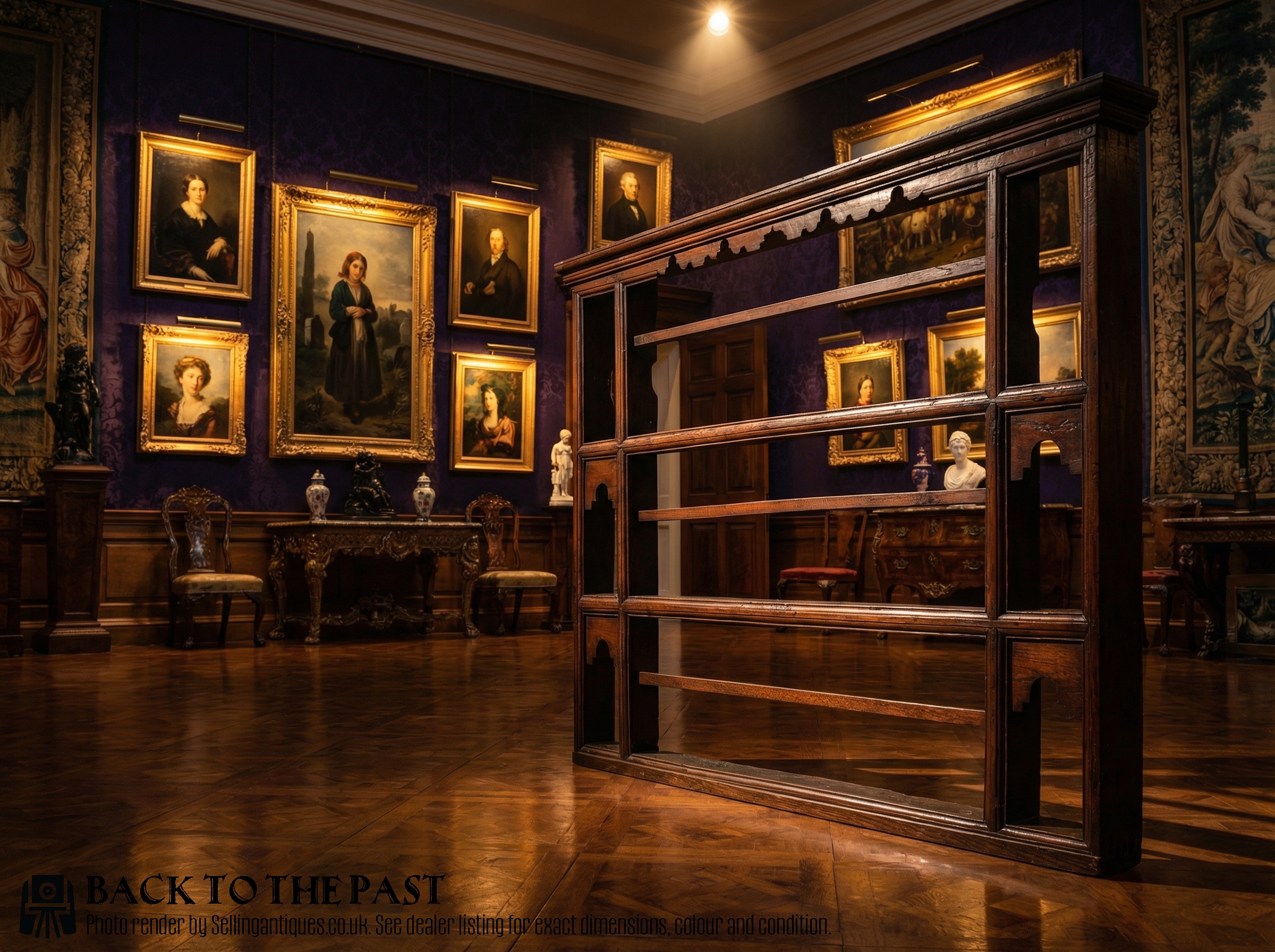
A georgian plate rack is an open wooden shelving unit designed to display and dry ceramics in domestic kitchens and dining spaces. These pieces appear both as standalone hanging wall shelves and as the upper rack components belonging to larger country dressers. They derive from the 18th century, with individual examples dating from around 1750 to 1800.
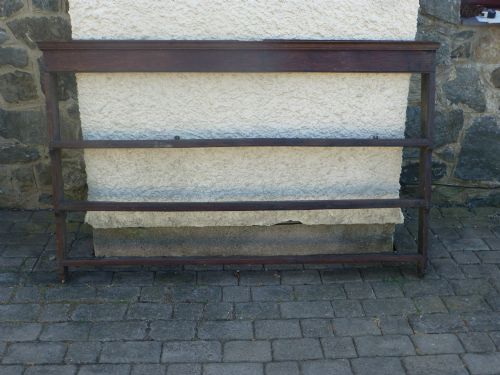
The layout typically incorporates horizontal wooden slats or shaped fore-rails to hold plates upright against a boarded back or open framework. Many surviving examples integrate small spice cupboards, subsidiary tiers, or lower pot shelves alongside the main plate channels. They range from compact wall-mounted versions to large country dresser tops built to hold heavy delftware collections.
How they were made
Cabinet makers constructed these racks predominantly using native timbers such as oak, pine, and mahogany, selected for local availability and structural strength. Joinery involved pegged mortise and tenon joints for the main frames, alongside straightforward nailed or screwed construction for the backboards and internal shelves.
Hardware details incorporate brass and iron for hinges, hanging brackets, and occasional hooks, while bone appears in small decorative escutcheons or pins. Surfaces show straightforward planing and hand-finishing, with some variants retaining early painted finishes on pine bodies.
Retail Price Guide 2026
Typical UK retail prices for georgian plate rack, calculated from the Sellingantiques database of over a million retail prices indexed since 2003. This retail price guide relies exclusively on Sellingantiques data; no external sources or auction records are used, so the figures do not describe the wider market.
The listings show regional variety through the use of solid oak, painted pine, and mahogany across 18th-century wall shelves and dresser tops.
What varies in quality
The distinction between ordinary utility items and superior pieces rests on timber selection, proportions, and the survival of original surfaces. Oak racks with rich patination and thick, well-figured boards command greater interest than plain utilitarian pine variants.
Subtleties in architectural moulding, such as shaped cornices, pierced fretwork, or integrated spice drawers, elevate the craftsmanship above basic kitchen joinery. The structural integrity of the individual plate slats and the depth of the hanging frame also determine how successfully the rack holds domestic ceramics.
The Georgian Plate Rack Glossary
- Delft rack
- An open wall-mounted shelving unit specifically designed for displaying tin-glazed earthenware plates and bowls. These racks use narrow frontal bars to secure ceramic rims safely.
- Pot shelf
- A lower horizontal display tier incorporated beneath the main plate-holding section of a dresser top. This sturdy base accommodates heavier vessels and larger kitchen utensils.
- Hanging shelves
- Wall-mounted timber storage tiers constructed without floor supports. These pieces attach directly to wall studs using structural brackets or hanging loops.
- Fore-rail
- The horizontal wooden retaining bar positioned across the front of a plate shelf. It prevents stacked crockery from sliding forward.
- Country dresser
- A vernacular dining-room or kitchen storage unit combining an open plate rack top with a lower base cupboard or drawers. These pieces reflect regional 18th-century joinery traditions.
Frequently Asked Questions
How do I hang a heavy oak plate rack?
Heavy timber racks require secure fixing directly into wall studs or solid masonry using appropriate steel brackets and heavy-duty fixings. Distributing the weight across multiple points ensures the wall structure can support both the timber frame and the heavy ceramics placed upon it.
Professional installation is recommended for large 18th-century oak and pine units. Attempting to hang them from plasterboard alone will lead to structural failure.
Can I use these racks for modern dinnerware?
Modern ceramics often feature thicker rims and heavier weights than antique delftware and earthenware. Checking the depth of the individual plate channels ensures that contemporary dinner plates sit securely without tipping forward.
Measuring the spacing between the horizontal retaining rails prevents disappointment. Many antique slots are tailored for slightly shallower historical plates.
How do I clean antique pine and oak?
Maintenance requires only a soft, dry cloth to remove dust from the crevices and mouldings. Avoid using modern chemical polishes or water, which can damage the aged timber patina and historical surface finishes.
Beeswax applied sparingly once or twice a year helps nourish dry oak and pine surfaces. Buffing the timber gently preserves its natural lustre over time.
Were these always attached to dressers?
Many surviving plate racks were manufactured as independent hanging wall fixtures rather than components of larger furniture. Over centuries, upper racks and lower base dressers were occasionally separated or reunited depending on domestic needs.
Examining the upper edges of base dressers and the feet of plate racks reveals peg holes and mounting marks that indicate whether two sections originally belonged together.