
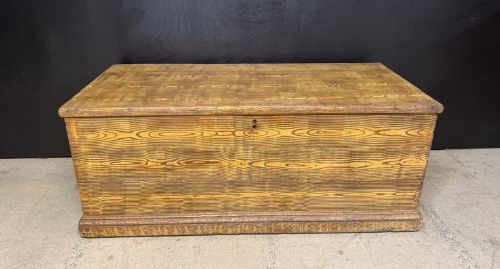
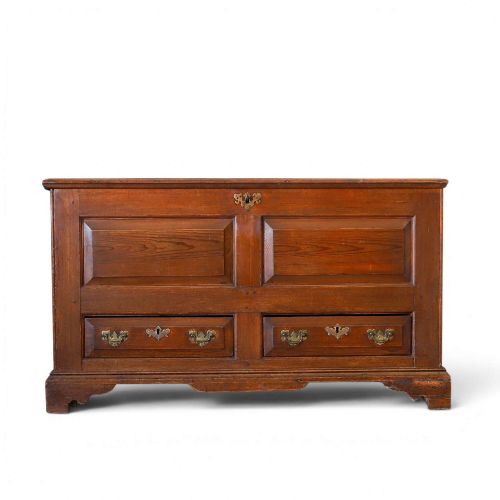
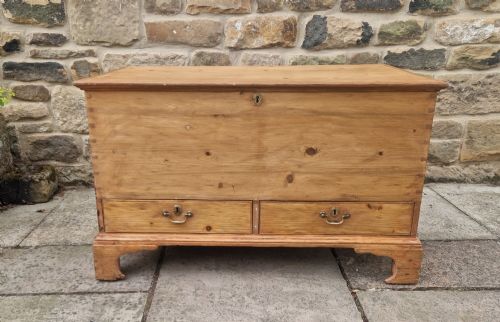
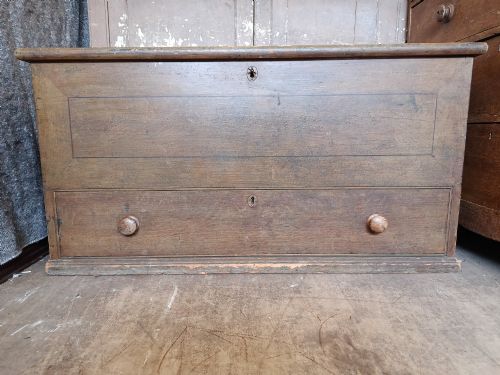
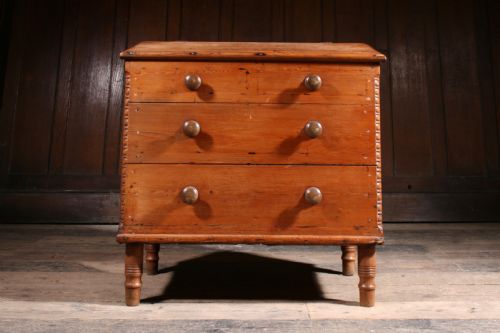


Georgian Pine Mule Chest
A georgian pine mule chest combines deep lidded storage with the utility of one or more lower drawers.
Georgian Pine Mule Chest
A georgian pine mule chest serves as a practical storage piece that bridges the gap between a simple coffer and a chest of drawers. These items typically feature a hinged lid opening above a single row or multiple rows of drawers at the base.
The pieces on this page span the georgian period, the eighteenth century, and the nineteenth century, including regional variations such as welsh country examples and painted folk art. Buyers often encounter pieces finished in traditional wax or retaining original painted surfaces.
Forms range from compact boxes to extra wide chests and large panelled coffer designs resting on bracket feet. This lineage provides robust everyday storage suited to modern hallways, bedrooms, or living spaces.
Materials and construction
Makers constructed these chests primarily using solid pine, sometimes utilising oregon pine or regional softwood timbers. Panels were frequently hand-planed and joined within sturdy frames to accommodate the natural movement of timber over decades.
Iron and brass fittings such as strap hinges, carrying handles, and drawer pulls were secured by hand. Surfaces were either left bare to acquire a waxed patina or coated with oil-based paint.
Listings feature pieces spanning the eighteenth and nineteenth centuries, constructed from pine with brass, iron, paint, and wax materials.
What separates examples
Quality in these chests rests upon the integrity of the timber, the presence of original hardware, and the survival of early surfaces. Untouched wax finishes and original paint schemes carry greater authenticity than later strip-down treatments.
Structural finesse distinguishes finer cabinet work from utilitarian carpentry, visible in dovetailed drawer construction, panel thickness, and the retention of original bracket feet or base mouldings.
The Georgian Pine Mule Chest Glossary
- Mule chest
- A storage chest featuring a hinged lid above one or more drawers built into the base. This hybrid form emerged when makers realised lower drawers provided easier access than reaching into the bottom of a deep coffer.
- Coffer
- A traditional heavy box with a lid, primarily used for storing valuables or textiles before dedicated wardrobes became common. Early versions often relied entirely on top-loading access.
- Bracket foot
- A small architectural foot supporting the corner of case furniture, commonly shaped in an ogee or simple bracket profile during the eighteenth century.
- Oregon pine
- A durable softwood timber imported from North America, noted for its straight grain and strength. Makers utilised this timber for large coffer and chest construction.
Georgian Pine Mule Chest: Frequently Asked Questions
What is a mule chest?
A mule chest is a traditional storage box that combines a top-opening lid with one or more drawers fitted beneath the main compartment. This design allowed users to retrieve items from the drawers without lifting objects off the top of the chest.
They evolved during the seventeenth and eighteenth centuries as houses required more sophisticated storage for linens, bedding, and personal belongings.
How do I date a pine chest?
Dating relies on examining construction methods, timber characteristics, and hardware. Eighteenth-century examples often feature hand-cut dovetails, pegged mortise and tenon joints, and hand-forged iron hinges.
Later nineteenth-century pieces typically show more uniform machine-sawn timber and simpler internal framing. Paint layers and wear patterns around handles also provide clues to age.
Are painted pine chests original?
Many pine chests retain early or original painted surfaces, particularly folk art pieces from regional traditions like welsh or hungarian workshops. Paint was frequently applied to protect cheaper softwoods or to decorate utilitarian furniture.
Close inspection under natural light reveals whether the paint has aged naturally with the wood underneath or represents a later decorative layer.
How do I care for antique pine?
Antique pine benefits from stable indoor humidity and protection from direct sunlight, which can dry out the timber and fade wax or paint finishes. Regular dusting with a dry cloth keeps the surface clean.
Applying a traditional beeswax feed periodically helps maintain the lustre of waxed pine without sealing the grain.