
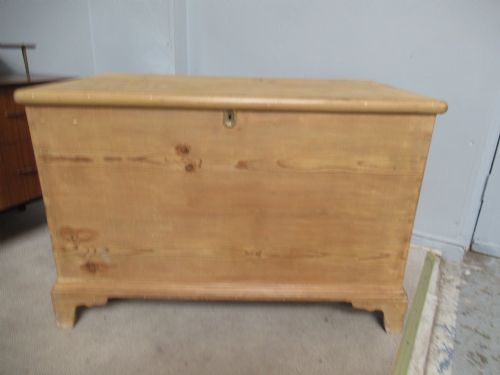
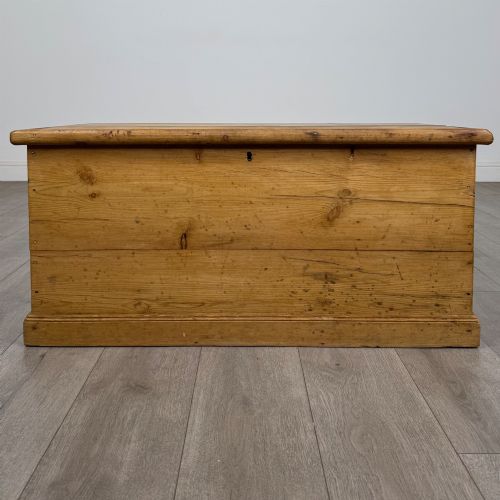
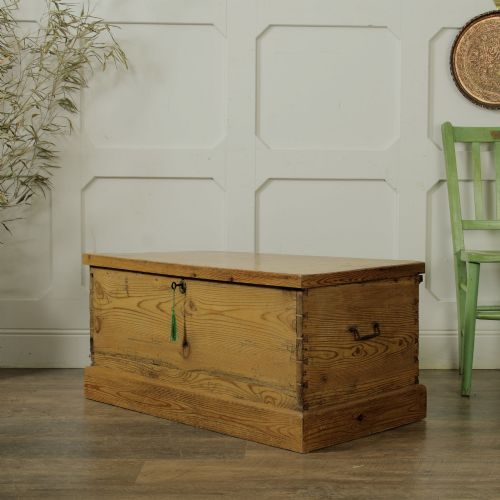
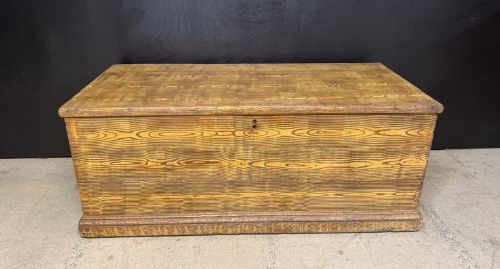

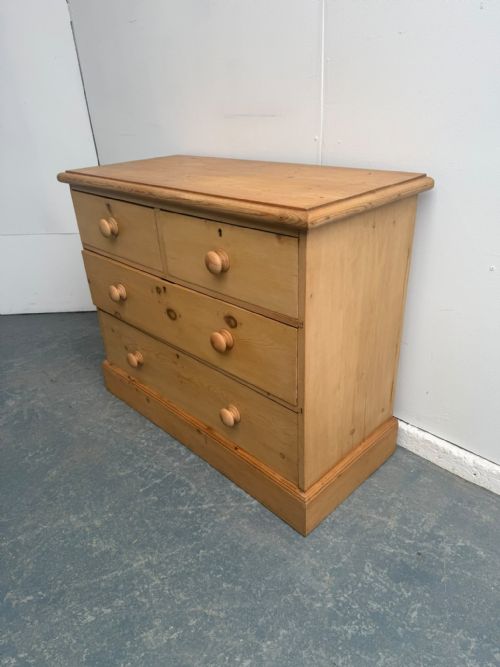
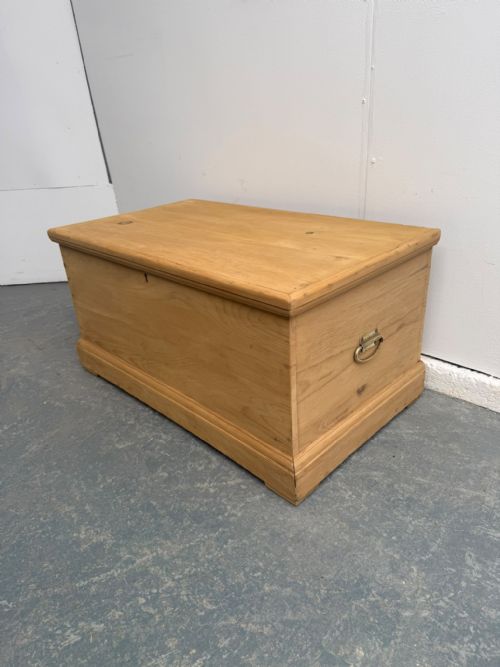
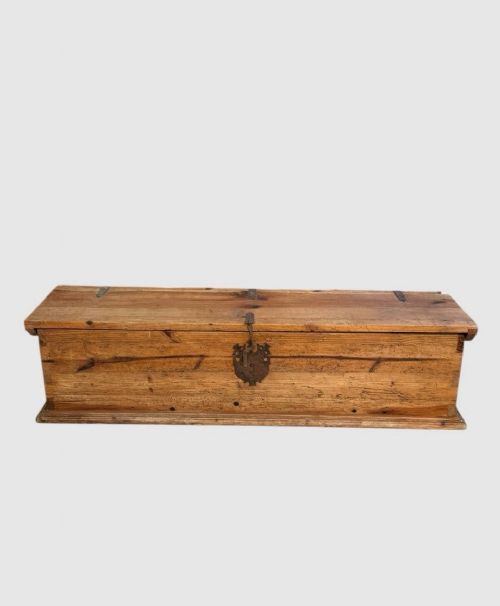
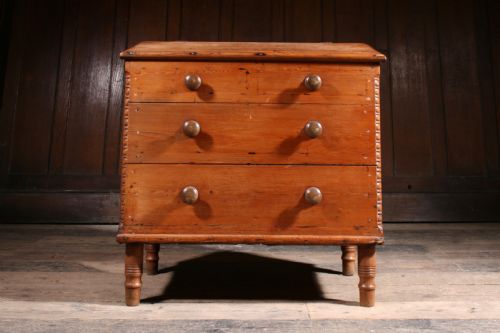

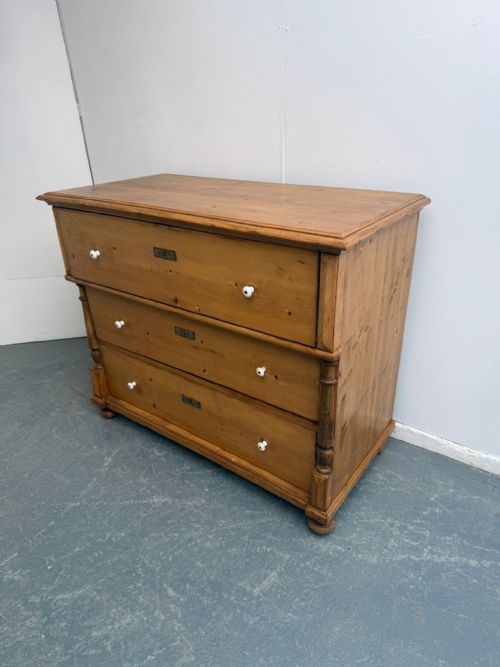
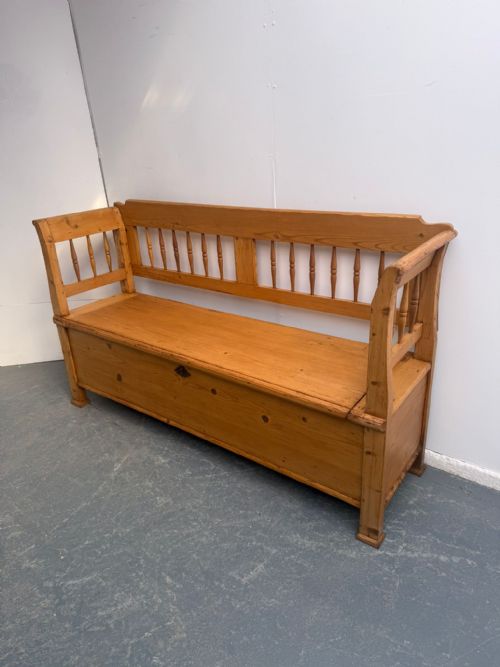
Honey Pine Coffer
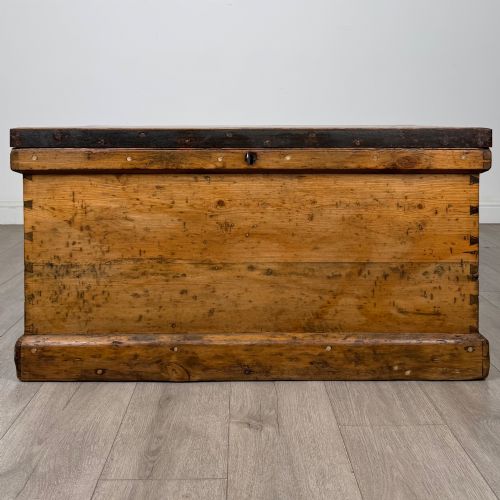
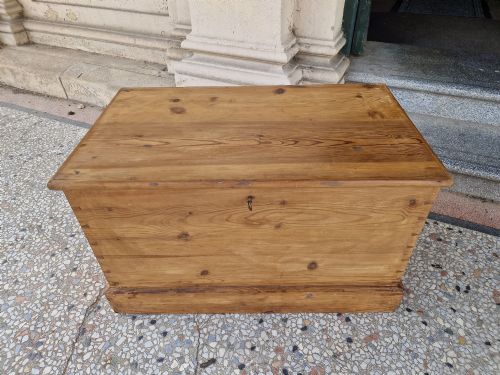
A honey pine coffer brings honest warmth and practical storage to a room through its mellow waxed finish and sturdy timber construction.
Understanding the Honey Pine Coffer
A honey pine coffer serves as a versatile storage chest, blanket box, or log box fashioned from softwood timber. These pieces span periods from the eighteenth century through the Victorian era and into the early twentieth century.
The objects on this page appear in various regional guises, including Georgian country pieces, rustic farmhouse examples, and painted Scandinavian variants. Most specimens feature simple rectangular forms designed to hold blankets, linens, or firewood.
Buyers encounter everything from large mule chests fitted with internal drawers to compact console boxes and trunks with side lifting handles. The overarching appeal lies in the warm, honeyed tone of the aged pine and the utility of the storage space.
Construction and Materials
Joiners built these chests primarily from solid pine and pitch pine, selecting softwoods that were readily available and workable. Boards joined together via traditional methods to create rigid walls and lids that could withstand heavy daily use.
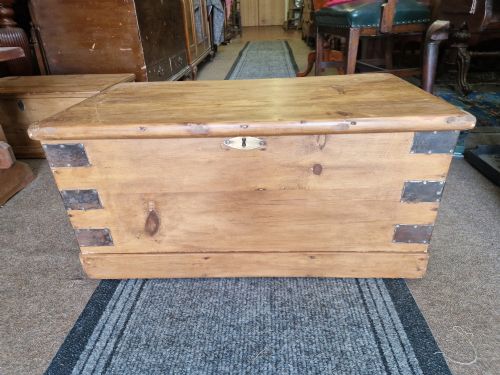
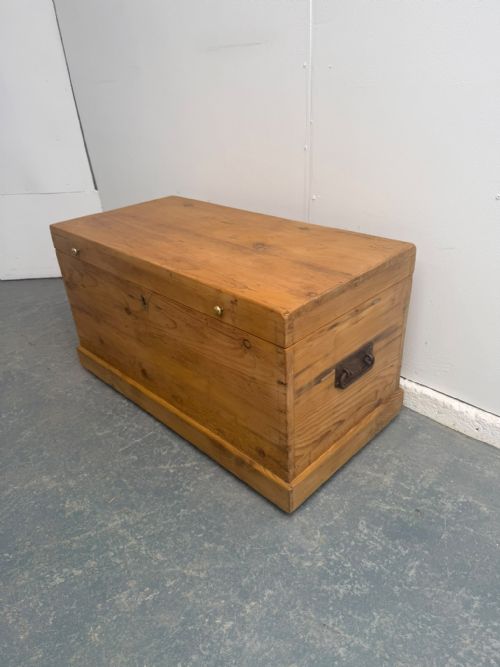
Metalwork played a vital functional role, with iron and brass utilised for hinges, side lifting handles, and working locks. Surfaces received protective and decorative treatments, ranging from simple wax polish to traditional paint finishes.
Retail Price Guide 2026
Typical UK retail prices for honey pine coffer, calculated from the Sellingantiques database of over a million retail prices indexed since 2003. This retail price guide relies exclusively on Sellingantiques data; no external sources or auction records are used, so the figures do not describe the wider market.
The inventory encompasses trunks, blanket boxes, mule chests, and painted Scandinavian log boxes.
Assessing Quality and Character
Quality rests in the integrity of the timber and the honesty of the construction, where thicker boards and dovetail joints elevate a piece above standard utility boxes. The depth of the honey patina develops naturally over centuries of handling and waxing, creating a visual richness that modern staining cannot replicate.
The presence of original hardware, such as working brass or iron locks and robust side handles, separates superior examples from altered items. Better proportioned chests, including extra-wide Georgian formats and mule chests with internal drawers, demonstrate higher ambition from the original maker.
The Honey Pine Coffer Glossary
- Coffer
- A heavy timber chest traditionally used for storing valuables, linens, or provisions. These domestic containers form the bedrock of early storage furniture.
- Mule chest
- A storage chest featuring one or more drawers beneath the main lifting compartment. This hybrid form bridges the gap between the simple trunk and the chest of drawers.
- Pitch pine
- A dense, resinous variety of pine known for its prominent grain patterns and durability. Makers utilised this timber for pieces requiring extra structural strength.
- Wax
- A traditional protective finish applied to timber to nourish the wood and produce a soft sheen. Regular waxing deepens the honey colour over generations of care.
Frequently Asked Questions
What is a honey pine coffer used for?
These chests provide generous enclosed storage for household items like spare blankets, bedding, and winter linens. Many people also utilise them in living spaces as coffee tables or beside fires to hold logs.
The deep interior and sturdy flat lid mean a coffer functions simultaneously as a surface and a concealed cupboard. This dual purpose makes them particularly useful in bedrooms and hallways.
How do I care for waxed pine furniture?
Maintain the warm honey tone by applying a quality beeswax polish once or twice a year, buffing it gently with a soft cloth. Keep the timber away from direct heat sources and strong sunlight to prevent the wood from drying out or splitting.
Avoid using modern silicone sprays or harsh chemical cleaners on antique pine surfaces. A simple dry dusting will handle day-to-day maintenance without harming the historic finish.
How can I tell a Georgian pine coffer from a Victorian one?
Georgian pieces often display greater width and more refined proportions, reflecting the country house aesthetics of the eighteenth century. They frequently incorporate details like panelled construction and deeper, richer patination accumulated over longer periods.
Victorian examples tend toward robust utility, sometimes utilising pitch pine and incorporating heavier iron hardware or internal drawer arrangements. The joinery methods and specific cut of the timber help distinguish the manufacturing era.
Are these chests heavy to move?
Solid pine and pitch pine are dense woods, meaning larger coffers and mule chests possess considerable weight when empty. Many pieces feature original iron or brass side lifting handles to assist with repositioning.
Because of their substantial build, it is wise to enlist help when moving them between rooms. Once in place, their weight ensures they remain stable and grounded.