





Georgian Pine Coffer
A georgian pine coffer is a practical utility chest designed for storage, offering honest country character that suits modern interiors.
What a georgian pine coffer is
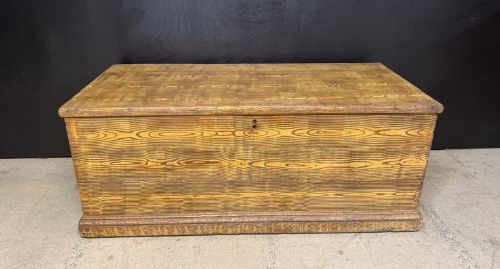
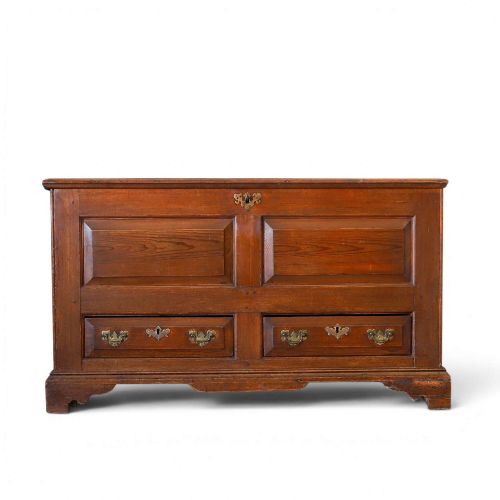
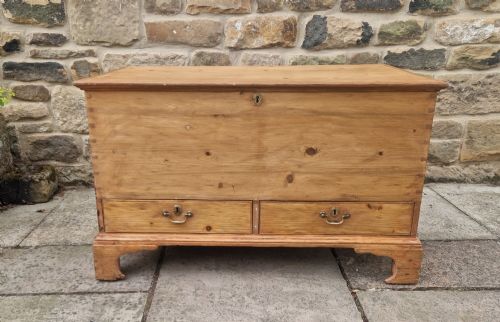
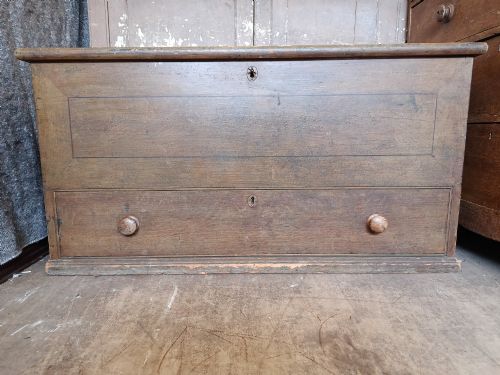
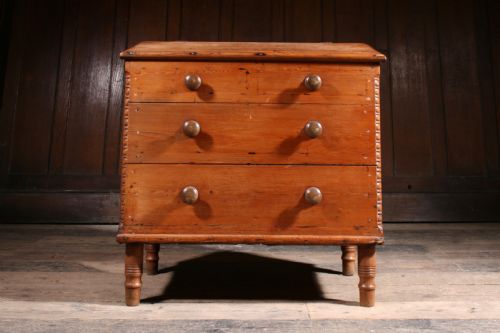
A georgian pine coffer represents utilitarian storage built during the eighteenth and nineteenth centuries, often serving multiple household roles as a blanket box or blanket chest. The pieces seen on this page span the georgian and early georgian periods, stretching into the nineteenth century with variations including mule chests fitted with lower drawers.
Most examples originate from country workshops, reflecting a rustic aesthetic rather than urban sophistication. Forms range from five plank constructions to large trunks and ottoman styles, showing how domestic storage evolved to keep textiles and household goods safe.
How they were made
Construction relies heavily on solid pine timbers, sometimes combined with secondary woods like oak, shaped by joiners using basic hand tools. Surfaces often receive a wax finish to nourish the wood, though some surviving examples feature painted finishes or bleached patination.
Hardware consists of functional iron and brass elements, securing lids and drawers for heavy daily use. Simple joinery techniques such as dovetailed corners or straightforward board joining define the structural integrity of these vernacular pieces.
Retail Price Guide 2026
Typical UK retail prices for georgian pine coffer, calculated from the Sellingantiques database of over a million retail prices indexed since 2003. This retail price guide relies exclusively on Sellingantiques data; no external sources or auction records are used, so the figures do not describe the wider market.
Several heavy pine coffers double as low coffee tables, proving that eighteenth-century storage makes a sturdy nineteenth-hole for your coffee cup.
What varies in quality
Quality rests in the proportion of the timber and the honesty of the surface patination, distinguishing simple utility boxes from finer country furniture. Extra wide proportions and the inclusion of working drawers elevate certain mule chests above standard blanket boxes.
The integrity of the original hardware and the depth of the wax or bleached finish dictate the visual appeal. Pieces showing straightforward construction without excessive later alterations retain the most authentic character.
The Georgian Pine Coffer Glossary
- Mule chest
- A storage chest featuring one or more drawers beneath the main lift-up compartment. This form bridges the gap between a traditional coffer and a chest of drawers.
- Coffer
- A large wooden box with a hinged lid used primarily for storing valuables, textiles, and household provisions. Early versions often utilised simple board construction.
- Blanket box
- A large chest traditionally used for storing bedding, woollens, and linens near the hearth. These pieces are typically fashioned from softwood timbers like pine.
- Five plank coffer
- A primitive chest constructed from five distinct boards joined at the edges, representing an early and straightforward method of box making.
- Patina
- The surface sheen and colour acquired by wood through age, handling, and repeated waxing. A desirable patination reflects decades of domestic use.
Frequently Asked Questions
What is a georgian pine coffer?
A georgian pine coffer is a traditional storage chest made from softwood during the eighteenth or early nineteenth century.
These pieces were built for everyday domestic utility, often serving as blanket boxes or mule chests to store household textiles.
How do you use a coffer today?
A coffer functions well in modern spaces as a coffee table, blanket box, or general living room storage unit.
Their sturdy lids and generous internal capacity make them practical for hiding clutter while adding rustic character to a room.
What is a mule chest?
A mule chest is a storage box that combines a traditional lift-up lid compartment with one or more drawers beneath.
This hybrid form emerged to provide easier access to stored clothing without requiring items on top to be moved.
How do you date a pine coffer?
Dating relies on observing construction methods, hardware types, timber characteristics, and overall proportions.
Early pieces often feature simpler board joins and hand-forged ironwork, while later nineteenth-century examples display more standard joinery techniques.