
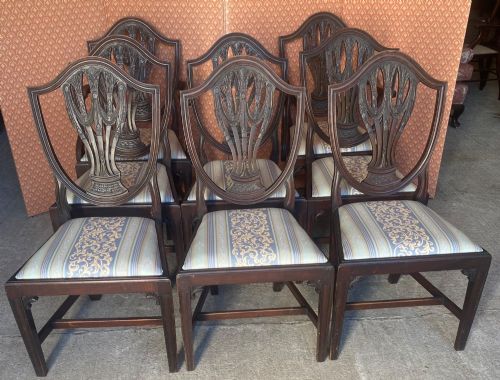
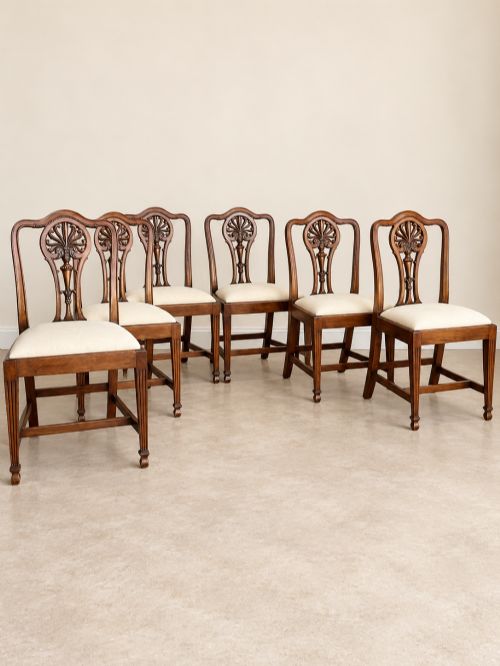
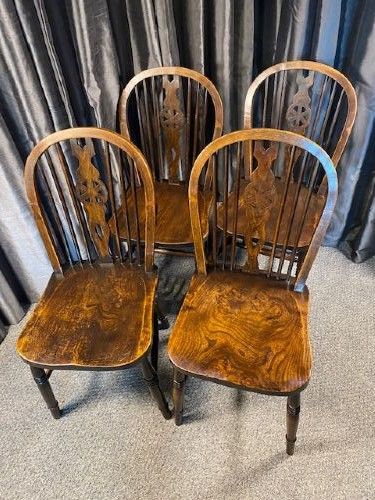
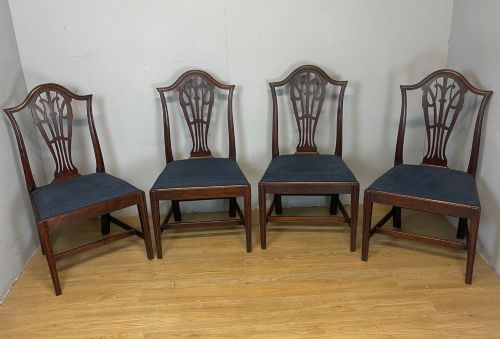
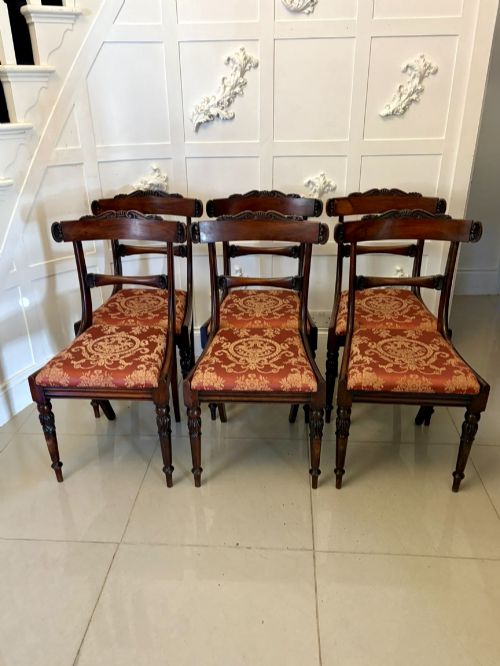
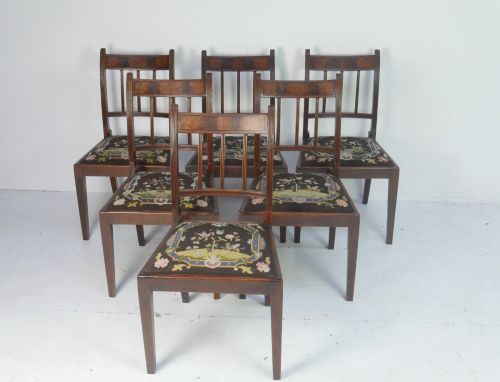
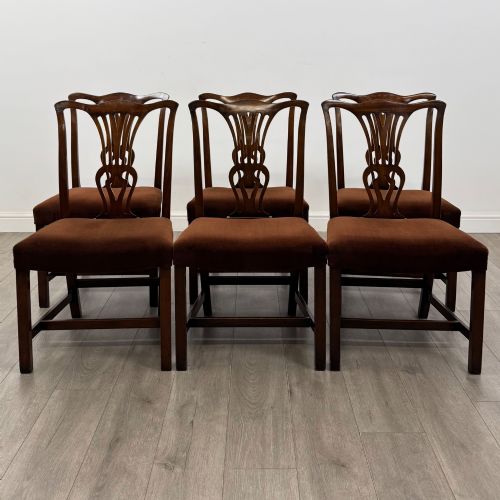
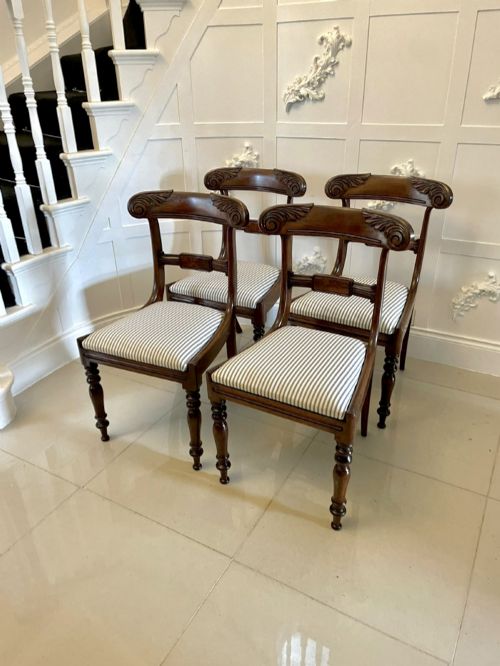

Georgian Period Dining Seating
Georgian period dining seating brings solid mahogany form and classic proportions to the table, offering a durable foundation for daily meals and formal gatherings alike.
How they were made
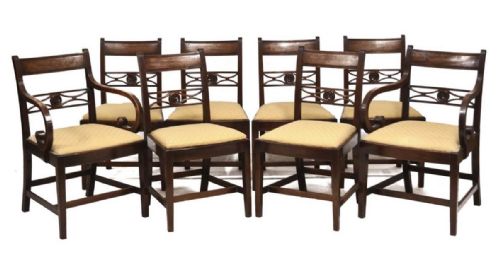
Cabinet makers relied predominantly on dense mahogany and rich walnut, shaping timber through traditional joinery to build sturdy frames for daily use. Decorative elements incorporated subtle marquetry, simulated rosewood finishes, and ebonised details to achieve varied surface textures.
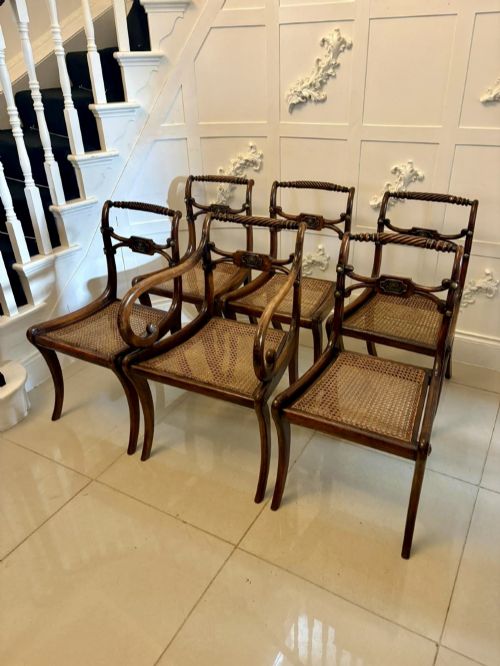
Seating surfaces utilised woven cane or upholstered pads covered in fabric, velvet, or specialised upholstery material. Brass accents occasionally appeared in mounts or fittings, complementing the polished wood frames.
What varies in quality
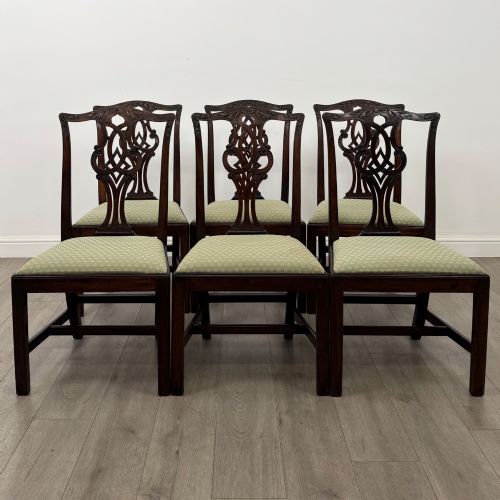
The caliber of georgian period dining seating rests in the crispness of the carved details and the integrity of the timber selection. Finer sets display harmonious grain matching across all pieces and robust structural joinery that withstands centuries of use.
Proportion and execution distinguish standard utilitarian furniture from superior examples designed for formal reception rooms. The retention of original components, such as cane seats or specific period timber patination, elevates the standing of an individual chair or set.
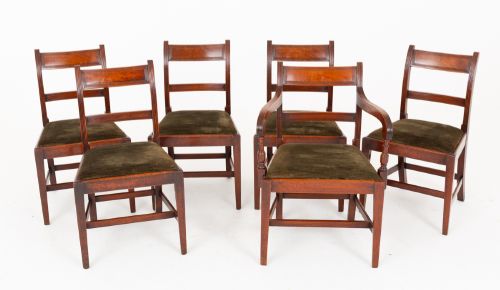
Upholstery materials recorded on these chairs include traditional fabric, velvet, and cane seating panels.
The Georgian Period Dining Seating Glossary
- Carver
- An armchair designed with armrests, traditionally placed at the head of a dining table and paired with matching single chairs.
- Shield back
- A chair back design shaped in the outline of a shield, popularised during the late eighteenth century by makers like Hepplewhite.
- Bar back
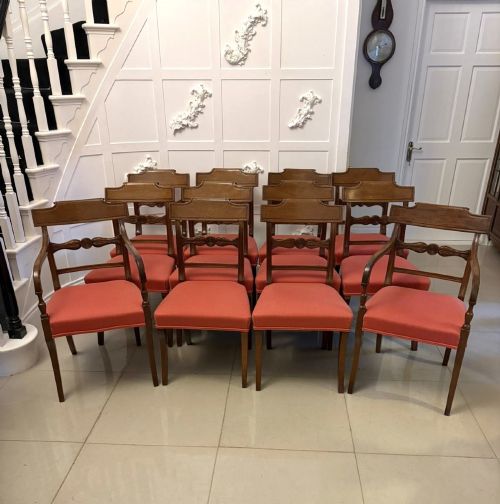
- A horizontal wooden slat or rail forming the upper portion of the chair back, common in nineteenth-century designs.
- Sabre leg
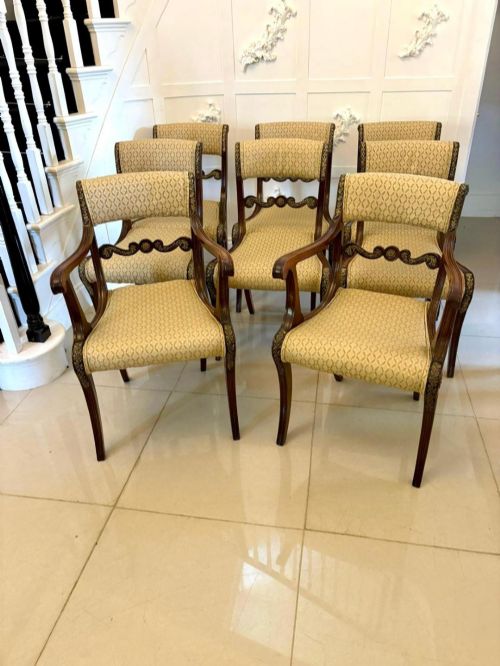
- A concave, outwardly curving leg tapering towards the foot, frequently seen on Regency period seating.
- Marquetry
- Decorative inlay work utilising various woods to create intricate patterns on the surface of the furniture.
Georgian Period Dining Seating: Frequently Asked Questions
How do I care for antique dining chairs?
Maintain stable indoor humidity levels to prevent timber from drying out or splitting over time. Clean wooden surfaces gently with a soft cloth and feed the grain with appropriate wax periodically.
Protect upholstered or caned seats from direct sunlight to preserve the textile integrity. Avoid placing heavy loads on antique armrests, as the historical joinery requires thoughtful handling.
Can I mix different chair styles together?
Combining complementary styles within the same period, such as matching George III single chairs with a related pair of carvers, creates a collected interior aesthetic. Ensure seat heights align appropriately so guests sit at a uniform level around the dining table.
Sticking to shared timber types like mahogany or walnut helps unify disparate seating arrangements. Maintaining similar proportions prevents heavier chairs from overwhelming lighter side chairs in the same room.
What is the difference between a side chair and a carver?
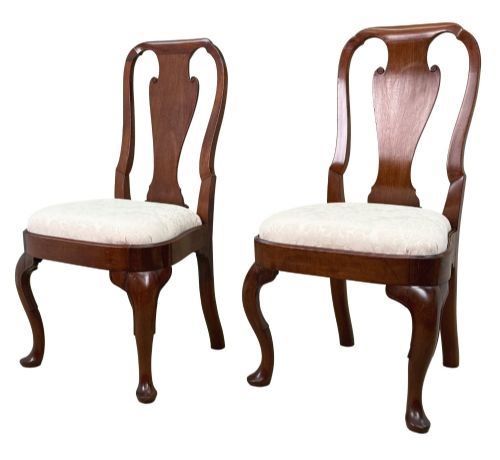
Side chairs are built without armrests, allowing multiple pieces to tuck neatly alongside each other beneath a dining table. They served as the primary seating for guests during Georgian dining occasions.
Carvers feature integrated armrests to accommodate the host or principal guests at the table ends. These armchairs typically match the design vocabulary of the accompanying side chairs in a set.
How do I identify a Regency period chair?
Regency seating often incorporates classical revival motifs, bold ebonised finishes, and sabre legs inspired by ancient Greek and Roman furniture. The proportions tend to feel heavier and more architectural compared to earlier mid-eighteenth-century designs.
Look for the integration of caned seating panels and simulated rosewood graining which gained popularity during the early nineteenth century. Construction details and joinery methods help distinguish these pieces from later nineteenth-century revival work.