
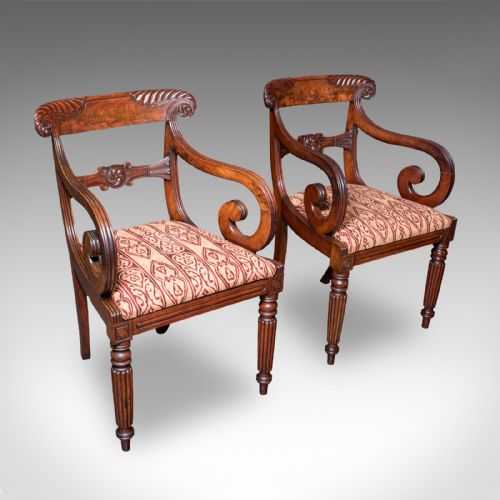
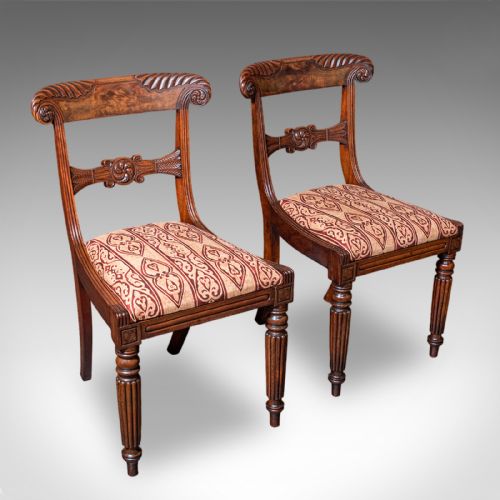
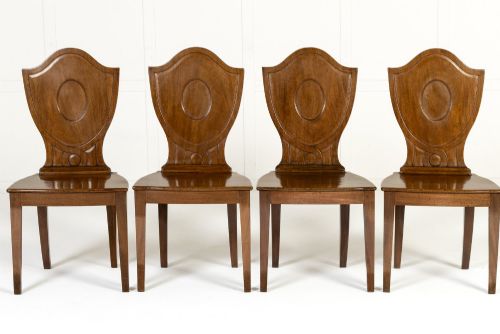


Traditional English Hall Chairs
Traditional English hall chairs are sturdy timber seats designed for passage spaces, offering upright posture and carved heraldry or plain panels.
Traditional English Hall Chairs
Traditional English hall chairs comprise firm timber seats created for reception spaces and grand entrances. These pieces direct posture toward an upright position and often feature solid wood backs suited for brief use. The selection spans the seventeenth, eighteenth, and nineteenth centuries, alongside Edwardian examples.
The assortment includes side chairs, armchairs, and specific hall seats fashioned in oak, mahogany, walnut, elm, and fruitwood. Makers applied styles ranging from Georgian and Regency to Victorian, William IV, and English Country Vernacular.
Buyers frequently encounter pairs and sets alongside single chairs reflecting Chippendale Revival, George I, and Jacobean influences. Certain pieces incorporate rush seats, needlepoint, fabric upholstery, or carved details such as bobbin turning.
Assessing quality in construction and material
Quality rests upon the selection of timber and the integrity of the joinery supporting the upright backrest. Dense grain in mahogany or oak indicates superior material selection compared to softer secondary woods.
Refinement in carving and turning separates standard utilitarian seating from pieces designed for principal reception rooms. Crisp edges on carved crests and sound structural joints demonstrate higher workshop standards.
Original surface finishes and authentic upholstery materials preserve the historical character of the piece better than later restorations or inappropriate replacements.
Listings feature woods such as mahogany, oak, elm, walnut, beech, and fruitwood alongside fabric and brass elements.
The Traditional English Hall Chairs Glossary
- Bobbin turning
- A form of lathe turning that produces a series of rounded, spool-like shapes along a wooden spindle or leg. This decorative method appears frequently on seventeenth and eighteenth-century frames.
- Vernacular
- Objects made by local craftsmen using regional materials and traditional designs rather than metropolitan high styles. These pieces emphasise functional practicality and local character.
- Rush seating
- Weaving seats from dried marsh rushes tightly wound around a wooden frame. This technique provides a resilient and traditional support found in country chairs.
- Ladderback
- A chair back featuring multiple horizontal wooden slats positioned between the upright posts. This traditional form appears across various regional styles.
- Needlepoint
- Stitched canvas embroidery utilising wool or silk threads to cover chair seats or back panels. It adds texture and colour to antique seating.
Traditional English Hall Chairs: Frequently Asked Questions
Where were hall chairs placed?
Traditional English hall chairs stood in entrance halls, corridors, and reception spaces to accommodate visitors waiting briefly.
Their upright design and solid timber construction discouraged lounging, encouraging visitors to maintain formal posture.
How do I care for antique timber chairs?
Maintain stable indoor humidity levels and keep wooden furniture away from direct heat sources to prevent timber splitting.
Apply microcrystalline wax occasionally to nourish the polished surface without building up excessive residue.
Are these chairs comfortable for daily sitting?
Most traditional hall chairs were built for visual impact and brief periods of waiting rather than prolonged relaxation.
Upright wooden backs and firm seats encourage an erect posture rather than deep lounging.
How can I tell the period of a chair?
Examine the wood species, turning styles, and joinery methods against known historical periods like Georgian or Regency.
Stylistic cues such as bobbin turning, ladder backs, or specific crest rails help indicate the likely era of manufacture.