





Hepplewhite Hall Chairs
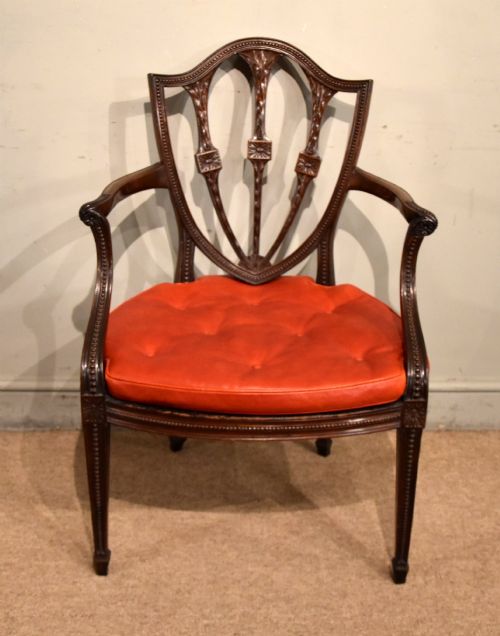
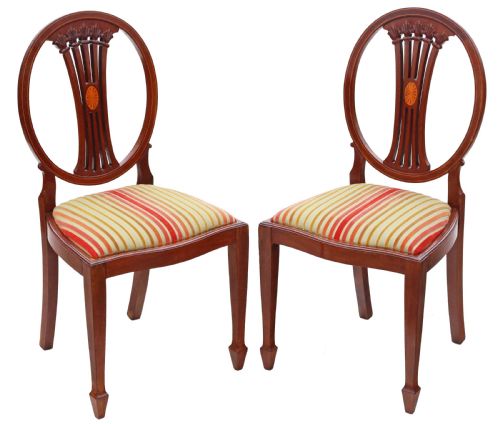
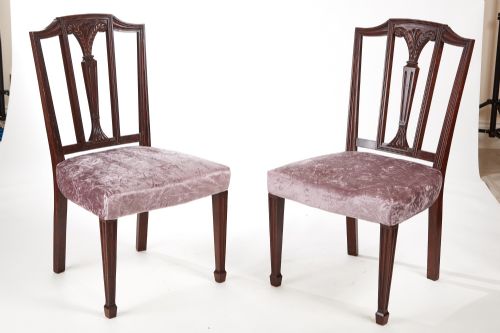
These hepplewhite hall chairs bring neoclassical elegance to an interior through their characteristic shield backs and refined proportions.
Hepplewhite Hall Chairs
When you search for hepplewhite hall chairs, you encounter seating that embodies the lighter, more graceful neoclassical tastes of the late eighteenth century and its later revivals. The form typically presents an upright wooden silhouette designed for a grand entrance or hallway rather than long periods of dining.
The evidence shows these pieces appearing primarily as side chairs, armchairs, and multi-seat settees with distinctive shield backs. You will find examples spanning the Georgian period alongside later Edwardian and revival interpretations from the turn of the twentieth century.
Makers drew on classical vocabulary, often incorporating carved details such as Prince of Wales feathers or restrained inlay into the timber framework. These furnishings served to impress visitors upon entry while maintaining the strict symmetry favoured by the style.
Materials and construction
Cabinet makers relied heavily on mahogany as the primary timber, valued for its strength in supporting intricate pierced splats and slender legs. Fruitwood and satinwood also appear, offering contrasting tones for inlaid decorative panels.
Upholstered seats utilise traditional textiles, including damask, fabric, leather, and various woven textiles secured with brass fixings. Joinery techniques ensured the upright frame remained rigid despite the delicate carving applied to the shield-shaped backs.
The documented periods range from original Georgian production through nineteenth-century revivals up to the nineteen-twenties.
Distinguishing quality
The refinement of the carved splat dictates much of the visual success in these chairs, separating ambitious design from utilitarian production. Crisp execution of neoclassical motifs like the shield outline and delicate pierced woodwork indicates a higher standard of craftsmanship.
Timber selection and the integration of contrasting inlays create subtle depth across the surface of the wood. Later revival pieces demonstrate differing degrees of fidelity to original eighteenth-century proportions and joinery methods.
The Hepplewhite Hall Chairs Glossary
- Shield back
- A chair back shaped in the outline of an inverted shield, frequently filled with pierced splats or carved ornament. This design defines the visual vocabulary associated with the style.
- Splats
- The vertical wooden strip down the middle of a chair back, often carved or pierced into intricate patterns. In these pieces, the splat typically forms the central support within the shield frame.
- Side chairs
- Chairs designed without arms, meant primarily for standing against walls or use around a table. They form a large portion of the available seating options in this category.
- Settees
- Long wooden or upholstered seats designed to accommodate multiple people, often featuring triple chair back designs. They mirror the decorative language of the matching single chairs.
- Neoclassical
- A style spanning the eighteenth century that drew inspiration from classical antiquity, favouring straight lines, symmetry, and restrained ornament. This movement shaped the core aesthetic of the pieces.
Hepplewhite Hall Chairs: Frequently Asked Questions
Are these chairs comfortable for daily use?
Hall chairs were historically designed for brief periods of seating in entrance spaces rather than long lounging. Their upright backs and firm seats reflect this original function.
Buyers today often place them in hallways, bedrooms, or occasional seating areas where their visual impact takes precedence over deep cushioning.
How do I spot a revival piece?
Revival pieces from later periods often show mechanical precision in their carving and timber finishing that differs from eighteenth-century work. Examining the underside and joinery helps reveal the age of the wood.
Stylistic cues and secondary woods used in the construction further assist in separating original Georgian examples from later Edwardian or nineteenth-century interpretations.
Where should I place a settee?
A triple chair back settee fits naturally along a spacious hallway wall, landing, or formal receiving room. Its elongated profile provides a strong architectural focal point.
Ensure the room has sufficient clearance, as the open woodwork and outstretched legs require room to be appreciated fully.