


Neoclassical Wooden Side Chairs
Neoclassical wooden side chairs bring architectural dignity and restrained classical ornament directly into the dining room or salon.
Neoclassical Wooden Side Chairs
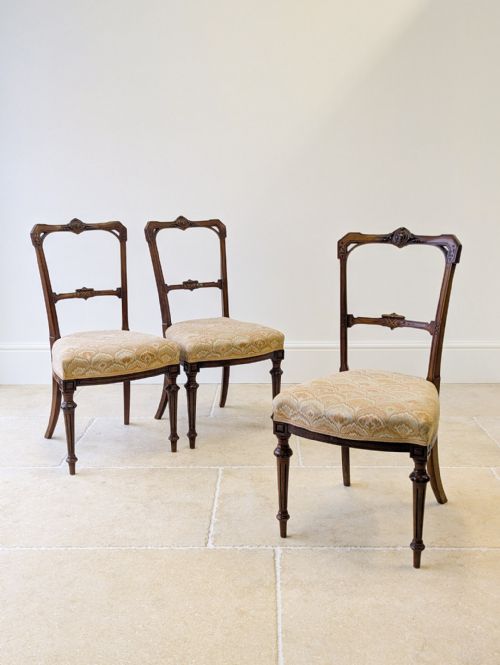
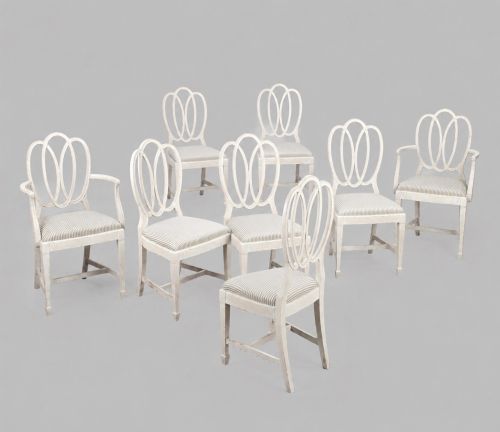
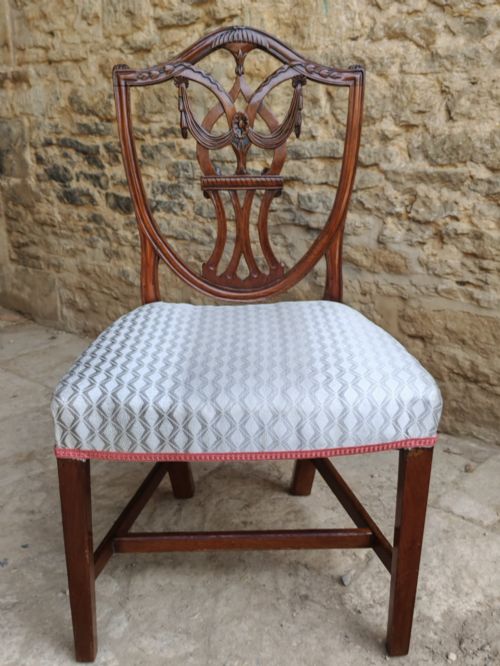
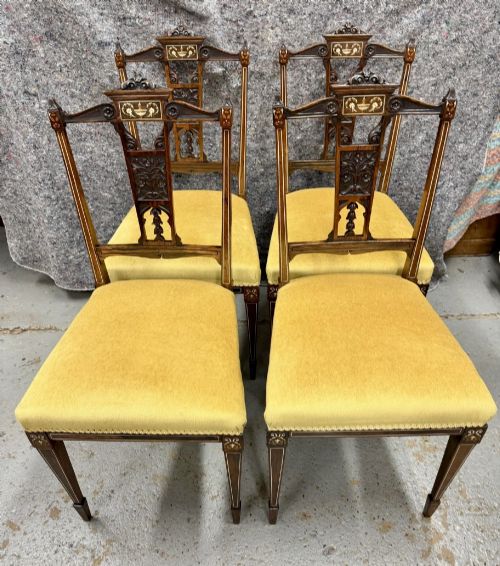
The forms encompass shield backs, klismos silhouettes, and straight-legged frames influenced by French Louis XVI and English Hepplewhite or Sheraton designs. Surviving sets range from single pairs to larger suites of eight or twelve, accommodating various domestic settings. Makers and workshops across these eras interpreted classical restraint through regional timber choices and decorative treatments.
How they were made
The construction of these seats relies predominantly on dense hardwoods such as mahogany, walnut, fruitwood, and satinwood, often shaped through hand carving. Artisans utilised painted wood surfaces and delicate inlay work to articulate classical motifs like fluting, paterae, and urns. Structural integrity depends on traditional joinery techniques suited to the slender proportions characteristic of the style.
Upholstery and seating surfaces incorporate cane, textile, fabric, and velvet, depending on the specific period and intended function of the chair. Caned panels offer lightweight resilience, while padded seats utilise traditional stuffing methods beneath textile coverings. These material combinations support both the decorative ambitions of the design and the practical requirements of daily use.
Materials recorded across the inventory include mahogany, walnut, fruitwood, satinwood, cane, paint, and various textiles.
What varies in quality
Quality in these seats reveals itself in the crispness of the carved ornament and the integrity of the timber framing. Superior examples display sharply defined flutes, crisp paterae, and tight joints that withstand structural stress without excessive reinforcement. Lesser pieces often show softened decorative details or timber shrinkage that compromises the original silhouette.
The uniformity within a set also dictates distinction, particularly when matching grain patterns or verifying that all components originate from the same period of manufacture. Original surface treatments, whether polished mahogany or aged paint, hold higher regard than later repainting or extensive structural replacement. Cohesion between the carved woodwork and the chosen seating material completes the assessment.
Brights of Nettlebed
The Neoclassical Wooden Side Chairs Glossary
- Klismos
- An ancient Greek chair form characterised by curved, outwardly sweeping legs and a concave backrest. Revival versions from the nineteenth century adapt these graceful ancient lines for domestic interiors.
- Shield back
- A chair back shaped in the outline of a heraldic shield, popularised by eighteenth-century English designers. This form often incorporates carved splats featuring drapery, wheat ears, or classical urns.
- Cane
- Woven rattan material used to create light, resilient seat inserts or back panels. It provides textural contrast against the solid timber frame.
- Patera
- A circular classical decorative motif resembling a shallow libation bowl, frequently carved in low relief upon chair rails and leg blocks.
- Satinwood
- A durable, light-yellow timber prized for its lustrous grain, frequently utilised in revival pieces for decorative banding and inlay work.
Neoclassical Wooden Side Chairs: Frequently Asked Questions
How do I date a neoclassical wooden side chair?
Dating relies on examining timber species, tool marks, joinery methods, and stylistic clues within the carved ornament. Eighteenth-century pieces typically show hand-sawn timber characteristics and specific regional framing techniques.
Later revival pieces from the Victorian and Edwardian eras often incorporate machine assistance while mimicking the earlier proportions. Comparing the specific decorative vocabulary against known historical periods helps narrow the manufacturing window.
Are these chairs suitable for daily dining use?
Most antique and revival examples function well for regular dining provided the structural joinery remains sound. Solid mahogany and walnut frames offer the necessary strength to support daily sitting.
Care should be taken with delicate caned seats or fragile painted surfaces to prevent unnecessary wear. Regular checks of the leg joints ensure the frames remain stable over time.
How should I care for painted and polished wooden surfaces?
Maintenance requires gentle dusting with a soft, dry cloth to prevent abrasive particle buildup on the finish. Avoid commercial silicone polishes that can degrade aged wax or painted layers over time.
Keep the chairs away from direct heat sources and strong sunlight to prevent timber splitting and paint fading. Stable indoor humidity protects both the wooden frames and any applied upholstery.