
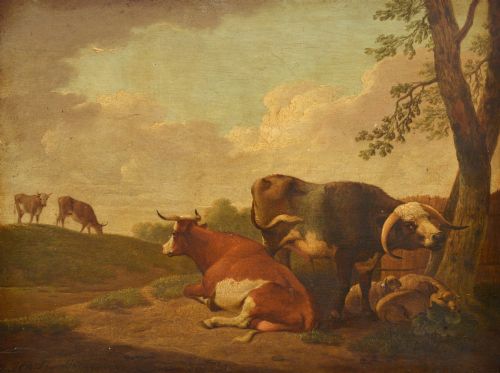
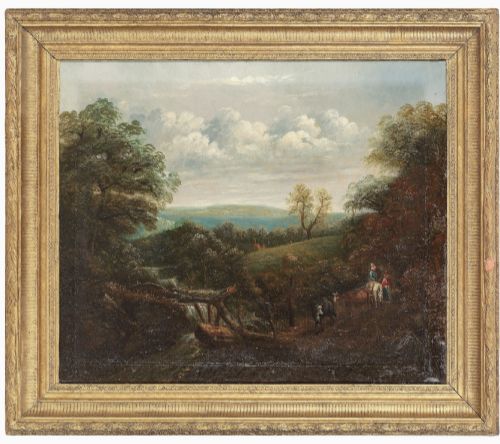
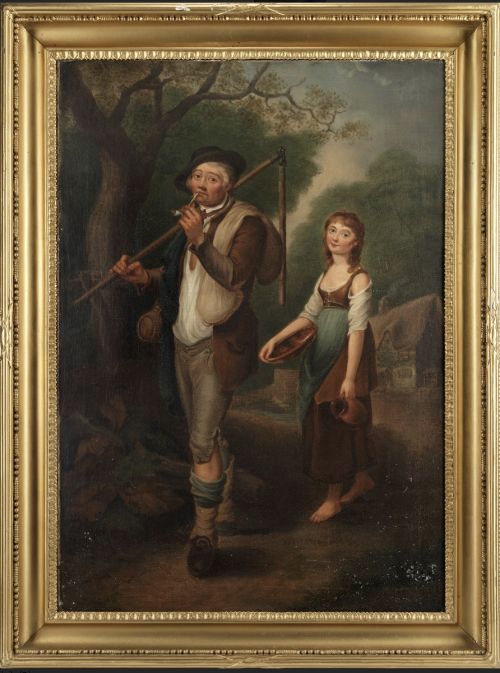
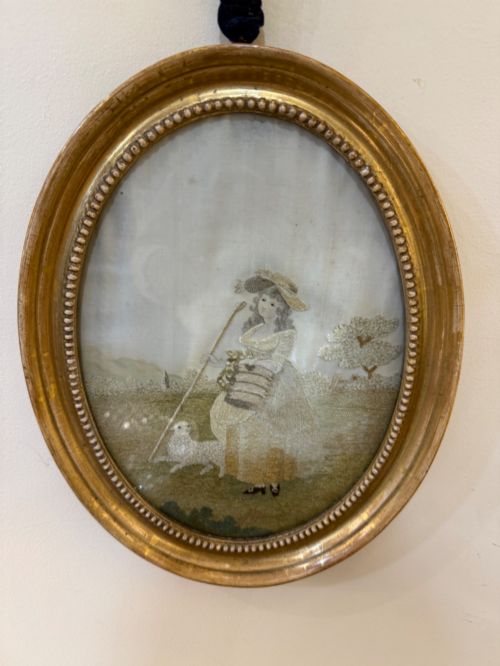


Georgian Pastoral Wall Art
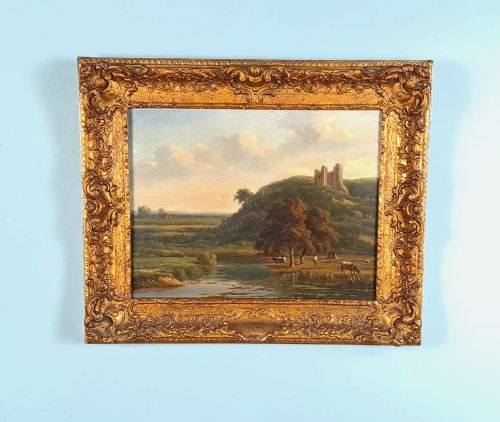
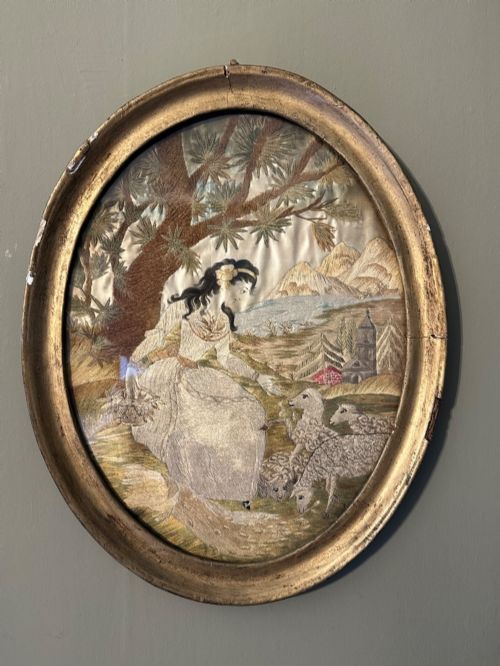
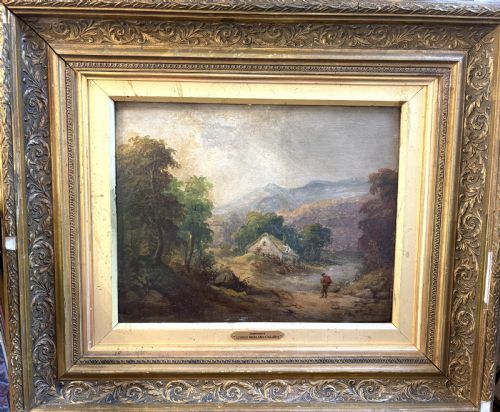
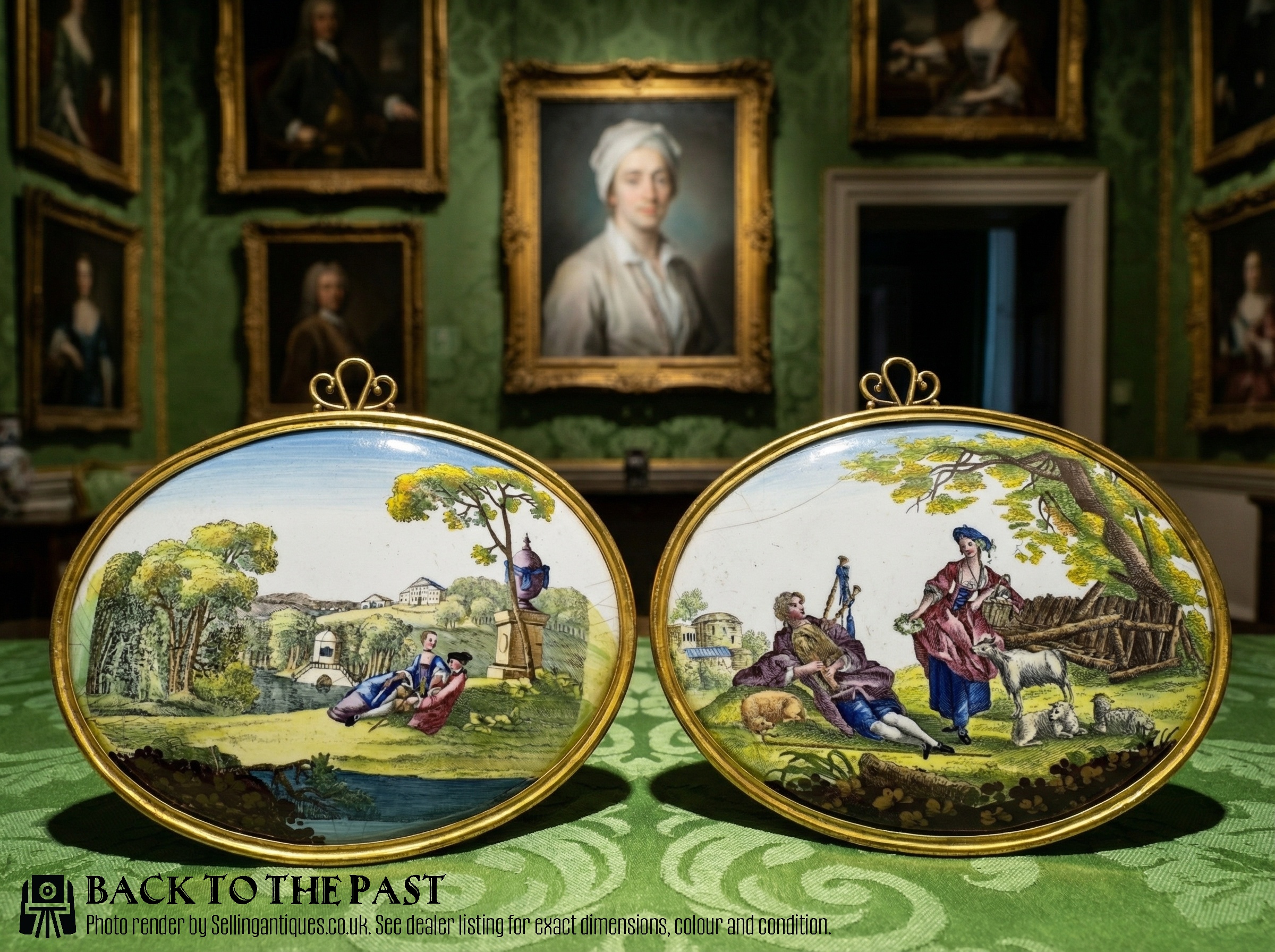
Georgian pastoral wall art captures idyllic rural scenes through oil paintings, silk embroideries and reverse glass prints.
Georgian Pastoral Wall Art
Georgian pastoral wall art encompasses framed decorative works depicting rustic landscapes, farming figures, and farmyard animals. These pieces celebrate an idealised country life that fascinated collectors across the eighteenth and nineteenth centuries.
Buyers will most frequently encounter oil paintings on canvas or board, alongside delicate textile works like silk embroideries and crewel work. Reverse glass prints and framed hand-coloured engravings also appear frequently within this grouping.
The objects originate primarily from British and European hands, spanning the Georgian, Regency, and early Victorian periods. Formats range from intimate oval plaques to substantial framed canvases.
How they were made
Artists and makers utilised oil paint on canvas, wood panel, and copper enamel plaques, often applying gold leaf to elaborate frames. Painters built up pastoral scenes with fine brushwork, capturing natural light across cattle, sheep, and country paths.
Textile works relied on silk, wool, and paper, combining intricate needlework, embroidery, and crewel work to build textured landscapes. Engravers and printers produced hand-coloured works and reverse glass prints, sealing delicate pigments behind protective glass layers.
Listings feature oil paintings, silk embroideries, enamel plaques, and reverse glass prints spanning the Georgian, Regency, and Victorian periods.
What varies in quality
Quality rests in the precision of the draughtsmanship and the expressive rendering of figures and animals within the landscape. Superior painted works demonstrate confident handling of light and shadow, while finer textiles show complex stitch variety and well-preserved silk threads.
The integrity of the framing plays a vital role, with period giltwood, Hogarth frames, and verre églomisé surrounds elevating the piece. Material preservation, such as minimal fading in silk embroideries or stable paint adhesion on glass, distinguishes exceptional survivals from standard examples.
Hendrik Willem Schweickhardt·Thomas Barker of Bath·T C Hofland·George Morland·John Sanderson Wells·John Inigo Richards·John Boydell·I R Smith
The Georgian Pastoral Wall Art Glossary
- Reverse glass print
- An image painted or transferred directly onto the back of a glass sheet for viewing from the front. This technique produces a glossy surface finish.
- Silk work
- An embroidery picture stitched primarily with silk threads on a fabric ground. These works often depict pastoral figures in muted historic palettes.
- Verre églomisé
- A process of applying gold or silver leaf to glass and scratching designs into the metal before sealing it. It creates a decorative, reflective frame border.
- Mezzotint
- A printmaking method that achieves tonal gradations by roughening a copper plate with a rocker. It yields rich, velvety dark areas suited to atmospheric landscapes.
- Crewel work
- Embroidery executed using wool yarn on a heavy linen or cotton twill foundation. It allows for textured, tactile depictions of foliage and rustic settings.
Georgian Pastoral Wall Art: Frequently Asked Questions
What is georgian pastoral wall art?
These works are historic decorative items depicting idealised rural scenes, farming life, and animals. They include oil paintings, embroidered silk pictures, and framed engravings from the eighteenth and nineteenth centuries.
Craftsmen and artists produced them to bring the perceived peace of the countryside into domestic interiors. They reflect a long-standing cultural fascination with rustic simplicity.
How were needlework pictures created?
Makers stitched threads of silk and wool onto fabric foundations to build up figurative country scenes. Often worked by skilled amateurs or professional embroiderers, these pictures utilised varied stitches to render foliage, clothing, and animals with tactile depth.
They were subsequently mounted behind glass within wooden frames to protect the delicate textile fibres from dust and atmospheric moisture.
Where should I hang these pieces?
These works suit traditional living spaces, studies, or hallways where their domestic scale can be appreciated up close. They pair well with wood panelling, historic interiors, and traditional period furnishings.
Owners should avoid placing them in direct sunlight or damp environments, as materials like silk, paper, and watercolour pigments fade or degrade easily.
How do I date a reverse glass print?
Dating relies on examining the framing methods, the type of glass, and the paper backing or wooden boards securing the print. Georgian examples often feature hand-lettered titles, specific publishing details, and thin pine backing boards held by old rose-head nails.
Stylistic cues in the clothing and landscape elements of the printed image also provide strong indicators of the manufacturing period.