



Georgian Pastoral Painting
When you search for georgian pastoral painting, you find works capturing rural tranquility across canvas, enamel, and glass from the eighteenth and nineteenth centuries.
Georgian Pastoral Painting
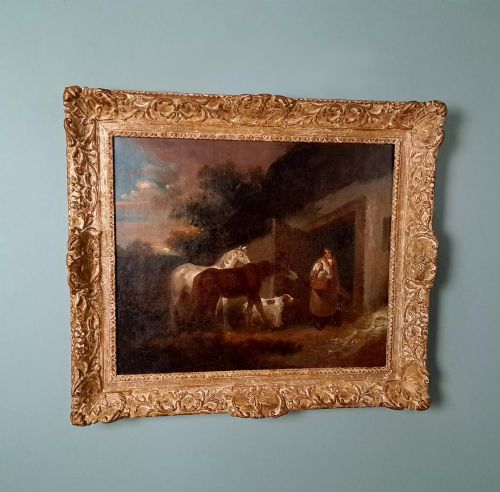
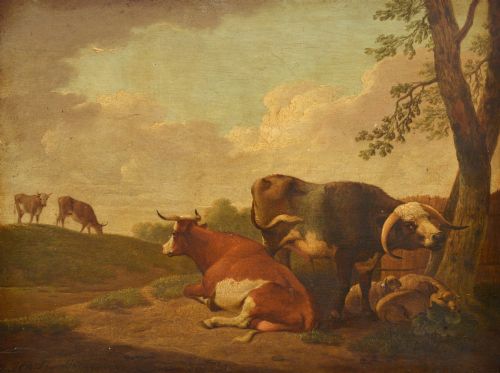
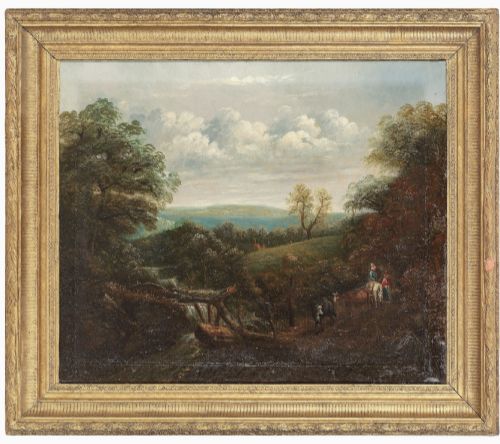
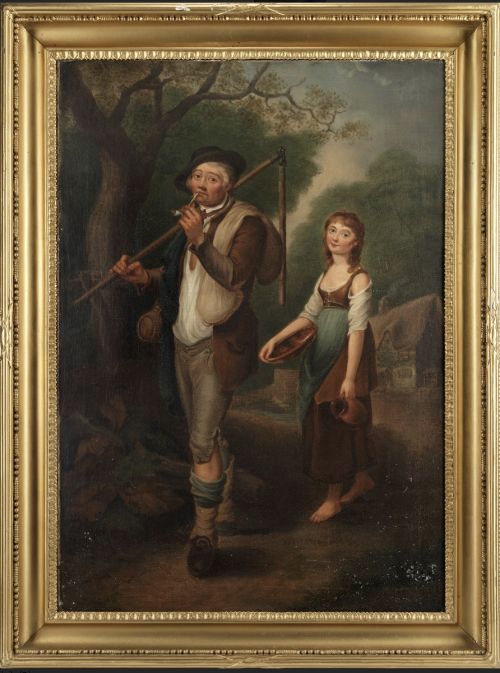
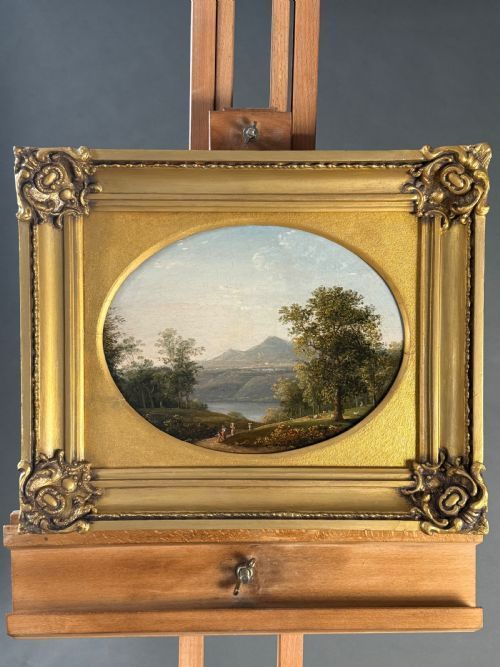
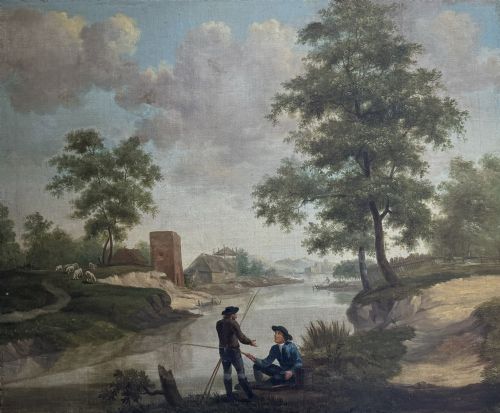
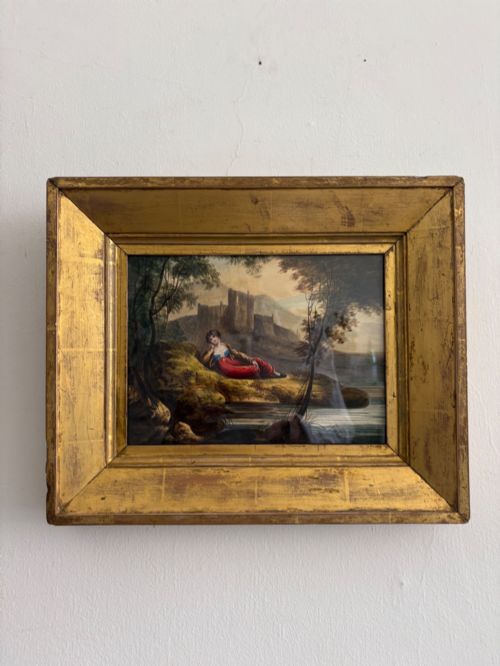
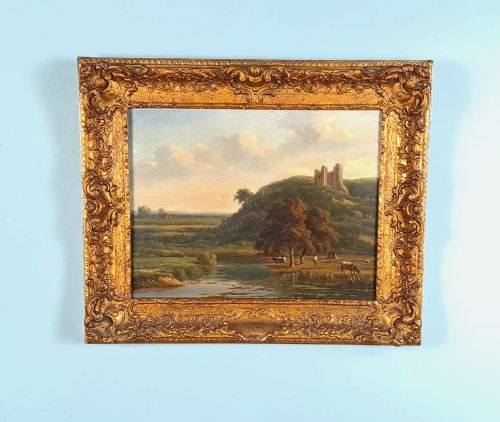
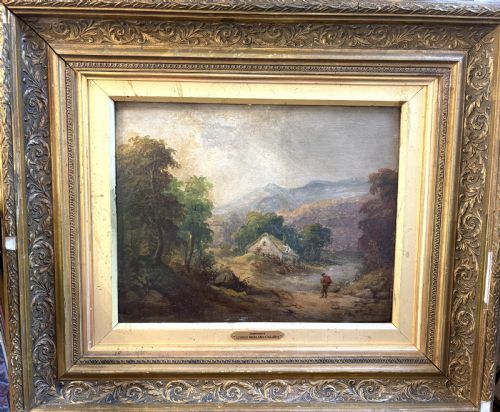
A georgian pastoral painting typically depicts idyllic rural scenes featuring figures, cattle, sheep, and rustic landscapes inspired by classical and British country life. You will frequently encounter oil paintings on canvas or board, alongside watercolours, gouache, and reverse glass prints originating from the eighteenth and nineteenth centuries.
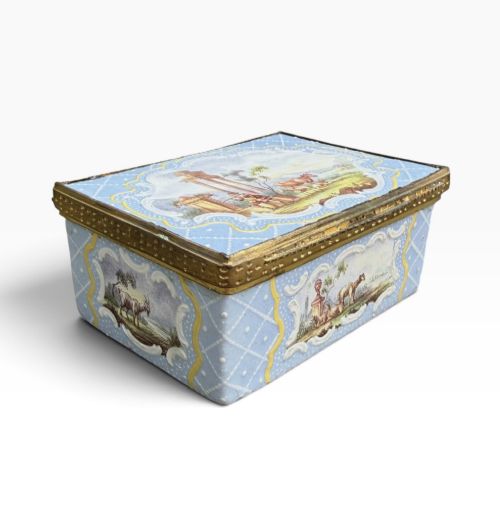
Beyond framed wall art, this category extends to smaller decorative objects bearing similar rustic themes, such as Bilston enamel snuff boxes, Staffordshire porcelain figures, and painted furniture like corner cupboards. These varied forms reflect a widespread cultural taste for romanticised countryside motifs during the Georgian era and beyond.
How they were made
Painters utilised oil paint on stretched canvas or wooden panels, building rich compositions with layered glazes and earth pigments to render skies, foliage, and grazing animals. Works on paper employed watercolour and gouache techniques to achieve lighter, translucent effects.
Enamel items utilised copper bases fused with powdered glass pigments fired in kilns, often hand-painted with delicate pastoral vignettes, while reverse glass prints required applying paint directly to the rear of glass sheets to create glossy finished surfaces framed in wood or gilt.
Antique bellows bearing shepherd boy decoration prove that even functional fireside tools once participated in the grand Georgian love of rural theatre.
What varies in quality
The sophistication of brushwork, anatomical precision in human and animal figures, and atmospheric depth distinguish accomplished works from simpler regional productions. Finer paintings demonstrate subtle handling of light and shadow, whereas standard decorative pieces rely on more formulaic compositions.
Original framing and material preservation also influence the standing of an object, with period giltwood frames and undamaged enamel surfaces commanding greater appreciation among collectors.
William Joseph Shayer Senior·Hendrik Willem Schweickhardt·Thomas Barker of Bath·Jacob Philipp Hackert·T C Hofland·George Morland·John Sanderson Wells·Francis Wheatley·Limbach Porcelain·Julius Caesar Ibbetson·Francesco Zuccarelli·John Inigo Richards·Richard Wilson·Claude Lorrain
The Georgian Pastoral Painting Glossary
- Pastoral
- An artistic style celebrating rural life, shepherds, and agricultural scenery. It draws on classical traditions of an untroubled countryside.
- Gouache
- An opaque watercolour paint mixed with a binding agent and white pigment to create solid, matte colour areas. It allows for vibrant detail on paper.
- Reverse glass print
- An image painted directly onto the reverse side of a glass sheet and viewed from the front. This technique produces a bright, glossy surface finish.
- Enamel plaque
- A small decorative metal plate fused with vitreous glass coatings and hand-painted. Bilston and South Staffordshire workshops produced notable examples.
Georgian Pastoral Painting: Frequently Asked Questions
What is a georgian pastoral painting?
A georgian pastoral painting is an artwork depicting idealised rural scenes, often featuring shepherds, cattle, and rustic landscapes produced during the eighteenth and early nineteenth centuries.
These pieces reflect the period's fascination with country life, heavily influenced by classical European landscape traditions and British topographical art.
How do I date an antique pastoral painting?
Dating relies on examining the canvas preparation, stretcher construction, artist signatures, and framing methods typical of the Georgian and Victorian periods.
Stylistic cues within the clothing of painted figures and the handling of pigments also provide reliable clues for establishing the era of creation.
Where were Bilston enamel patch boxes made?
Bilston enamel patch boxes and snuff boxes were manufactured in the Staffordshire region of England during the eighteenth century.
These small containers often featured hand-painted pastoral scenes on their hinged lids, serving as fashionable accessories for Georgian society.
What is a reverse glass print?
A reverse glass print is an image painted directly onto the back of a glass sheet, requiring the artist to apply fine details and foregrounds before background layers.
When viewed through the front of the glass, the paint displays a distinctive polished sheen and deep luminosity popular in Georgian interior decoration.