


18th Century Landscape Canvas
An 18th century landscape canvas brings pastoral scenes, rural idylls and classical compositions into domestic interiors through historic oil painting traditions.
18th Century Landscape Canvas
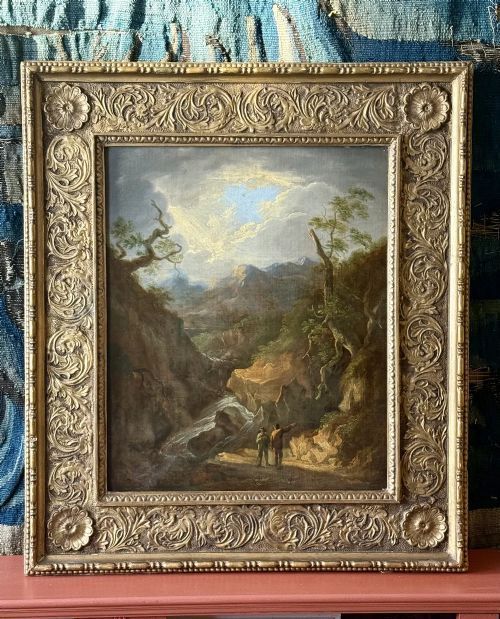
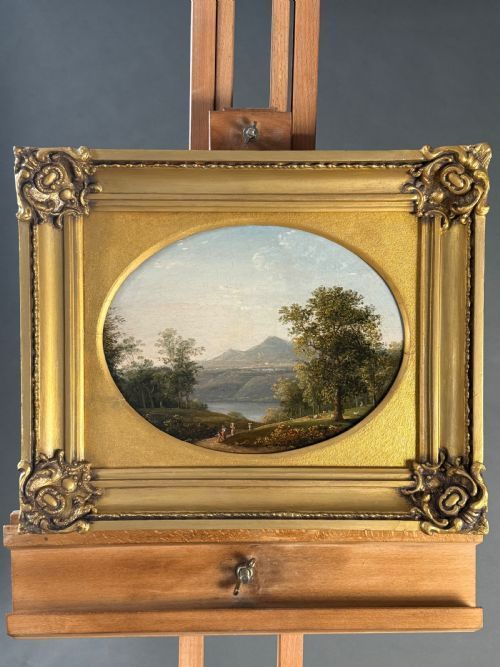
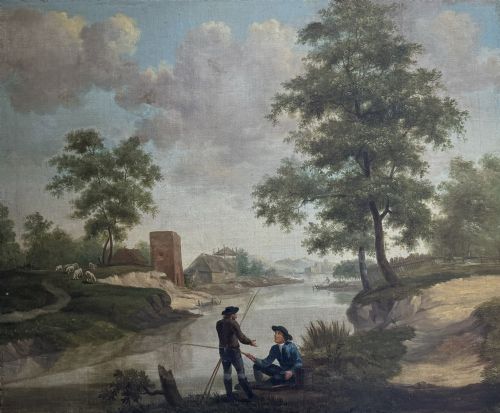
An 18th century landscape canvas captures pastoral views, river valleys, and wooded idylls produced across British, French, and Italian schools. These works range from intimate regional studies to grand Italianate compositions inspired by classical masters.
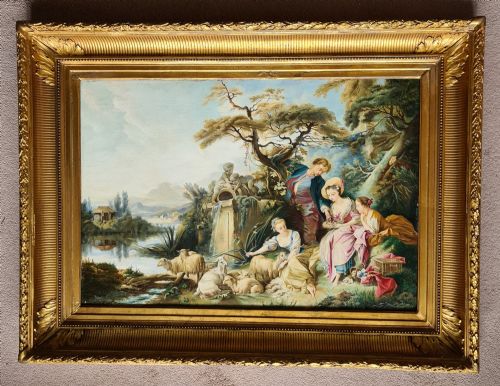
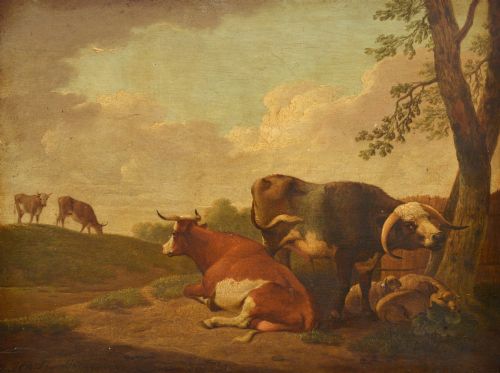
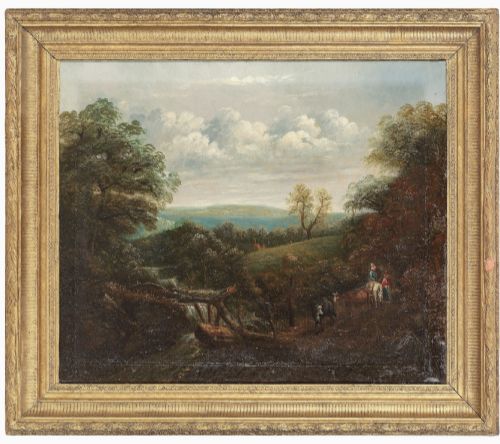
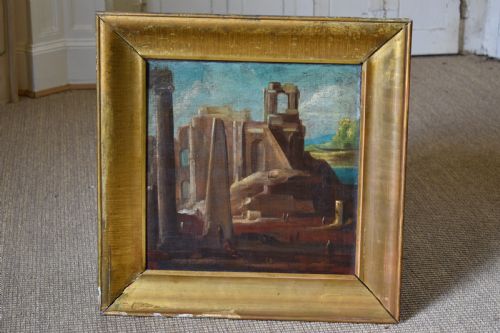
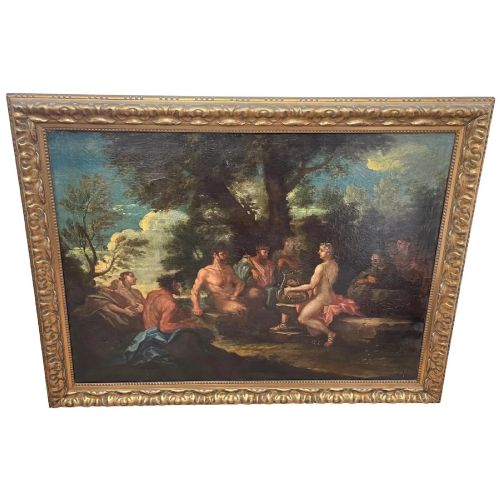
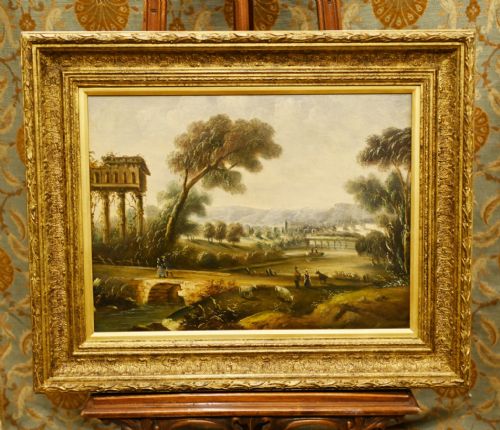
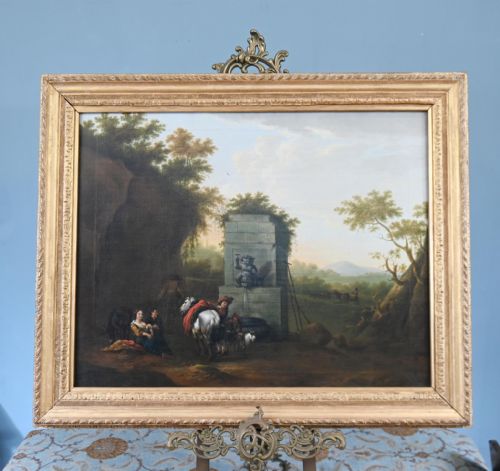
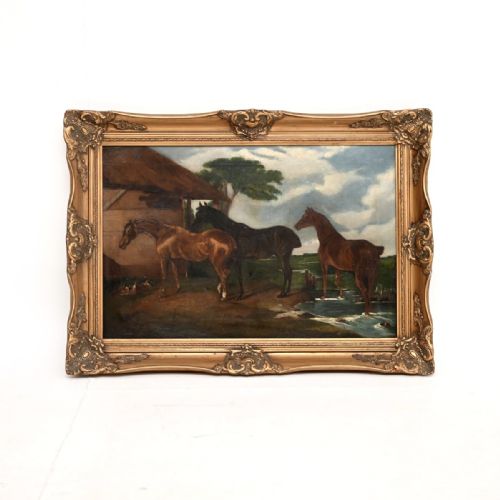
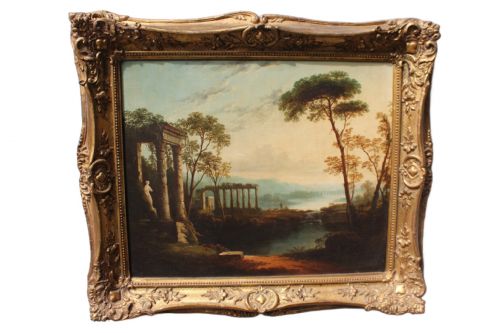
Buyers encounter subjects featuring cattle, figures on country paths, and architectural ruins alongside mythological and historical staffage. Many pieces reflect the influence of the Grand Tour and regional schools such as the Norwich or Scottish traditions.
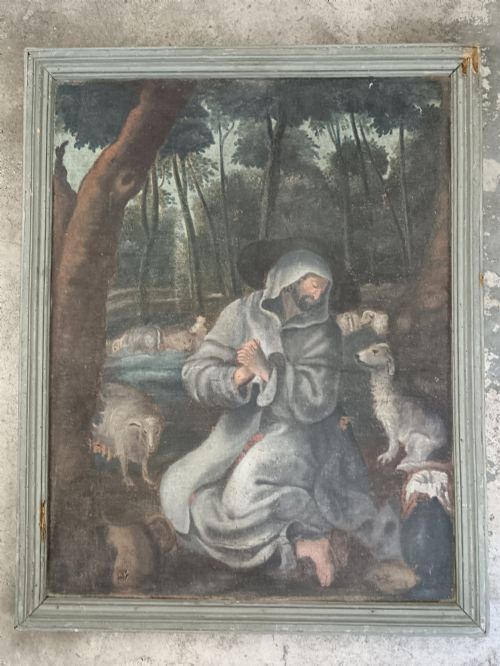
The selection includes original oils executed on woven fabric supports, often retained within period giltwood or carved wooden frames. Surviving works span structured classical vistas to more rustic, naïve interpretations of European countryside.
Materials and Techniques
Artists built these works using oil paint applied to woven canvas supports, often stretched over traditional wooden frames. Pigments were layered to create depth in skies, foliage, and architectural elements.
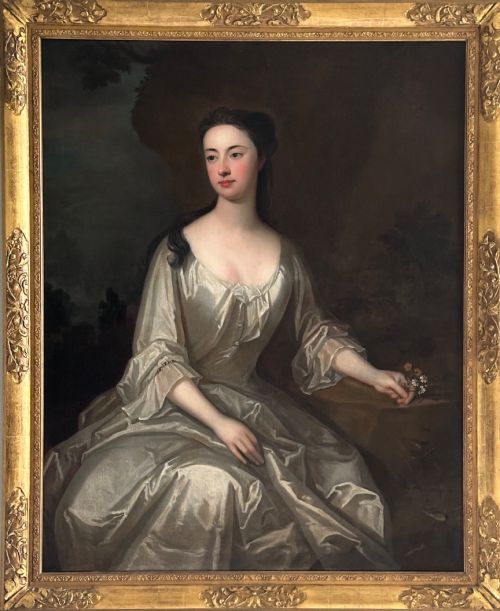
Many surviving examples retain their original or period frames constructed from giltwood, wood, and gold leaf. These surrounds complement the tonal palette of the painted surface.
Several canvases quietly record historical farmyard scenes, complete with observant pigs and stray cattle.
Quality Variations
Differentiation across these works rests on the confidence of brushwork, the handling of light and atmospheric perspective, and the preservation of the original paint layer. Masterful compositions balance foreground details with expansive background views.
The integrity of the canvas and the survival of the original or period giltwood frame contribute to the overall standing of an individual painting within the historical record.
Francois Boucher·Hendrik Willem Schweickhardt·Benjamin Barker of Bath·Jacob Philipp Hackert·Adriana Verelst·Jan Miel·John Hamilton Mortimer·Claude Lorrain·Marmaduke Cradock·Jacob Bogdani·George Morland·Frank Moss Bennett·Julius Caesar Ibbetson·Francesco Zuccarelli·Joseph Farington·Jean Antoine Watteau·Antonio Allegri Correggio·Richard Wilson·George Stubbs·Giacomo Nani·Hendrik Frans Van Lint·Christian Georg Schutz
The 18th Century Landscape Canvas Glossary
- Canvas
- A heavy woven fabric stretched across a wooden frame to serve as the support for oil paintings.
- Giltwood
- Wood carved and coated with gold leaf or metallic paint, commonly used for period picture frames.
- Italianate
- A stylistic approach depicting the idealized architecture, lighting, and terrain of the Italian landscape.
- Pentimento
- An alteration in a painting where previous brushstrokes show through the upper layers of oil paint.
- Staffage
- Human or animal figures included within a landscape to provide scale and narrative interest.
18th Century Landscape Canvas: Frequently Asked Questions
How do I care for an antique oil painting?
Keep the canvas away from direct sunlight, high humidity, and rapid temperature fluctuations to protect the oil paint and wood stretcher. Dust the surface gently with a soft, dry brush without applying pressure.
Avoid using water, liquid cleaners, or chemical solvents on the painted canvas or the giltwood frame. Professional conservation is recommended for any structural repairs or deep cleaning.
What defines an Italianate landscape?
An Italianate landscape portrays sunlit Southern European scenery, featuring classical ruins, rolling hills, and hazy atmospheric skies. This style drew inspiration from the physical environment of Italy and the compositions of earlier masters.
Artists across Britain and Northern Europe adopted these visual tropes to evoke classical antiquity and pastoral harmony in their studio works.
Are these paintings in their original frames?
Many works retain period frames made of giltwood, wood, and gold leaf, which match the age and origin of the canvas. These frames often show historic wear consistent with centuries of display.
Matching a canvas to a period frame enhances its historical context, though some pieces have been reframed over their lifespan to suit changing interiors.
What is the significance of a pentimento?
A pentimento occurs when an artist changes their composition during the painting process, causing earlier brushstrokes to emerge through the top layer over time. This phenomenon indicates an authentic, hand-painted work rather than a mechanical copy.
Observers value these visible revisions as a direct record of the artist's creative decisions on the canvas.