


Georgian Panelled Oak Chest
A georgian panelled oak chest brings solid timber storage and centuries of English and Welsh country craftsmanship into a modern interior.
Georgian Panelled Oak Chest
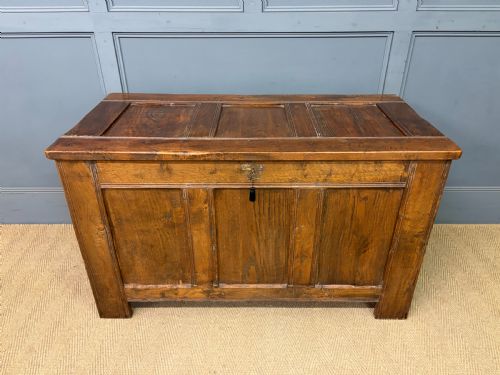
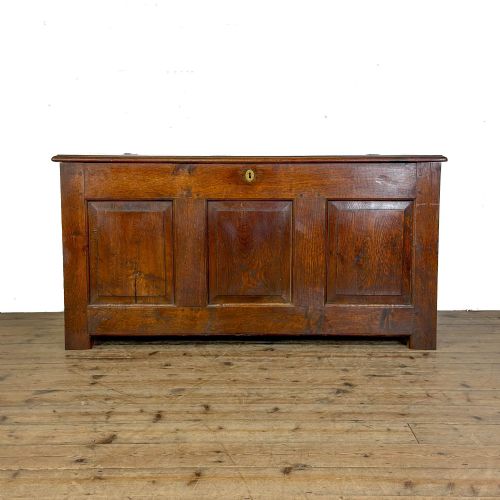
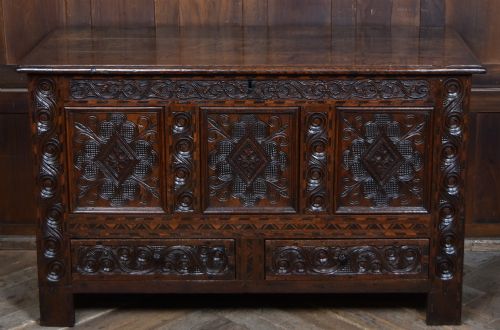
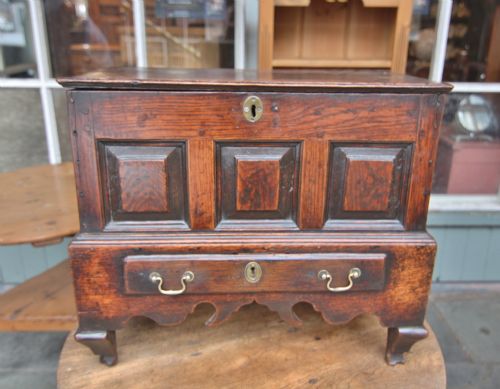
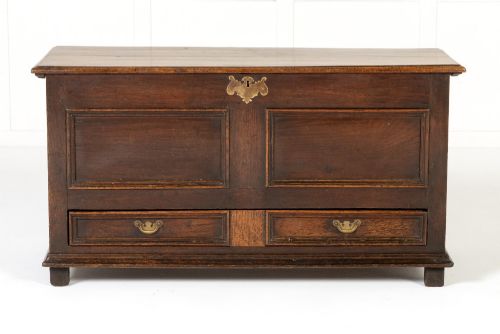
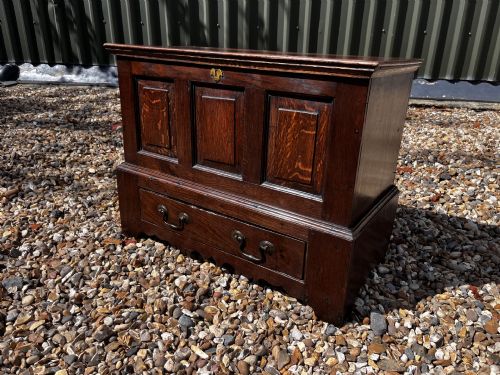
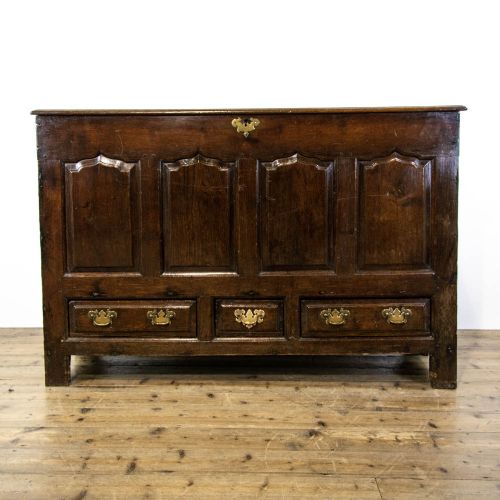
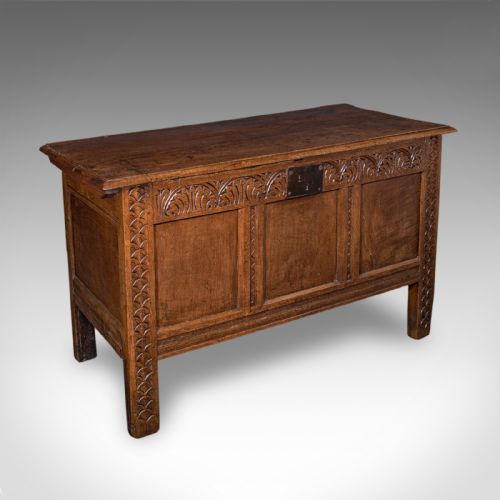
When you search for a georgian panelled oak chest, you encounter sturdy storage furniture originating primarily from the eighteenth and nineteenth centuries. These pieces encompass standard coffers, blanket chests, mule chests featuring lower drawers, and regional variants such as the Welsh coffer bach.
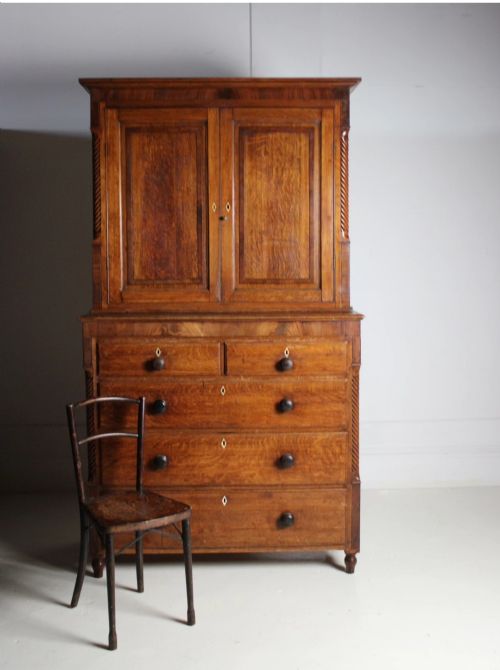
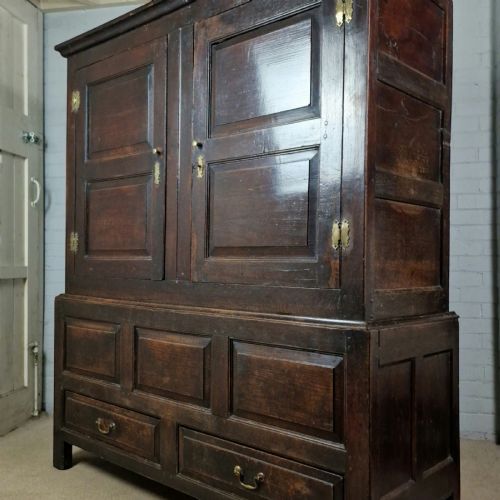
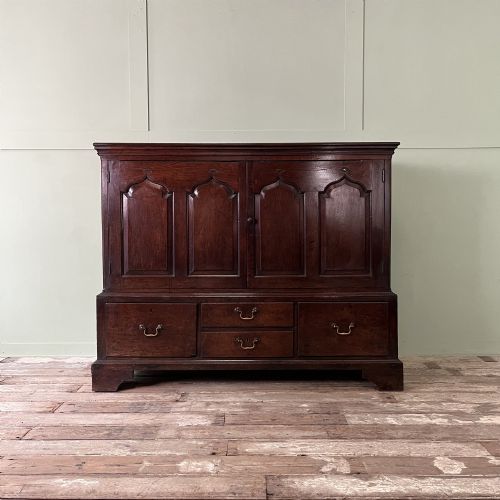
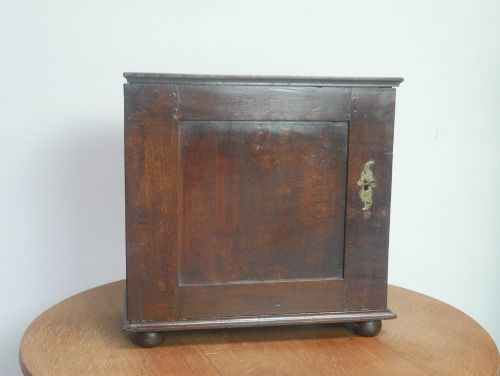
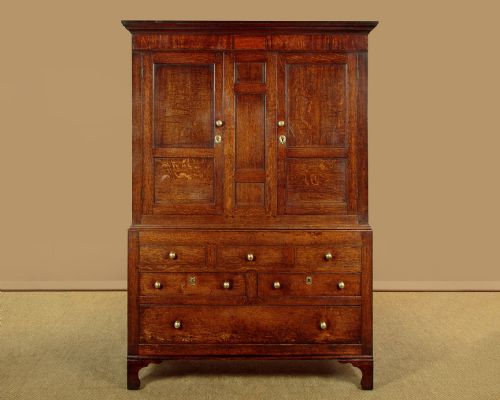
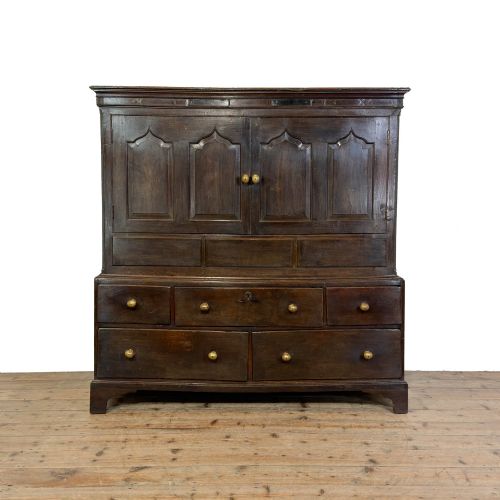
The dominant forms on this page include simple joined coffers and mule chests alongside press cupboards, spice cupboards, and occasional settlers. Regional styles range from English country workshops to Welsh vernacular traditions, reflecting local rural cabinet making.
Makers constructed these items for domestic utility, storing textiles, linen, and household provisions. Surviving examples demonstrate heavy panelled construction designed to withstand daily use over generations.
What varies in quality
Quality rests in the integrity of the timber selection and the precision of the joinery rather than surface ornamentation alone. Pieces featuring figured timbers, such as burr elm panels, or integrated drawer arrangements demonstrate higher levels of workshop ambition.
Proportion and structural survival determine the standing of an individual example. Items retaining their original brass or iron hardware and uncompromised panel construction occupy the upper tier of the range.
The Georgian Panelled Oak Chest Glossary
- Mule chest
- A storage chest that incorporates one or more drawers beneath the main lift up compartment. This form bridges the traditional coffer and the chest of drawers.
- Coffer bach
- A small Welsh box or miniature coffer, often fitted with a drawer. The term translates directly from the Welsh as small chest.
- Joined construction
- A method of cabinet making using mortise and tenon joints to frame panels. This technique allows the timber to expand and contract naturally without splitting.
- Marquetry inlay
- The art of applying decorative pieces of wood veneer onto a structure to form patterns. It adds visual detail to flat surfaces on select period furniture.
Georgian Panelled Oak Chest: Frequently Asked Questions
What is a mule chest?
A mule chest combines a traditional lift up blanket box with one or more drawers fitted beneath the main compartment.
This form emerged as makers sought to provide accessible storage for smaller items without requiring users to lift the heavy lid every time.
How do I date an oak chest?
Dating relies on examining construction techniques, hardware types, and timber characteristics. Hand cut joinery, peg fastenings, and iron hinges point towards earlier periods.
Secondary indicators include regional stylistic traits and the presence of integrated lower drawers which became common during the eighteenth century.
How do I use a coffer today?
These pieces function effectively as practical storage furniture for blankets, bed linen, and bulky household items. Their flat tops also allow them to serve as occasional window seats, blanket boxes at the foot of a bed, or hallway surfaces.