


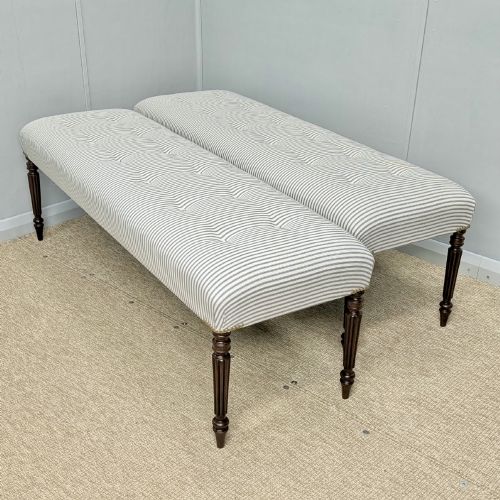
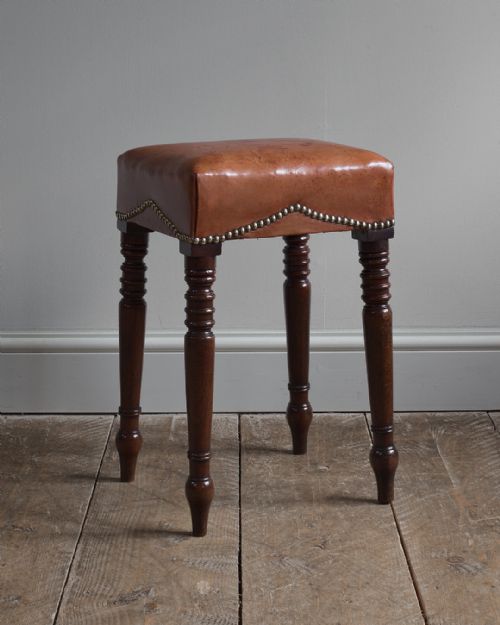
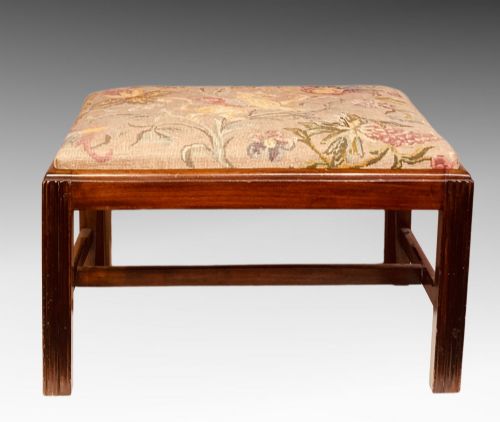
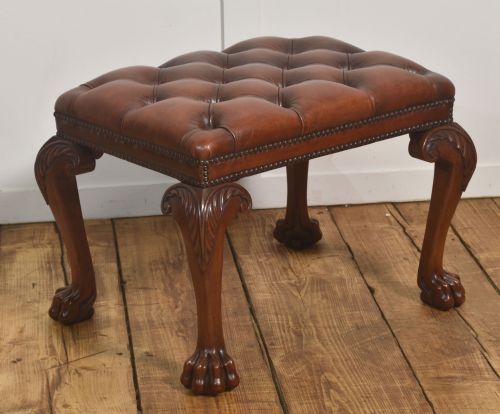



Georgian Padded Stool
A georgian padded stool brings low, upholstered seating into a room, combining solid timber frames with textile tops for everyday comfort.
Georgian Padded Stool
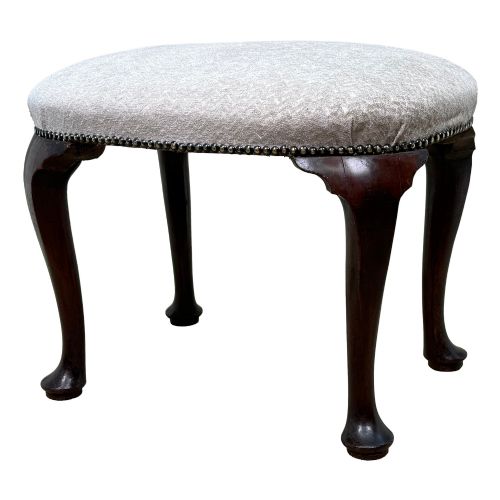
When you search for a georgian padded stool, you encounter low wooden seats designed for dressing tables, window alcoves, or general foot support. The selection spans authentic eighteenth-century examples alongside later nineteenth-century revivals produced in walnut and mahogany.
Most pieces combine a sturdy timber base with traditional textile, leather, or tapestry upholstery. Forms range from simple square and oval shapes to larger window seats and long footstools intended for specific domestic tasks.
How they were made
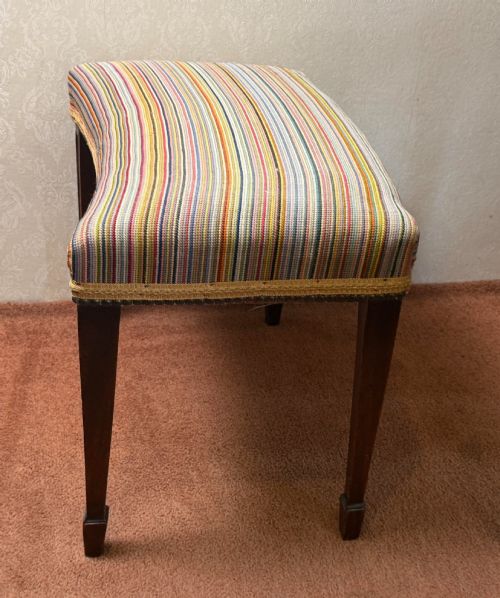
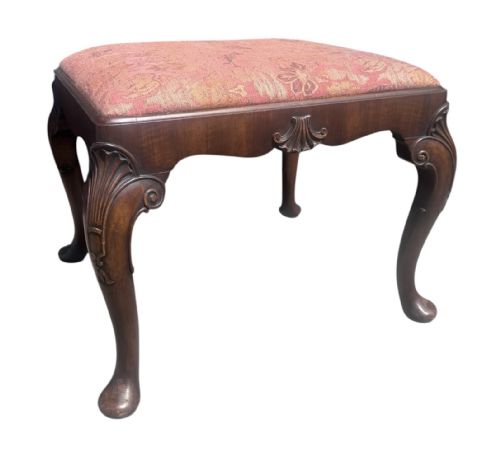
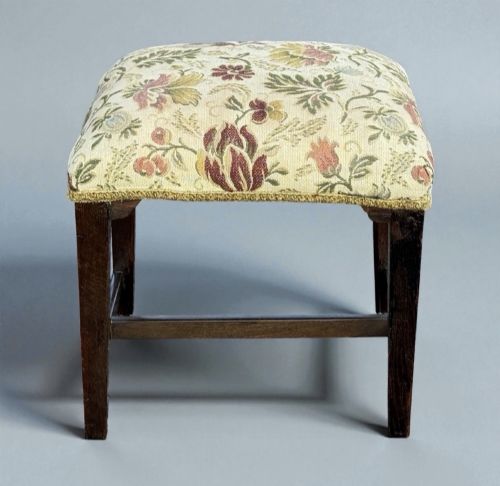
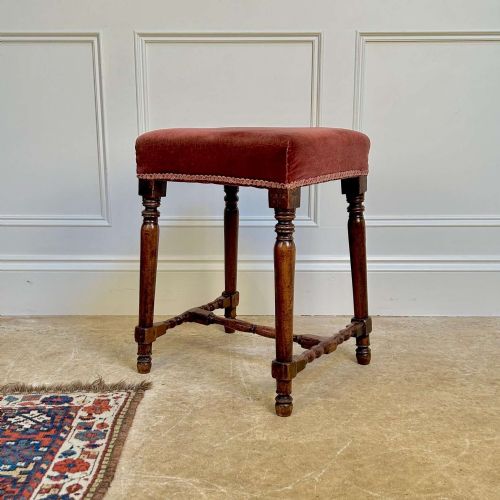
Cabinetmakers constructed the foundational frames primarily from dense hardwoods like mahogany and walnut, occasionally utilising elm or beech for specific structural elements. Joinery relied on traditional techniques to support weight across cabriole, straight square tapering, or carved legs.
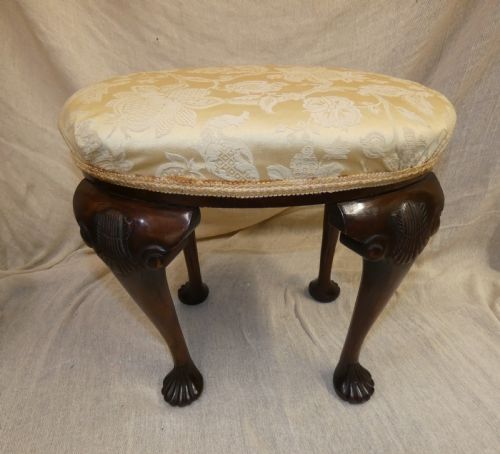
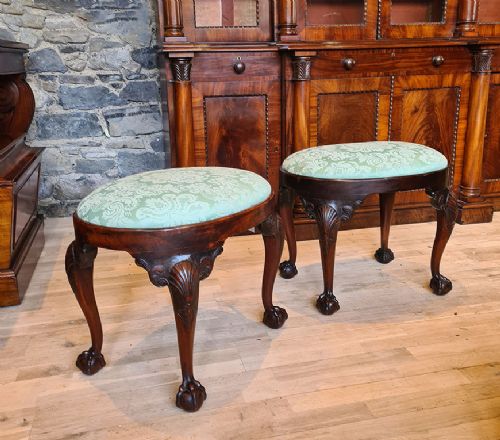
Upholstered surfaces combined supportive interior webbing or stuffing with top layers of wool, velvet, chenille, or tapestry. Brass elements and carved details such as cross stretchers or lion paw feet completed the finish.
Georgian Padded Stool Retail Price Guide 2026
Typical asking prices for georgian padded stool among the pieces listed under this phrase on Sellingantiques today, from the lower quarter to the upper quarter. They describe what is for sale here now, not the wider market.
Listings feature frames built from mahogany, walnut, beech, elm, and burr maple.
What varies in quality
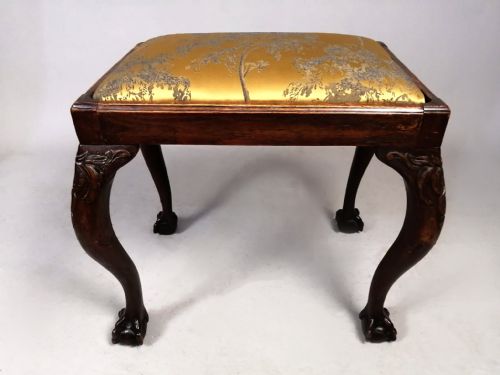
The degree of hand-carving on the wooden frame separates standard utilitarian furniture from exceptional pieces designed for formal interiors. Crispness in the execution of cabriole legs, claw and ball feet, or serpentine rails indicates superior workshop standards.
The choice and execution of the upholstery materials also differentiate pieces. Original or period-appropriate textile work, including fine tapestry and leather, alters the visual integrity and historical consistency of the stool.
The Georgian Padded Stool Glossary
- Cabriole leg
- A furniture leg that curves outward at the knee and tapers inward toward the ankle, ending in a foot. This design appears frequently on eighteenth-century walnut and mahogany seating.
- Cross stretcher
- Wooden bracing members connecting the legs beneath a stool to provide structural stability. They often feature central carvings or intersections characteristic of specific periods.
- Serpentine
- A furniture edge or rail shaped with a double curve, undulating outward at the centre and inward at the sides. This contour adds visual movement to dressing table stools and window seats.
- Window seat
- A long, upholstered bench designed to fit within a window recess. These pieces frequently incorporate arms and substantial wooden framing.
Georgian Padded Stool: Frequently Asked Questions
Where were these stools placed?
These stools served varied functions around the home, appearing beside dressing tables for grooming or positioned in window alcoves for reading and viewing.
Smaller footstools sat directly in front of chairs to support the legs, while longer benches and ottomans occupied hallways and drawing rooms.
How do I identify a revival piece?
Revival items mimic earlier aesthetic movements, utilising styles such as Chippendale or Queen Anne while employing nineteenth or early twentieth-century manufacturing methods.
Examining the internal timber, tool marks, and secondary woods helps distinguish a genuine eighteenth-century piece from a later Georgian style interpretation.
What woods were used for frames?
Cabinetmakers relied heavily on durable hardwoods, with mahogany and walnut forming the majority of surviving frames.
Less common timber choices include elm, beech, and burr maple, each providing distinct grain patterns and structural qualities to the finished seat.
Are the upholstery coverings original?
Many surviving stools have undergone reupholstery over time to replace worn textiles and interior padding.
Surviving examples featuring period textiles such as needlework tapestry, chenille, or leather remain less common and usually date to specific nineteenth or twentieth-century restorations.