

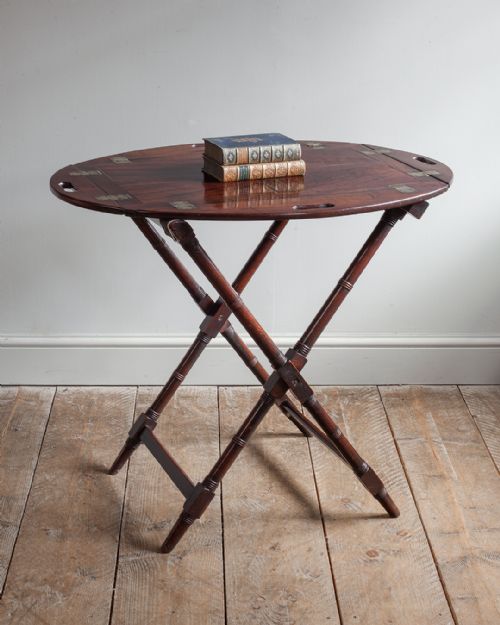


Georgian Oval Tray
A georgian oval tray brings tangible utility and classical proportion to a room, serving as a refined surface for drinks or display.
Georgian Oval Tray
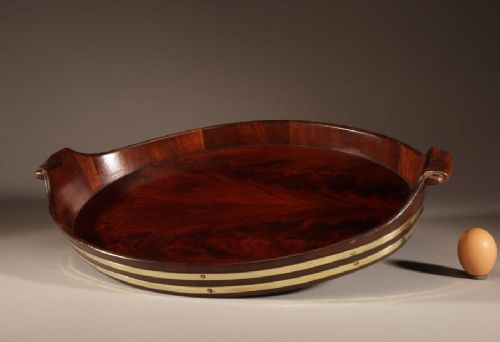
A georgian oval tray encompasses serving dishes, butler's trays, and calling card trays shaped in rounded curves rather than rigid angles. These pieces originate predominantly from the Georgian, Regency, and 19th Century periods, reflecting the domestic habits of earlier centuries.
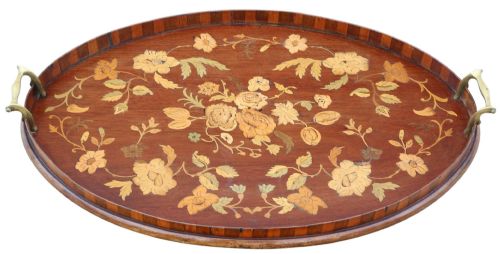
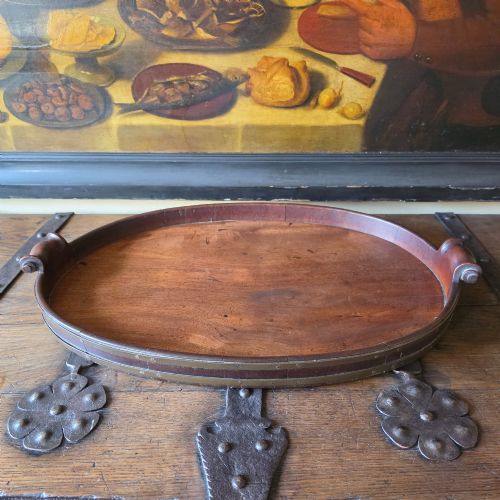
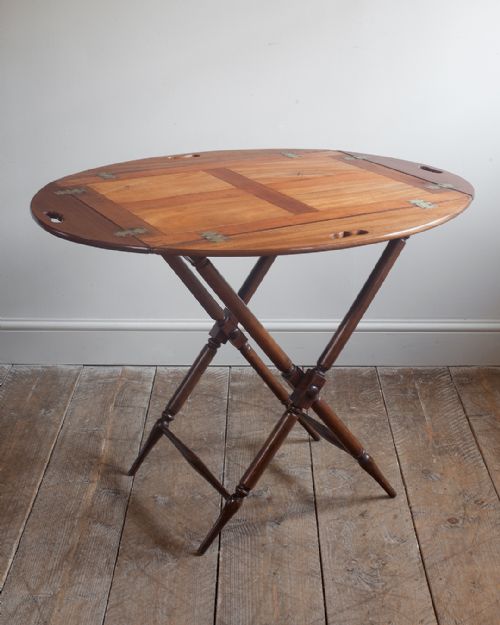
The version most commonly encountered on this page is the mahogany butler's tray, frequently resting upon a folding or fixed wooden stand. These timber examples often appear alongside silver, porcelain, papier-mâché, and toleware variations.
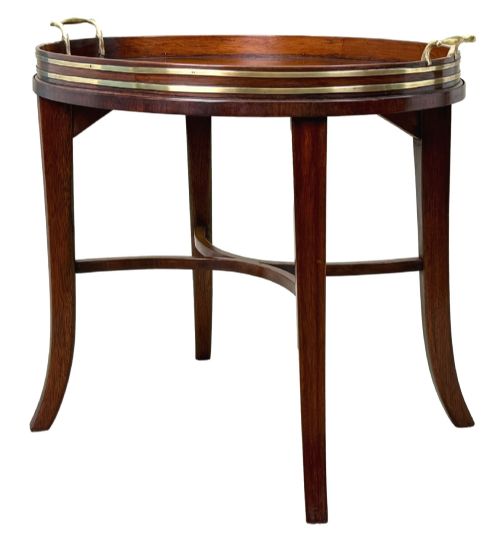
Serving trays and platters range from miniature examples to large serving surfaces designed for dining rooms and drawing rooms. Occasional tables and coffee tables also appear, created by mounting these antique trays onto compatible bases.
How they were made
Makers utilised dense timbers such as mahogany, satinwood, and yew wood, often employing coopered construction or raised galleries to contain items safely. Inlaid details, marquetry, and contrasting stringing decorate the wooden surfaces of many examples.
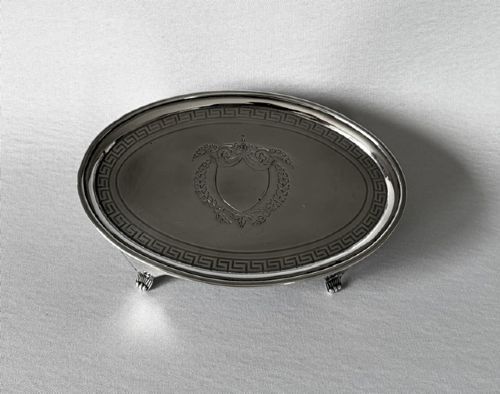
Metal variations combine sterling silver, brass, and silver plating, sometimes incorporating brass bound decoration or handles for carriage. Papier-mâché and painted toleware offer lighter alternatives finished with lacquer.
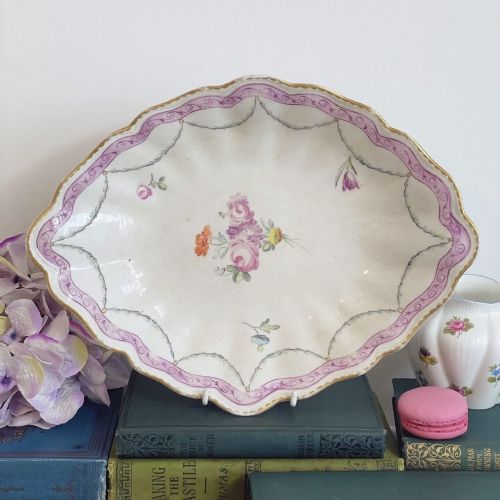
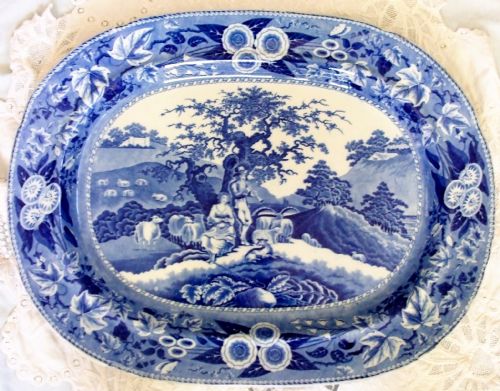
Ceramic dishes and platters employ earthenware and porcelain bodies, decorated with handpainted polychrome floral motifs or blue and white transfer printing.
Listings span multiple materials including mahogany, sterling silver, porcelain, papier-mâché, and toleware across the Georgian, Regency, and Victorian periods.
What varies in quality
The grade of timber selection and the precision of inlay determine the visual strength of wooden items. Superior examples display carefully matched grain patterns and crisp, cleanly executed marquetry rather than rushed decoration.
Construction methods reveal the standard of workshop output, seen in the tight fit of coopered staves and the structural integrity of galleried edges. Pierced handles and applied brass mounts show varying degrees of hand-finished detail.
In silver and ceramic pieces, the clarity of hallmarks, the sharpness of transfer-printed scenes, and the skill of handpainted brushwork separate ordinary production from superior craftsmanship.
Robert Breading·Peter and Anne Bateman·Henry Clay·Barr Flight and Barr
The Georgian Oval Tray Glossary
- Butler's tray
- A portable wooden tray featuring high sides or handles, traditionally lifted from its stand after a meal. These pieces frequently feature hinged edges or cut-out handholds.
- Galleried
- Describes a tray with an elevated rim running around the perimeter to prevent items from sliding off. This raised border is sometimes pierced with handgrips.
- Coopered
- Formed of curved wooden staves joined edge to edge, a technique borrowed from barrel-making to create rounded trays. This method provides robust strength to oval wooden forms.
- Toleware
- Painted or lacquered metalware, usually tinplate, popular for decorative serving trays. These surfaces often feature dark backgrounds embellished with gilt or polychrome decoration.
- Mazarine
- A flat draining insert or plate placed inside a serving dish to keep meat elevated from juices. These silver or plated items fit closely within oval platters.
Georgian Oval Tray: Frequently Asked Questions
How were butler's trays used?
These trays served domestic staff in transporting tea services, food, or correspondence between rooms before being placed on a folding support for stable use.
In modern interiors, they function effectively as standalone coffee tables or portable side surfaces.
What woods were commonly used?
Mahogany forms the majority of surviving wooden trays, often selected for its durability and rich grain.
Satinwood and yew wood also appear, frequently highlighted with contrasting marquetry or delicate stringing.
Are stands usually original?
Many trays survive alongside their original folding or fixed wooden stands, though others were paired with bases during later periods.
Both period-matching stands and later adaptations appear frequently within these listings.
How do I care for antique wood?
Wooden surfaces benefit from gentle dusting with a dry cloth and protection from direct sunlight and excessive moisture.
Applying appropriate wax preserves the polish and nourishes the historical timber.