

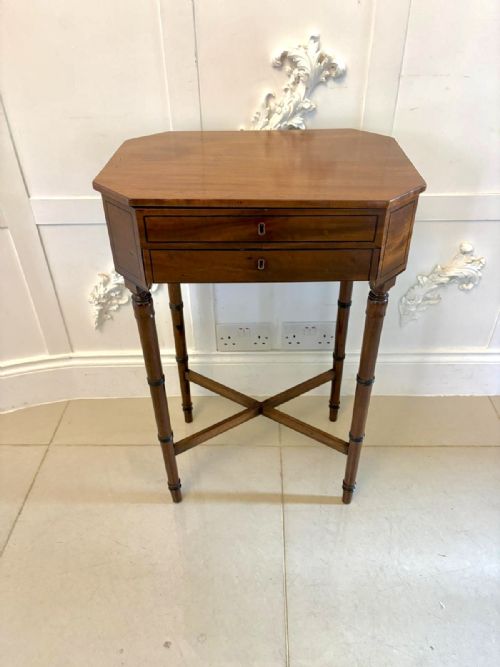


Georgian Octagonal Furniture
Georgian octagonal furniture brings together precise geometry and rich timbers, offering practical surfaces that anchor a room with calm proportion.
Georgian Octagonal Furniture
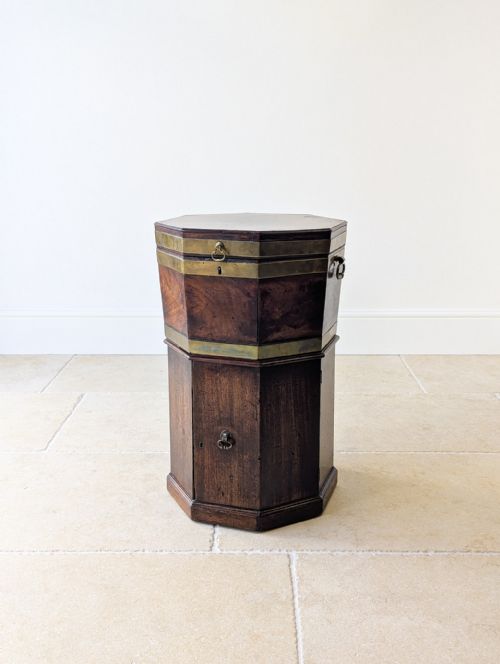
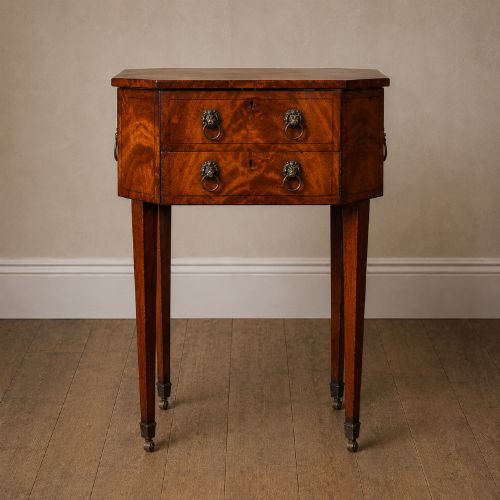
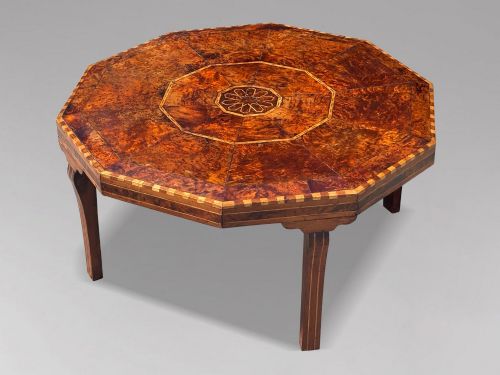
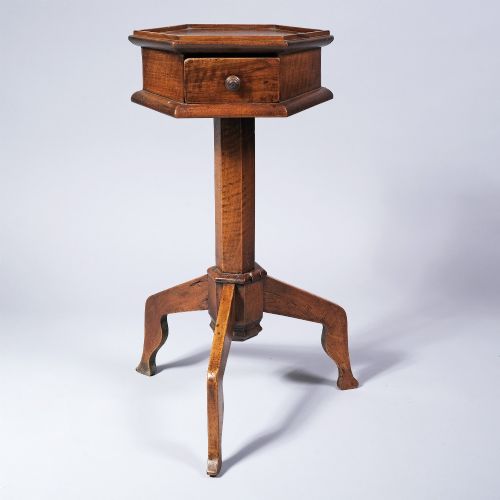
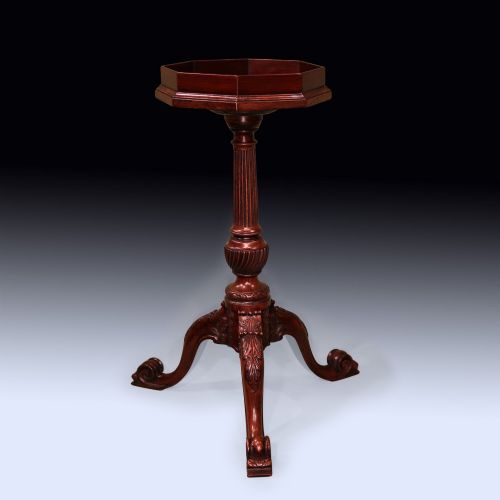
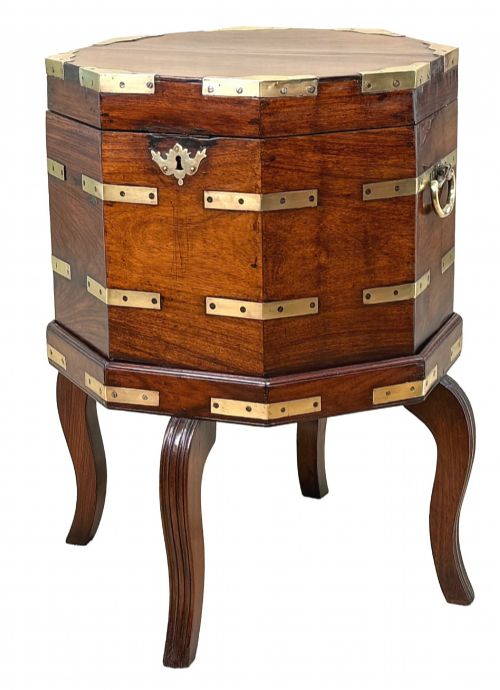
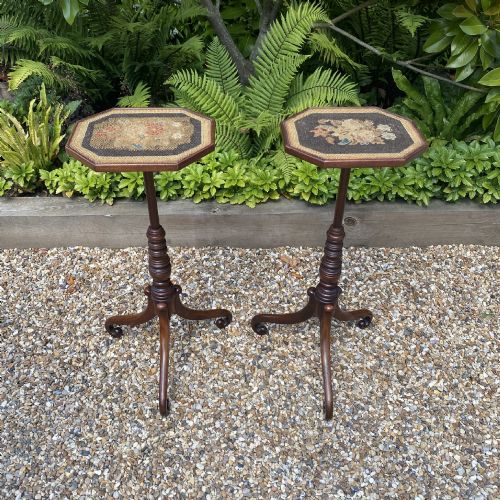
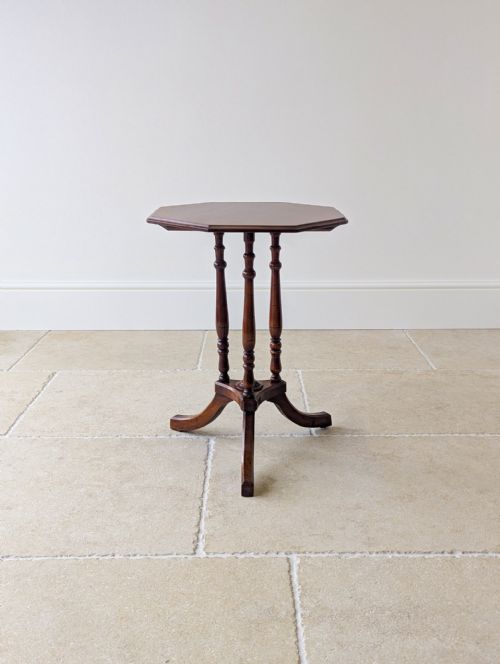
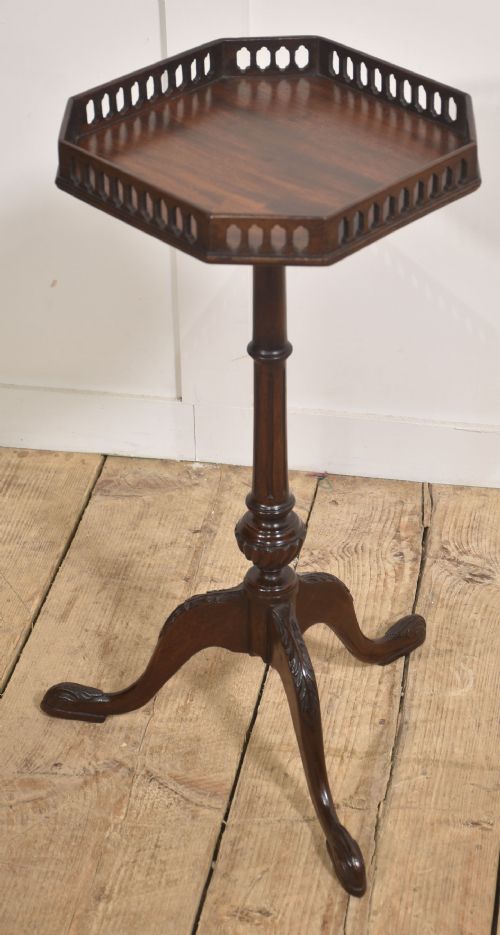
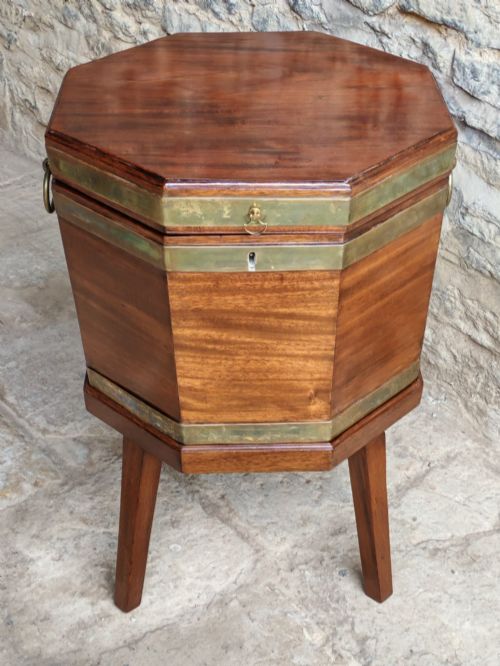
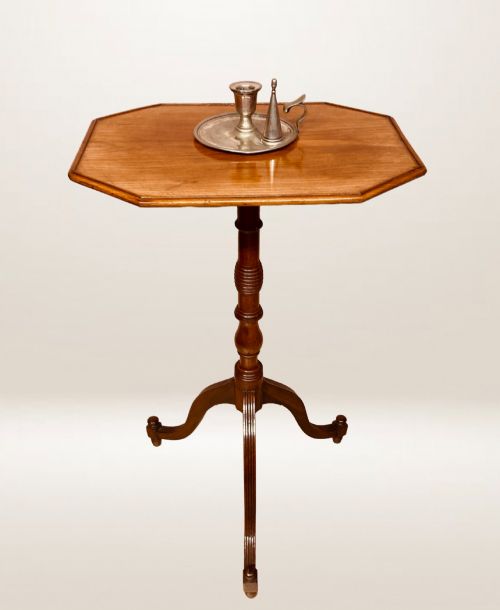
Georgian octagonal furniture encompasses compact occasional tables, cellarettes, work tables, and multi-tiered stands shaped with eight distinct sides. These forms emerge primarily from the Georgian, Regency, and William IV periods, executed in substantial timbers like mahogany, satinwood, and burr yew. The selection here leans heavily towards cellarettes, wine coolers, and occasional lamp tables designed for specific domestic duties.
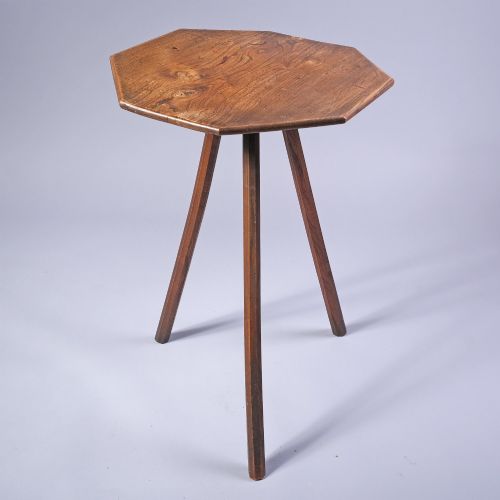
Makers of the late eighteenth and early nineteenth centuries utilised the octagonal format to soften room corners while providing generous surface area relative to a table's footprint. Examples range from George III brass-bound wine coolers to inlaid satinwood work tables and tripod stands. Each piece demonstrates how cabinetmakers balanced utility with the strict architectural demands of multi-sided geometry.
How they were made
Cabinetmakers constructed these pieces using dense hardwoods such as mahogany, oak, and padouk, often applying fine veneers of satinwood, burr yew, or rosewood over secondary timbers. Surface enrichment relied on precision stringing, boxwood inlay, and brass banding rather than excessive carving. Structural integrity was achieved through traditional joinery, sturdy tripod bases, and custom hardware like lion mask handles and brass castors.
Cellarettes and wine coolers required careful cooperage to hold liquids and ice, utilising tight stave construction bound by heavy brass hoops. Work tables and teapoys incorporated fitted interior compartments with lids, demanding delicate miniature joinery for boxes and sewing baskets. The eight-sided tops required meticulous edge-mitring to ensure the grain met cleanly at each corner.
Listings feature periods spanning from the eighteenth century through the Victorian era, executed in mahogany, satinwood, burr yew, and oak.
What varies in quality
Quality rests upon the choice of timber and the precision of the grain matching across the eight sides of the top. Superior examples display figured flame mahogany, choice satinwood, or unblemished burr yew selected specifically for the geometry of the panel. Lower grades rely on plain, unselected timbers with less attention paid to how the grain flows around the corners.
The sophistication of the internal fittings and secondary details separates workshop tiers. Finer pieces include original brass locks, working interior compartments in teapoys, and crisp inlay work in boxwood and ebony. Simpler vernacular examples offer sturdy utility without the decorative stringing or specialised hardware found in high-end urban commissions.
Gillows
The Georgian Octagonal Furniture Glossary
- Cellaret
- A freestanding box or cabinet designed to hold bottles of wine and spirits, often lead-lined and brass-bound.
- Teapoy
- A small stand or table fitted with compartments for storing tea leaves, which were once an expensive luxury commodity.
- Stringing
- A narrow strip of contrasting wood inlaid into the surface of a piece to create decorative borders and geometric outlines.
- Torchere
- A tall, slender stand intended to support a candle or lamp, typically featuring a small circular or octagonal top on a tripod base.
- Etagere
- A set of open shelves for displaying small items, constructed here with multi-tiered octagonal platforms.
Georgian Octagonal Furniture: Frequently Asked Questions
What is a teapoy used for?
A teapoy served as a secure repository for loose tea leaves, which were kept locked to protect them from theft by household staff in the eighteenth and nineteenth centuries.
Inside, these pieces typically feature lidded canisters and a small mixing bowl for blending different grades of tea before serving.
How do I date a cellaret?
Dating relies upon the timber choice, the profile of the base, and the style of the brass mounts or hardware. Earlier Georgian examples often feature straight-grained mahogany with heavy brass banding, while Regency pieces introduce rosewood and more elaborate carved feet.
Examine the construction of the interior lining and the type of screws or fasteners used, as these evolved considerably between seventeen-eighty and eighteen-thirty.
Where should I place an octagonal table?
An octagonal table fits naturally beside a sofa or chair because the multi-sided top removes harsh right angles from cramped seating layouts. They also work effectively as freestanding centre tables in smaller reception rooms or hallways where foot traffic flows around all four sides.
Are these pieces made of solid mahogany?
Most high-quality tables and cellarettes utilise solid primary timbers for structural legs and frames, but large flat surfaces like table tops are usually veneered onto stable secondary woods. This technique prevented the wide boards from splitting as seasonal humidity changed.
Cabinetmakers selected figured veneers deliberately to display dramatic grain patterns that solid timber planks could rarely match.