
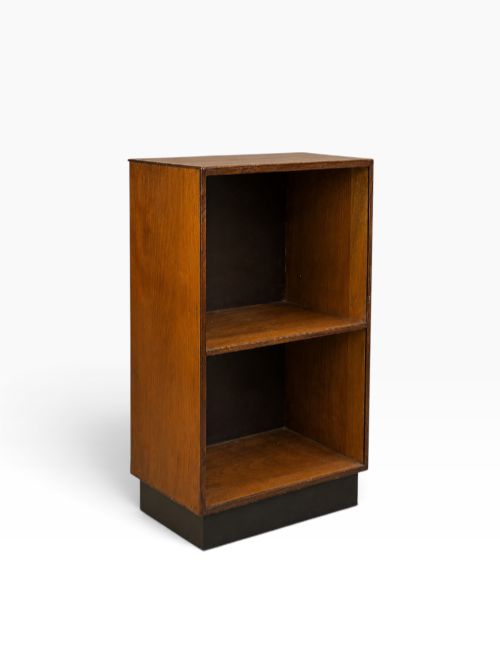
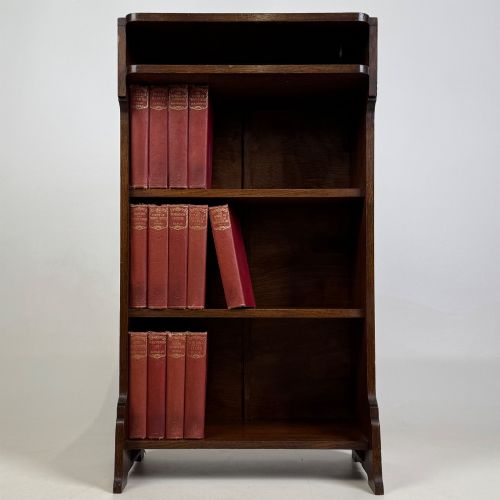
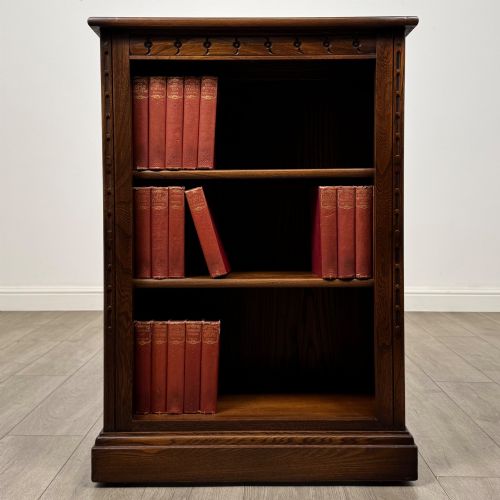
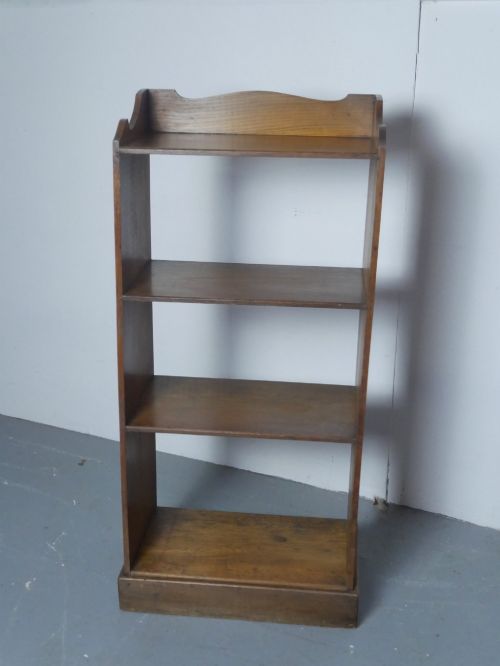


Compact Open Bookshelf
A compact open bookshelf offers immediate, accessible storage for daily reading without overwhelming a modest room.
Compact Open Bookshelf
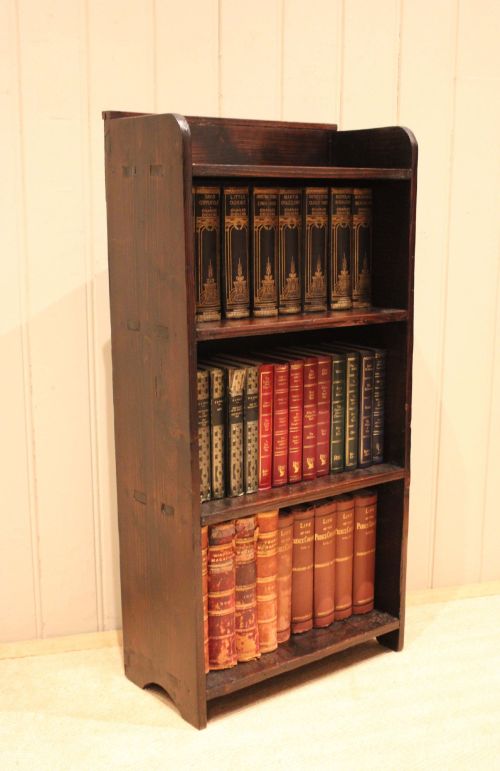
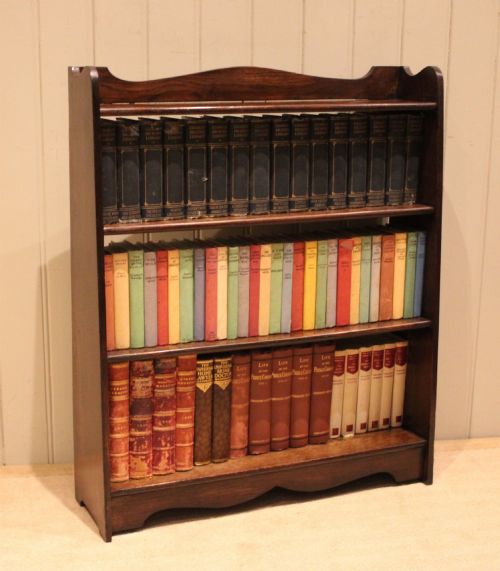
A compact open bookshelf provides straightforward shelving designed for smaller spaces, relying on accessible open fronts rather than glazed or panelled doors. These items appear across several distinct eras, spanning Victorian designs through Edwardian pieces and into 1930s and 1940s interpretations.
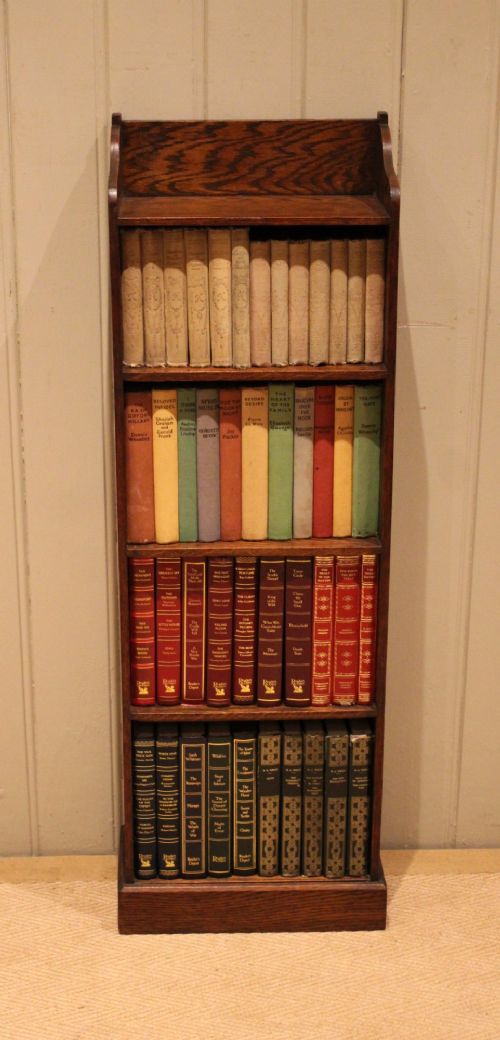
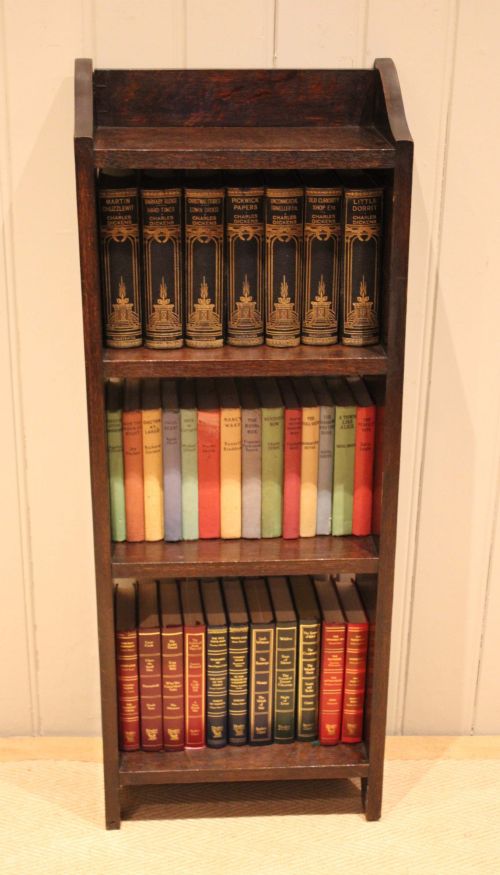
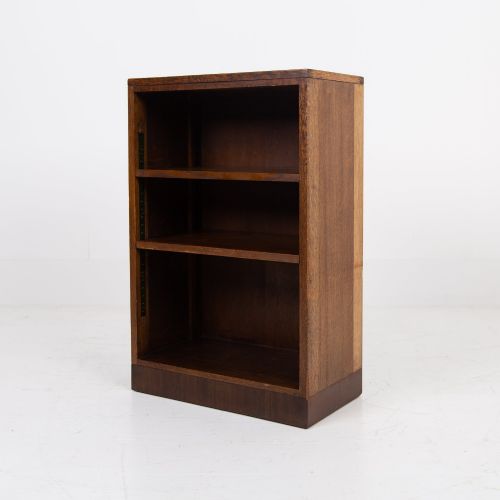
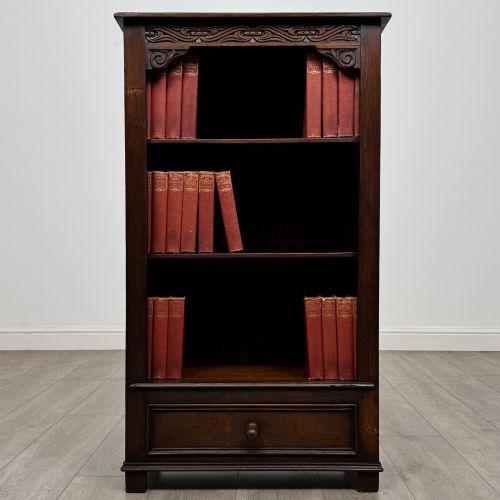
The most common version on this page is the small oak bookcase, typically originating from the Edwardian period or the 1920s. Buyers frequently encounter simple upright proportions alongside specialised forms like angled shelves or leather-topped variants.
Materials and construction methods
Construction relies heavily on timber, with oak dominating the selection alongside mahogany, pine, ash, and partridge wood. Cabinetmakers utilised these sturdy woods to build upright standing frames capable of supporting heavy rows of volumes.
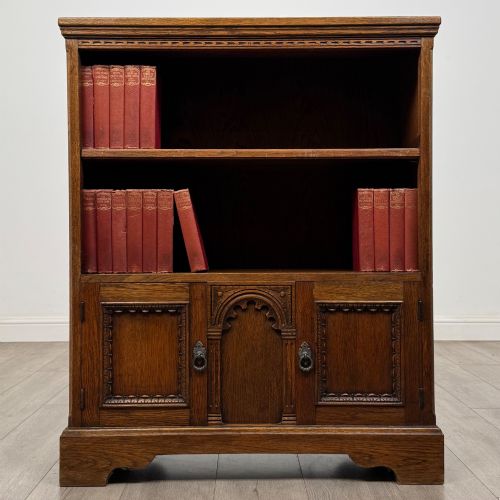
Metal components occasionally appear alongside timber elements, while specific finishes incorporate leather inserts, particularly on the top surfaces of 1930s examples. Joinery reflects the traditional periods of manufacture, including Arts and Crafts influences and Jacobean Revival detailing.
Current listings span the nineteenth century through the 1940s, featuring oak, mahogany, ash, and pine in styles from Art Deco to rustic country.
Assessing build quality and proportion
Superior examples demonstrate careful selection of timber grain, particularly in woods like oak, mahogany, and ash, where figured surfaces elevate simple utilitarian forms. The balance between depth and height dictates how gracefully a piece sits within a room.
Refinements such as leather top details, angled shelving tiers, or distinctive revival styles distinguish more ambitious workshop output from standard domestic furniture.
The Compact Open Bookshelf Glossary
- Open bookcase
- A piece of furniture designed for storing books behind an uninhibited front without doors or glass panels. This format ensures instant access to volumes.
- Edwardian
- A stylistic period spanning the reign of King Edward VII from 1901 to 1910, known for lighter furniture proportions than the preceding Victorian era.
- Arts and Crafts
- A design movement emphasising handcraftsmanship, simple forms, and honest use of natural materials like oak. This style valued utility alongside understated decoration.
- Mahogany
- A durable, reddish-brown tropical hardwood favoured by cabinetmakers during the nineteenth century for fine domestic furniture. It takes a high polish and resists warping.
- Partridge wood
- An exotic timber prized for its distinctive mottled grain pattern resembling partridge feathers. It appears on decorative nineteenth-century freestanding pieces.
Compact Open Bookshelf: Frequently Asked Questions
Where should I place a compact open bookshelf?
These smaller bookcases suit tight spaces like hallways, alcoves, or beside seating where full-height shelving would overwhelm the floor plan.
Because the shelves are open, keeping them away from direct sunlight protects both the bindings and the timber finish.
How do I identify an Edwardian bookcase?
Edwardian pieces often feature lighter framing in oak, moving away from the heavier, darker timbers typical of the late Victorian era.
Look for straightforward proportions and restrained decorative carving influenced by the Arts and Crafts movement.
Are these shelves adjustable?
Most period examples on this page feature fixed shelving built directly into the structural uprights during initial construction.
Buyers should check individual dimensions to ensure shelf heights accommodate specific volumes or modern paperbacks.
What is an angled bookcase?
An angled bookcase positions the top tier or all shelves at a slanted angle to make book titles easier to read from a standing position.
This functional variation appeared in the early twentieth century to improve accessibility in study spaces.