
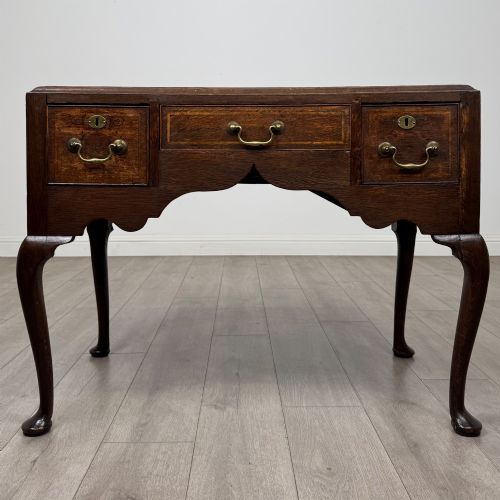
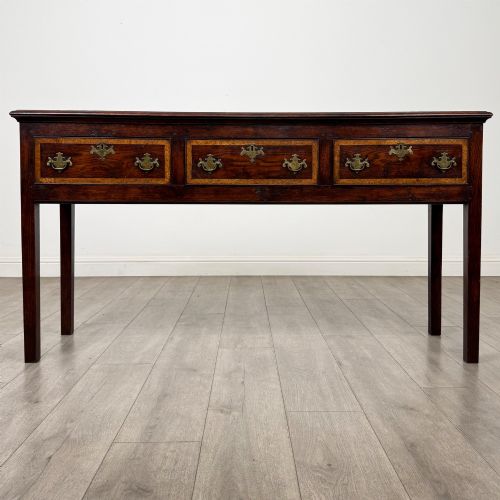
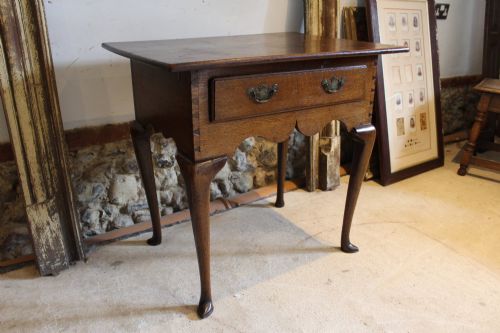
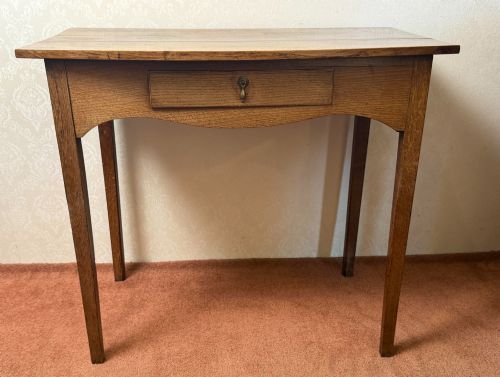
Georgian Oak Side Drawer Table
A georgian oak side drawer table is a utilitarian timber piece designed for storage and surface use, prized for its honest provincial character.
Georgian Oak Side Drawer Table
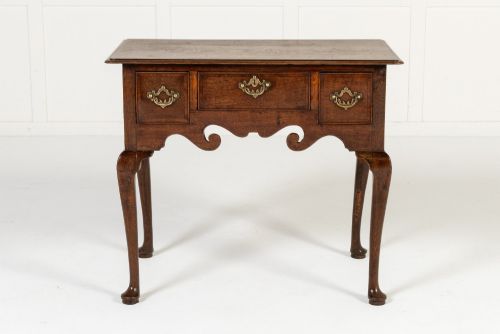
A georgian oak side drawer table combines a sturdy timber framework with one or more functional compartments, serving as a versatile piece for hallway, parlour or chamber use. These items emerge frequently from the eighteenth century, encompassing lowboys, dresser bases and provincial writing desks.
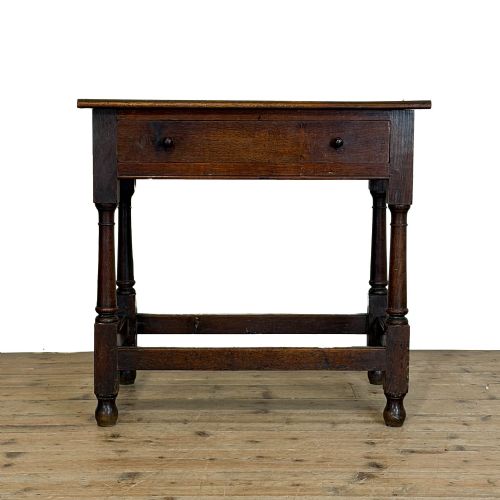
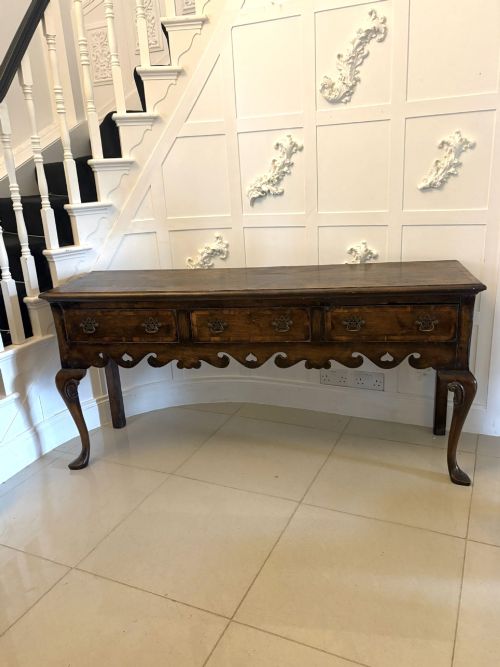
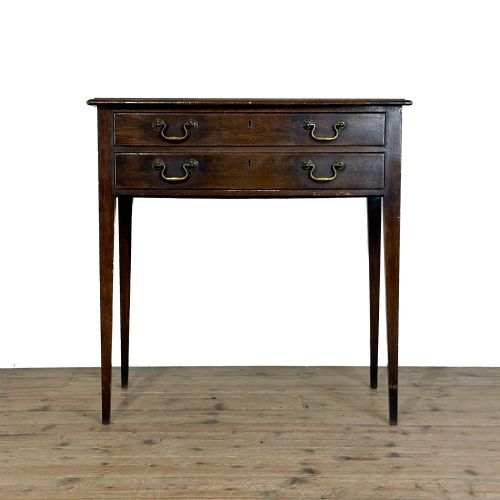
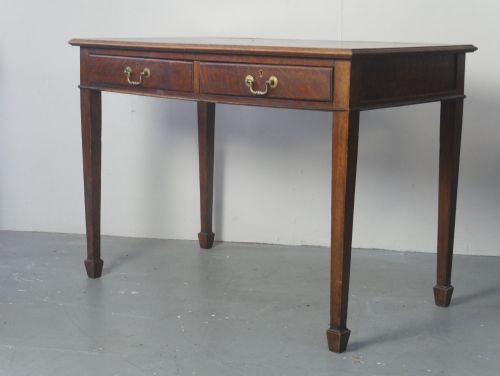
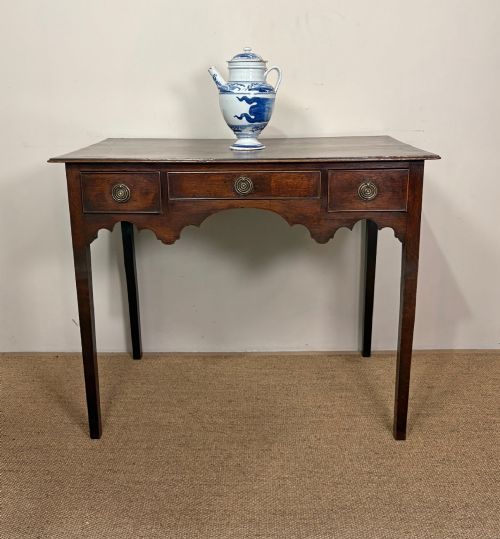
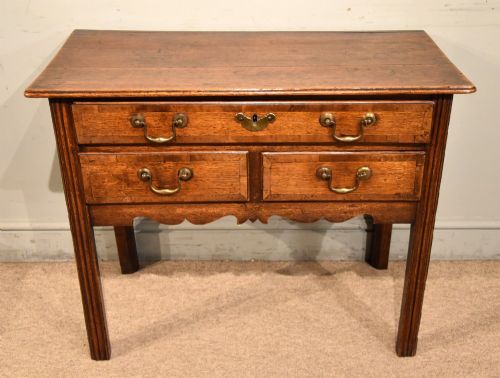
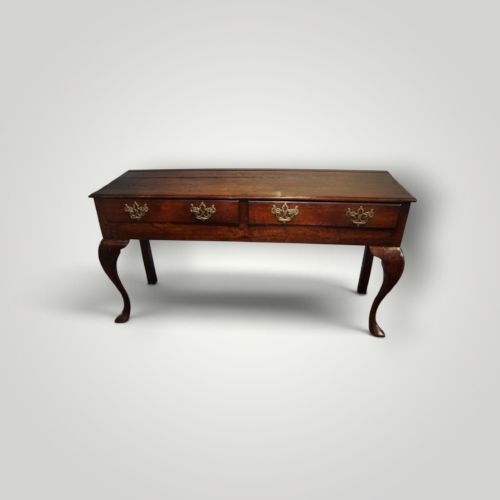
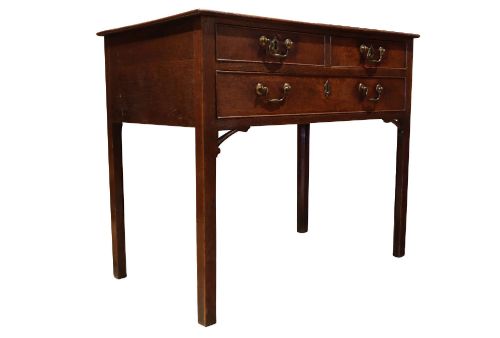
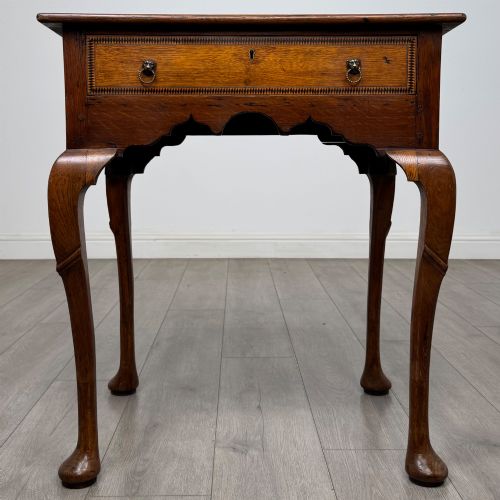
The most common examples on this page are lowboys and single drawer side tables built during the Georgian period, often reflecting English or Welsh country workshop traditions. They typically stand on four legs, sometimes featuring cabriole shapes or straight supports, with brass pull handles fitted to the frieze drawers.
How They Were Made
Construction relies heavily on solid oak timbers, occasionally supplemented with secondary woods such as pine, ash or walnut for internal drawer linings and secondary panels. Cabinetmakers utilised traditional pegged mortise and tenon joints to secure the frames, ensuring durability across centuries of daily domestic use.
Surface finishes range from pale waxed timber to bleached oak and painted variants, sometimes showing the natural grain or distressed patination acquired over generations. Hardware such as brass drop handles or backplates were standard fittings for the drawers, fastened securely to the front rail.
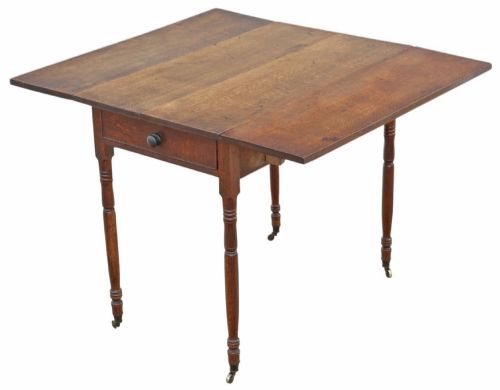
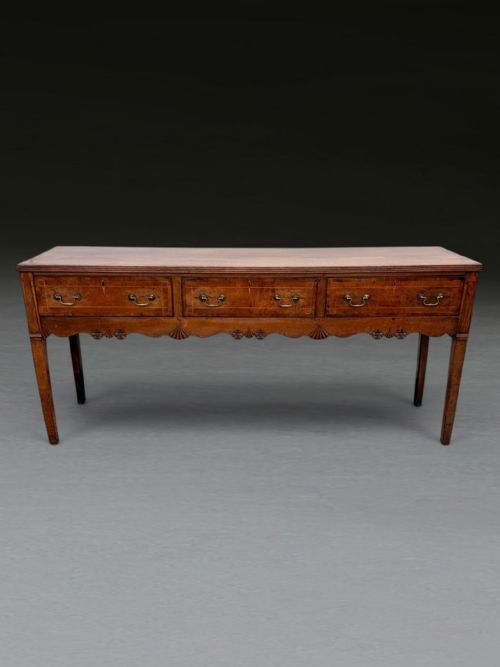
The inventory records vernacular forms including side tables, lowboys, writing desks, and dresser bases.
What Varies in Quality
The standard of a georgian oak side drawer table is determined by the crispness of its joinery, the thickness and selection of the timber boards, and the integrity of the structural frame. Superior examples display careful timber matching, refined moulding details around the drawer edges, and minimal replacement to the original brass hardware.
Provincial pieces vary from straightforward utilitarian workshop output to more ambitious designs featuring crossbanded drawer fronts, shaped aprons or cabriole legs. The depth of the colour, the tactile warmth of the patination, and the retention of period fittings distinguish a finer country table from a standard utility item.
The Georgian Oak Side Drawer Table Glossary
- Lowboy
- A small table with one or more drawers, typically used as a dressing table or side table in the eighteenth century. They usually stand on slender legs and offer a compact surface for domestic storage.
- Frieze drawer
- A storage compartment built directly beneath the top surface within the framework of the table. These drawers often feature hand-cut dovetail joints and single or multiple brass pulls.
- Dresser base
- A lower sideboard or console unit featuring multiple drawers and sometimes cupboards or an open pot board below. These pieces originated in regional kitchens and dining rooms for storing household utensils.
- Cabriole leg
- A furniture leg that curves outward at the knee and tapers inward toward the ankle, often ending in a pad or plain foot. This design appears frequently on mid-eighteenth-century tables.
- Crossbanding
- A decorative border technique where thin strips of veneer are laid across the grain around the perimeter of a drawer front or table top. It creates a contrasting visual frame using distinct timber grains.
Georgian Oak Side Drawer Table: Frequently Asked Questions
What is a lowboy table?
A lowboy is a small, low table fitted with one to three drawers, traditionally used for dressing or as a compact side table in eighteenth-century rooms.
These pieces provide a convenient surface and concealed storage without dominating a hallway or chamber.
How do I date a Georgian oak table?
Dating relies on examining construction methods, such as hand-cut dovetailing in the drawers, pegged joints in the frame, and the style of the legs.
Changes in leg profiles, from straight tapered styles to earlier cabriole forms, help assign pieces to specific decades within the eighteenth and early nineteenth centuries.
Where were these tables used originally?
These tables served various domestic functions in country houses, provincial homes, and larger town residences as hall tables, writing desks, or serving surfaces.
Their versatile proportions allowed them to sit against walls in corridors, parlours, and dining spaces.
Are these tables made of solid oak?
Most examples utilise solid oak for the primary framework, top boards, and drawer fronts, reflecting the dominant timber used by regional cabinetmakers.
Secondary woods like pine or deal occasionally appear in internal carcases, drawer bases, or back panels.
How do I care for antique oak furniture?
Maintaining antique oak involves keeping the timber away from direct heat sources and sudden humidity changes to prevent wood movement and splitting.
Regular application of traditional wax helps nourish the surface and preserves the natural patination built up over centuries.