


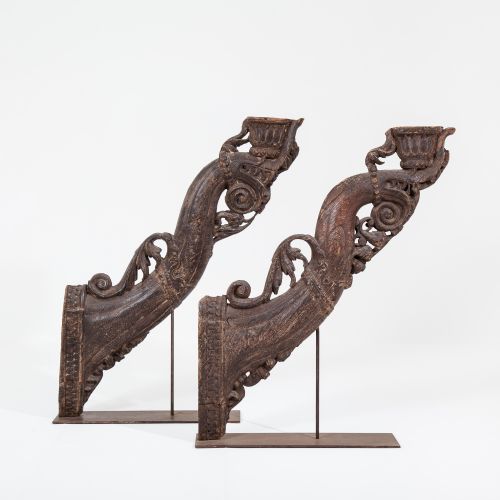

Georgian Oak Shelves
Georgian oak shelves bring honest, hard-wearing utility and rich grain to a room, offering practical display space built to last centuries.
Georgian Oak Shelves
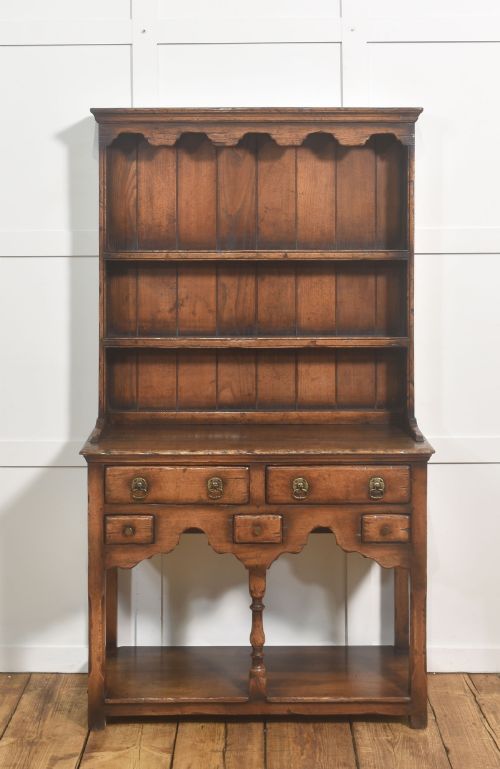
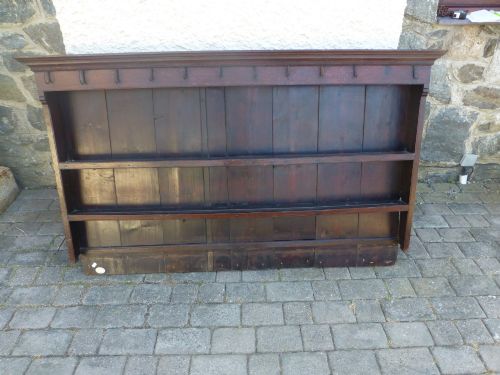
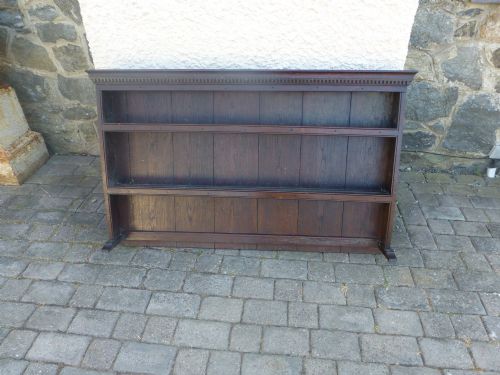
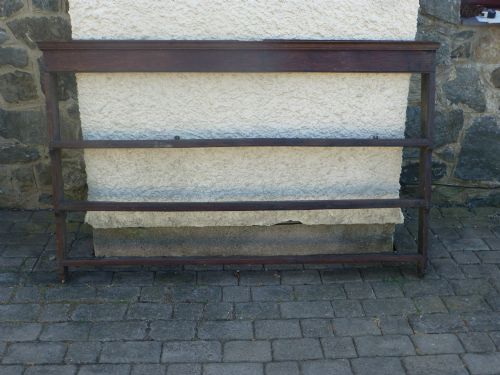
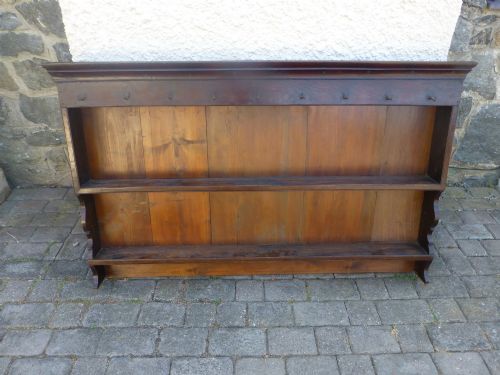
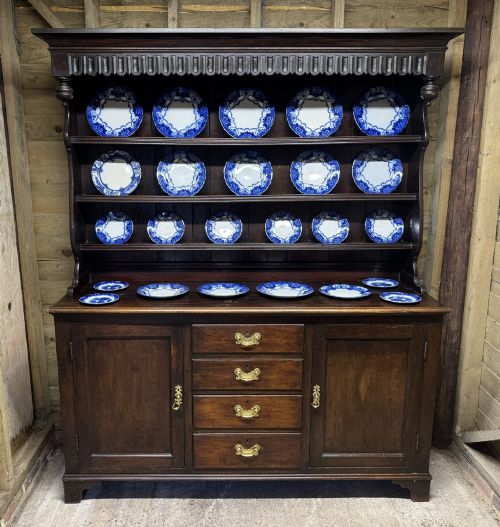
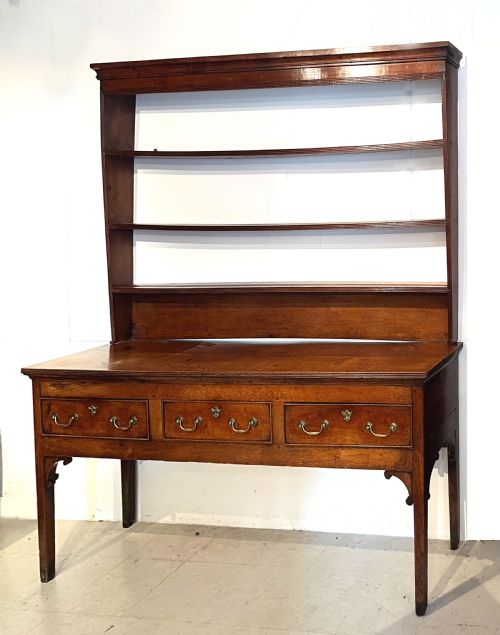
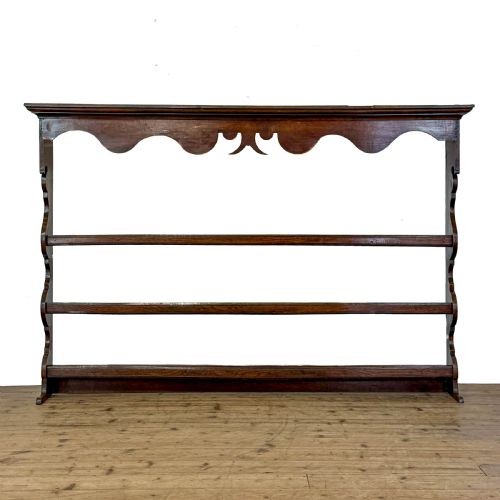
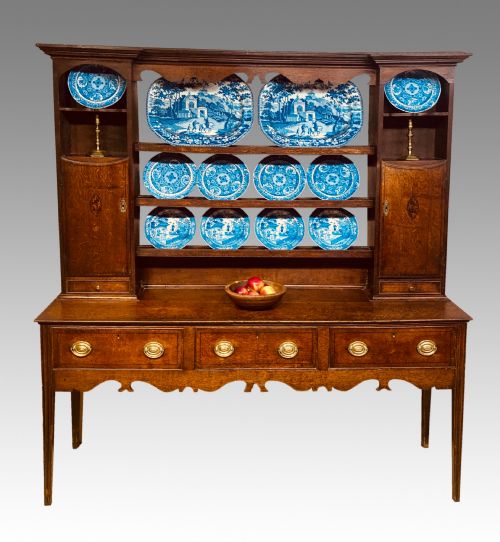
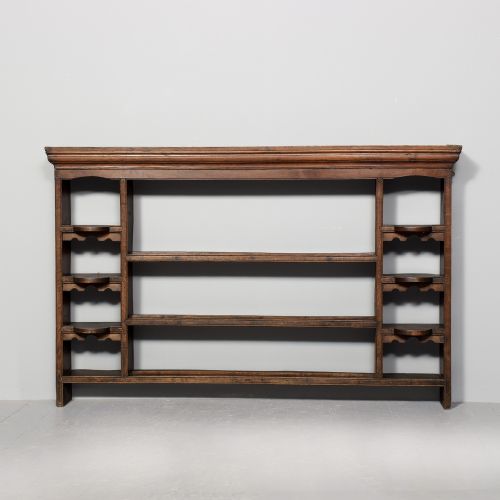
When you search for georgian oak shelves, you encounter sturdy pieces designed for everyday domestic life in past centuries. These functional items primarily take the form of wall-mounted delft racks, plate racks, and the upper tiers attached to large country dressers.
The versions most commonly met on this page span the eighteenth century and the Regency period, often hailing from English and Welsh country workshops. They range from simple hanging wall shelves meant for kitchen plates to substantial architectural plate racks featuring multiple tiers.
Construction and Materials
Joiners built georgian oak shelves using solid native oak boards, occasionally supplemented with secondary timbers like pine or elm for internal elements. Boards were hand-sawn and planed, showing the subtle tool marks of early woodworking rather than the uniform finish of modern machinery.
Construction relied on traditional pegged mortise and tenon joints, dovetails, and simple housing joints to secure the shelves to their vertical supports. Backboards often consist of vertically laid planks secured with handmade wrought iron or brass fixings.
The listings on this site feature oak as the dominant material, accompanied by occasional structural elements in pine, elm, and brass.
Judging Quality
Quality in these pieces rests upon the integrity of the timber, the depth of the natural patina accumulated over generations, and the proportion of the mouldings. Superior examples display tight medullary rays in the oak grain and retain their original hanging brackets or backboards without extensive timber replacement.
Simpler provincial pieces possess a rustic charm, while finer urban or regional workshop pieces exhibit more considered architectural details like cornice mouldings or shaped friezes. The balance between practical utility and refined proportion dictates where a piece sits within the range.
The Georgian Oak Shelves Glossary
- Delft rack
- A set of wall-mounted shelves specifically designed to display ceramic plates upright against a retaining bar or groove. These fixtures formed a central part of eighteenth-century kitchen storage.
- Potboard dresser
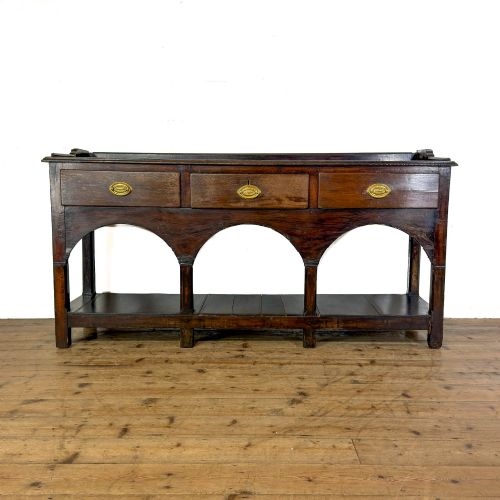
- A large dining room or kitchen storage unit featuring a lower open shelf near the floor, traditionally used for heavy pots and pans beneath a plate rack.
- Cornice
- The decorative architectural moulding running along the uppermost edge of a rack or dresser top, defining the profile of the piece.
- Medullary ray
- A ribbon-like cellular structure visible in quarter-sawn oak that creates a distinct flecked pattern across the grain, prized by cabinetmakers.
Georgian Oak Shelves: Frequently Asked Questions
How were these shelves originally used?
Households mounted these shelves in kitchens and dining parlours to store and display pewter, delftware, and earthenware plates within easy reach of the table.
The grooved lower ledges and wooden retaining rails kept heavy ceramic dishes from sliding forward during daily domestic activity.
Can these shelves support heavy modern items?
Solid oak construction and pegged joints give these vintage fixtures remarkable structural strength for everyday use.
Buyers should secure them properly to solid wall studs, as the weight of old oak timber combined with heavy ceramics requires robust wall fixings.
How do I tell a period piece from a later revival?
Authentic pieces display hand-tooled surfaces, irregular board widths, and period construction methods such as pegged joinery without modern screws.
Timber shrinkage, dry surface patination, and handmade iron hardware further distinguish eighteenth-century workshop output from later decorative copies.
What is the difference between a plate rack and a dresser?
Plate racks function as self-contained hanging wall shelves designed exclusively for vertical dish display.
Dressers combine these upper shelves with a lower base unit containing drawers and cupboards for enclosed storage.