
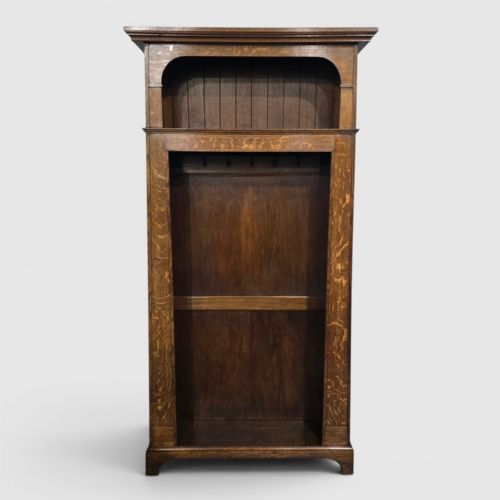
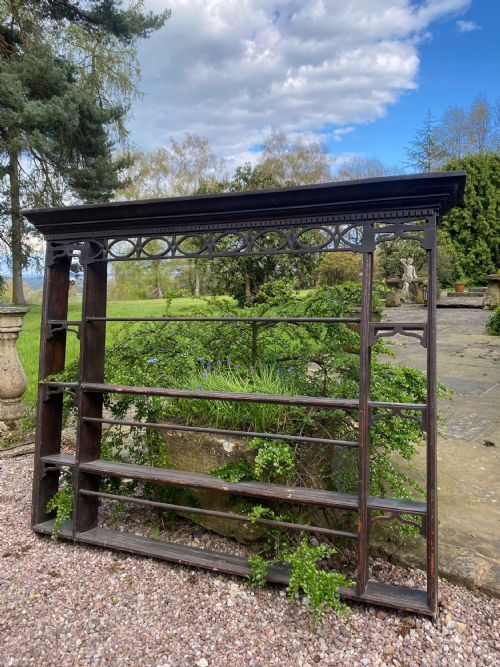
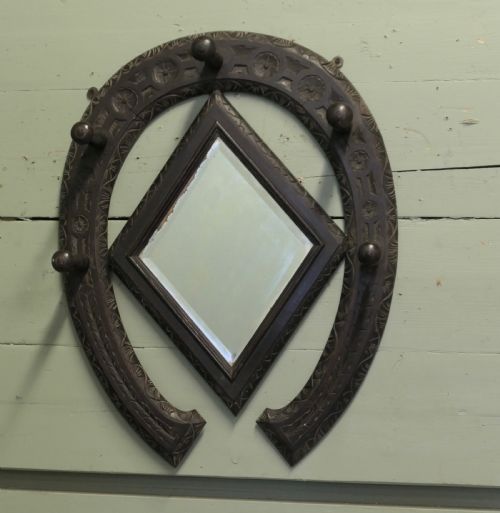
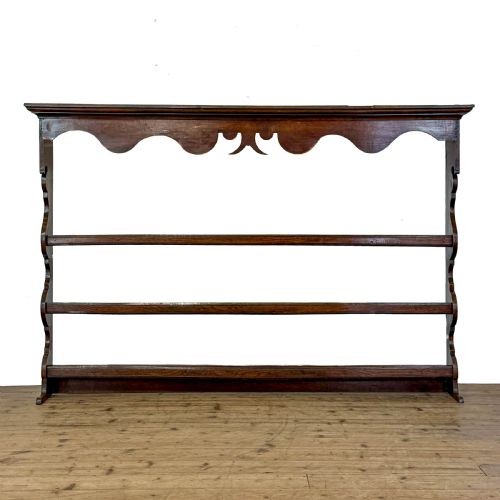
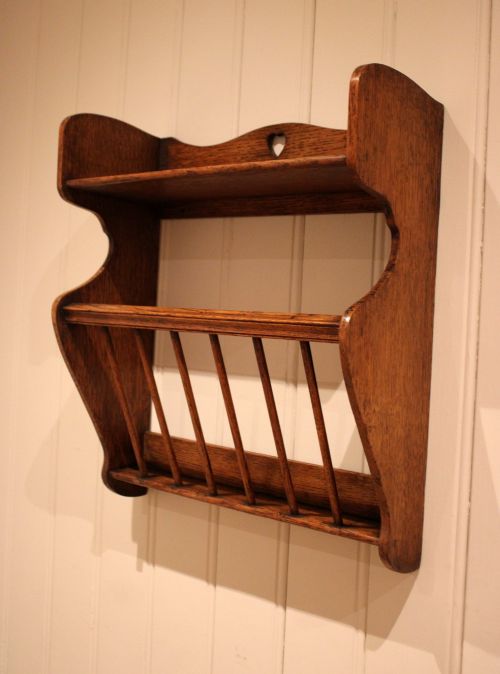


Oak Hanging Rack
An oak hanging rack organises a domestic wall with timber shelving and iron or brass hooks built to last centuries.
Oak Hanging Rack
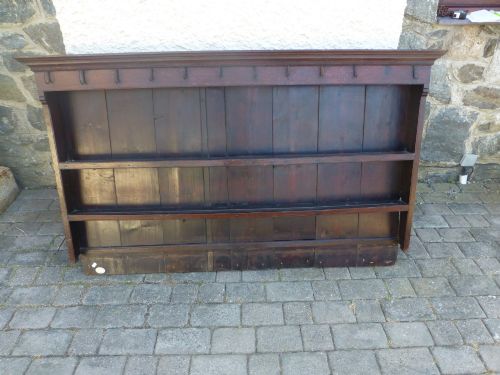
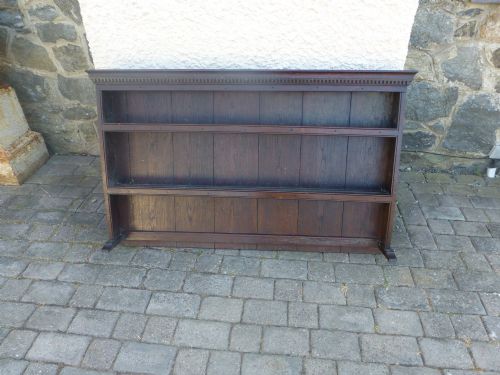
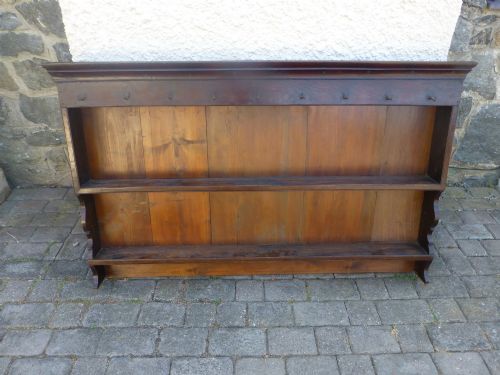
An oak hanging rack serves domestic storage needs across centuries, appearing most frequently in 18th century and 19th century forms. Buyers encounter plate racks, spoon racks, coat racks, and wall shelves designed to display crockery or hold everyday items.
The pieces reflect regional English styles, including Georgian and Victorian designs alongside Arts and Crafts and Gothic Revival pieces. These wall-mounted fittings range from simple kitchen plate displays to elaborate hall robes and spice racks.
How They Were Made
Joiners built these wall fixtures primarily using solid oak, occasionally combining it with secondary timbers like elm, beech, or mahogany. Boards were joined with traditional methods, showing pegged joints or plain construction suited to daily household loads.
Metal fittings played an integral structural and decorative role, incorporating forged iron cup hooks, brass brackets, and mirrors. Stained oak finishes also appear, particularly on later Victorian and Arts and Crafts examples.
Listings feature oak hanging racks spanning the 17th century, 18th century, 19th century, and 1900, alongside mahogany and stained oak variations.
What Varies in Quality
Quality rests on the depth of timber selection and the integrity of the original construction rather than surface polish. Pieces retaining their early iron hooks and uncompromised backboards hold greater architectural interest.
Proportion and restrained carving distinguish finer workshop output from utilitarian items. The crispness of detail on moulded cornices or shaped friezes separates standard domestic furniture from superior examples.
William Tonks and Sons
The Oak Hanging Rack Glossary
- Delft rack
- A wall-mounted wooden shelving unit specifically designed with narrow plate grooves and wooden rails to display tin-glazed earthenware plates.
- Spoon rack
- A narrow hanging board fitted with notches or slots to display pewter spoons safely on a wall.
- Trefid spoon
- An early eating spoon featuring a flat, three-lobed terminal handle shape popular during the late 17th and early 18th centuries.
- Gothic Revival
- A design style drawing inspiration from medieval architectural forms, characterised by pointed arches, tracery, and heavy ironwork.
- Plate rail
- A horizontal wooden ledge or strip fixed to a shelf to prevent ceramic plates from sliding forward.
Oak Hanging Rack: Frequently Asked Questions
How were oak hanging racks used in old kitchens?
Households mounted these racks on dining room or kitchen walls to store and display daily ceramic plates, platters, and pewter spoons. The open shelves kept frequently used tableware within easy reach while protecting it from crowded floor cupboards.
Iron hooks fixed along the bottom or sides held cups, jugs, or hanging utensils. This vertical storage maximised space in traditional homes before fitted cabinetry became standard.
How do I tell an 18th-century rack from a Victorian one?
Early 18th-century and Georgian pieces typically exhibit hand-sawn timber boards, pegged joinery, and simpler country construction without factory embellishment. They often show deep patination and wear consistent with domestic plate storage.
Victorian and later pieces frequently incorporate machine-cut elements, applied mouldings, and contrasting brass hardware or mirrors. Styles like Gothic Revival introduce pointed arches and decorative iron strapwork absent on earlier plain kitchen racks.
Are these racks sturdy enough for modern kitchen plates?
Original oak wall racks were built to support heavy earthenware and pewter tableware, making them remarkably robust for daily use. Solid timber construction and wall-fixing points ensure they can bear the weight of modern ceramic plates.
Buyers should ensure the mounting brackets and wall fixings match the weight of the timber and the intended crockery load. Professional installation into solid masonry or wall studs guarantees secure support.
What rooms suit an antique hanging rack today?
Kitchens and dining rooms provide a natural setting for plate and spoon racks, echoing their original historic function. They keep modern tableware visible while adding warmth and texture to plain plaster walls.
Smaller Victorian or Arts and Crafts variants featuring mirrors, shelves, or coat hooks work well in hallways and boot rooms. These pieces offer practical hanging space for everyday items while introducing period character to entranceways.