
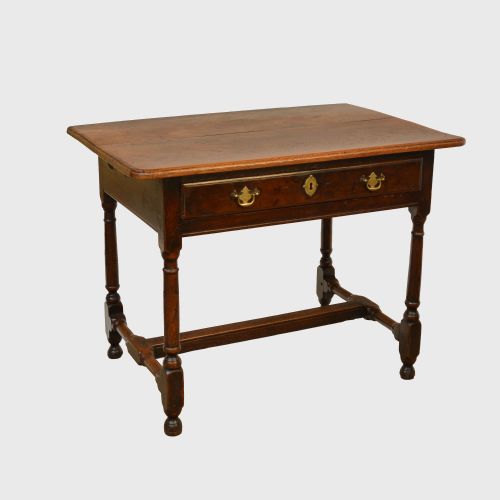
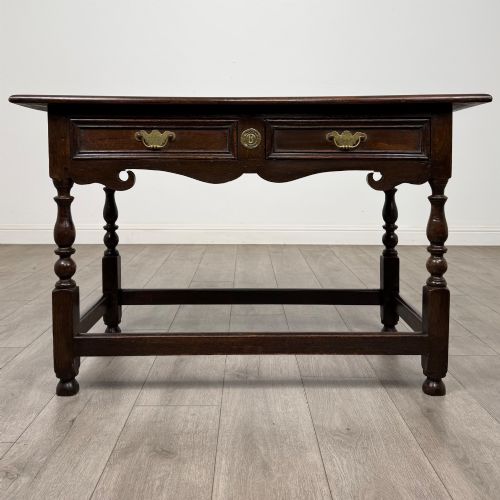
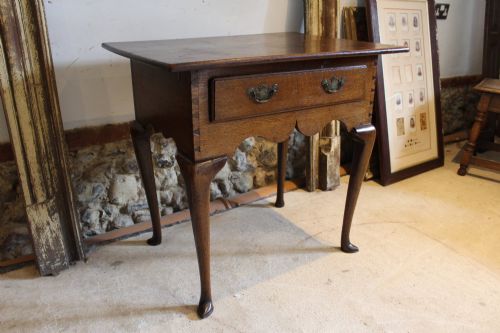
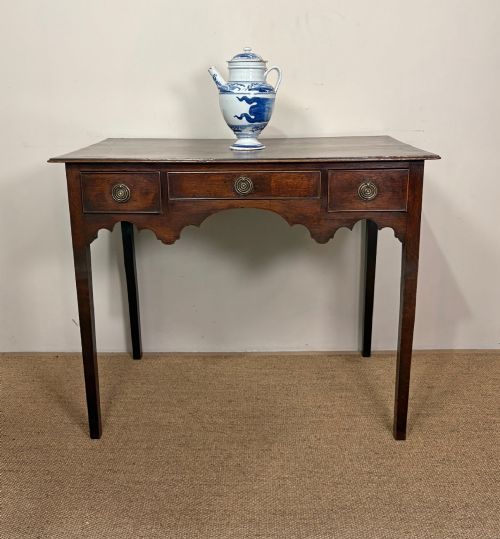
Georgian Oak Lowboy Table
A georgian oak lowboy table offers compact utility and honest eighteenth-century craftsmanship for modern hallway or dressing use.
Georgian Oak Lowboy Table
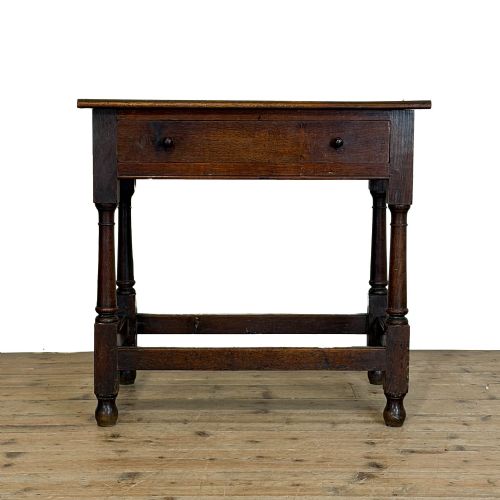
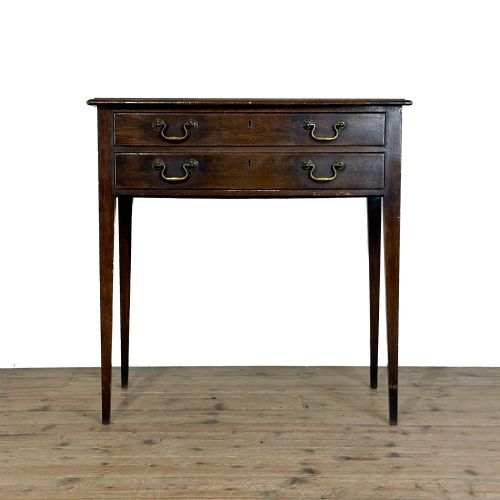
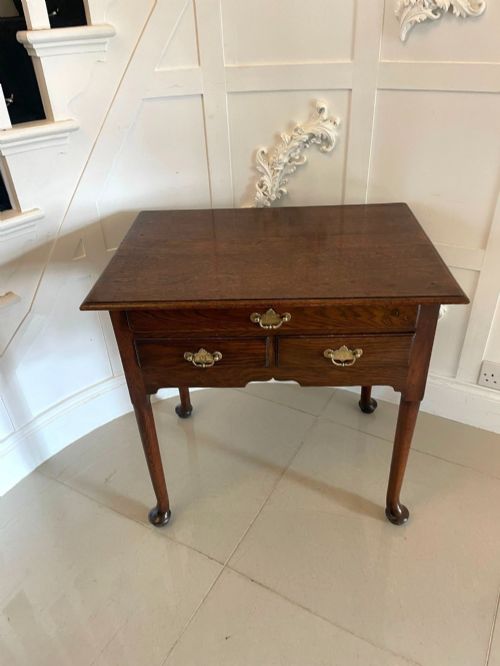
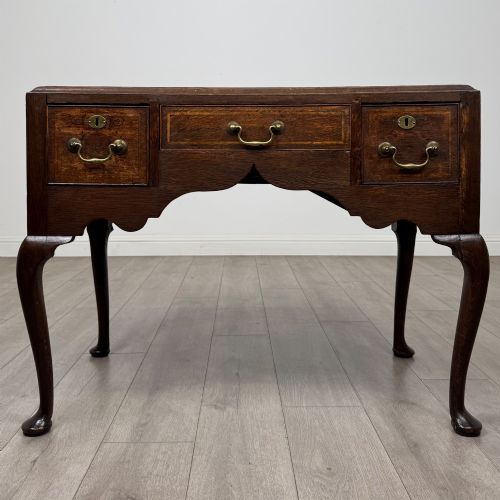
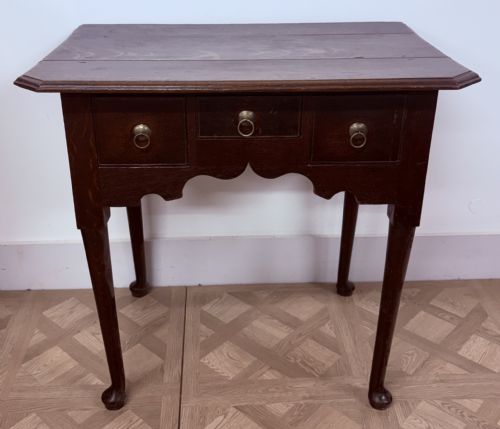
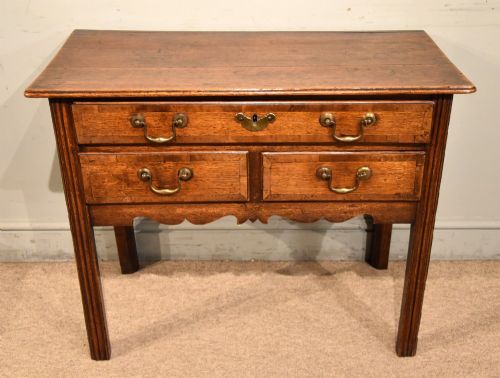
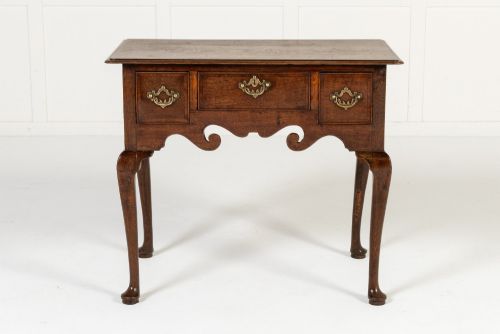
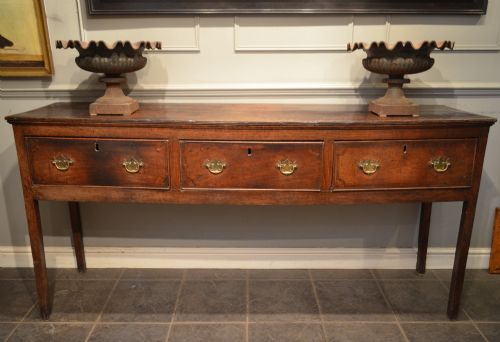
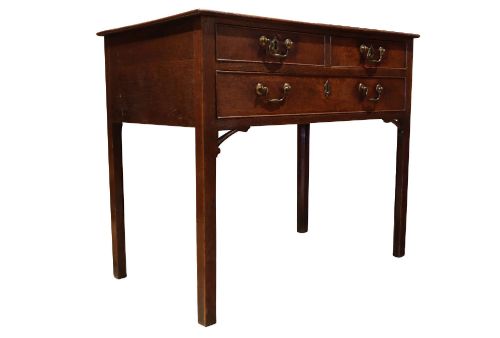
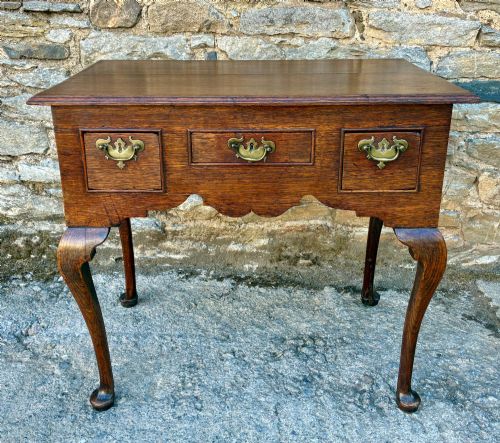
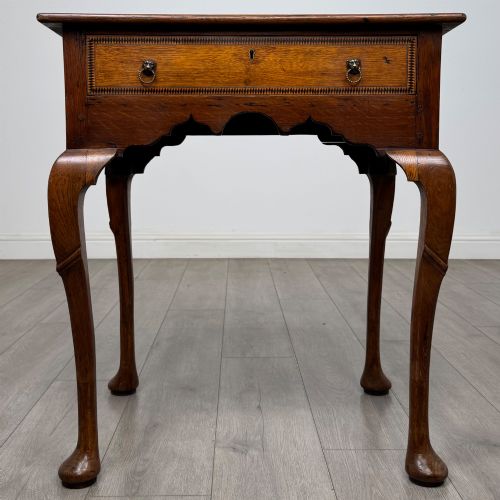
A georgian oak lowboy table is essentially a small occasional table fitted with one, two, or three drawers beneath the work surface. These pieces frequently appear from the eighteenth century, spanning periods from Queen Anne through to the George III era.
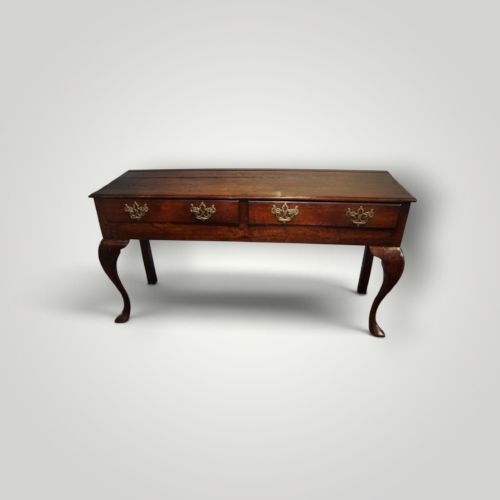
Most examples function as side tables, dressing tables, or writing desks within provincial English and Welsh settings. The form typically presents a rectangular timber top supported by slender cabriole or straight legs.
Buyers frequently encounter related forms such as larger dresser bases or side tables sharing identical construction traits. The proportion remains consistently low and domestic, designed to sit comfortably beneath a wall mirror or beside a chair.
Materials and construction methods
Solid timber forms the structural core of these items, with oak serving as the predominant material alongside secondary woods like ash, elm, and yew. Regional cabinetmakers selected native hardwoods for their durability and distinct grain patterns.
Joinery techniques rely heavily on traditional pegged mortise and tenon joints for the frame, while drawer construction typically employs hand-cut dovetails. Brass drop handles or swing handles are attached to the drawer fronts, often suspended from backplates.
Surfaces frequently display a warm, patinated finish developed through centuries of domestic use, occasionally showing traces of bleached oak or historic wax polishing.
Georgian Oak Lowboy Table Retail Price Guide 2026
Typical asking prices for georgian oak lowboy table among the pieces listed under this phrase on Sellingantiques today, from the lower quarter to the upper quarter. They describe what is for sale here now, not the wider market.
Listings span the eighteenth and nineteenth centuries, featuring brass hardware, oak, walnut, and mahogany timbers across various side table and dresser base formats.
Distinctions in quality and execution
The refinement of leg profiles and timber selection largely distinguishes superior examples from simpler provincial pieces. Crisp moulding details around the drawers and well-proportioned cabriole legs indicate more thoughtful workshop execution.
Originality of the brass hardware and stability of the underlying frame contribute significantly to the standing of an individual table. Alterations to drawer linings or replaced handles occur frequently across domestic antique furniture of this age.
The Georgian Oak Lowboy Table Glossary
- Lowboy
- A small table with drawers, standing on legs, used historically for dressing or writing.
- Cabriole leg
- A furniture leg that curves outward at the knee and tapers inward toward the foot, typical of eighteenth-century design.
- Dresser base
- The lower section of a kitchen or dining dresser, sharing similar drawer configurations and proportions with larger lowboys.
- Cross-banded
- Bordered with a narrow strip of veneer running perpendicular to the grain of the main surface.
- Geometric moulded
- Featuring raised wooden mouldings applied to drawer fronts in symmetrical geometric patterns.
Georgian Oak Lowboy Table: Frequently Asked Questions
What was a lowboy used for?
These tables served multiple domestic purposes including personal grooming, writing letters, and storing small valuables in bedrooms or halls. Their modest size allowed them to move easily between rooms as household needs shifted.
Over generations, owners adapted their surfaces to hold lamps, decorative objects, or everyday correspondence without altering the core structure.
How do I date an oak lowboy?
Dating relies on observing leg shapes, drawer construction methods, and overall proportions relative to known stylistic periods like Queen Anne or George III. Hand-cut dovetails and pegged frame joints generally point toward eighteenth-century production.
Subsequent revivals from the nineteenth and early twentieth centuries often reproduce these early forms with slightly different timber patination and internal machine milling.
Are these tables suitable for modern hallways?
Their shallow depth and modest width make them exceptionally practical for narrow entryways, landings, and living spaces. The single or multiple drawers provide convenient concealed storage for keys and small items.
Placing one against a wall creates a functional focal point that accommodates modern lamps or mirrors while retaining historic character.
What wood was used besides oak?
While oak dominates the surviving inventory, cabinetmakers frequently incorporated elm, yew, ash, walnut, and mahogany into regional tables. These alternative timbers appear both as primary show woods and as secondary linings inside drawer boxes.
Regional preferences in Wales and provincial England often dictated which local hardwoods were combined within a single piece.