
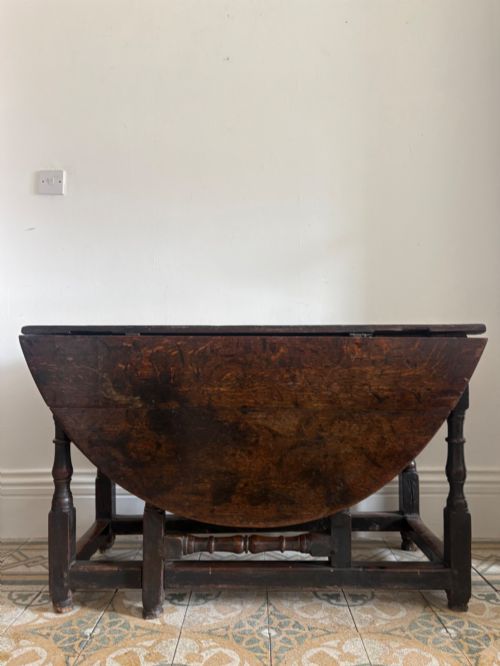


Georgian Oak Drop Leaf
Georgian oak drop leaf tables are robust utilitarian dining surfaces designed to fold flat against walls when not in use.
Georgian Oak Drop Leaf
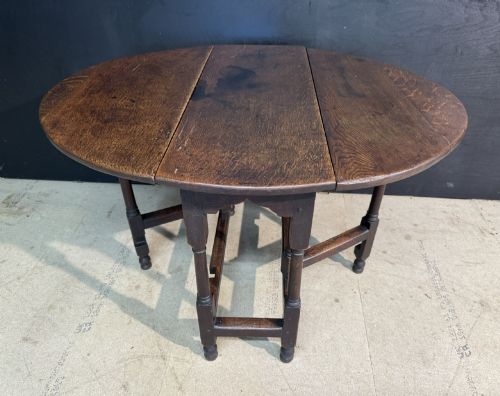
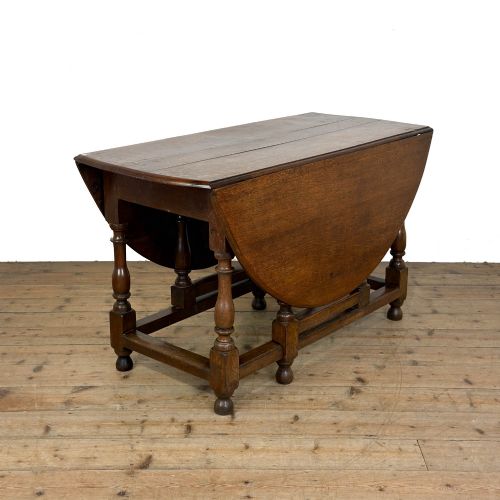
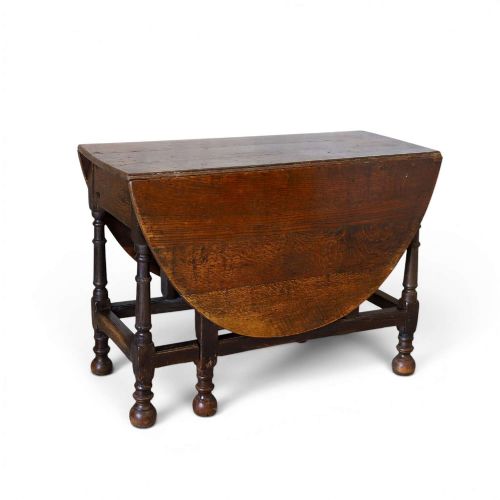
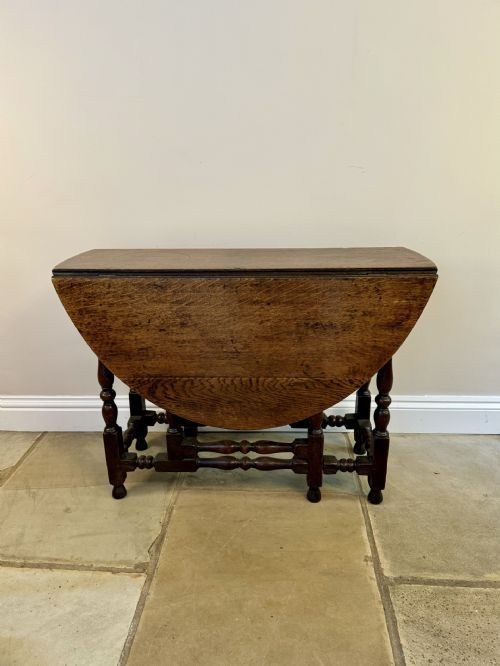
A georgian oak drop leaf table serves primarily as a versatile dining surface, appearing frequently in formats that seat between four and eight people. These pieces span centuries of domestic use, ranging from compact occasional formats to substantial gateleg dining tables.
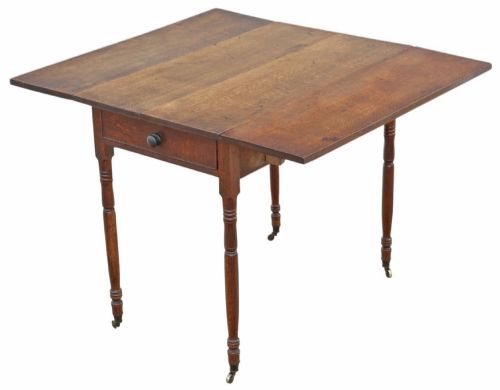
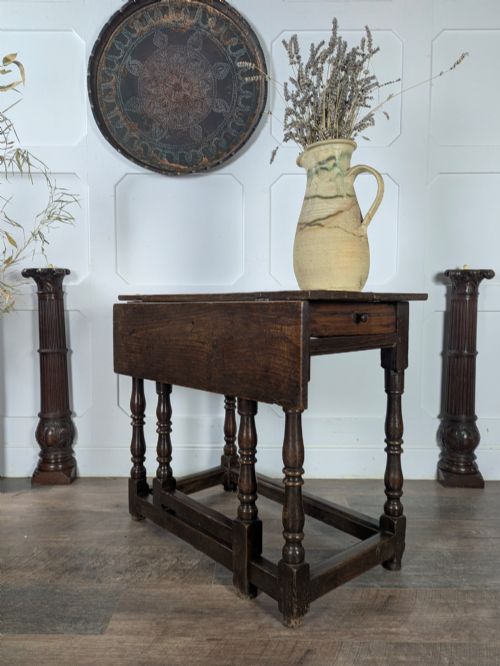
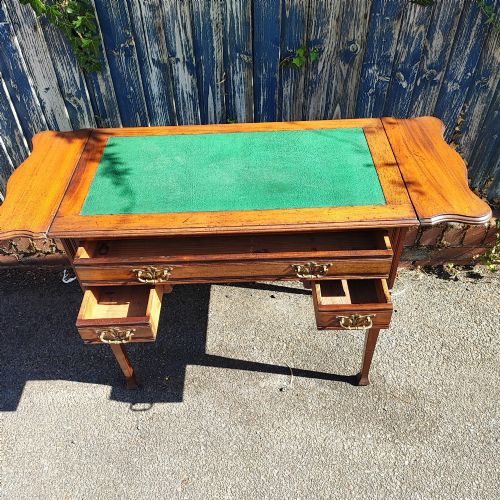
The material palette is anchored by sturdy native timber, complemented occasionally by walnut or pollard oak accents and functional hardware in brass and iron. Structural forms include gateleg designs with swinging support legs, alongside Pembroke and writing table variants equipped with drop side flaps.
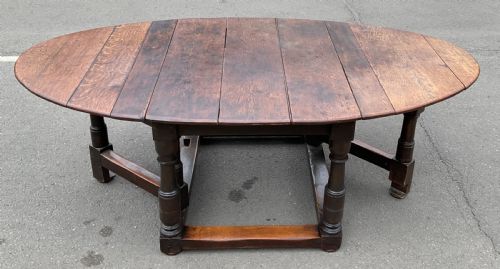
Originating predominantly from English country houses and farmhouses, these tables reflect a practical vernacular aesthetic. Pieces from the eighteenth century dominate the selection, offering generous oval tops supported by turned baluster legs and plank construction.
What varies in quality
The calibre of a georgian oak drop leaf table rests on the depth of its original patina and the integrity of its timber surfaces. Tables retaining their early hinges and untouched surface finishes command greater appreciation than those with replaced elements.
Proportion and scale also dictate distinction, with larger eight-seater formats and smaller clever writing variants showing superior joinery. The crispness of turned baluster legs and the tightness of the gateleg joints indicate the original maker's skill.
The listings span from the seventeenth century through to the Edwardian revival, showcasing solid oak, walnut, and pollard oak across dining tables, desks, and work tables.
The Georgian Oak Drop Leaf Glossary
- Gateleg table
- A table with hinged leaves supported by legs that swing outward like a gate. This clever mechanism provides sturdy support for large oval tops when extended.
- Drop leaf
- A table featuring a fixed central section and one or two hinged flaps that fold down. This design allows the furniture to save space when pushed against a wall.
- Patina
- The surface sheen and colour developed over decades of use and polishing. A warm patina indicates age and careful maintenance.
- Pembroke table
- A small rectangular table with two hinged side flaps and usually a single drawer. It was often utilised for breakfast or writing in smaller rooms.
- Baluster leg
- A turned vertical wooden support shaped like a classical pillar or vase. They provide robust structural backing on eighteenth-century dining pieces.
Georgian Oak Drop Leaf: Frequently Asked Questions
How many people do these tables seat?
Many standard dining variants comfortably accommodate four to six guests when fully opened. Larger gateleg formats extend further to seat eight people.
Compact occasional and Pembroke versions are built for smaller spaces and provide surface area for solitary tasks or intimate tea settings.
How do I care for an oak surface?
Protect the timber by using mats for hot dishes and wiping moisture spills immediately with a dry cloth. Regular applications of beeswax maintain the natural lustre.
Keep these tables away from direct heat sources and strong sunlight to prevent the oak from warping or drying out over time.
How can I tell the period of an oak table?
Inspect the construction methods, such as the cut of the timber boards and the style of the turned baluster legs. Eighteenth-century pieces frequently display pegged joints and heavy plank tops.
Examine the hardware closely; original hand-forged iron or early brass hinges offer strong clues to the manufacturing era of the piece.