
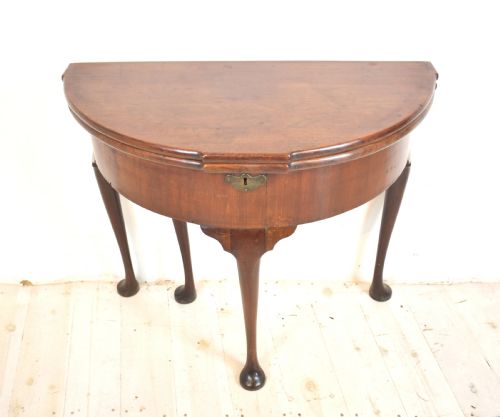


Pad Foot Gateleg Table
A pad foot gateleg table offers clever folding utility with graceful proportions, making it a timeless choice for flexible dining spaces.
Pad Foot Gateleg Table
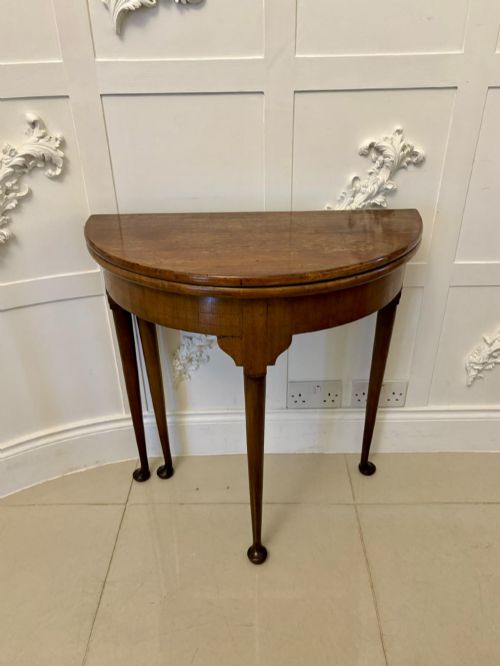
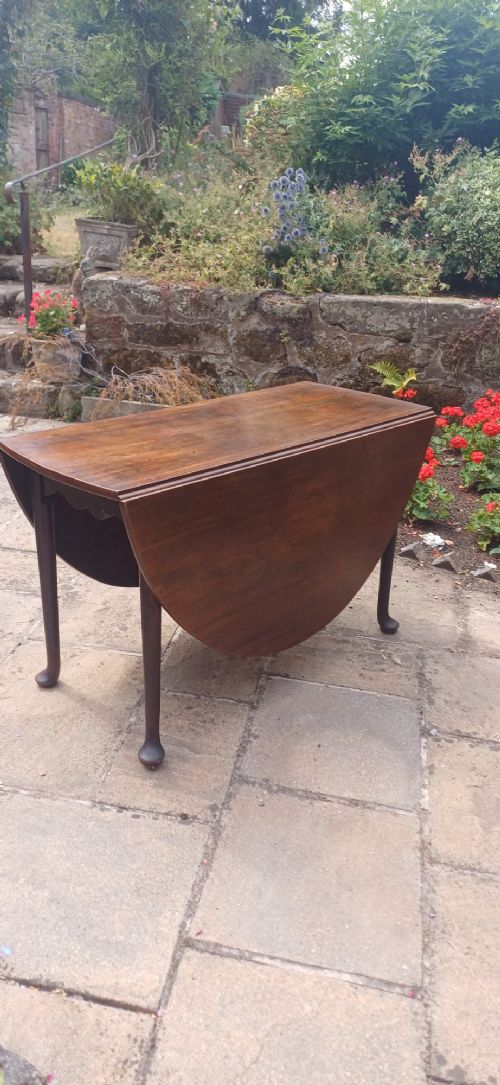
When you search for a pad foot gateleg table, you look for a versatile drop-leaf surface supported by hinged legs that swing out to hold the folding leaves. These pieces emerge predominantly from the eighteenth century, spanning the Georgian, George I, George II, and George III periods, alongside later Victorian and twentieth-century interpretations.
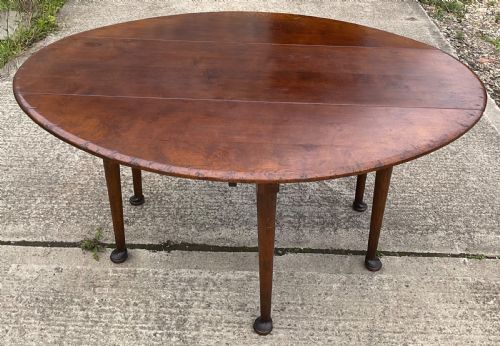
Proportions range from small side tables intended for intimate rooms to large dining tables featuring six legs for extra stability. The defining characteristic remains the pad foot, a simple rounded foot resting flat on the floor that anchors the slender legs of the frame.
Evaluating quality and proportion
The distinction between ordinary examples and superior pieces rests largely on the quality of the timber selection and the elegance of the turning on the legs. Grain patterns with deep figuration, particularly on Cuban mahogany surfaces, separate the finer examples from plain utilitarian stock.
Proportion and scale dictate the desirability of a piece, with well-balanced oval tops and crisp pad foot carving demonstrating superior workshop skill. The structural integrity of the gateleg action and the preservation of original timber surfaces also determine the standing of each piece.
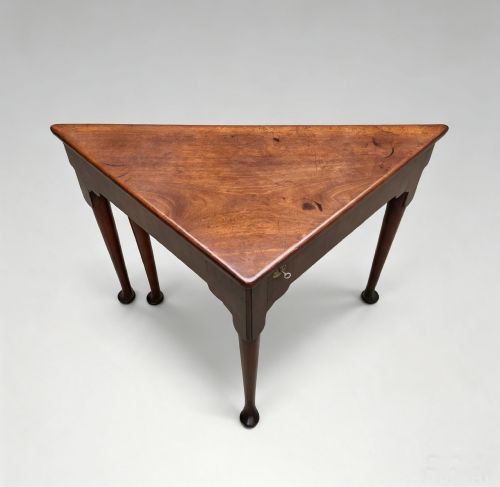
Some clever eighteenth-century variants double as envelope tea tables or trifold games surfaces for clandestine parlour pastimes.
The Pad Foot Gateleg Table Glossary
- Pad foot
- A simple, rounded foot shape that sits flat on the floor at the base of a cabriole or straight leg. It provides a neat termination without excessive ornamentation.
- Gateleg table
- A table with hinged leaves supported by one or more legs that swing outward like a gate. This mechanism allows the surface area to expand or contract easily.
- Drop-leaf
- A table top configuration comprising a fixed centre section and hinged flaps on either side. These flaps drop down vertically when not in use.
- Cuban mahogany
- A dense, dark timber harvested in the West Indies, prized by eighteenth-century cabinetmakers for its rich grain and heavy weight. It develops a deep patina over centuries of polishing.
- Cabriole leg
- A furniture leg that curves outward in a convex arc and tapers inward in a concave arc to end in a pad foot. It mimics the shape of an animal's limb.
Pad Foot Gateleg Table: Frequently Asked Questions
How do I use a gateleg table daily?
Keep the table folded against a wall with a lamp or book on top to serve as a side or occasional surface. When you need extra space for dining or writing, simply swing the hinged legs outward and raise the leaves.
The sturdy swing mechanism supports the drop leaves reliably, allowing you to open one side for a smaller extension or both sides for a full oval table.
How can I date an eighteenth-century table?
Examine the timber species, construction marks, and foot style to narrow down the period. Pieces from the George I and George II eras often feature dense Cuban mahogany and refined pad feet.
Tool marks left by hand saws and hand planes on the underside of the leaves also indicate early craftsmanship predating industrial machinery.
Will a mahogany table fit modern rooms?
The compact footprint of a folded drop-leaf table makes it exceptionally adaptable for smaller contemporary living areas. You can tuck it into tight corners or hallway spaces without blocking foot traffic.
Opening the leaves provides an instant dining surface when entertaining guests, combining historic character with practical daily utility.
What maintenance does old oak need?
Feed the timber periodically with natural beeswax to nourish the dry wood and maintain a soft lustre. Avoid placing the table near direct heat sources or damp areas that could warp the solid oak top.
Use coasters and felt pads under objects to protect the historic surface from moisture rings and scratches while enjoying the piece daily.