
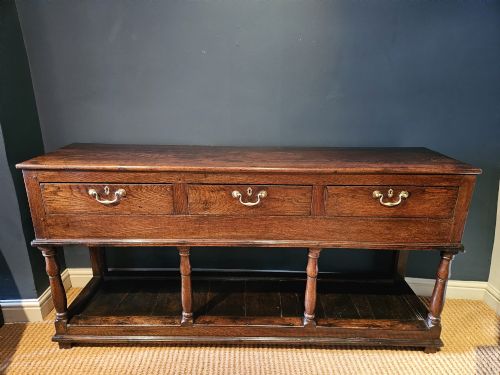
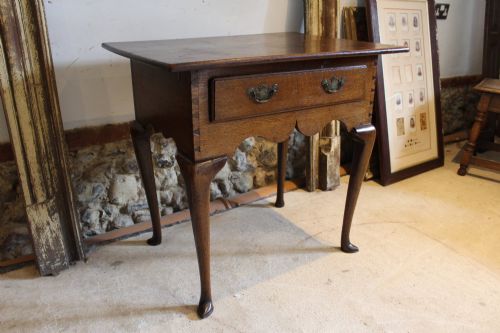
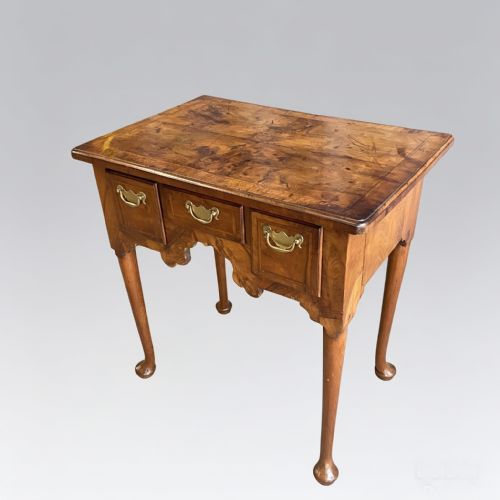


George II Oak Table
A george ii oak table brings practical surface space and honesty of construction to a room through solid timber and robust joinery.
George II Oak Table
A george ii oak table encompasses versatile forms built during the mid-eighteenth century, with lowboys and side tables appearing most frequently alongside dining pieces.
Makers shaped these utilitarian objects from native timber, producing sturdy side tables, desks, and writing tables suited to domestic service.
The pieces on this page span the georgian era, combining regional oak construction with practical proportions designed for daily use.
Materials and construction methods
Cabinet makers built these tables primarily using solid oak, occasionally incorporating walnut, cherrywood, and brass hardware for handles and supports.
Joinery relied on traditional techniques, evident in pegged joints, quarter-sawn boards, and single plank table tops.
Listings feature oak, walnut, cherrywood, and brass across side tables, lowboys, and tripod tables from the eighteenth century.
Distinctions in quality and execution
The standard of a george ii oak table depends on the figure of the wood, the integrity of the original joints, and the crispness of any carved detail.
Examples featuring untouched patination, original timber boards, and structural restraint command greater respect among collectors than altered items.
The George II Oak Table Glossary
- Lowboy
- A small side table or dressing table typically fitted with one or more drawers beneath the surface. These items often served secondary rooms in country houses.
- Cricket table
- A small three-legged round table with a wooden top, historically balanced on uneven flagstone floors. The design provides stability on rough surfaces.
- Gateleg table
- A dining or side table with hinged flaps supported by swinging legs that pivot like a gate. This mechanism allows the table to expand or fold down.
- Refectory table
- A long dining table traditionally used in communal halls and large kitchens. The form prioritises length and stability for seating numerous diners.
- Tripod table
- A small occasional table supported by a central pillar and three splayed feet. Many versions feature tilt-top mechanisms for storage against a wall.
George II Oak Table: Frequently Asked Questions
What is a lowboy used for?
A lowboy served as a compact dressing table or side table in eighteenth-century bedchambers and parlours.
Today, buyers utilise them as hallway surfaces or writing desks where space is limited.
How do I spot an 18th-century table?
Examine the timber for hand-cut joints, peg construction, and surface patination developed through centuries of use.
Genuine pieces display tool marks and shrinkage consistent with period seasoning methods.
Where should I place a cricket table?
A cricket table fits well beside an armchair or in a corner as an occasional lamp stand.
Its three-legged base ensures stability even on thick carpets or uneven historical flooring.
Can I use an oak table daily?
Solid oak furniture handles daily domestic use remarkably well due to the inherent density and toughness of the timber.
Standard maintenance involves basic dusting and avoiding excessive moisture on the historical finish.