





Georgian Oak Desktop Chest
A georgian oak desktop chest brings small-scale craftsmanship into a room, offering clever storage with the rich grain and sturdy build of the period.
Georgian Oak Desktop Chest
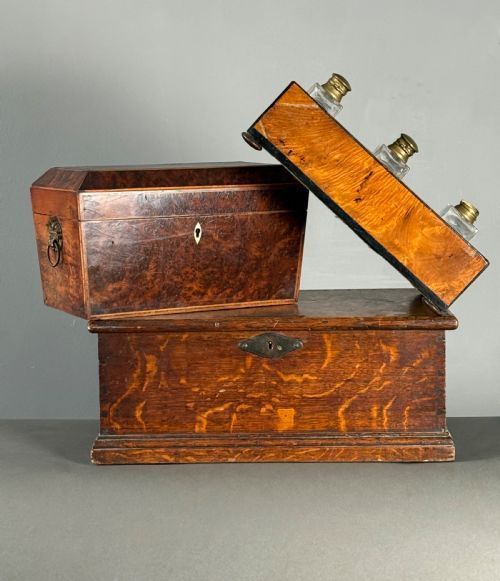
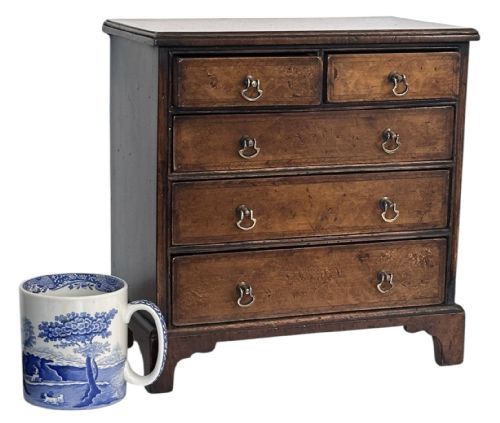
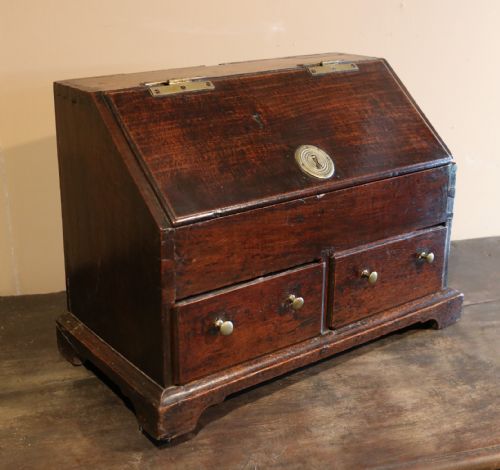
When you search for a georgian oak desktop chest, you encounter miniature furniture, small cabinets, writing slopes, and desk boxes produced during the eighteenth and nineteenth centuries. These pieces reflect the forms of larger household furniture reduced to tabletop or wall-hanging scale.
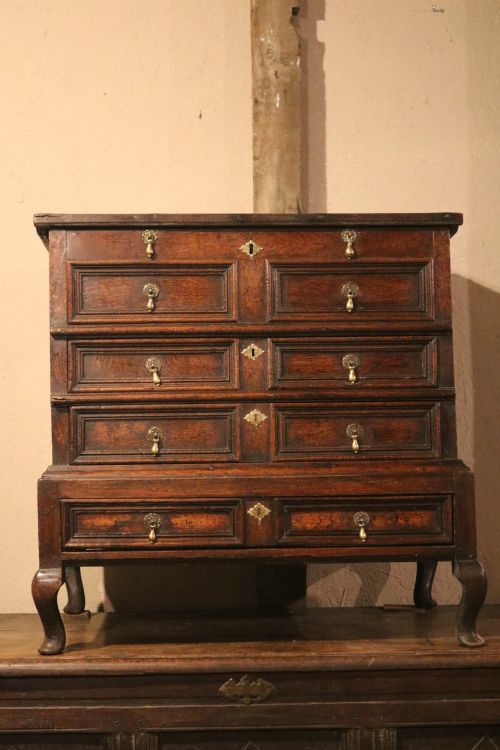
You are most likely to meet oak miniature chests of drawers and desk boxes from the Georgian and Regency periods. Regional examples, such as Welsh oak tallboys and bureaus, also appear among these compact furnishings.
Cabinet makers designed these smaller items for apprentices to demonstrate their skill, for travellers needing portable storage, or for domestic desktop organisation. Their versatility meant they could serve as spice cabinets, letter boxes, or collectors cabinets.
How they were made
Joiners and cabinet makers utilised solid oak, frequently paired with burr oak for decorative contrast on drawer fronts and surfaces. Inlay wood, holly, and bog oak provided subtle geometric or linear decoration on eighteenth-century desk boxes.
Metalwork played a functional and visual role, with brass and iron used for hinges, handles, and escutcheons. Carving appeared on select panels, adding texture to regional pieces produced in workshops across Britain.
Apprentice chests give diminutive drawers to big ambitions, proving that good things really do come in small, dovetailed packages.
What varies in quality
The standard of timber selection and decorative detail marks the distinction between ordinary utility items and finer examples. Rich figuring in burr oak panels and careful execution of holly and bog oak inlay elevate the visual presence of a piece.
Proportion and the handling of miniature scale determine the success of the design. Well-executed drawer construction and integrated regional characteristics, such as specific Welsh framing methods, demonstrate the maker's competence.
The Georgian Oak Desktop Chest Glossary
- Apprentice piece
- A small item of furniture created by a craftsman in training to demonstrate mastery of joinery and woodworking techniques to a guild or master.
- Tallboy
- A tall chest of drawers formed by placing a smaller chest on top of a larger base chest.
- Escutcheon
- A protective plate surrounding a keyhole, usually fashioned from brass or iron.
- Miniature furniture
- Scale models of full-sized furniture forms, built with the same timber joints and functional drawers as domestic household items.
- Bureau
- A desk featuring a sloping hinged writing flap that opens to reveal small compartments and pigeonholes.
Georgian Oak Desktop Chest: Frequently Asked Questions
What were desktop chests used for?
These compact pieces served multiple domestic purposes, from organising correspondence and stationery to holding valuables or medicinal spices. Their portable nature allowed owners to keep important papers close at hand.
Cabinet makers also constructed them as apprentice pieces or salesman samples to demonstrate complex woodworking techniques in a reduced format.
How do I date an oak desktop chest?
Dating relies on observing construction methods, timber choices, and stylistic cues associated with periods like the Georgian era or the nineteenth century. Details such as secondary woods and hand-cut dovetails offer clues to the decade of manufacture.
Regional variations and specific inlay materials like holly and bog oak further help narrow down the production period.
Are these pieces actually antique?
The pieces listed originate from the eighteenth and nineteenth centuries, placing them firmly in the antique category. They carry the patination and wear accumulated through generations of domestic use.
Materials like solid oak and brass hardware display the authentic signs of age rather than modern reproduction techniques.
Where should I place a desktop chest?
Their small footprint makes them suitable for placement on top of larger chests of drawers, sideboards, or dedicated writing desks. They also function well on tabletops where they can store small everyday items.
Some variants, such as wall-hanging cupboards, can be mounted securely to display collections while saving surface space.