





Georgian Needlework Sampler
A georgian needlework sampler brings stitched history onto the wall, offering charming records of names, dates, and schoolgirl endeavours.
What a georgian needlework sampler is
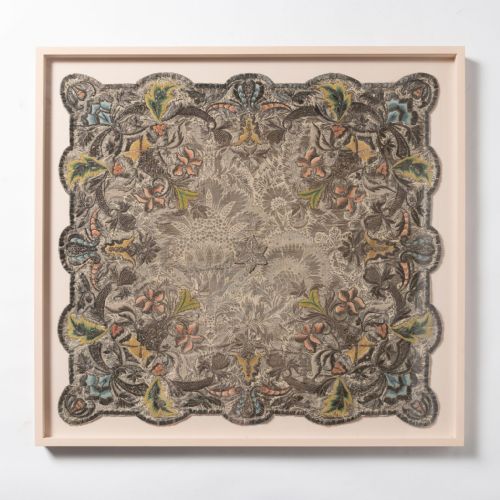
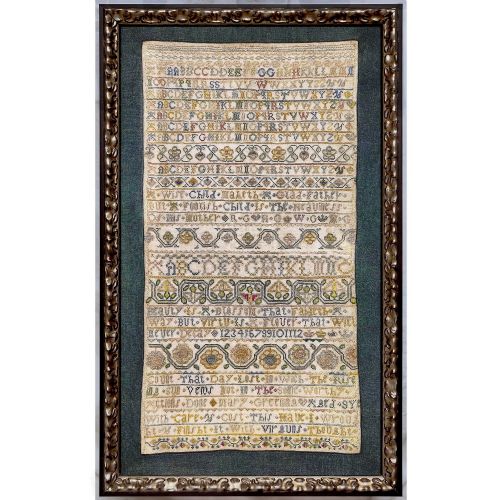
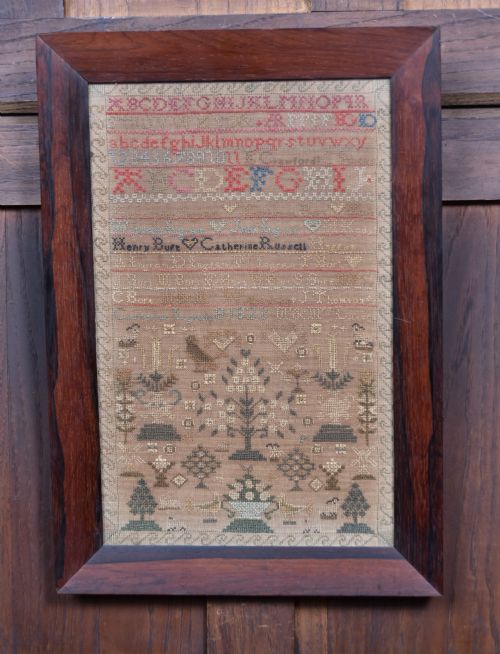
A georgian needlework sampler is a framed textile piece stitched on a linen ground, often recording the maker's name, age, and a specific year. These works span the eighteenth and nineteenth centuries, including pieces from the Georgian, William IV, and Victorian periods.
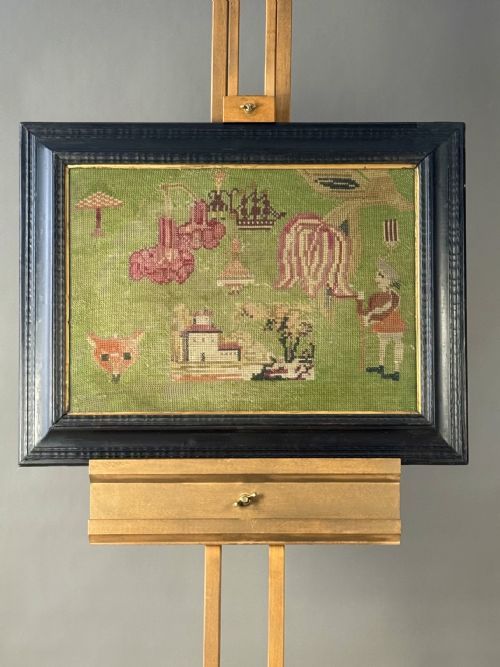
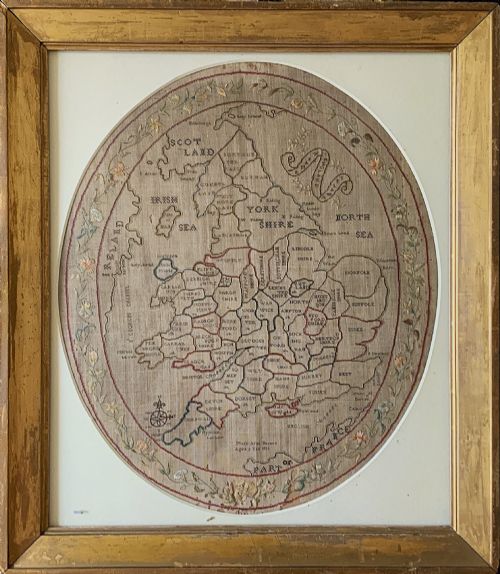
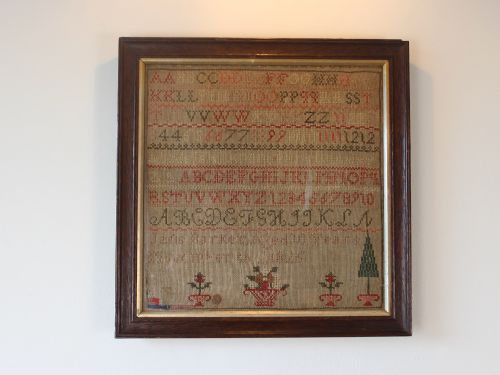
The subjects on this page range from simple alphabets and verses such as On Education to detailed needlework maps of England and Wales, alongside pictorial examples depicting animals and Adam and Eve scenes.
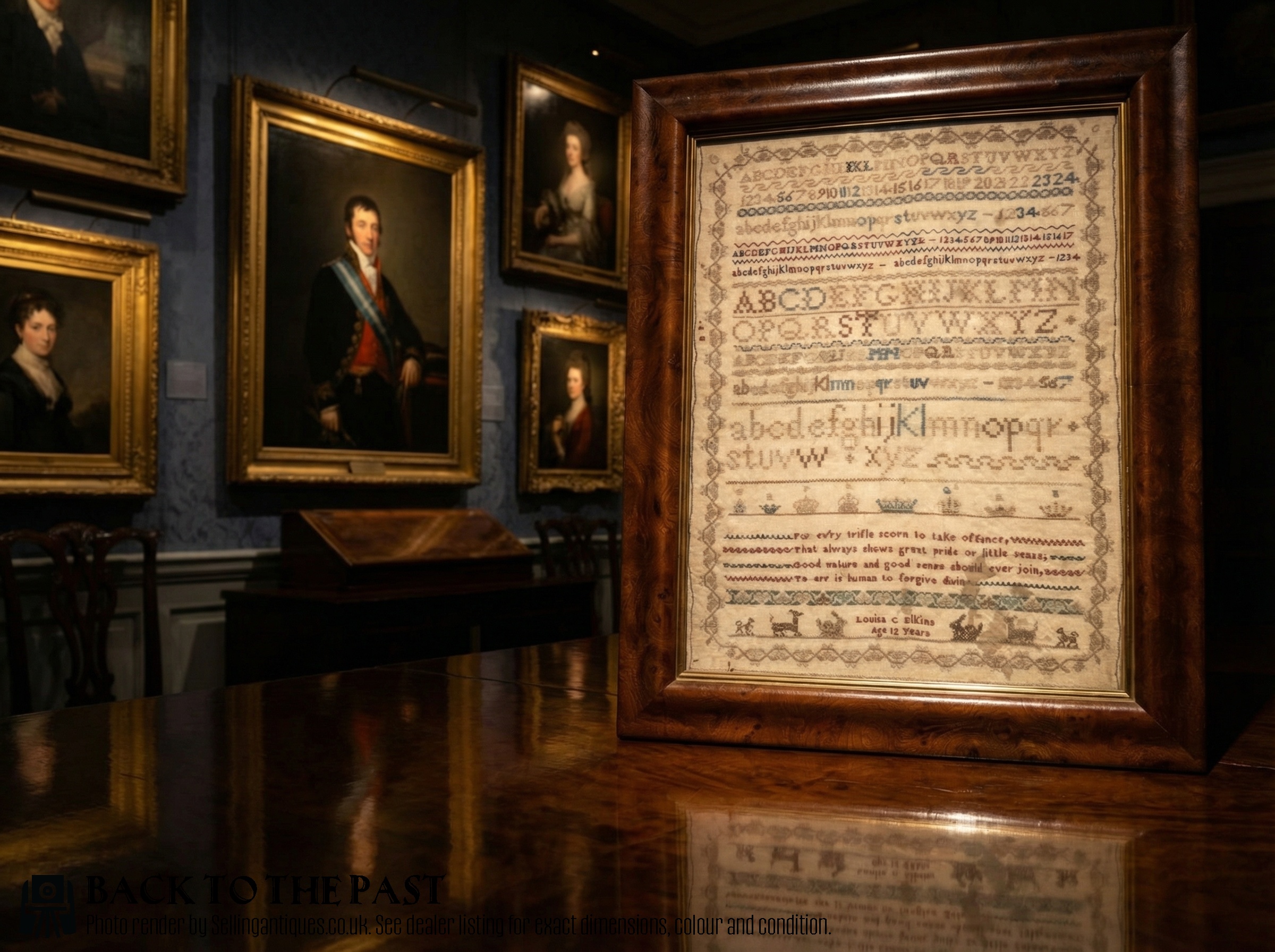
Makers recorded in the stitching include young girls like Sarah Baker, Mary Mason, Eleanor Grady, and Louiss Elkins, as well as institutional pieces such as the Oswestry National School tapestry sampler by Rachel.
How they were made
Makers worked with thread, silk, and silk thread stitched directly onto a linen foundation to form letters, numbers, and pictorial motifs.
Surviving examples typically reside within wood frames, often protected behind glass, and occasionally set within gilt wood moulding.
Retail Price Guide 2026
Typical UK retail prices for georgian needlework sampler, calculated from the Sellingantiques database of over a million retail prices indexed since 2003. This retail price guide relies exclusively on Sellingantiques data; no external sources or auction records are used, so the figures do not describe the wider market.
Materials across these listings consistently include linen, silk thread, wood, glass, and gilt wood.
What varies in quality
Complexity of the design separates standard alphabet exercises from pictorial maps or narrative scenes involving figures and animals.
The presence of fully documented provenance, including legible maker names, specific dates, and original frames, elevates individual examples.
Louiss Elkins·Sarah Baker·Mary Mason·Ann B Gilies·Rachel·Eleanor Grady·Sarah Andrew of Ardsley·Eliza Watson of Thorne·Mary Thornton·Deliah How
The Georgian Needlework Sampler Glossary
- Sampler
- A piece of needlework produced as a demonstration or test of skill in stitching. These textiles often display alphabets, numerals, and decorative motifs.
- Linen
- A strong textile made from the fibres of the flax plant used as the base fabric for stitching. It provides the woven grid that guides the needle.
- Silk thread
- A fine, lustrous filament used for embroidery work in these textiles. It offers a smooth finish and catches the light differently than standard thread.
- Gilt wood
- Timber frames treated with a thin layer of gold leaf or metallic gilt. This finish adds brightness and structure to the border of the textile.
Frequently Asked Questions
What is a georgian needlework sampler?
A georgian needlework sampler is a piece of stitched textile art created on linen during the eighteenth and nineteenth centuries. They record names, dates, and verses.
Many examples include schoolgirl signatures, ages, and pictorial elements like maps or biblical scenes.
How were these samplers used?
Makers originally created them to practice and demonstrate proficiency in various stitches, alphabets, and numbers. They served as needlework exercises.
Over time, families framed these textiles to preserve the stitcher's work and display personal history on walls.
How do I tell the periods apart?
Needlework samplers often bear stitched dates and names that anchor them directly to the Georgian, William IV, or Victorian eras. Style shifts help identify the period.
Lettering fonts, border designs, and pictorial subjects changed over the decades, moving from simple alphabets to complex topographical maps.
How do I live with a sampler?
Display these framed textiles away from direct sunlight to protect delicate silk threads and linen grounds from fading. Proper placement ensures longevity.
Keep them in stable indoor environments shielded from excessive moisture to preserve the wood frames and glass protection.